




Services on Demand
Journal

Article
 English (pdf)
 Article in xml format
 Article references
 Automatic translation
 Send this article by e-mail
Indicators
Related links
-
 Cited by Google
 -
 Similars in Google
Share

 Permalink
South African Journal of Science
On-line version ISSN 1996-7489Print version ISSN 0038-2353
S. Afr. j. sci. vol.120 n.11-12 Pretoria Nov./Dec. 2024
https://doi.org/10.17159/sajs.2024/19079
BOOK REVIEW
Table Mountain: Reading the rocks on an unimaginable scale
Saul Dubow
Smuts Professor of Commonwealth History, University of Cambridge, Cambridge, England. Email: shd28@cam.ac.uk
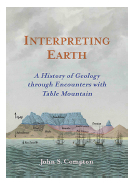
Book Title: Interpreting Earth: A history of geology through encounters with Table Mountain
Author: John S. Compton
ISBN: 9780796112521 (hardcover, 335 pp; ZAR450); 9780796128317 (softcover, 335 pp; USD28); 9780796112538 (ebook, 335 pp; USD10)
Publisher: Earthspun Books, Cape Town
Published: 2023
John S. Compton's geological biography of Table Mountain delights and excites from start to finish. Beginning with Khoisan cosmology as well as Portuguese and Dutch encounters with the Mountain, the author traverses widely as he takes on enlightenment thinking about stratigraphy, questions about the shape of the earth (spherical or oblate), early debates in geology focusing on the unfathomable age of the earth, the question of Neptunism vs Plutonism, the puzzle of rising and falling sea levels, and more recent controversies around continental drift and plate tectonics. Compton is as sure a guide as one might hope for. Table Mountain is, in his capable hands, both a subject of analysis and a platform for the interpretation of broader geological theory and history.
Dante Alighieri's Divine Comedy, we are reminded, imagined a terraced mountain in the south, its lowest level comprising Hell, rising successively through Purgatory and culminating in a flat-topped earthly Paradise with Empyrean Heaven above. Although Dante could not have had any direct knowledge of Table Mountain, European travellers versed in his poetry were primed to see Table Mountain according to this schema. And yet, for all its familiarity, the Mountain remained elusive.
It is not at all certain that Bartolomeu Dias glimpsed Table Mountain on his journey around the Cape, or even on his return voyage. Antonio de Saldanha was likely the first European, perhaps the first person, to have scaled its summit (in 1504). While there is rich archaeological evidence of Middle Stone Age life on the lower reaches of the Mountain, there is no record of human occupation in caves higher up. Despite its commanding presence, the absence (or cursory descriptions) of Table Mountain in travel accounts is equally salient. Only in the period of Dutch occupation do we find regular reports of mountain ascents: it was a challenging, sometimes dangerous climb that, from the early period of English occupation, became a routine hike for visiting sailors and, later, a fashionable excursion for turn of the century society figures like Lady Anne Barnard. The domestication of Table Mountain was part of the process whereby the Cape of Storms transmuted into the Fairest Cape, a sublime rather than a fearsome presence.
It is well known that artists failed to render Table Mountain accurately. Robert Sayer (1754) entirely missed the horizontal layers of sandstone that define the massif. William Hodges did better in 1772. It took longer still to make sense of the layered composition of the Mountain, from Malmesbury shale at the bottom, through granite and muddy sandstone, to the ordered layers of sandstone beds further up. The geological significance of these discrete rock layers, brilliantly sketched by Albrecht Herport in 1669, was thus apt to be missed.
Only in the 19th century did Table Mountain come to serve as a prism through which understanding of animated academic discussions could be conducted: for example, whether catastrophic volcanism or incremental deposition shaped by the sea and by wave action was the operative creative force. The telling intrusion of granite into shale, evidenced in Platteklip Gorge (the most accessible route up the Mountain) was missed by travellers and observers until the arrival of Basil Hall in 1812. Soon after, another visitor bound for China, Clarke Abel, identified a striking shale-granite geological contact at Sea Point. He viewed the 'intimate intermingling' of rocks as supportive of Plutonist views of hot magma intrusion, although Abel also saw the slow action of Neptunism in the topography of overlying sandstone. Table Mountain thus became a case study for European, specifically Scottish, enlightenment argumentation about the earth's formation.
The absence of fossils embedded in Table Mountain contrasts with their abundance in regions in the interior where powerful evidence of glaciation and of contortion and deformation is spectacularly demonstrated throughout the mountains of the Cape Fold Belt. For Alex du Toit (1878-1948), surely one of South Africa's greatest scientists, this offered strong reason to pursue the iconoclastic theory of southern hemispheric continental drift. Du Toit's broad imagination linked the folded mountains of the Cape, through Table Mountain and the Falkland Islands, to Latin America. Behold! Port Stanley adjacent to Port Elizabeth!
Du Toit's reworking of Wegener's theory of continental drift in Our Wandering Continents1 centred on the idea that 'Africa forms the Key', an idea pursued by Jan Smuts in association with Raymond Dart's claims that Australopithecus africanus constituted the key missing link in hominin evolution. Decisive evidence required to settle the contentious debate about the mechanics of continental drift was only forthcoming with the emergence of plate tectonics theory in the 1960s - a paradigmatic shift in geological thinking that Compton attends to in the final chapter of the book.
Compton's synoptic eye draws attention to important geologists at the Cape as well as the importance of geological awareness. His reading of John Barrow, whose travel writings and descriptions are well known to historians, demonstrates just how foundational geology was to the thinking of this significant imperial scientist and policymaker. It was Barrow who determined that Devil's Peak and Lion's Head originally formed one mass with the central Table. Compton is illuminating, too, about the geological ruminations of other well-known visitors and travellers better known as botanists and naturalists, such as William Burchell, Hinrich Lichtenstein and François Le Vaillant. Just as Table Mountain's geological features hide in plain sight, so their views on geology have eluded the attention of readers more attuned to descriptions of fauna and flora.
Compton's focus moves between aesthetic evocations of the Mountain to history and earth science. He delights in walking his readers up Platteklip Gorge, for long the preferred route for mountaineers and hikers, as well as an instructive petrological text for geologists. He also uses Table Mountain as a means to engage with broader geological theories that do not necessarily pertain strictly to the Mountain itself. For uninitiated readers like myself, this is not a matter for complaint. Compton's style is breathy and bracing, his enthusiasm is infectious, and his core knowledge, if not all his interpretations, unimpeachable. As popular science, this is an exemplary contribution, comparable to Hugh Eales' Riddles in Stone2 which also tackles South African geology. My only complaint relates to Compton's idiosyncratic and minimalist referencing system, which makes sources difficult to check. This niggle is, however, outweighed by the book's abundant and well-chosen illustrations.
References
1. Du Toit AL. Our wandering continents: An hypothesis of continental drifting. London: Oliver & Boyd; 1937. [ Links ]
2. Eales HV. Riddles in stone: Controversies, theories and myths about southern Africa's geological past. Johannesburg: Wits University Press; 2007. [ Links ]
Published: 04 December 2024
