



Services on Demand
Journal

Article
 English (pdf)
 Article in xml format
 Article references
 Automatic translation
 Send this article by e-mail
Indicators
Related links
-
 Cited by Google
 -
 Similars in Google
Share

 Permalink
South African Journal of Science
On-line version ISSN 1996-7489Print version ISSN 0038-2353
S. Afr. j. sci. vol.121 n.7-8 Pretoria Jul./Aug. 2025
https://doi.org/10.17159/sajs.2025/21341
RESEARCH ARTICLE
Palm oil In salty snacks: A South African labelling audit on sustainability communication
Manzlmase Sishi-Vilakazi; Henriette L. de Kock
Department of Consumer and Food Sciences, University of Pretoria, Pretoria, South Africa
ABSTRACT
Palm oil is widely used in global food production and is highly valued in the salty snack industry for its frying performance, oxidative stability and cost-effectiveness. However, concerns about its environmental and social impacts persist. We investigated the prevalence of palm oil and its derivatives in salty snack products, the presence of sustainability claims, including the Roundtable on Sustainable Palm Oil (RSPO) certification logo, and other types of claims on salty snack product labels. A total of 638 in-market products across six categories (maize, potato, grain, vegetable and fruit chips, and ready-to-eat popcorn) were audited. Palm oil and its derivatives were declared in 59% of products; 27% used alternative oils and 14% listed only 'vegetable oil' without specifying the oil type. Maize chips (45%) and potato chips (31%) were the largest product categories, with 60% and 69%, respectively, containing palm oil and its derivatives. Vegetable chips showed the lowest reliance on palm oil. Despite the prominence of palm oil, none of the products featured the RSPO certification logo or any certification indicating sustainable palm oil sourcing. Instead, product claims primarily highlighted dietary information, flavour characteristics and production methods. These findings reveal that while palm oil use is widespread in salty snacks, engagement with palm oil sustainability concerns is lacking. This gap presents an opportunity for manufacturers to adopt certified sustainable palm oil or eco-friendly alternatives, aligning with Sustainable Development Goal (SDG) 12 (responsible consumption and production) and growing consumer demand for transparency and environmental responsibility.
SIGNIFICANCE:
This study uncovered a disconnect in South Africa's salty snack industry: while palm oil is a dominant ingredient, its sustainability remains overlooked. Despite global efforts to promote certified sustainable palm oil, none of the audited products featured the RSPO certification logo or communicated sustainable palm oil sourcing practices. This gap highlights a missed opportunity for manufacturers to align with Sustainable Development Goal 12 (responsible consumption and production). By adopting and promoting certified sustainable palm oil, the industry can meet rising consumer demand for ethical practices, reduce its ecological footprint and position itself as a leader in sustainable food production.
Keywords: palm oil, sustainability, Roundtable on Sustainable Palm Oil, salty snack, SDG12
Introduction
The consumption of salty snack products is a significant and growing trend within global food markets1, driven by shifting consumer preferences2 coupled with increased urbanisation3 and stress levels4. Salty snacks, which include an array of products such as potato chips, nuts, crackers, popcorn and pretzels are popular across various demographics due to their convenience5, appealing taste6 and variety7. These snacks are found in many households and are a popular choice for on-the-go consumption.8
There is a rising interest in the use of sustainable ingredients in the production of snack products.9 One such ingredient is palm oil, which is obtained from the fleshy, ripe mesocarp of palm fruit from palm trees (Elaeis guineensis). In its natural state, palm oil is semi-solid at room temperature and typically undergoes fractionation, a separation process, to yield its derivatives: palm stearin (solid) and palm olein (liquid).10 For palm oil to be considered sustainable, it must be produced in ways that minimise environmental and social harm.11 Palm oil and its derivatives are cost-effective, versatile and widely used ingredients in the food industry.10 They are found in a variety of packaged products, ranging from snacks to cosmetics, commonly sold in supermarkets.12 Notably, palm oil is particularly favourable for frying salty snacks due to its high-temperature stability, oxidation resistance and neutral odour.10
However, the production of palm oil is notorious for its significant negative environmental impacts, such as water pollution, deforestation and loss of biodiversity. Additionally, the expansion of palm oil plantations has negatively affected local communities through displacement, exploitation and child labour.13 These challenges have spurred the development of sustainable palm oil production practices, which are certified by organisations such as the Roundtable on Sustainable Palm Oil (RSPO).14 The RSPO, a global non-profit organisation, has established a certification scheme to identify products made with palm oil that is economically viable, socially beneficial and environmentally friendly. As the largest and most significant palm oil certification body, the RSPO is accredited by independent organisations to ensure credibility. Its globally recognised certification logo is aimed at helping consumers easily identify and choose products containing RSPO-certified sustainable palm oil.
As consumers become more environmentally and socially conscious, they increasingly prefer food products that reduce ecological footprints and adhere to ethical production practices.15 Incorporating sustainable palm oil into food products aligns with this growing demand for responsibly sourced ingredients. This shift reflects broader global goals, such as the United Nations' Sustainable Development Goal (SDG) 12, which emphasises sustainable consumption and production patterns. SDG 12 encourages industries to adopt responsible sourcing practices and minimise their environmental impact. Furthermore, this shift aligns with SDG 3, which aims to ensure healthy lives and promote well-being for all at all ages.
Despite growing consumer interest, no research has been found on the use of sustainable palm oil in food products sold in South Africa. However, studies conducted in Italy16, France17, England18, Spain and Peru19, Germany20,21 and Switzerland11 have explored consumer perceptions of palm oil, awareness of the RSPO label and the impact of 'palm oil free' versus 'sustainable palm oil' claims on consumer perceptions22. According to the RSPO23:
South Africa is the largest consumer of certified sustainable palm oil (CSPO) [palm oil that is certified by the RSPO24] on the African continent, followed by Nigeria, Egypt and Kenya, accounting for 17% of total CSPO consumption in Africa. With South Africa having the highest number of RSPO supply chain certified facilities by an African country, it is a critical hub for downstream suppliers.
The objective of this research was to explore the use of palm oil and its derivatives as ingredients in salty snack products available on the South African market, and to assess the extent to which manufacturers communicate the use of sustainable palm oil through front- or back-of-pack claims, including the use of the RsPO certification logo or any other sustainability-related certifications and markings. In addition, we aimed to analyse the broader spectrum of product claims presented on product packaging, to determine whether and how sustainability, particularly in relation to fats and oils, is integrated into consumer-facing labelling. By examining these claims, this research provides valuable insights into the visibility, prioritisation and framing of sustainability narratives in the salty snack industry of South Africa.
Materials and methods
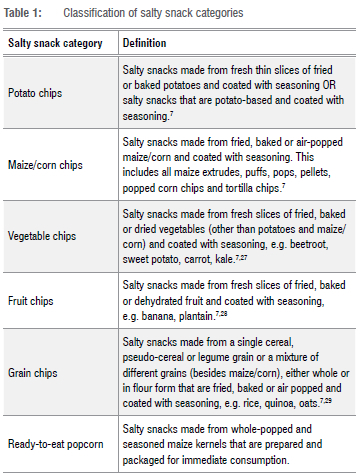
The audit consisted of two parts. The first part explored and described the use of palm oil and its derivatives as ingredients in selected salty snack products available on the South African retail market through a market analysis. The second part investigated whether any salty snack products claimed to use sustainable palm oil as communicated via the RSPO certification logo or any other forms of sustainability claims. Other claims found on product labels (both front and back) were also documented. To ensure comprehensive coverage, an Internet search supplementary to the in-store audit was conducted through retailer and manufacturer websites. Data collection and analysis were conducted between December 2023 and August 2024. Salty snack products were limited to maize (also referred to as corn in some parts of the world), potato, grain, vegetable and fruit chips, and ready-to-eat popcorn as defined in Table 1. The categories were chosen based on their reliance on significant amounts of oil during production (e.g. deep-frying, frying and popping).25,26 Additionally, the product categories were chosen to represent a wide spectrum of popular snack options available to consumers, ensuring a robust analysis of palm oil usage patterns across products, brands and flavours. Although brand names were recorded during data collection, they have been excluded in the results. This was done to avoid any perceived endorsement or criticism, reduce bias and maintain objectivity. All types of nuts, crackers, pretzels, sweet maize snacks, rice cakes and microwave popcorn were excluded in this study as they typically use lower amounts of oil in their production.
The market analysis was conducted exclusively in the Johannesburg Metropolitan Municipality, a major economic hub in South Africa30, where diverse food retailers cater to consumers across socio-economic groups31. Data were collected from a total of 13 stores: six grocery stores (Checkers, Pick 'n Pay Hyper, Food Lover's Market, Spar, Woolworths Food and Glenvale Hyper), two health stores (Clicks and Dischem), three wholesale stores (Makro, Devland Cash & Carry, Kit Kat Cash & Carry), one speciality snacks store (Tasko Sweets) and one clothing store selling its own brand of snack products (Mr Price). Some of these retailers were chosen for their large revenue and growth, providing an inclusive representation of where most consumers purchase their salty snacks.32
Both qualitative and quantitative data were collected, transcribed and categorised into a Microsoft® Excel® spreadsheet (Version 2409). Photographs of products within the selected salty snacks categories were captured with a smartphone for documentation purposes and supplemented with images from manufacturer websites. Information on the front and back of each product's packaging was captured to ensure inclusion of ingredient lists, country of origin and all claims.
Data analysis
Descriptive statistics, analysed using Microsoft Excel 365, were used to report the declaration of palm oil and its derivatives, as well as other oils listed as ingredients. Each product label was assessed only once using a binary coding system (1=present/yes, 0=absent/no) to capture the declaration of the use of palm oil and its derivatives. When the same salty snack product was available in multiple packaging sizes, only one size (either the largest or the one available at the time of data collection) was recorded to avoid duplication. Similarly, if the same salty snack product was available at multiple store locations, it was included only once for analysis. Any other non-palm-oil-related claims identified on multiple products were grouped based on similarity, and regarded as one claim to eliminate double-counting. For example, gluten-free/ naturally gluten-free/certified gluten-free was regarded as one type of claim. Additionally, the countries of origin were analysed for all salty snack products included in the study. To maintain confidentiality, product brands and names were anonymised in this analysis.
Results
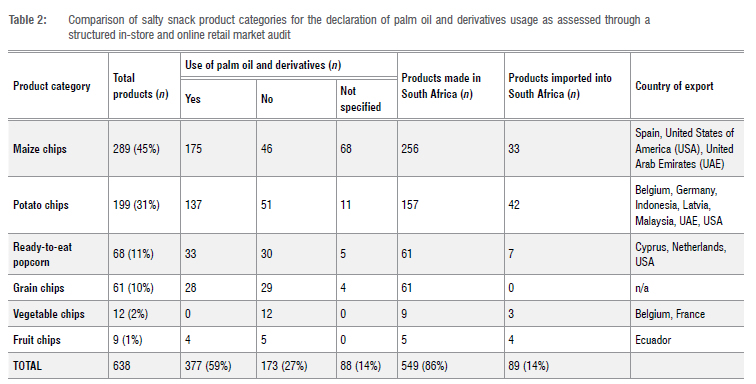
The granular data collection approach provided a detailed understanding of the variations in labelling practices across different salty snack product categories and brands, particularly with respect to ingredient disclosures and any sustainability-related claims. Table 2 summarises the ratio of products per category, details of products with and without palm oil and its derivatives, and the distribution of locally made versus imported products. In total, 638 salty snack products were included in the analysis, consisting of maize chips (n = 289), potato chips (n = 199), ready-to-eat popcorn (n = 68), grain chips (n = 61), vegetable chips (n = 12) and fruit chips (n = 9). Of all the products assessed, as expected, a majority (59%) of the salty snack products explicitly declared the use of palm oil as an ingredient, while 27% of products did not make use of palm oil or its derivatives as an ingredient. The remaining 14% just specified 'vegetable oil' as an ingredient. The results highlight varying degrees of transparency and reliance on palm oil and its derivatives across salty snack product categories. Maize chips constituted the largest salty snack product category (45% of the total sample). Among these, 175 products (61%) declared the use of palm oil and its derivatives, demonstrating a significant reliance on this ingredient; 46 products (16%) did not list palm oil as an ingredient, but listed other vegetable oils (such as canola and sunflower oil) and 68 products (24%) specified the generic term 'vegetable oil'. Additionally, 256 (89%) of the maize chip products were produced in South Africa while 33 (11%) were imported. Potato chips represented the second-largest category (31% of the total sample). For this category, 137 products (69%) declared the use of palm oil and its derivatives, 51 products (26%) stated use of other oils and 11 products (6%) specified the generic term 'vegetable oil'. Of the potato chips analysed, 157 products (79%) were produced in South Africa and 42 products (21%) were imported. The ready-to-eat popcorn category, representing the third-largest category, comprised 11% of the total sample; 33 products (49%) declared the use of palm oil, 30 products (44%) listed the use of other vegetable oils and 5 products (7%) specified the generic term 'vegetable oil'. Within this category, 61 products (90%) were produced in South Africa, while 7 products (10%) were imported. Grain chips accounted for 10% of the total sample. The results for this category showed that 28 products (46%) declared the use of palm oil, 29 products (48%) the use of other vegetable oils and 4 products (7%) specified 'vegetable oil'. All grain chip products analysed were produced in South Africa. Vegetable chips were a smaller category (2% of the total sample). None of the vegetable chips declared the use of palm oil or its derivatives; instead, all products (100%) stated the use of vegetable oils. Of these, 9 products (75%) were produced in South Africa and 3 (25%) were imported. The fruit chips category represented the smallest category with 9 products (1% of the total sample). Four products (44%) declared the use of palm oil while five products (56%) declared use of other vegetable oils. Five products (56%) were produced in South Africa and the rest (44%) were imported.
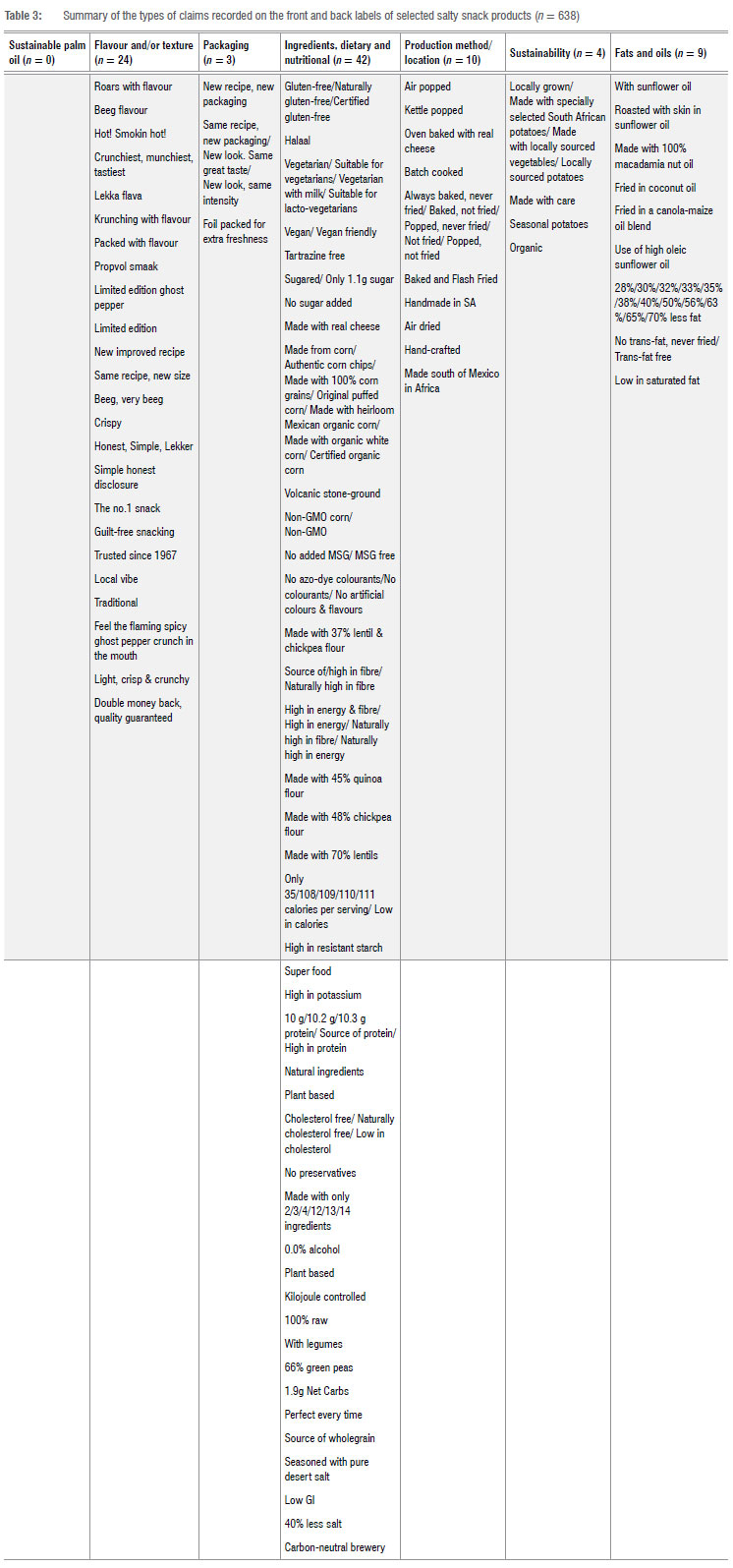
Table 3 outlines the types of claims recorded from the front and back labels of the 638 salty snack products assessed. The claims were grouped into seven categories: sustainable palm oil, flavour and/or texture, packaging, ingredients and nutrition, production methods/ locations, sustainability, and fats and oils. Each category provides insight into how manufacturers present and communicate product quality, health and sustainability to consumers.
No claims related to the use of sustainable palm oil and its derivatives, communicated using the RSPO certification logo or alternative wording, were recorded on any of the salty snack product labels. A total of 24 claims were recorded, which were flavour and/or texture related. Common descriptors in this category emphasised the intensity of flavours and satisfying textures, limited-edition offerings, product size and endorsements of brand history. Examples include: "Roars with flavour", "Beeg flavour", "Crunchiest, munchiest, tastiest", "Lekka flava" and "Krunching with flavour".
Packaging claims, although less prevalent, were noted in three instances. These claims focused on new or improved packaging designs, as well as packaging techniques aimed at enhancing product quality. Examples include: "New recipe, new packaging" and "Foil packed for extra freshness". These packaging claims suggest an effort to differentiate salty snack products based on improved quality preservation and consumer satisfaction.
The most frequently recorded claims (43) were related to ingredients, dietary information and nutritional content. These claims often promoted health-conscious ingredients or special dietary considerations, appealing to nutrition and dietary-preference-conscious consumers. Examples include: "Gluten free", "Halaal", "Vegetarian", "No sugar added", "Non-GMO corn", "High in protein" and "Natural ingredients".
Production methods were recorded through 10 claims, typically emphasising artisanal or traditional methods of production, along with innovative cooking processes aimed at improving product health and quality. Examples include: "Batch cooked", "Air popped", "Oven baked with real cheese" and "Handmade in SA".
Sustainability-related claims were infrequent, with only four claims recorded, none of which directly addressed the use of sustainable palm oil and its derivatives. The sustainability-related claims that were present focused on production methods or sourcing of ingredients. Examples include: "Made with specially selected South African potatoes", "Organic", "Made with care" and "Seasonal potatoes".
Nine claims were recorded about the use of fats and oils, primarily focused on the type of oils used or the health benefits associated with the product's fat content. Claims in this category often emphasised lower fat content or the use of alternative and healthier oils. Examples include: "Fried in coconut oil", "Fried in a canola-maize oil blend", "Trans-fat free" and "Low in saturated fat".
Discussion
This study provides valuable insights into the use of palm oil and its derivatives in salty snack products within the South African retail market, based on an analysis of 638 products across six distinct categories. As expected, the use of palm oil is widespread in salty snacks available in this market. This aligns with global trends, in which palm oil is favoured over other vegetable oils such as sunflower and canola oils due to its stability at high temperatures, oxidative resistance and cost-effectiveness.10,33 These functional properties make it a key ingredient in large-scale snack production, underscoring its importance in the industry.
A substantial portion of the products either did not use palm oil and its derivatives or did not specify its use, simply labelling the oil generically as "vegetable oil". This lack of transparency in ingredient disclosure has substantial implications for consumer awareness and sustainability efforts. Without clear labelling, consumers concerned about the environmental or social impacts of palm oil may struggle to make informed choices. According to the South African foodstuffs labelling and advertising regulation (R.146), the class names of ingoing fats and oils (single and in combination) shall be indicated in the list of ingredients of foodstuffs as "vegetable", "animal", "fish" or "marine". In addition, "each class name should be further qualified by an indication of all of its ingoing type(s) of fats and oils, in parentheses after the class name". And, "in the case of vegetable fats and oils the particular part of the plant from which the fat or oil is derived, shall be specified"34. For example, if a product makes use of palm oil and/or its derivatives, it should be listed in the ingredient list as "vegetable oil (palm oil/palm kernel oil/palm olein/palm stearin)".
The use of the generic term "vegetable oil" without specifying the oil type/s, could be a way for manufacturers to avoid disclosing the use of palm oil, non-compliantly so, thus potentially hindering efforts to educate consumers about sustainability. Alternatively, by not specifying the oil type, manufacturers could switch between different oils based on availability, cost or market conditions, without needing to relabel their products. This flexibility is particularly advantageous in volatile commodity markets where oil prices fluctuate.35 Interestingly, lack of specificity in oil-type labelling may also suggest that some salty snack producers may be shifting towards using alternative oils such as sunflower or canola oil, which are often perceived as healthier.33 This trend could indicate an opportunity for further market differentiation, particularly in the growing health, wellness and sustainability segments. As noted by Frey et al.15, sustainability is increasingly being used as a competitive advantage in global food markets. South African snack manufacturers could benefit from adopting similar strategies to attract health- and environmentally conscious consumers.
One of the most notable findings of this study was the absence of any claims related to the use of sustainable palm oil and its derivatives, as certified by the RSPO or other sustainability logos. This is particularly interesting given the increasing global consumer awareness of environmental sustainability and the growing demand for sustainably produced ingredients.36 In addition, although palm oil is widely used, the audit found no evidence of manufacturers promoting the use of CSPO or other eco-friendly alternatives in their products. This raises important questions concerning whether manufacturers are sourcing sustainable palm oil at all or whether they are simply not mentioning or promoting it.
The absence of RSPO certification logos on products could be attributed to several factors. Firstly, there might be logistical, supply chain or cost-related challenges in sourcing, verifying and using sustainable palm oil. For instance, RSPO-certified suppliers may be required to pay licensing fees to use the RSPO certification logo. Therefore, while RSPO-certified palm oil is environmentally friendly, it can be more expensive to source for manufacturers because of these fees37,38, the cost of complying with RSPO standards and supply chain limitations11. Verifying supply chain transparency and ensuring that the palm oil used is truly sustainable can also be perceived by manufacturers as overly complex. Additionally, packaging redesigns to accommodate sustainability logos may incur further operational and printing costs. For manufacturers focused on decreasing production costs, switching to sustainable palm oil may not be a priority, especially in a price-sensitive market like South Africa. Secondly, manufacturers may not see the immediate value in promoting sustainability, especially if they believe that South African consumers are more concerned with, for example, price, taste and convenience than with environmental responsibility.39 If consumers are not fully aware of the environmental and social impacts of conventional palm oil production, they may not actively demand sustainable alternatives. This creates a feedback loop where manufacturers are less inclined to source sustainable palm oil because there is no perceived market for it or return on investment. Lastly, there may be a knowledge gap in which manufacturers themselves are not fully aware of the benefits and opportunities associated with using certified sustainable palm oil. This lack of engagement with sustainability certifications, particularly RSPO, contrasts sharply with global trends in which numerous companies and brands are increasingly adopting sustainable palm oil practices to align with consumer expectations40, corporate social responsibility goals41 and SDGs42. Notably, while South Africa is recognised as the largest consumer of CSPO in Africa23, this study's findings suggest that the local retail market for salty snacks has not yet capitalised on the environmental, social and competitive advantages of sustainable sourcing compared to the global market, where the RSPO has made strides in promoting sustainable palm oil. This gap offers manufacturers an opportunity to differentiate their products by incorporating meaningful sustainability claims, potentially appealing to the growing segment of ethically and environmentally conscious consumers.
In contrast to the lack of sustainability-related claims, the audit revealed that manufacturers place strong emphasis on flavour, health and ingredient-related claims, demonstrating a strong focus on sensory appeal. Flavour and texture claims were prevalent, reflecting the competitive nature of the salty snack market where sensory appeal is a key driver of consumer purchase decisions.6 These claims highlight the competitive emphasis on enjoyable eating experiences to attract and retain consumers. Additionally, they help differentiate products by creating a sense of exclusivity, loyalty or local pride, adding value beyond flavour and texture considerations. This sensory focus aligns with existing research, which highlights taste as a primary motivator for snack consumption43, particularly in indulgence categories like potato chips and popcorn. Ingredient-related claims were also prominent, with claims related to diet and nutrition such as "MSG/ Gluten-free" or "Non-GMO corn". This implies that manufacturers are responding to growing consumer demand for 'perceived to be healthier' snack options44 by emphasising dietary inclusivity, clean labels and transparency concerning ingredient sourcing. In addition, these ingredient-related claims align with specific consumer dietary needs2 such as 'low-fat', 'high-protein', and 'source of' or 'free-from' attributes. Therefore, the prevalence of these claims suggests that provision of healthy salty snack product options is a priority for manufacturers, which aligns with broader health trends in which consumers are increasingly seeking lower-fat or healthier oil options in their salty snack products of choice. Claims related to production methods reflect a growing trend of highlighting small-scale, traditional or healthier cooking techniques as a way to appeal to consumers seeking authentic and healthier alternatives.
The limited presence of sustainability-related claims, compared to the prevalence of other types of claims, suggests that, while manufacturers operating in this market are addressing certain consumer preferences, environmental concerns are not yet being prioritised in their marketing strategies. This imbalance reflects the industry's current priorities where sustainability is not yet a primary concern for salty snack producers in the South African market, as only a small number of brands are actively promoting their environmental credentials on their product labels. This contrasts with research indicating that sustainability is becoming an increasingly important factor in consumer food choices45, particularly among younger generations40,42. Manufacturers in South Africa may be missing an opportunity to engage with these consumers through more robust sustainability communication, particularly regarding palm oil sourcing. Additionally, manufacturers have the potential to have a positive impact on the environment and communities in palm-oil-producing countries by supporting sustainable production practices. This would help address critical issues such as deforestation of tropical rainforests, habitat destruction of palm oil plantations and unfair labour practices. Manufacturers and retailers could play a more proactive role in educating consumers about palm oil sustainability through clearer labelling, in-store promotions or online platforms. Such efforts would not only help bridge the current knowledge gap but also capture a larger share of the market, particularly among environmentally conscious consumers.
Overall, these findings address the objectives of the study. The audit confirmed the widespread use of palm oil and its derivatives in salty snack products across most categories, particularly maize and potato chips. It revealed a striking lack of on-pack communication regarding sustainable palm oil sourcing, with no instances of RSPO certification or similar sustainability logos observed. In addition, the analysis of front- and back-of-pack claims showed that although flavour, nutrition and production methods were frequently highlighted, environmental sustainability, especially in relation to palm oil, was notably underrepresented. Collectively, these results confirm a disconnect between ingredient sourcing and the promotion of sustainability in labelling practices, thereby fulfilling the study's aim of evaluating both the prevalence of palm oil and the extent to which its sustainability is communicated to consumers.
This study provides a baseline understanding of palm oil usage and labelling practices in the South African salty snack industry. Future research could explore a few directions to build on these findings. Firstly, while this study focused on salty snacks, other snack products were observed during the audit. A broader audit inclusive of additional snack categories, including all types of sweet and savoury snack products, could provide deeper insights into palm oil usage across the entire snack industry. This would help determine whether the patterns observed in this study are consistent across other product types. Secondly, future research could explore consumer perceptions and awareness of palm oil and its derivatives, as well as their sustainability impacts. While this study focused on product labels and manufacturer claims, understanding how consumers interpret and respond to sustainability certification logos would provide valuable context for developing more effective marketing strategies. Focus group discussions or surveys with consumers, particularly targeting younger demographics, could shed light on the factors driving their snack purchasing decisions and the role of sustainability in their choices. Lastly, longitudinal studies could track changes in palm oil usage and sustainability claims over time. As global pressure to adopt sustainable palm oil practices continues to grow, monitoring how the South African snack industry responds will be critical in determining whether more products begin to utilise the RSPO certification logo or other sustainability certifications.
Conclusion
The findings of this study demonstrate that palm oil is a prominent ingredient in the South African salty snacks industry. Maize and potato chips, in particular, demonstrate a high reliance on palm oil and its derivatives, likely because of their functional properties such as frying stability, cost-effectiveness and texture enhancement. In contrast, smaller categories like vegetable and fruit chips use palm oil less frequently. Despite the growing global awareness of the environmental and social impact of palm oil production, none of the products audited displayed the RSPO certification logo or any other certification to communicate the use of sustainable palm oil. This highlights a significant gap in both the adoption and communication of sustainable palm oil practices in the South African salty snack market. This gap presents a major opportunity for manufacturers to differentiate themselves by sourcing CSPO and prominently featuring the RSPO certification logo on their packaging. Doing so would not only contribute toward lessening the environmental and social impacts of palm oil production but also align with the increasing consumer demand for environmentally and socially responsible food products. The absence of the RSPO certification logo on products suggests that South African consumers may not be fully informed about the environmental and social impacts of palm oil or the value of sustainable options. In addition, the costs associated with RSPO logo licensing and packaging redesign may disincentivise manufacturers from communicating sustainability practices, especially in price-sensitive markets. This signals a need for further research to understand potential barriers such as lack of awareness, scepticism toward certifications and price sensitivity, as well as drivers such as environmental and social concerns. Insights from such research could guide new communication strategies and supply chain decisions, encouraging manufacturers to source and promote certified sustainable ingredients.
Acknowledgements
We acknowledge the University of Pretoria for awarding a postgraduate student bursary to M.S-V. in support of her doctoral studies.
Data availability
The data supporting the results of this study are not available.
Declarations
M.S-V. is an employee of PepsiCo Inc. We declare no additional conflicts of interest. In preparing this manuscript, AI (artificial intelligence)46 was used to assist in revising and editing the text, as well as summarising existing literature. The prompt that was used for some sections was "Suggest an improved version of this paragraph to enhance readability and flow". This tool helped improve the clarity, coherence and grammatical accuracy of the writing. All content generated or refined with AI was thoroughly reviewed, validated and adjusted by the authors to ensure it aligned with the study's objectives and maintained accuracy.
Authors' contributions
M.S-V.: Conceptualisation, methodology, investigation, formal analysis, validation, data curation, writing - original draft, writing - review and editing, project leadership, project administration. H.L.d.K.: Conceptualisation, methodology, writing - review and editing, supervision. Both authors read and approved the final manuscript.
References
1. Innova Market Insights. Global salty snack trends and innovation [webpage on the Internet]. c2024 [cited 2024 Dec 07]. Available from: https://www.innovamarketinsights.com/trends/global-snack-trends/ [ Links ]
2. Mintel. Key trends driving growth in the salty snacks market [webpage on the Internet]. c2023 [cited 2024 Dec 18]. Available from: https://www.mintel.com/insights/food-and-drink/key-trends-driving-growth-salty-snacks-market/ [ Links ]
3. FAO Knowledge Repository. The state of food security and nutrition in the world. Urbanization is transforming agrifood systems and affecting access to affordable healthy diets across the rural-urban continuum [document on the Internet]. Rome: FAO, IFAD, UNICEF, WFP,WHO; 2023 [cited 2024 Dec 28]. Available from: https://openknowledge.fao.org/items/445c9d27-b396-4126-96c9-50b335364d01 [ Links ]
4. Gillebaart M, Schlinkert C, Poelman MP, Benjamins JS, De Ridder DT. Snacking for a reason: Detangling effects of socio-economic position and stress on snacking behaviour. BMC Public Health. 2022;22(1), Art. #2009. https://doi.org/10.1186/s12889-022-14384-2 [ Links ]
5. Vollmers C, Vollmers S, Swenson J. Competing in the salty snack industry. In: Hall S, editor. Proceedings of the American Society of Business and Behavioral Sciences Conference; 17-21 February 2000; Nevada. Las Vegas, USA. San Diego, CA: ASBBS; 2000. p. 1-16. https://citeseerx.ist.psu.edu/document?repid=rep1&type=pdf&doi=f73c67f26bb8e0f8b068a6be8e134dd67280b62c#page=3 [ Links ]
6. Schlinkert C, Gillebaart M, Benjamins J, Poelman M, De Ridder D. The snack that has it all: People's associations with ideal snacks. Appetite. 2020;152, Art. #104722. https://doi.org/10.1016/j.appet.2020.104722 [ Links ]
7. Bawa AS, Sidhu JS. Snack foods | Range on the market. In: Caballero B, editor. Encyclopedia of Food Sciences and Nutrition. 2nd ed. Cambridge, MA: Academic Press; 2003. p. 5322-5332. https://doi.org/10.1016/B0-12-227055-X/01096-8 [ Links ]
8. Hess JM, Jonnalagadda SS, Slavin JL. What is a snack, why do we snack, and how can we choose better snacks? A review of the definitions of snacking, motivations to snack, contributions to dietary intake, and recommendations for improvement. Adv Nutr. 2016;7(3):466-475. https://doi.org/10.1096/fasebj.30.1_supplement.895.5 [ Links ]
9. Boukid F, Klerks M, Pellegrini N, Fogliano V, Sanchez-Siles L, Roman S, et al. Current and emerging trends in cereal snack bars: Implications for new product development. Int J Food Sci Nutr. 2022;73(5):610-629. https://doi.org/10.1080/09637486.2022.2042211 [ Links ]
10. Mba OI, Dumont M-J, Ngadi M. Palm oil: Processing, characterization and utilization in the food industry - A review. Food Biosci. 2015;10:26-41. https://doi.org/10.1016/j.fbio.2015.01.003 [ Links ]
11. Wassmann B, Siegrist M, Hartmann C. Palm oil and the roundtable of sustainable palm oil (RSPO) label: Are Swiss consumers aware and concerned? Food Qual Prefer. 2023;103, Art. #104686. https://doi.org/10.1016/j.foodqual.2022.104686 [ Links ]
12. Sundaraja CS, Hine DW, Lykins AD. Palm oil: Understanding barriers to sustainable consumption. PLoS One. 2021;16(8), e0254897. https://doi.org/10.1371/journal.pone.0254897 [ Links ]
13. Plasek B, Lakner Z, Badak-Kerti K, Kovács A, Temesi Á. Perceived consequences: General or specific? The case of palm oil-free products. Sustainability. 2021;13(7), Art. #3550. https://doi.org/10.3390/su13063550 [ Links ]
14. Roundtable on Sustainable Palm Oil (RSPO). The RSPO Trademark [webpage on the Internet]. c2023 [cited 2024 Nov 01]. Available from: https://rspo.org/as-an-organisation/our-trademark/ [ Links ]
15. Frey S, Am JB, Doshi V, Malik A, Noble S. Consumers care about sustainability-and back it up with their wallets [webpage on the Internet]. c 2023 [cited 2025 Jan 04]. Available from: https://www.mckinsey.com/industries/consumer-packaged-goods/our-insights/consumers-care-about-sustainability-and-back-it-up-with-their-wallets [ Links ]
16. Capecchi S, Amato M, Sodano V, Verneau F. Understanding beliefs and concerns towards palm oil: Empirical evidence and policy implications. Food Policy. 2019;89, Art. #101785. https://doi.org/10.1016/j.foodpol.2019.101785 [ Links ]
17. Disdier A-C, Marette S, Millet G. Are consumers concerned about palm oil? Evidence from a lab experiment. Food Policy. 2013;43:180-189. https://doi.org/10.1016/j.foodpol.2013.09.003 [ Links ]
18. Aguiar LK, Martinez DC, Caleman SM. Consumer awareness of palm oil as an ingredient in food and non-food products. J Food Prod Mark. 2017;24(3):297-310. https://doi.org/10.1080/10454446.2017.1266559 [ Links ]
19. Guadalupe GA, Lerma-García MJ, Fuentes A, Barat JM, Bas MDC, Fernández-Segovia I. Presence of palm oil in foodstuffs: Consumers' perception. Br Food J. 2019;121(9):2148-2162. https://doi.org/10.1108/bfj-09-2018-0608 [ Links ]
20. Hinkes C, Christoph-Schulz I. Consumer attitudes toward palm oil: Insights from focus group discussions. J Food Prod Mark. 2019;25(9):875-895. https://doi.org/10.1080/10454446.2019.1693468 [ Links ]
21. Lieke S-D, Spiller A, Busch G. Can consumers understand that there is more to palm oil than deforestation? Sustain Prod Consum. 2023;39:495-505. https://doi.org/10.1016/j.spc.2023.05.037 [ Links ]
22. Vergura DT, Zerbini C, Luceri B. "Palm oil free" vs "sustainable palm oil": The impact of claims on consumer perception. Br Food J. 2019;121(9):2027-2035. https://doi.org/10.1108/bfj-01-2019-0020 [ Links ]
23. Roundtable on Sustainable Palm Oil (RSPO). RSPO hosts first Africa downstream sustainable palm oil supply chain forum in Cape Town [media release on the Internet]. 2024 April 18 [cited 2024 Dec 05]. Available from: https://rspo.org/rspo-hosts-first-africa-downstream-sustainable-palm-oil-supply-chain-forum-in-cape-town/ [ Links ]
24. CSPO Watch. What is certified sustainable palm oil CSPO? [webpage on the Internet]. c2024 [cited 2024 Dec 20]. Available from: https://www.cspo-watch.com/defining_sustainable_palm_oil_cspo.html [ Links ]
25. Arslan M, Xiaobo Z, Shi J, Rakha A, Hu X, Zareef M, et al. Oil uptake by potato chips or French fries: A review. Eur J Lipid Sci Technol. 2018;120(10), Art. #1800058. https://doi.org/10.1002/ejlt.201800058 [ Links ]
26. Zhang Y, Zhang T, Fan D, Li J, Fan L. The description of oil absorption behavior of potato chips during the frying. LWT - Food Sci Technol. 2018;96:119-126. https://doi.org/10.1016/j.iwt.2018.04.094 [ Links ]
27. Frincu M, Barbu A, Ion VA, Petre A, Bădulescu L. Processing methods used for organic vegetable chips-review. Sci Pap Ser B Hortic. 2022;66(2):384-391. https://horticuiturejournal.usamv.ro/pdf/2022/issue_2/Art49.pdf [ Links ]
28. Fu H, Lee CH, Noiden AA, Kinchia AJ. Nutrient density, added sugar, and fiber content of commercially available fruit snacks in the United States from 2017 to 2022. Nutrients. 2024;16(2), Art. #292. https://doi.org/10.3390/nu16020292 [ Links ]
29. Agrahar-Murugkar D, Zaidi A, Dwivedi S. Quality of nixtamalized, sprouted and baked multigrain chips. Nutr Food Sci. 2018;48(3):453-467. https://doi.org/10.1108/NFS-11-2017-0252 [ Links ]
30. Quirk J. Making Johannesburg the epicentre. Camb Rev Int Aff. 2021; 34(6):888-894. https://doi.org/10.1080/09557571.2021.1994322 [ Links ]
31. Thorne S. The cities where South Africans pay the most for food. Businesstech. 2024 April 04 [cited 2024 Nov 30]. Available from: https://businesstech.co.za/news/lifestyle/765769/the-cities-where-south-africans-pay-the-most-for-food/ [ Links ]
32. The biggest retailers in South Africa: Shoprite vs Woolworths vs Spar vs Pick n Pay. Businesstech. 2024 May 20 [cited 2024 Dec 20]. Available from: https://businesstech.co.za/news/trending/772654/the-biggest-retailers-in-south-africa-shoprite-vs-woolworths-vs-spar-vs-pick-n-pay/ [ Links ]
33. Parsons S, Raikova S, Chuck CJ. The viability and desirability of replacing paim oil. Nat Sustain. 2020;3(6):412-418. https://doi.org/10.1038/s41893-020-0487-8 [ Links ]
34. South African Department of Health (DOH). Foodstuffs, Cosmetics and Disinfectants Act, 1972 (Act no. 54 of 1972): Regulations relating to the labelling and advertising of foodstuffs, Regulation no. R146. Pretoria: DOH; 2010. Available from: https://www.gov.za/sites/default/files/gcis_document/201409/32975146.pdf [ Links ]
35. Caputo R, Ordóñez F. Wars, cartels and COVlD-19: Regime switching in commodity prices. Appi Econ Lett. 2022;31(4):338-345. https://doi.org/10.1080/13504851.2022.2133892 [ Links ]
36. Hattingh D, Ramiakan S. Stretched South African consumers put health and sustainability on the shopping list [webpage on the Internet]. c2022 [cited 2024 Nov 07]. Available from: https://www.mckinsey.com/za/our-insights/stretched-south-african-consumers-put-health-and-sustainability-on-the-shopping-list [ Links ]
37. Zizhu Z. Certification makes paim oil pricier, so why aren't producers benefiting from it? Dialogue Earth. 2021 May 08 [cited 2024 Jan 30]. Available from: https://dialogue.earth/en/food/can-oniy-western-buyers-afford-sustainable-paim-oil/ [ Links ]
38. Oliphant E, Simon AC. The cost of sustainable paim oil: Should an Indonesian smallholder pursue RSPO-certification? World Dev Perspect. 2022;26, Art. #100432. https://doi.org/10.1016/j.wdp.2022.100432 [ Links ]
39. Magano NN, Tuorila H, De Kock HL. Food choice drivers at varying income levels in an emerging economy. Appetite. 2023;189, Art. #107001. https://doi.org/10.1016/j.appet.2023.107001 [ Links ]
40. Dauda S, Sidique SF, Sheng TY, Djama M. Consumer preference for certified sustainable paim oil with environmental sustainability attributes: A choice experiment approach. Stud Appi Econ. 2021;39(4):1-13. https://doi.org/10.25115/eea.v39i4.4570 [ Links ]
41. Khalil S, Ismail A, Ghalwash S. The rise of sustainable consumerism: Evidence from the Egyptian Generation Z. Sustainability. 2021;13(24), Art. #13804. https://doi.org/10.3390/su132413804 [ Links ]
42. Su C-H, Tsai C-H, Chen M-H, Lv WQ. U.S. sustainable food market Generation Z consumer segments. Sustainability. 2019;11(13), Art. #3607. https://doi.org/10.3390/su11133607 [ Links ]
43. Forbes SL, Kahiya E, Baiderstone C. Analysis of snack food purchasing and consumption behaviour. J Food Prod Mark. 2016;22(1):65-88. https://doi.org/10.1080/10454446.2014.949992 [ Links ]
44. Innova Market Insights. Global snack market trends [webpage on the Internet]. c2024 [cited 2024 Dec 28]. Available from: https://www.innovamarketinsights.com/trends/snack-market/ [ Links ]
45. Allès B, Pénéau S, Kesse-Guyot E, Baudry J, Hercberg S, Méjean C. Food choice motives including sustainability during purchasing are associated with a healthy dietary pattern in French adults. Nutr J. 2017;16(1), Art. #58. https://doi.org/10.1186/s12937-017-0279-9 [ Links ]
46. OpenAI. ChatGPT-4-turbo [software online]. 2023 [accessed 2025 Mar 31]. Available from: https://chatgpt.com/ [ Links ]
 Correspondence:
Manzimase Sishi-Vilakazi
Email: manzisishi@gmail.com
Received: 02 Apr. 2025
Revised: 24 June 2025
Accepted: 25 June 2025
Published: 11 Aug. 2025
Editors: Annchen Mielmann, Leslie Swartz
Funding: None