



Services on Demand
Journal

Article
 English (pdf)
 Article in xml format
 Article references
 Automatic translation
 Send this article by e-mail
Indicators
Related links
-
 Cited by Google
 -
 Similars in Google
Share

 Permalink
South African Journal of Education
On-line version ISSN 2076-3433Print version ISSN 0256-0100
S. Afr. j. educ. vol.44 n.4 Pretoria Nov. 2024
https://doi.org/10.15700/saje.v44n4a2417
ARTICLES
Motivational profiles for choosing special education teaching as a career
Lidia Valdenegro-FuentesI; Alvaro González-SanzanaII
IUniversidad Católica de la Santísima Concepción, Concepción, Chile and Millennium Nucleus for the Science of Learning (MiNSoL), Talca, Chile. lvaldenegro@ucsc.cl
IIUniversidad de Magallanes, Punta Arenas, Chile
ABSTRACT
With the research reported on here we investigated the motivation of pre-service special education teachers to choose special education as major. The participants were 332 pre-service teachers from 10 universities in Chile. A latent profile analysis with 5 motivational factors of the factors influencing teaching (FIT)-choice scale was carried out to determine the motivational profiles of special education pre-service teachers. Findings show 3 profiles solution as the best model. The disenchanted profile shows low scores for all the motivational factors included in the study. A group of pre-service teachers displayed the highly engaged profile with very high motivational variables. The conventional profile had high scores in the social utility value, intrinsic value, and self-perceptions factors, although the performance in all of them was like that of the other profiles. Knowing the motivational profiles to choose a special education teaching programme can inform policies to attract and retain special education teachers in the field.
Keywords: FIT-choice scale; latent profile analysis; motivation; special education pre-service teachers
Introduction
Concerns about teacher quality and retention have highlighted the importance of initial teacher training in attracting students to the teaching profession (Eren & Yeşilbursa, 2019; Hegheim & Federici, 2022). Well-trained teachers are essential for shaping future societies, given the critical role they play in students' development (Watt, Richardson & Smith, 2017). Research links teacher quality to student learning outcomes and overall educational system performance (Darling-Hammond, 2017; Ponnock, Torsney & Lombardi, 2018). This connection has led to an increase in research that consider the factors that motivate students to pursue teaching degrees (Abonyi, Awhireng & Luguterah, 2021; Eren & Tezel, 2010; Simić, Marušic-Jablanović & Purić, 2021; Taimalu, Luik, Kantelinen & Kukkonen, 2021).
This emphasis on attracting and retaining qualified teachers has become a central issue in educational policies worldwide (Ingersoll, May & Collins, 2019; Ondrasek, Carver-Thomas, Scott & Darling-Hammond, 2020). The importance of well-trained teachers is further underscored by the United Nations' (UN) 2030 Agenda for Sustainable Development (UN, 2018). The fourth Sustainable Development Goal of the UN's 2030 Agenda specifically emphasises the need for such teachers to provide quality education for all students, especially those from disadvantaged backgrounds and children with disabilities (Cooc, 2019). The world is increasingly focused on ensuring that every child has access to quality education regardless of their abilities. This has led to a surge in research on special education, particularly how teachers can be better prepared for this challenging and rewarding field (Alnahdi & Schwab, 2021; Baglama & Uzunboylu, 2017; Feng, L & Sass, 2013; Li & Ruppar, 2021; Ozcan & Gur, 2016).
Research indicates that teaching students with special needs can be emotionally demanding and draining, and often lead to teacher burnout and early career dropout (Wang & Zhang, 2021). Understanding the motivation for choosing this major is, therefore, crucial from multiple perspectives. Research shows that teachers' motivation is linked to their commitment to the profession and their sense of identity as educators (García-Poyato Falcón, Cordero Arroyo & Torres Hernández, 2018). By understanding what drives people to choose special education, researchers can provide valuable insights for educational administrators seeking to recruit, retain, and support teachers. As a result effective educational policies and quality improvement programmes can be developed to support them throughout their careers (Fray & Gore, 2018; Han & Yin, 2016). While much research on teachers' motivation in general education has been done, we still do not know enough about why people choose to become special education teachers. This is a critical gap in our knowledge. By studying the factors that influence their decisions, we can improve teacher programme competition, graduation rates, recruitment, retention, and professional development programmes (Goller, Ursin, Vähäsantanen, Festner & Harteis, 2019; Sato, Fernández Castillo & Oyanedel, 2022).
Research on the factors influencing the choice of special education teaching programmes remains limited (Alnahdi, 2020; Baglama & Uzunboylu, 2017). While existing studies have explored motivation in other education fields, such as primary (Abonyi et al., 2021; Kılınç, Watt & Richardson, 2012; Said-Hung, Gratacós & Cobos, 2017) and secondary education (Glutsch & König, 2019; Silvestre, Figueroa-Gutiérrez & Díaz-Esteve, 2020; Soekamto, Utaya, Sumarmi, Handoyo & Amin, 2021), the motivations of prospective special education teachers are understudied. With this study we aimed to investigate the interplay among intrinsic, extrinsic, and altruistic motivation, social influences, and self-perceptions among pre-service special education teachers.
To achieve this, two objectives were established. Firstly, we sought to identify motivational profiles among Chilean special education pre-service teachers considering factors such as intrinsic, social, and personal values, self-perception, and social influences as measured by the factors influencing teaching (FIT)-choice scale. Given the absence of prior research, an exploratory approach without specific hypotheses was adopted. As gender and sociodemographic variables exhibited homogeneity within the sample, they were not included as covariates.
Secondly, we aimed to examine the relationships among the identified motivational factors and potential differences between profiles. Building on previous research by Alnahdi (2020), and Giersch, Ydhag and Korhonen (2021), which demonstrated a strong association between social and intrinsic value, we hypothesised that social value would be prevalent across all profiles, although with variations between groups.
Theoretical Framework
Special education teaching profession
The special education teacher profession is characterised by high turnover rates because of factors such as stress, workload, limited support, and emotional demands (Billingsley & Bettini, 2019; Dewey, Sindelar, Bettini, Boe, Rosenberg & Leko, 2017; Scott, Taylor, Bruno, Padhye, Brendli, Wallace & Cormier, 2022). Identifying the motivation of individuals who choose special education is essential for developing effective strategies to attract and retain qualified teachers in this field. While research has highlighted the importance of empathy, patience, and vocational skills for special education teachers (Allahverdiyev, Yucesoy & Baglama, 2017; Baglama & Uzunboylu, 2017; Ozcan & Gur, 2016), there is a notable gap in understanding the underlying motivations for pursuing this career paths.
Given the rising number of students with special educational needs, understanding the motivation of special education teachers is increasingly critical. In Chile, the number of students enrolled in school integration programmes (PIE for the Spanish acronym Programa de Integración Escolar) has steadily increased from 333,073 in 2017 to 385,413 in 2021, representing 10.6% of the total number of students enrolled in the school system in the country (Centro de Estudios MINEDUC, 2022). Similar trends have been reported in other countries like Northern Cyprus (Baglama & Uzunboylu, 2017) and the United States of America (Scott et al., 2022). This growing demand for special education services necessitates a larger and more qualified teacher workforce.
Motivation for choosing teaching as a career
Teacher motivation significantly influences job performance, commitment, and overall career satisfaction (Han & Yin, 2016; Roness & Smith, 2010; Watt et al., 2017). Alexander, Wyatt-Smith and Du Plessis (2020) show that pre-service teachers with high intrinsic motivation show greater professional satisfaction and well-being, while Holzberger, Maurer, Kunina-Habenicht and Kunter (2021) identified distinct teacher profiles based on motivation, beliefs, and self-regulation, with highly motivated individuals demonstrating greater occupational well-being.
Much of the research on teacher motivations employed a quantitative approach, primarily using the FIT-choice model (Fray & Gore, 2018). Grounded in the expectancy-value theory (Wigfield & Eccles, 2000), this model posits that motivation is influenced by both expectations (self-perceived ability) and value (personal beliefs about the importance of teaching). The FIT-choice model further distinguishes extrinsic, intrinsic, and altruistic motivation. While expectations are closely tied to the "expectancy" component of the theory, motivation aligns with the "value" component.
Although expectations play a crucial role in choosing a teaching career (Bergmark, Lundström, Manderstedt & Palo, 2018; Reeves & Lowenhaupt, 2016), extrinsic factors such as salary, job security, and societal perceptions also play a significant role, particularly in specific cultural contexts. For instance, Lindqvist, Thornberg and Lindqvist (2021) found that some Swedish teachers pursued special education to advance their career paths or to increase career opportunities rather than promote inclusive education. Similarly, Y Feng (2012) identified strong extrinsic motivation among Chinese special education teachers, including job security, career opportunities, and family financial pressures. These findings align with Wang and Zhang (2021) who found that extrinsic factors, such as income and residence status, influenced Chinese teachers' career choices.
Studies conducted in South Africa (Mwamwenda, 2010) and Türkiye (Yüce, Sahin, Koçer & Kana, 2013) also underscore the importance of extrinsic factors in career decisions. As Fray and Gore (2018) established, extrinsic factors such as work hours and job security were not prioritised over altruistic or intrinsic motivations in many Western countries. In contrast, extrinsic motivation significantly influenced career choices in some non-Western nations. This highlights the importance of considering cultural factors when studying teacher motivation. Despite these cross-cultural differences, a universal pattern explaining why people choose teaching remains elusive (Taimalu et al., 2021).
Method
Sample and Procedures
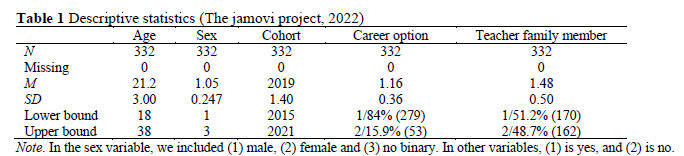
A randomised sample of pre-service special education teachers from 10 Chilean universities was invited to participate in the study. The sample comprised 332 students enrolled in special education programmes between 2015 and 2021, with 71% from the most recent three cohorts. Participating universities were located in the Valparaíso, Metropólitan, Biobío, and Magallanes regions. The sample was predominantly female (95.5%), and 84% (n = 279) of participants reported special education as their first-choice major. Additionally, 51.2% indicated having a relative involved in teaching. Descriptive statistics for the sample are presented in Table 1.
Data were collected online using Google Forms between April and August 2021. All students provided informed consent before participation. The consent form outlined the objectives, benefits, no-cost involvement, minimal risk, confidentially measures, and participant rights of the study. These procedures adhered to the World Conferences on Research Integrity (2024). The principal investigator managed the data, and identification codes were assigned to universities and students to protect confidentiality. The Institutional Ethics Committee approved the study (ORDN05/2021).
Instruments
FIT-choice scale
The FIT-choice scale (Watt & Richardson, 2007) is a measurement structured in three parts. The first was adapted to the Chilean context, including sociodemographic data. This section included questions about parents' educational level and average family income. The second refers to the motivational factors related to the social and personal utility value, self-perception, and social influences. The third group is the perception factors associated with the demands of teaching and the return that this career may have. The instrument has 57 items; the multiple-choice answers are arranged on a 7-point Likert scale where (1) is not important and (7) is extremely important. The reliability indexes for the sampling are obtained through the Omega coefficient and are between ω = .613 and ω = .929.
Data Analysis
A descriptive statistical analysis was done to answer the first research objective. Then a latent profiles analysis (LPA) was carried out with the motivation factors of the FIT-choice scale (intrinsic value, social value, personal value, self-perception, and social influences). The factor of fallback career was excluded because it did not show reasonable adjustment and reliability indexes for the Chilean version of the scale (González-Sanzana, Valenzuela-Carreño, Cáceres-Serrano & Valdenegro-Fuentes, 2023). The adjustment index AIC (Akaike information criterion), BIC (Bayesian information criterion), entropy, and chi-square were used to select the best model (Spurk, Hirschi, Wang, Valero & Kauffeld, 2020).
A one-way ANOVA was carried out to verify the variance of the means of each of the profiles in each factor to answer the second research objective. At the same time, Tukey' s post hoc test was used to compare the significant differences between the profiles (Ruxton & Beauchamp, 2008). The procedures of analysis were done using the statistics program, jamovi 2.2.5.
Results
Sociodemographic Characteristics
The sample predominantly comprised females (95.5%) who chose to study special education. Most participants originated from public schools and state-subsidised private schools. This finding aligns with research demonstrating a female predominance in the teaching profession in various countries, including Australia, Israel (Watt, Butler & Richardson, 2021), Spain (Gratacós & López-Jurado Puig, 2016), South Africa (Mashiya, 2014; Petersen, 2014), and Latin American countries (Llanes Ordóñez, Méndez-Ulrich & Montané López, 2021). The socioeconomic status (SES) of the participants in the sample was medium to low.
Interestingly, a small proportion of students were from private schools, suggesting a lower interest in special education among individuals from higher SES backgrounds. This pattern has been observed in other countries, such as Türkiye, Saudi Arabia, Northern Cyprus, and various Latin American nations, where teaching is often associated with lower socio-economic groups (Alnahdi, 2020; Baglama & Uzunboylu, 2017; Balyer & Özcan, 2014; Llanes Ordóñez et al., 2021), which is in contrasts with countries where the teaching profession attracts a more homogeneous socio-economic group (Goller et al., 2019; Taimalu et al., 2021; Watt & Richardson, 2012).
These findings highlight the sociodemographic characteristics of the sample and provide context for understanding the potential motivation for choosing a special education career.
Motivational Profiles for Choosing Special Education Teaching
Four models incorporating the five motivational factors from the FIT-choice scale were tested using latent profile analysis (LPA). The specific model characteristics are presented in Table 2.
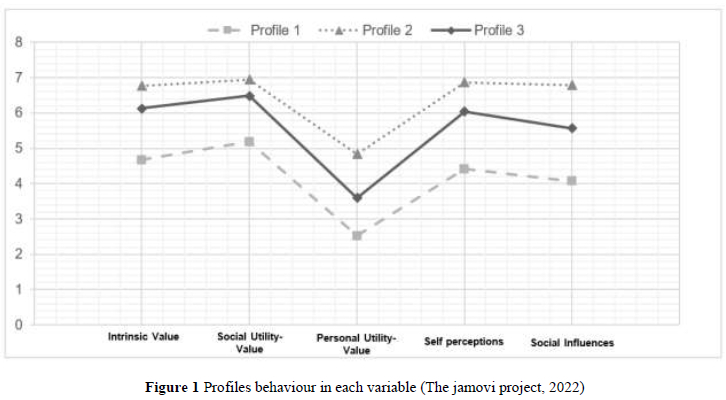
The best-fit model identified through LPA was a three-class model solution (Mod.2; AIC = 4020; BIC = 4370; Entropy = 5.81; X2 P < .001). The distribution of variables across these three profiles is shown in Figure 1.
Following the procedures used by other researchers (Moses, Berry, Saab & Admiraal, 2017; Simić et al., 2021; Watt, Richardson & Wilkins, 2014), the three profiles were named and characterised as follows.
The disenchanted, profile (Profile 1) accounted for 8.1 % of the sample (n = 27) and exhibited the lowest scores across all variables. Social utility was the least valued factor, followed by intrinsic value. Self-perception of teaching abilities were lower than the pleasure derived from teaching. Social influences, previous teaching experience, and extrinsic motivation had minimal impact on career choice.
Highly engaged (Profile 2), comprising 42.1% of the sample (n = 140), presented the classic teacher profile. It demonstrated strong relationships among intrinsic value, self-perception, and social value. This group exhibited the highest mean scores across all variables, with social influences and previous teaching experience playing a significant role in career choice. Extrinsic motivation was relatively low.
Conventional (Profile 3), the largest profile accounting for 49.6% of the sample (n = 165), emphasised altruistic and intrinsic motivation, followed by self-perception. Social influences were somewhat lower than in the highly engaged profile, while extrinsic motivation remained the least valued factor.
Differences Among the Profiles
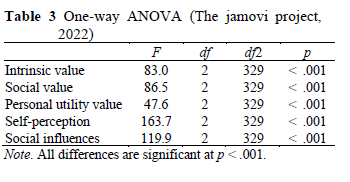
One-way ANOVA results indicated significant differences among the three profiles regarding all five dependent variables (intrinsic value, social value, personal utility value, self-perception, and social influences). This is indicated by the p-value of less than .001 for each variable. The values are displayed in Table 3.
Levene's test for homogeneity of variances was significant (p < .001), indicating unequal variances across groups. Despite this violation of the ANOVA assumption, Tukey' s post-hoc test revealed significant differences (p < .001) between all pairs of groups for each dependent variable. The disenchanted profile consistently exhibited lower scores than both the highly engaged and conventional profiles. Conversely, the highly engaged profile demonstrated the highest scores across all variables. Detailed results of multiple comparison tests are presented in Table 4.
We performed a Pearson's correlation to understand how these factors were related to one another. All factors were significantly correlated (p < 0.001), as shown in Table 5. We found a moderate positive correlation between intrinsic career value (ICV) and self-perception (SP) (p = 0.580). This suggests that individuals who felt confident in their abilities and regarded themselves as suited for special education were more likely to value the intrinsic rewards of the job, such as the intellectual challenge and opportunity to make a difference. We also found a moderate positive correlation between social utility value (SUV) and self-perception (SP) (p = 0.595). This lead to the belief that people who felt confident in their abilities, and regarded themselves as suited for special education were also more likely to value the social impact of their work, such as helping others and making a social contribution. In the case of special education teachers this is manifested in a contribution to enhance equity and access for students with special needs.
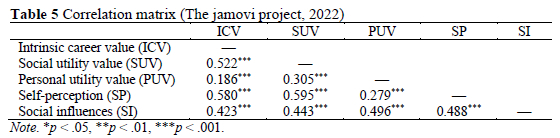
Finally, we found a weak and positive correlation between SUV and social influences (SI) (p = 0.443). These results show that people who are influenced by others to pursue a career in special education are also more likely to value the social contributions of their job. However, self-perception shows the strongest correlations with ICV and SUV, revealing that these are core factors in choosing special education teaching as a career.
Discussion
The global shortage of special education teachers is a serious issue that needs attention (Balyer & Özcan, 2014; Billingsley & Bettini, 2019; Dewey et al., 2017). Some research notes that understanding the factors that motivate people to decide to pursue this career would allow the generation of policies of attraction and retention to help solve this problem (Abonyi et al., 2021; Han & Yin, 2016; Watt & Richardson, 2012). By examining the motivation of pre-service special education teachers, we contribute to the development of effective recruitment and retention strategies.
Based on motivational factors of the FIT-choice model we were able to identify three different profiles of pre-service special education teachers: conventional, highly engaged, and disenchanted. Low motivational levels were seen in all dimensions of the disenchanted profile, indicating a lack of interest in the field.
In contrast, the highly engaged profile demonstrated strong intrinsic and altruistic motivation aligning with other research highlighting the importance of helping others and making a difference (Ozcan & Gur, 2016; Scott, Bruno,
Gnilka, Kozachuk, Brendli & Vitullo, 2021; Zhang, Wang, Losinski & Katsiyannis, 2014). Similar results were found by Alnahdi and Schwab (2021) in Saudi Arabia, where 98% of the participants considered that choosing a teaching career in special education implied working with children with disabilities, which they believed to be a gratifying and humanitarian task. Likewise, research carried out in Türkiye found that helping people with special educational needs to integrate into society was the most critical factor in choosing a special education major (Ozcan & Gur, 2016). This shows solid altruistic motivation.
The conventional profile, however, represented a balance between intrinsic and extrinsic motivation, with a strong emphasis on social utility. Unlike the highly engaged group, this profile showed high scores in the social utility value factor, intrinsic value, and self-perception. Social influences had a lower incidence than in the previous group. The high intrinsic value manifests the pleasure for these people to be involved in teaching. The high social value underlines the wish to contribute to the betterment of society and the lives of people with special educational needs. Other studies have found similar results regarding primary school teachers and high school teachers in countries as diverse as Nigeria, Finland, Germany, Australia, and Serbia (Akpochafo, 2020; Goller et al., 2019; Richardson & Watt, 2006; Simic et al., 2021). It seems that this profile represents the commonly expressed reasons for choosing teaching careers because regardless of the characteristic of the instrument to explore the motivation for pursuing a career in education, a consistent pattern points to altruistic motivation as the first reason to choose teaching as a profession (Brookhart & Freeman, 1992).
One-way ANOVA results indicate significant differences among the three profiles regarding intrinsic value, social value, personal utility, self-perception, and social influences. Pearson correlations revealed strong relationships among these factors, suggesting that they are interconnected. While the disenchanted profile was characterised by low scores across all variables, the highly engaged profile exhibited high levels of motivation. The conventional profile shows an emphasis on intrinsic and altruistic values offering a middle ground for reasons to choose teaching in special education.
The results of this study highlight the importance of taking into account contextual and cultural aspects when analysing motivation to choose to teach. This is in contrast to other nations where the personal utility value factors (e.g. stability, development opportunities, social status of the profession, family/job time conciliation) have resulted in being the ones that attract people to this career (Abonyi et al., 2021; Alnahdi, 2020; Goller et al., 2019; Lee, Kang & Park, 2019; Mwamwenda, 2010; Salifu, Alagbela & Gyamfi Ofori, 2018). In Chile, extrinsic factors like professional development, achievement expectations, and working conditions are not relevant when choosing special education teaching programmes.
These findings have some implications for teacher education, recruitment, and retention. Understanding the motivation of pre-service teachers to choose special education teaching can provide institutions with valuable insights to develop targeted strategies to attract and retain qualified candidates. Additionally, initiatives to enhance general working conditions and the professional status of teachers can help to reduce turnover rates and boost job satisfaction.
Several suggestions are made in order to capitalise on our findings and attend to the issues that have been found. Firstly, it is important to implement strategic recruitment initiatives targeted at people who fit particular motivation profiles. Secondly, comprehensive mentorship and induction programmes can foster intrinsic motivation and support new teachers. Thirdly, competitive compensation packages, including robust benefits and professional development opportunities, are crucial for attracting and retaining qualified educators. Finally, reducing non-teaching workloads and fostering collaborative partnerships can enhance job satisfaction and create a more supportive school environment.
Furthermore, pre-service teacher education programmes should highlight the demands and rewards of special education. In this regard practical experiences such as field placements and internships, are indispensable for developing the necessary skills, knowledge and competencies to deal with everyday challenges in special education.
This multifaceted approach addresses the complex issues of special education teacher recruitment, retention, and preparation, ultimately contributing to improved outcomes for students with disabilities.
Conclusion
With this study we aimed to understand what motivated people to become special education teachers. We identified three distinct groups of future teachers: the disenchanted, the highly engaged, and the conventional. These groups differed significantly regarding their motivation, such as the value they placed on helping others, personal growth and social recognition.
Understanding the motivations is crucial for attracting and retaining talented special education teachers. For example, we could create mentorship programmes for the disenchanted group to boost their engagement, or leadership development opportunities for the highly engaged group to further their growth. Additionally, we could enhance self-perception through academic support and practical experiences to attract more qualified candidates.
It is important to note that our findings are specific to the Chilean context. Cultural and societal factors, like the social status of teachers and government policies, can influence career choices. However, our research provides valuable insights that can be applied to other countries facing similar challenges. Future research should expand the sample to include a broader population, explore the stability of the identified profiles over time, and conduct comparative studies with other countries to identify culturally specific patterns in teacher motivation. Addressing the complex interplay between individual motivation and contextual factors, future research can also contribute to the development of evidence-based strategies to strengthen the special education teaching workforce.
Acknowledgement
This work was supported by Agencia Nacional de Investigación y Desarrollo (ANID), República de Chile [grant number 21190754], Fondecyt Regular 1210626 and ANID - MILENIO - NCS2021_014. Additional support was provided by the Research Office of Universidad Católica de la Santísima Concepción.
Authors' Contributions
LVF - conceptualisation, methodology, data analyses, writing and responding to reviewers' comments. AGS - editing, writing and formal analysis. All authors reviewed the final manuscript.
Notes
i. This article is based on the doctoral thesis of Lidia Valdenegro-Fuentes.
ii. Published under a Creative Commons Attribution Licence.
References
Abonyi UK, Awhireng D & Luguterah AW 2021. Motivations of pre-service teachers in the colleges of education in Ghana for choosing teaching as a career. Cogent Education, 8(1):1-14. https://doi.org/10.1080/2331186X.2020.1870803 [ Links ]
Akpochafo GO 2020. Factors influencing undergraduates' choice of teaching as a career (Fit-choice) in Nigeria. International Journal of Education and Practice, 8(1):121-133. https://doi.org/10.18488/joumal.61.2020.81.121.133 [ Links ]
Alexander C, Wyatt-Smith C & Du Plessis A 2020. The role of motivations and perceptions on the retention of inservice teachers. Teaching and Teacher Education, 96:103186. https://doi.org/10.1016/j.tate.2020.103186 [ Links ]
Allahverdiyev M, Yucesoy Y & Baglama B 2017. An overview of arts education and reflections on special education. International Journal of Educational Sciences, 19(2-3):127-135. https://doi.org/10.1080/09751122.2017.1393956 [ Links ]
Alnahdi GH 2020. Factors influencing the decision to major in special education in Saudi Arabia. South African Journal of Education, 40(2):Art. #1742, 9 pages. https://doi.org/10.15700/saje.v40n2a1742 [ Links ]
Alnahdi GH & Schwab S 2021. Special education major or attitudes to predict teachers' self-efficacy for teaching in inclusive education. Frontiers in Psychology, 12:680909. https://doi.org/10.3389/fpsyg.2021.680909 [ Links ]
Baglama B & Uzunboylu H 2017. The relationship between career decision-making self-efficacy and vocational outcome expectations of preservice special education teachers [Special issue]. South African Journal of Education, 37(4):Art. # 1520, 11 pages. https://doi.org/10.15700/saje.v37n4a1520 [ Links ]
Balyer A & Özcan K 2014. Choosing teaching profession as a career: Students' reasons. International Education Studies, 7(5):104-115. https://doi.org/10.5539/ies.v7n5p104 [ Links ]
Bergmark U, Lundström S, Manderstedt L & Palo A 2018. Why become a teacher? Student teachers' perceptions of the teaching profession and motives for career choice. European Journal of Teacher Education, 41(3): 266-281. https://doi.org/10.1080/02619768.2018.1448784 [ Links ]
Billingsley B & Bettini E 2019. Special education teacher attrition and retention: A review of the literature. Review of Educational Research, 89(5):697-744. https://doi.org/10.3102/0034654319862495 [ Links ]
Brookhart SM & Freeman DJ 1992. Characteristics of entering teacher candidates. Review of Educational Research, 62(1):37-60. https://doi.org/10.3102/00346543062001037 [ Links ]
Centro de Estudios MINEDUC 2022. Esquema de registro de matrícula única 2000-2021 por estudiante, bases públicas con MRUN [Single enrolment registration scheme 2000-2021, public basis with MRUN]. Santiago, Chile: Ministerio de Educación de la República de Chile. [ Links ]
Cooc N 2019. Teaching students with special needs: International trends in school capacity and the need for teacher professional development. Teaching and Teacher Education, 83:27-41. https://doi.org/10.1016/j.tate.2019.03.021 [ Links ]
Darling-Hammond L 2017. Teacher education around the world: What can we learn from international practice? European Journal of Teacher Education, 40(3):291-309. https://doi.org/10.1080/02619768.2017.1315399 [ Links ]
Dewey J, Sindelar PT, Bettini E, Boe EE, Rosenberg MS & Leko C 2017. Explaining the decline in special education teacher employment from 2005 to 2012. Exceptional Children, 83(3):315-329. https://doi.org/10.1177/0014402916684620 [ Links ]
Eren A & Tezel KV 2010. Factors influencing teaching choice, professional plans about teaching, and future time perspective: A mediational analysis. Teaching and Teacher Education, 26(7):1416-1428. https://doi.org/10.1016/j.tate.2010.05.001 [ Links ]
Eren A & Yeşilbursa A 2019. Pre-service teachers' teaching-specific hopes and their motivational forces: The roles of efficacy beliefs and possible selves. Teaching and Teacher Education, 82:140152. https://doi.org/10.1016/j.tate.2019.03.016 [ Links ]
Feng L & Sass TR 2013. What makes special-education teachers special? Teacher training and achievement of students with disabilities. Economics of Education Review, 36:122-134. https://doi.org/10.1016/j.econedurev.2013.06.006 [ Links ]
Feng Y 2012. Teacher career motivation and professional development in special and inclusive education: Perspectives from Chinese teachers. International Journal of Inclusive Education, 16(3):331-351. https://doi.org/10.1080/13603116.2010.489123 [ Links ]
Fray L & Gore J 2018. Why people choose teaching: A scoping review of empirical studies, 2007-2016. Teaching and Teacher Education, 75:153-163. https://doi.org/10.1016/J.TATE.2018.06.009 [ Links ]
García-Poyato Falcón J, Cordero Arroyo G & Torres Hernández RM 2018. Motivaciones para ingresar a la formación docente. Revisión de estudios empíricos publicados en el siglo XXI [Motivations to enter teacher education. Review of empirical studies published in the 21st century]. Perspectiva Educacional, 57(2):51-72. https://doi.org/10.4151/07189729-vol.57-iss.2-art.727 [ Links ]
Giersch J, Ydhag CC & Korhonen V 2021. Motivations to become a teacher in Finland, Sweden, and the United States. Nordic Studies in Education, 41(1):62-79. https://doi.org/10.23865/nse.v41.2200 [ Links ]
Glutsch N & König J 2019. Pre-service teachers' motivations for choosing teaching as a career: Does subject interest matter? Journal of Education for Teaching, 45(5):494-510. https://doi.org/10.1080/02607476.2019.1674560 [ Links ]
Goller M, Ursin J, Vähäsantanen K, Festner D & Harteis C 2019. Finnish and German student teachers' motivations for choosing teaching as a career. The first application of the FIT-Choice scale in Finland. Teaching and Teacher Education, 85:235-248. https://doi.org/10.1016/j.tate.2019.06.023 [ Links ]
González-Sanzana A, Valenzuela-Carreño J, Cáceres-Serrano P & Valdenegro-Fuentes L 2023. Propiedades psicométricas de la Escala Factores que influyen en la elección de carreras de Educación Fit-Choice en estudiantes de Pedagogía chilenos [Psychometric properties of the FIT-Choice scale factors influencing the choice of education careers in Chilean pedagogy students]. Electronic Journal of Research in Educational Psychology, 22(1):213-236. https://doi.org/10.25115/ejrep.v22i62.9100 [ Links ]
Gratacós G & López-Jurado Puig M 2016. Validación de la versión en español de la escala de los factores que influyen en la elección de los estudios de educación (FIT-choice) [Validation of the Spanish versión of the Factors Influencing Teaching (FIT)-Choice scale]. Revista de Educación, 372:87-110. https://10.4438/1988-592X-RE-2015-372-316 [ Links ]
Han J & Yin H 2016. Teacher motivation: Definition, research development and implications for teachers. Cogent Education, 3(1):1217819. https://doi.org/10.1080/2331186X.2016.1217819 [ Links ]
Høgheim S & Federici RA 2022. Interest in teacher education: Exploring the relation between student teacher interest and ambitions in teacher education. European Journal of Teacher Education, 45(5):581- 5999. https://doi.org/10.1080/02619768.2020.1860006 [ Links ]
Holzberger D, Maurer C, Kunina-Habenicht O & Kunter M 2021. Ready to teach? A profile analysis of cognitive and motivational-affective teacher characteristics at the end of pre-service teacher education and the long-term effects on occupational wellbeing. Teaching and Teacher Education, 100:103285. https://doi.org/10.1016/j.tate.2021.103285 [ Links ]
Ingersoll R, May H & Collins G 2019. Recruitment, employment, retention and the minority teacher shortage [Special issue]. Education Policy Analysis Archives, 27(37):1-42. https://doi.org/10.14507/epaa.27.3714 [ Links ]
Kılınç A, Watt HMG & Richardson PW 2012. Factors influencing teaching choice in Turkey. Asia-Pacific Journal of Teacher Education, 40(3):199-226. https://doi.org/10.1080/1359866X.2012.700048 [ Links ]
Lee JA, Kang MO & Park BJ 2019. Factors influencing choosing teaching as a career: South Korean preservice teachers. Asia Pacific Education Review, 20(3):467-488. https://doi.org/10.1007/s12564-019-09579-z [ Links ]
Li L & Ruppar A 2021. Conceptualizing teacher agency for inclusive education: A systematic and international review. Teacher Education and Special Education, 44(1):42-59. https://doi.org/10.1177/0888406420926976 [ Links ]
Lindqvist H, Thornberg R, & Lindqvist G 2021. Experiences of a dual system: Motivation for teachers to study special education. European Journal of Special Needs Education, 36(5):743-757. https://doi.org/10.1080/08856257.2020.1792714 [ Links ]
Llanes Ordóñez J, Méndez-Ulrich JL & Montana López A 2021. Motivación y satisfacción académica de los estudiantes de Educación: Una visión internacional [Academic motivation and satisfaction among students of education: An international perspective]. Educación XX1, 24(1):45-68. https://doi.org/10.5944/educxx1.26491 [ Links ]
Mashiya N 2014. Becoming a (male) foundation phase teacher: A need in South African schools? South African Journal of Childhood Education, 4(3):24-36. https://doi.org/10.4102/sajce.v4i3.224 [ Links ]
Moses I, Berry A, Saab N & Admiraal W 2017. Who wants to become a teacher? Typology of student-teachers' commitment to teaching. Journal of Education for Teaching, 43(4):444-457. https://doi.org/10.1080/02607476.2017.1296562 [ Links ]
Mwamwenda TS 2010. Motives for choosing a career in teaching: A South African study. Journal of Psychology in Africa, 20(3):487-489. https://doi.org/10.1080/14330237.2010.10820403 [ Links ]
Naciones Unidas 2018. La Agenda 2030 y los Objetivos de Desarrollo Sostenible: Una oportunidad para América Latina y el Caribe [The 2030 Agenda and the Sustainable Development Goals: An opportunity for Latin America and the Caribbean]. Santiago, Chile: Author. Available at https://www.cepal.org/es/publicaciones/40155-la-agenda-2030-objetivos-desarrollo-sostenible-oportunidad-america-latina-caribe. Accessed 15 March 2022. [ Links ]
Ondrasek N, Carver-Thomas D, Scott C & Darling-Hammond L 2020. California' s special education teacher shortage (Report). Palo Alto, CA: Policy Analysis for California Education. Available at https://leamingpolicyinstitute.org/product/pace-california-special-education-teacher-shortage-report. Accessed 15 October 2021. [ Links ]
Ozcan D & Gur P 2016. What do postgraduate students think about special education? Cypriot Journal of Educational Sciences, 11(2):102-108. https://doi.org/10.18844/cjes.v11i2.902 [ Links ]
Petersen N 2014. The 'good', the 'bad' and the 'ugly'? Views on male teachers in foundation phase education. South African Journal of Education, 34(1):Art. # 772, 13 pages. https://doi.org/10.15700/201412120926 [ Links ]
Ponnock AR, Torsney BM & Lombardi D 2018. Motivational differences throughout teachers' preparation and career. New Waves Educational Research & Development, 21(2):26-45. Available at https://files.eric.ed.gov/fulltext/EJ1211293.pdf. Accessed 3 January 2022. [ Links ]
Reeves TD & Lowenhaupt RJ 2016. Teachers as leaders: Pre-service teachers' aspirations and motivations. Teaching and Teacher Education, 57:176-187. https://doi.org/10.1016/J.TATE.2016.03.011 [ Links ]
Richardson PW & Watt HMG 2006. Who chooses teaching and why? Profiling characteristics and motivations across three Australian universities. Asia-Pacific Journal of Teacher Education, 34(1):27-56. https://doi.org/10.1080/13598660500480290 [ Links ]
Roness D & Smith K 2010. Stability in motivation during teacher education. Journal of Education for Teaching, 36(2):169-185. https://doi.org/10.1080/02607471003651706 [ Links ]
Ruxton GD & Beauchamp G 2008. Time for some a priori thinking about post hoc testing. Behavioral Ecology, 19(3):690-693. https://doi.org/10.1093/beheco/am020 [ Links ]
Said-Hung E, Gratacós G & Cobos JV 2017. Factores que influyen en la elección de las carreras de pedagogía en Colombia [Factors affecting the choice of teaching programs in Colombia]. Educação e Pesquisa, 43(1):31-48. https://doi.org/10.1590/s1517-9702201701160978 [ Links ]
Salifu I, Alagbela AA & Gyamfi Ofori C 2018. Factors influencing teaching as a career choice (FIT-Choice) in Ghana. Teaching Education, 29(2): 111-134. https://doi.org/10.1080/10476210.2017.1365360 [ Links ]
Sato M, Fernández Castillo F & Oyanedel JC 2022. Teacher motivation and burnout of English-as-a-foreign-language teachers: Do demotivators really demotivate them? Frontiers in Psychology, 13:891452. https://doi.org/10.3389/fpsyg.2022.891452 [ Links ]
Scott LA, Bruno L, Gnilka P, Kozachuk L, Brendli K & Vitullo V 2021. Comparing special education teachers' personality profile with their choice to teach. Excelsior: Leadership in Teaching and Learning, 14(1):20-35. https://doi.org/10.14305/jn.19440413.2021.14.1.02 [ Links ]
Scott LA, Taylor JP, Bruno L, Padhye I, Brendli K, Wallace W & Cormier CJ 2022. Why do they stay? Factors associated with special education teachers' persistence. Remedial and Special Education, 43(2):75-86. https://doi.org/10.1177/07419325211014965 [ Links ]
Silvestre E, Figueroa-Gutiérrez V & Díaz-Esteve JV 2020. ¿Por qué los estudiantes de la Universidad Pedagógica ISFODOSU escogen la carrera de Educación? [Why ISFODOSU Pedagogical University students choose the education career?]. Ciencia y Educación, 4(1):47-69. https://doi.org/10.22206/cyed.2020.v4i1.pp47-69 [ Links ]
Simic N, Marusic-Jablanovic M & Puric D 2021. МОТИВАЦИЈА БУДУЋИХ НАСТАВНИКА ЗА ИЗБОР НАСТАВНИЧКЕ ПРОФЕСИЈЕ - ПРИСТУП УСМЕРЕН НА ОСОБУ [Preservice teachers' motivation for a teaching career - a person-centred perspective]. Zbornik Instituta Za Pedagoska Istrazivanja, 53(2):207-238. https://doi.org/10.2298/ZIPI2102207S [ Links ]
Soekamto H, Utaya S, Sumarmi, Handoyo B & Amin S 2021. Attitude toward teaching profession and student interest in being a teacher: It's effect on teaching skills of Geography teachers candidate. Degres, 20(2):100-110. https://doi.org/10.1877/degres.v20i2.78 [ Links ]
Spurk D, Hirschi A, Wang M, Valero D & Kauffeld S 2020. Latent profile analysis: A review and "how to" guide of its application within vocational behavior research. Journal of Vocational Behavior, 120:103445. https://doi.org/10.1016/j.jvb.2020.103445 [ Links ]
Taimalu M, Luik P, Kantelinen R & Kukkonen J 2021. Why they choose a teaching career? Factors motivating career choice among Estonian and Finnish student teachers. Trames, 25(1):19-35. https://doi.org/10.3176/tr.2021.1.02 [ Links ]
The jamovi project 2022. Jamovi (Version 2.3) [Computer software]. Available at https://www.jamovi.org. Accessed 30 November 2024. [ Links ]
Wang D & Zhang LJ 2021. Sustainability as a goal in teaching workforce retention: Exploring the role of teacher identity construction in preservice teachers' job motivation. Sustainability, 13(5):2698. https://doi.org/10.3390/su13052698 [ Links ]
Watt HMG, Butler R & Richardson PW 2021. Antecedents and consequences of teachers' goal profiles in Australia and Israel. Learning and Instruction, 76:101491. https://doi.org/10.1016/j.learninstruc.2021.101491 [ Links ]
Watt HMG & Richardson PW 2007. Motivational factors influencing teaching as a career choice: Development and validation of the FIT-Choice scale. The Journal of Experimental Education, 75(3):167-202. https://doi.org/10.3200/JEXE.75.3.167-202 [ Links ]
Watt HMG & Richardson PW 2012. An introduction to teaching motivations in different countries: Comparisons using the FIT-Choice scale. Asia-Pacific Journal of Teacher Education, 40(3):185-197. https://doi.org/10.1080/1359866X.2012.700049 [ Links ]
Watt HMG, Richardson PW & Smith K 2017. Why teach? How teachers' motivations matter around the world. In HMG Watt, PW Richardson & K Smith (eds). Global perspectives on teacher motivation. Cambridge, England: Cambridge University Press. https://doi.org/10.1017/9781316225202.001 [ Links ]
Watt HMG, Richardson PW & Wilkins K 2014. Profiles of professional engagement and career development aspirations among USA preservice teachers. International Journal of Educational Research, 65:23-40. https://doi.org/10.1016/j.ijer.2013.09.008 [ Links ]
Wigfield A & Eccles JS 2000. Expectancy-value theory of achievement motivation. Contemporary Educational Psychology, 25(1):68-81. https://doi.org/10.1006/ceps.1999.1015 [ Links ]
World Conferences on Research Integrity 2024. Singapore statement on research integrity. Available at https://www.wcrif.org/guidance/singapore-statement. Accessed 23 November 2024. [ Links ]
Yüce K, Şahin EY, Koçer Ö & Kana F 2013. Motivations for choosing teaching as a career: A perspective of pre-service teachers from a Turkish context. Asia Pacific Education Review, 14:295306. https://doi.org/10.1007/s12564-013-9258-9 [ Links ]
Zhang D, Wang Q, Losinski M & Katsiyannis A 2014. An examination of preservice teachers' intentions to pursue careers in special education. Journal of Teacher Education, 65(2):156-171. https://doi.org/10.1177/0022487113510743 [ Links ]
Received: 14 June 2022
Revised: 29 June 2024
Accepted: 30 November 2024
Published: 30 November 2024