




Services on Demand
Journal

Article
 English (pdf)
 Article in xml format
 Article references
 Automatic translation
 Send this article by e-mail
Indicators
Related links
-
 Cited by Google
 -
 Similars in Google
Share

 Permalink
South African Journal of Agricultural Extension
On-line version ISSN 2413-3221Print version ISSN 0301-603X
S Afr. Jnl. Agric. Ext. vol.53 n.3 Pretoria 2025
https://doi.org/10.17159/2413-3221/2025/v53n3a18424
ARTICLES
Understanding Farmer Typology, Manure Use Dynamics and Resource Endowment in a Smallholder Rural Community of the Eastern Cape Province, South Africa
Mzayiya Z.B.I; Manyevere A.II; Mashamaite C.V.III
IMSc student at the Department of Agronomy, University of Fort Hare, Private Bag X1314, Alice 5700, South Africa. Email: ivasinga2@gmail.com
IIAssociate Professor in Faculty of Science and Agriculture, University of Fort Hare, Private Bag X1314, Alice 5700, South Africa. Tel. +27406022290; Email: amanyevere@ufhac.za. Orcid 0000-0002-4756-0895
IIIPostdoctoral researcher at the Department of Agronomy, University of Fort Hare, Private Bag X1314, Alice 5700, South Africa. Email: vickymashamaite@gmail.com. Orcid 0000-0002-6079-6093
ABSTRACT
Smallholder agriculture productivity in the Eastern Cape (EC) of South Africa is declining due to, among other, resource endowment, manure-use dynamics, and low-productive conventional technology. As such, this study assessed the influence of resource availability on various agricultural activities among smallholder farmers in the Tsitsa River catchment of EC. A structured questionnaire (137 participants) and interviews (18 participants) were administered to gather information on the farm typology, resource endowment, and manure-use dynamics. The results from the descriptive statistics showed that many participants (72%) cultivated their crops in gardens, whereas few used the field for crop production (4%). Most farmers used kraal manure to plant various crops in their gardens, and owning cattle provided easy access to manure. However, the lack of transportation for manure field application was raised, resulting in more nutrients being applied to fields closer to the farmhouse than outfields. The Pearson's Chi-square test of association revealed that participants' age and gender had no effect (p > 0.05) on their likelihood of engaging in various agricultural activities and management practices. The principal component analysis results showed five PCs that contributed to the most variability in the area: the type of land under cultivation, livestock numbers, crop fertilisation, irrigation, and the source of manure. Furthermore, using PCA and cluster analysis, three farm typologies were identified: high resource endowered, medium resource endowed, and low resource endowered. This analysis helped us to understand some overlapping data better. It also showed comparable or varied farming practices and management in the study area. The qualitative results indicated several challenges affecting their farm productivity, including climate change, invasive species, theft, lack of infrastructure, and limited resources. When deciding on intervention programmes involving smallholder farmers in rural communities, authorities and governments should use a holistic approach that considers Indigenous knowledge and attitudes.
Keywords: Crop Production, Indigenous Knowledge Systems, Kraal Manure, Livestock Production, Mixed Farming, Resource Availability.
1. INTRODUCTION
Smallholder farmers are rural dwellers who practice intensive, permanent, and diverse agriculture on relatively small-scale farms ranging from 0.2 to 2 ha (Kabini, 2022; Tittonell et al., 2005a; Zingore et al., 2007). Small farms account for 84% of all farms globally; they operate close to 12% of all agricultural land and produce approximately 35% of the world's food (Lowder et al., 2021). However, poor and deteriorating soil fertility is a major limiting factor for crop production in smallholder African farms (Mairura et al., 2022; Mucheru-Muna et al., 2021). Likewise, smallholders' agricultural productivity in South Africa is stagnant and declining due to inefficient, traditional technologies (Kabini, 2022). This includes producing under rainfed conditions and using less fertiliser than recommended for producing potential yields (Kibirige, 2013). Moreover, this is because the diversity of resource endowment, soil and climatic circumstances can all impact smallholder farmers' management, production, and soil fertility. For instance, soil management varied between and within farms due to socioeconomic factors influencing resource allocation techniques (Giller et al., 2011a; Tittonell et al., 2005a). Such resource allocation inequalities in smallholder farms have resulted in the formation of soil fertility gradients both across and within farms (Bucagu et al., 2014).
Smallholder farming in South Africa's rural Eastern Cape Province includes agricultural and livestock production (Wenhold et al., 2007). Crop production under rain-fed conditions is usually divided into garden and field areas, with vegetables planted in gardens and cereals such as maize cultivated in arable fields (van Averbeke et al., 2008; Wenhold et al., 2007). However, crop productivity is negatively affected by a variety of factors, including social and economic factors, as well as land degradation (Chimonyo et al., 2020; Kibirige, 2013; Manyevere, 2014; Wenhold et al., 2007; Zantsi et al., 2019). In some areas, most land suitable for cultivation has been hampered by soil erosion, acidity, and low soil fertility (Mandiringana et al., 2005; van Tol et al., 2014). On the other hand, livestock production in the province's rural areas depends mainly on communal pasture systems. Livestock commonly kept are cattle, sheep, chickens, goats and pigs (van Averbeke et al., 2008; Wenhold et al., 2007). However, poor pasture management leads to overgrazing and deterioration of pasture (Gusha et al., 2018). Smallholder livestock production is further hampered by various obstacles, such as a lack of feed to supplement during the dry seasons, resulting in low productivity and a high mortality rate (Gusha et al., 2018; Mthi & Nyangiwe, 2018). As such, this could hinder farmers from achieving the 2030 United Nations' Sustainable Development Goals (SDG 1 - 3) of No Poverty, Zero Hunger, and Good Health and Well-being (United Nations, 2020).
In the Eastern Cape Province, smallholder farming is mainly concentrated in the former homeland areas, previously referred to as the Transkei and Ciskei (Aliber & Hart, 2009). The former eastern Bantustan (former Transkei) is the largest consolidated area (4.37 million per ha) in South Africa, where land is occupied by smallholders (van Averbeke et al., 2008). The agroecology of the former Transkei region receives more rainfall (600 mm/annum) than other parts of the province, thus permitting dryland production (van Averbeke et al., 2008). The Tsitsa River catchment falls under the eastern former Transkei area within the larger Mzimvubu River catchment. The Mzimvubu river catchment is the largest underdeveloped river in the country (van Tol et al., 2018).
Through the Mzimvubu water project initiative, the South African government, under different departments, is attempting to kick-start social and economic development in the catchment (DWS, 2014; van Tol et al., 2018). These developments include dam construction, which is expected to boost irrigated agricultural activities (DWS, 2014; van Tol et al., 2014). Since the inception of this initiative, several feasibility studies have been conducted to explore the cost estimates and economic impact of the initiative on the livelihoods of the surrounding communities. For example, some studies have already identified erosion-sensitive areas (du Plessis et al., 2020; van Tol et al., 2014), while others pointed out the importance of driving natural resource investigations along with social studies to understand the perceptions and lived experiences of people living close to this initiative (Bester et al., 2019; DWS, 2014; DWS, 2017; Fabricius et al, 2016; van Tol et al, 2014).
However, due to the heterogeneity of farmers, tailoring those approaches to specific land use, climate, topographic, and socioeconomic conditions has been challenging (Eshetae et al., 2024; Huber et al., 2024). Understanding and capturing the variety of farming systems and other environmental and socioeconomic factors is critical to adapting management options and facilitating targeting and scaling (Giller et al., 2011b; Girma, 2022). Establishing a farm typology can be a crucial first step to target agricultural development, particularly in a mixed crop-livestock farming system. Farm typologies are used in rural development and agriculture to comprehend the variety of farming systems and farmers in each area (Alvarez et al., 2018; Kumar et al., 2019). Farm typology captures the variability of farming systems, which is critical for guiding agricultural interventions in any mixed crop-livestock farming system (Eshetae et al., 2024). This entails grouping farmers according to specific criteria related to their farming practices, resources, and socioeconomic, agronomic, and demographic attributes. With this information, targeted and domain-specific agricultural interventions can be created to meet individual farmer groups' needs best (Giller et al., 2011b; Gebrekidan et al., 2020; Sarker et al., 2021).
Indigenous knowledge is critical in developing farming practices and resolving local issues concerning government services, conflict resolution, and local communities (Manyevere et al., 2020; Peter, 2008). This is because local farmers and rural communities are closely involved in the daily demands of utilising and managing local ecosystems (Mashamaite et al., 2023; Peter, 2008). For this reason, it is imperative to include social components and indigenous knowledge in any community engagement. As such, policymakers and/or government departments should consider indigenous knowledge and perceptions before any intervention programmes concerning smallholder farmers (Bannatyne et al., 2017). Subsequently, there is a need to investigate the current social dynamics amongst active farmers, especially after the Coronavirus (COVID-19) pandemic, which may have resulted in social changes and adjustments to the new everyday realities. It is also crucial to investigate the crops and livestock-keeping activities of the farmers concerning their resource endowment, as van Tol et al. (2018) identified a paucity of resources as a factor affecting production. Therefore, this study aimed to assess the local knowledge and perceptions about the effect of resource availability and kraal manure use dynamics on farming production practices and activities among rural smallholder farmers in the Eastern Cape Province of South Africa.
2. MATERIALS AND METHODS
2.1. Description of Study Site
The study was conducted in the Tsitsa River catchment between June and October 2022, and this is the site identified for dam construction within the Mzimvubu catchment. The area lies between 30° 46' 58" and 31° 28' 55"S and 27° 55' 56" and 29° 13' 47"E in the Eastern Cape Province of South Africa (Le Roux & Van der Waal, 2020). The Tsitsa River catchment is approximately 4936 km2 in size (Bannatyne et al., 2017). Mean annual rainfall ranges from 672 mm in the lower plains to 1327 mm in the mountains between October and March (Le Roux et al., 2015). The soils in the catchment vary significantly, and the mudstone parent material in the central part of the catchment is associated with duplex soils that are highly erodible (du Plessis et al., 2020; Le Roux et al., 2015). Rural communities near the dam site area fall under Maclear town, which is situated under Elundini local municipality, which covers an area of 5064 km2 and has 17 wards (Elundini Local Municipality, 2017). Elundini local municipality is in the Joe Gqabi district and has an estimated population of 144,929. The population of Elundini consists of 61% (88 247) females and 39% (56 682) males (Elundini IDP, 2022).
Approximately 38% of households in Elundini local municipality earn less than R800 per month or have no income at all (Elundini IDP, 2022). The rural areas of Elundini Municipality are marked by low levels of employment, and most people's livelihood activities are subsistence (Elundini Local Municipality, 2017). The percentage of people living in poverty was almost 70% in 2016, and most people living in poverty were Africans (Elundini Local Municipality, 2017). This study area was chosen because of numerous community-based land restoration initiatives to sustain local livelihoods in the catchment (Le Roux et al., 2015). The initiatives are under the Department of Environmental Affairs: National Resource Management Programme (DEA-NRM) with the support of the Ntabelanga and Laleni Environmental Infrastructure Programme (NLEIP). The Department of Water and Sanitation (DWS) plans the multi-purpose Ntabelanga and Laleni Dam projects on the Tsitsa River (DWS, 2014; Le Roux et al., 2015). The uMzimvubu Water Project is expected to bring about growth in economic activities across the Eastern Cape and the development of the catchment (DWS, 2014).
2.2. Research Design, Participants and Data Collection
The current study used a mixed-method approach (Abuhamda et al., 2021). The main component of the study was a quantitative design using questionnaires to gather information about the characteristics of farmers who have differences in resource endowment. A complementary qualitative approach was used to get in-depth information on how resource endowment influences decision-making among different farmers. A purposive random sampling technique was used in household selection, using the presence of the kraal and garden as the selection criterion (Suri, 2011).
A structured questionnaire was administered to 137 households whose members were over 18 years old, mainly the household heads (see supplementary material 1). Gatekeepers were consulted before the surveys to identify villages included in this study. Informants included the local extension officers from the Maclear office and traditional community leaders. The extension officers assisted in providing contact details and locations of active farmers involved in crop and livestock production. Traditional community leaders assisted in introducing the study to community members and organising meetings. Active farmers, as recognised by the extension officers, helped get access to other farmers whose information has not yet been captured by the department. Five villages near the dam potentially benefiting from the increased irrigation and water supply were sampled. Questionnaires were administered in KuNzebe (54), Siqhungqwini (38), Sommerville (18) and Qurhana (13) villages. The household questionnaire covered information on demographics, crops grown, livestock, fertiliser use, source of labour, and asset ownership. All questionnaires were written in English but administered by IsiXhosa-speaking people.
The qualitative part of the study was conducted using telephonic interviews with 18 participants (see supplementary material 2). We could not reach these farmers during the field survey since they live in remote farms far from the villages. Before calling the farmers, bulk messages (SMS) were issued to all commercial smallholder farmers identified in the Maclear office data bank of the Department of Agriculture. The messages outlined the purpose of the call and suggested tentative times when follow-up calls would be made. Farmers targeted were particularly those that practised mixed crop and livestock production. All telephone interviews were recorded after receiving consent from the farmers. Most interviews lasted 30 minutes and were stored on a password-protected and encrypted laptop.
2.3. Ethical Consideration
Approval by the University of Fort Hare ethics clearance (REC-270710-028-RA level 01) was granted before data collection commenced. Each participant knew participation was voluntary and their identity would remain anonymous. Before each interview, the participant was handed an information sheet explaining the study's purpose and procedure and requested to sign a consent form once consent was granted. The purpose of the questionnaire was explained thoroughly to the participants, and they were made aware that they could stop the interview at any time or refuse to give certain information as they saw fit.
2.4. Data Analyses
Descriptive statistics were used to generate frequencies and percentages of responses. Pearson's Chi-square test of association (χ2) was used to predict whether the likelihood of the diversity in the characteristics of the farmers was related to age and gender by giving proportion at the probability of 5%. All the analyses were carried out using Statistical Package for Social Science (IBM SPSS Statistics v. 28). Principal component analysis (PCA) was analysed using Stata Statistical Software (StataCorp.2017: Release 15). The PCA was performed to select and group the quantitative variables or grouping of variables which explain the characteristics of the farmers into different groups referred to as principal components (PCs). To deal with the difficulties of assessing data with varied measurement scales, variables were standardised by removing anomalies (Mooi & Sarstedt, 2011; Dunjane et al., 2018). Kaiser-Meyer Olkin (KMO) tested data suitable for PCA to ensure satisfactory sampling and Bartlett for sphericity. The PCA was carried out using the data's Z-scores. When generating the PCs, the correlation matrix was rotated with a varimax rotation to remove multicollinearity. The PCs with eigenvalues greater than one were retained for further analysis as they significantly influence the farmers' characteristics (Dunjane et al., 2018; Stephen et al., 2022). According to Jagadamma et al. (2008), the PC-correlated variable was represented by the variables with the highest loading coefficients. Following PCA analysis, farming households were classified using the hierarchical clustering method (Mooi & Sarstedt, 2011). The selected farm typologies for each variable category were combined to make the farm typology construction more thorough, relevant, representative, and easy to identify. The most prevalent typologies with a frequency of occurrence greater than 25 were selected from a pool of 137 samples.
A general inductive technique for the qualitative strand entailed comprehensive readings of raw interview material to extract specific themes (Thomas, 2006) and was employed to aid Braun and Clarke's (2006) six-step thematic analysis. Transcribed interviews were read multiple times to identify themes and sub-themes that represented fundamental messages stated by respondents (Miles & Huberman, 1993). No new themes surfaced towards the end of the transcripts, suggesting that important themes had been detected and data saturation had been attained (Thomas, 2006). Verbal examples from the transcribed text supported the themes and sub-themes. Inter-reliability was ensured with the supervisors involved in the thematic analysis (Mashamaite et al., 2023). For quality checks, independent coding was done to see if the emerging themes matched those discovered by the principal investigator (Mashamaite et al., 2023).
3. RESULTS AND DISCUSSION
3.1. Demographic Information
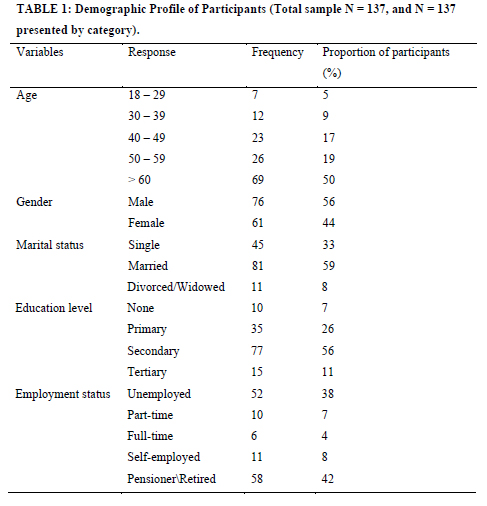
About half of the participants were 60 and older, while the younger group (18 - 29) had the least participants (Table 1). Regarding gender, 55% were males, while 45% were females. Almost 60% of the participants were married, and most had a secondary education level (56%). Most participants were pensioners (42%) or unemployed (38%).
3.2. Farm Information
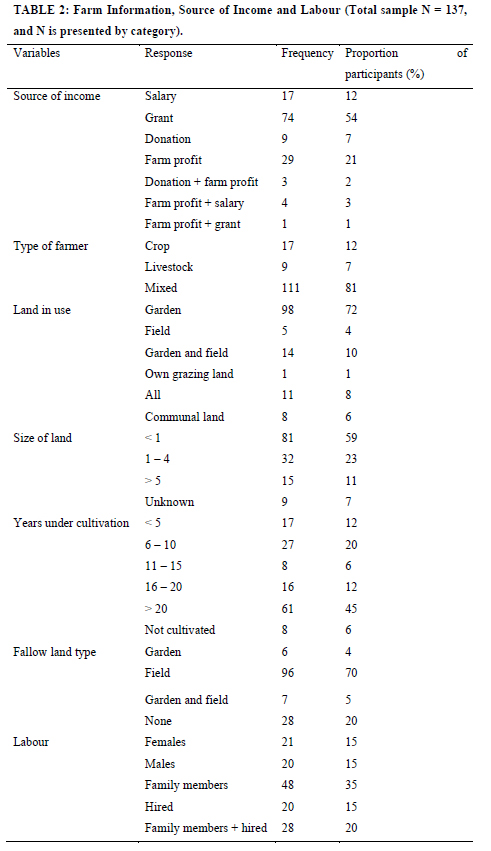
Most respondents relied on social grants (i.e., child support, old age and disability grants) as a source of income, and approximately 21.2% relied solely on farm profits (Table 2). This could be because most active farmers were older and eligible for old-age grants. Another reason could be the high prevalence of youth unemployment, which qualified persons of working age for government social support. Studies in most smallholder farmer setups have indicated that social grants are essential in supplementing farm operations (Cousins, 2013; Sixotho, 2017). Most farmers (81%) practised mixed crops and livestock (Table 2). Furthermore, agricultural productivity in the areas relied heavily on family members for labour (35%). This is a common profile of smallholder farmers from different localities in the province who practice mixed farming on small pieces of land and usually rely on family members for labour (Khapayi, 2013; Gqibityala, 2017; Zwelendaba, 2014). According to Netting (1993) and Mugwe et al. (2009), the family oversees and enables farm operations such as labour, production, consumption, and commodity marketing. Since youth involvement in smallholder agriculture is low, there is a possibility that the labour force may not consist of able-bodied farmers (Manyevere et al., 2014). Most participants (72%) cultivated their crops in gardens, whereas few used the field for crop production (4%). Most fields in the area are lying fallow (70%), as many participants used their farming resources for garden production. Abandonment of available field areas for production is observed in other studies, with the fields being left for pasture purposes (Connor & Mtwana, 2018).
3.3. Farm Resources
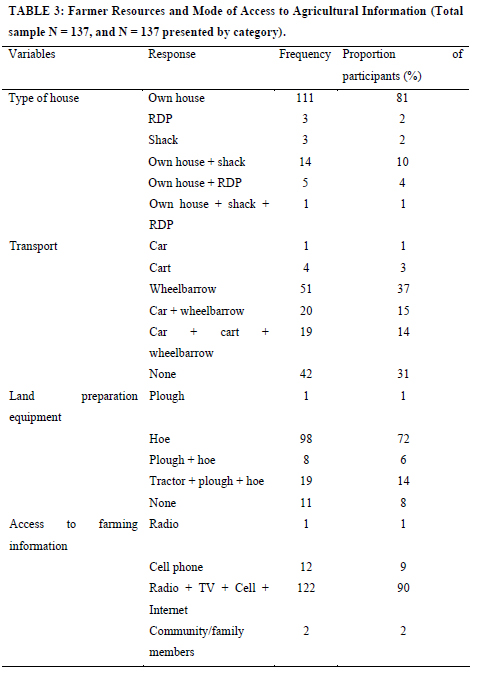
Most participants have built their own houses, and approximately 2% have received housing assistance from the government under the Reconstruction and Development Programme (RDP) (Table 3). About 37% of participants mentioned that they used only a wheelbarrow to transport their produce, and 31% did not have any mode of transportation. For land preparation, most farmers use a hand hoe (72%). Most respondents accessed farming information through radio, TV, cell phone and the internet. As reported in other localities, a shortage of farming equipment was one of the main limiting factors of smallholders' productivity (Manyevere, 2014). This is because impoverished farmers lack capital and livestock, while wealthy farmers have access to resources such as tractors, specific irrigation systems, labour, capital, and livestock (Tittonell et al., 2005a; Vanlauwe et al., 2007; Zingore et al., 2007). Furthermore, smallholder farmers frequently modified their management approaches in response to financial restrictions and/or indigenous knowledge (Mugwe et al., 2009; Snapp et al., 1998; Tittonell et al., 2005b).
3.4. Crop Production and Fertilisation Information
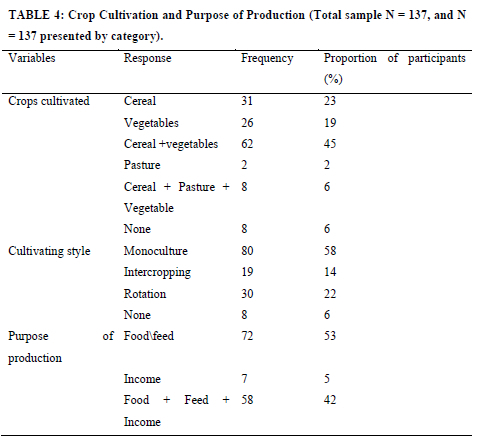
Almost half of the farmers cultivated a mix of cereal and vegetables (45%), while the majority practised monoculture (58%). The primary motivation for production was for human food and livestock feed (53%), whereas approximately 5% of participants were producing for profit (Table 4). In line with previous studies, maize monoculture was primarily grown in fields; however, in household gardens, farmers planted maize in rotation with other crops to diversify their diet (Zwelendaba, 2014). Moreover, others reported that the most common crops cultivated on rural smallholder farms include maize, pumpkin, potatoes, spinach, beans, and cabbage (Kibirige, 2013; Manyevere et al., 2014; van Averbeke et al., 2008). Crops grown by smallholders contribute mainly to household food security, and the surplus is sold locally (Zantsi et al, 2019).
Combining chemical fertilisers and kraal manure was the most commonly used option for cereal production (34%). However, approximately 18% of participants did not fertilise cereal crops. The use of fertiliser in combination with manure by farmers on field soils was also reported by Chimonyo et al. (2020). Some farmers mentioned that they applied kraal manure only for vegetable production (3 7%), while close to 10% used chemical fertilisers for vegetable production. Many farmers (69%) purchased chemical fertilisers, whereas 57% utilised kraal manure from their households (Table 5). Likewise, a survey of vegetable growers indicated a similar preference for organic over inorganic fertilisers (Gqibityala, 2017). Many farmers did not irrigate, and of those that did, 23% used hand-held irrigation equipment such as a hosepipe or a watering can; this was also reported by Gqibityala (2017).
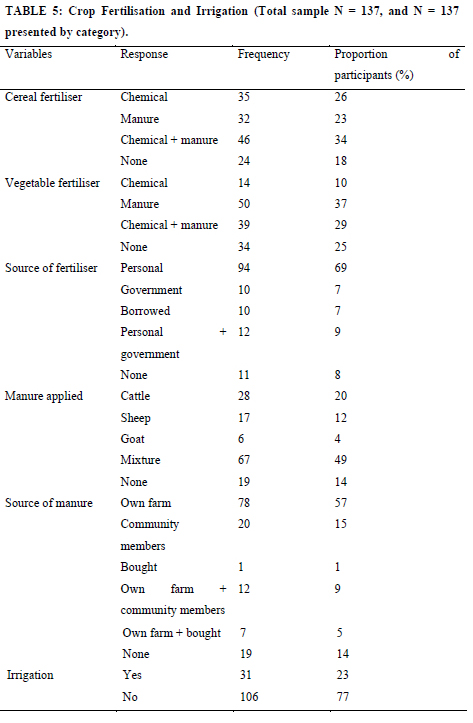
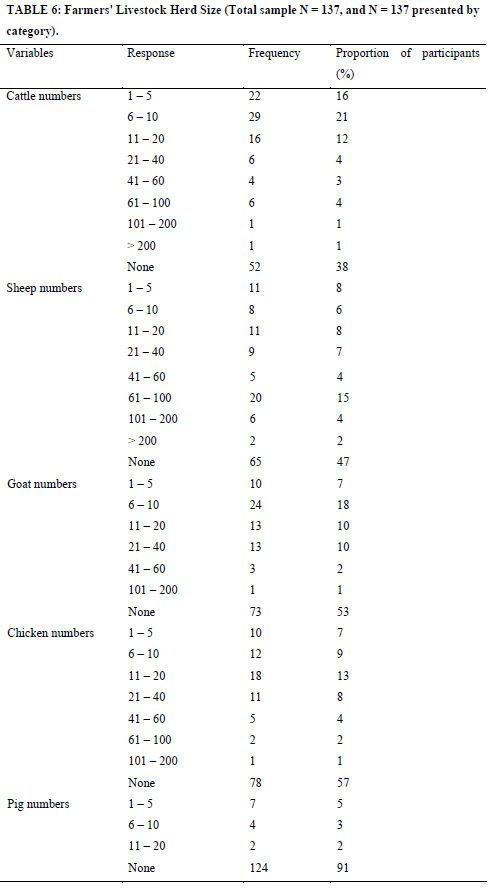
Most participants who raised cattle and goats had less than 10 animals in their herd. Sheep were the most kept livestock, with 15% of farmers keeping a herd of between 61 and 100 animals (Table 6). More than half of the farmers did not raise hens, and 91% did not raise pigs. Regarding livestock managed in South Africa, this high number of sheep compared to other animals was recorded nationally (Stats SA, 2017). Livestock ownership provides simple access to manure, resulting in relatively inexpensive mineral fertiliser expenditures (Mugwe et al., 2009; Vanlauwe et al., 2007; Zingore et al., 2007). Increased reliance on manure significantly impacts soil fertility gradients because it affects transportation, giving fields nearer the farmhouse more nutrients than outfields.
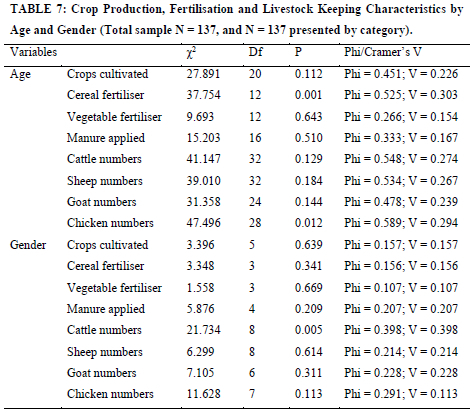
The results showed that the likelihood of choosing the cultivated crops, fertiliser applied to vegetables and type of manure applied were not associated (p > 0.05) with the age of participants. However, the fertiliser used for cereals and the number of chickens kept by farmers were associated (p < 0.001) with the age of farmers, with the strength of association being 53% and 59%, respectively (Table 7). The difference in types of fertiliser or combinations of fertilisers applied by groups of farmers at different age groups was also reported in a study by Chimonyo et al. (2020). These were easily explained by sample sizes that had more of a certain age group. On the other hand, all variables (e.g., crop cultivation, fertilisation, manure application and numbers of livestock kept) were not associated with the gender of the participants, except cattle numbers (p < 0.01).
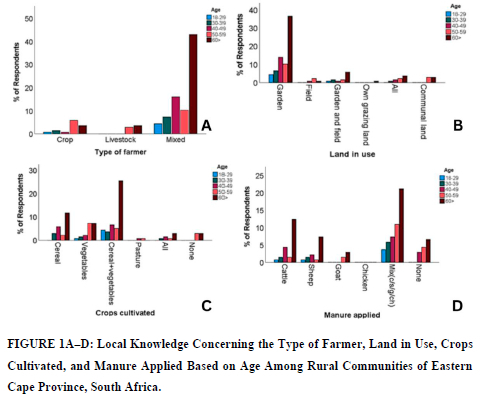
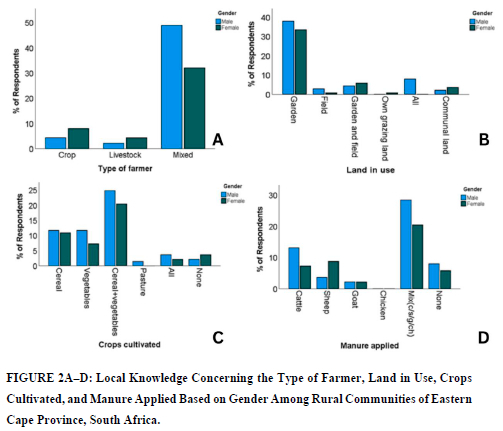
Most agricultural activities were performed by participants above 60 years old, even though this was statistically insignificant (p > 0.05). Many participants above the age of 60 years practised mixed farming of crops and livestock (Figure 1a). Regarding land use, gardens were used mostly by all age groups, with those over 60 years being the dominant category (Figure 1b). Compared to other age ranges, most participants above 60 cultivated cereals and vegetables (Figure 1c). Cattle, sheep and goat manure were used (i.e., sole or mixture) by all age groups; however, the highest use of these manures was by participants above 60 (Figure 1d). Notably, these findings may reflect the higher proportion of farmers over 60 who participated in our study. Regarding gender, most males practised mixed farming, with many growing their crops in gardens (Figure 2a, b). Many participants who cultivated both cereals and vegetables were males (Figure 2c). On manure application, males used mostly cattle manure and a mixture of all types available, whereas females used mostly sheep manure on their crops (Figure 2d). In contrast, Manqana (2022) highlighted the significant role of women in rural smallholder farms in the KwaZulu-Natal Province of South Africa, highlighting the higher proportion of female-headed households involved in agricultural activities. The contrast could be a result of the fact that our sample size included more males than females, which does not necessarily imply that males were more involved in agricultural activities usage than females.
3.5. Principal Component Analysis
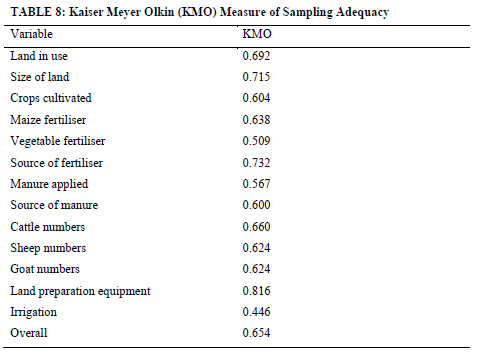
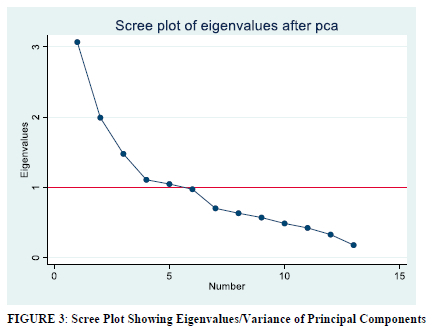
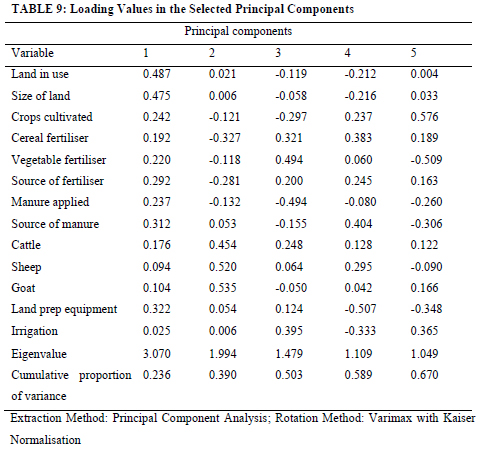
A KMO value of sampling adequacy of 0.616 and Bartlett's test of sphericity (p = 0.000) indicated that the variables were related and analysis by PCA was possible (Table 8). This also means that all of the dataset's variables can be used to generate farm typologies, indicating some type of factoring. Thirteen principal components (PCs) were generated, and five had eigenvalues greater than 1 (Figure 3). More than one PC was selected and used for the study, accounting for 67% of the variability. The PCs 1, 2, 3, 4, and 5 accounted for 24, 15, 11, 9 and 8% of variability. The loading factors within each PCA were used to characterise the principal components. In Table 9, the PC1 is related to the type of land cultivated, the size of the land cultivated, and the land preparation equipment. Land and mechanisation were also reported as the factors that represent the most variability when investigating the socioeconomic dimensions in KwaZulu-Natal Province (Essa & Nieuwoudt, 2003). PC2 is strongly related to livestock kept by farming households. The diversity in the number of animals kept at the household level indicates existing differences in social status (Moyo & Swanepoel, 2010). The first 2 PCs account for the most variability (39%), and the same factors of land and livestock ownership were reported as the main factors accounting for the most variability in smallholder farming communities in Zimbabwe (Dunjane et al., 2018). The PC3 described vegetable fertilisation and irrigation, accounting for 11% of the variance. The PC4 was represented by cereal fertilisation and source of manure, whereas PC5 was related to the type of crops cultivated.
3.6. Cluster Profiles and Farm Typology Construction Based on Resource Endowment
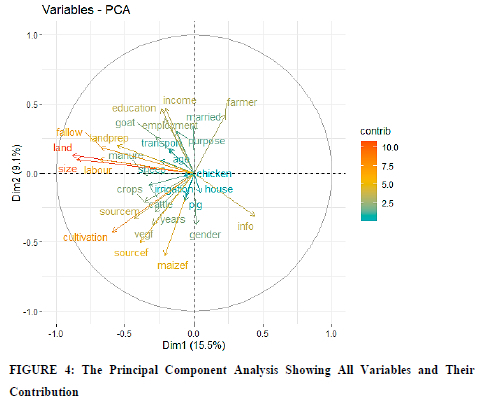
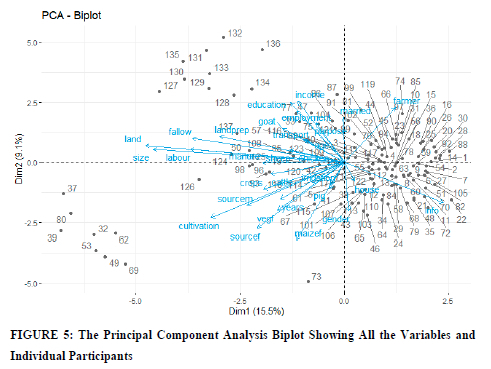
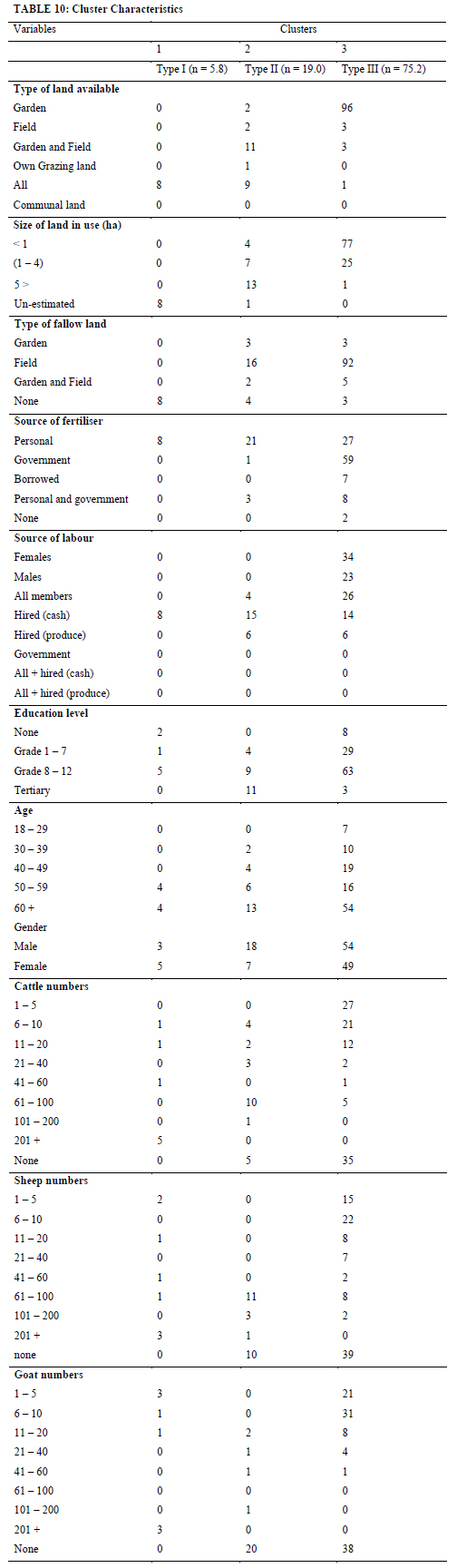
Farm typologies were identified when all dataset variables were considered for PCA and analysis (Figures 4 and 5). The hierarchical clustering results in Table 10 show that three farm types were identified for the generalised farm typologies. The current study's cluster profile was fair regarding cohesiveness and separation. The detailed results for the farm typologies are presented in subsections below.
3.6.1. Type I: High Resource Endowed
Cluster I is made up of 5.8% of the households that took part and is led by females (62.5%) and males (37.5%) between the ages of 50 and 60 (Table 10). These are mixed-production farmers who have access to various land types for production. They typically leave the garden land fallow and concentrate their resources on field production with a commercial focus to earn an income while providing food and feed. The total size of the fields was not determined because most farmers use land granted to them by tribal authorities. The hired labour is paid in cash. Farmers use hired mechanisation equipment for field preparation; even though the majority still own a plough, their tractors have been stolen or are standing unrepaired after being damaged due to a lack of finances to purchase or repair the tractor. They purchase their fertiliser and do not use kraal manure in their crop production. On average, 62.5% of farmers possess more than 200 cattle, and 37.5% own more than 200 sheep and goats. Most farmers (62.5%) in this cluster have completed grades 8 - 12 (Table 10).
3.6.2. Type II: Mediu m Resource Endowed
This cluster has 19% of households, with the majority of males aged 60 and over. This cluster contains the majority of farmers with postsecondary education other than agriculture, accounting for 8% of the total region studied. These farmers practised mixed production and mostly used a mono-cropping agriculture approach in their gardens. Despite having a field area given to them, most are fallow. Fertiliser is primarily obtained from individuals (84%), although the government provides aid (12%). These farmers mostly use manure for fertilisation, and when possible, they use a combination of manure and synthetic fertilisers for maize production. Vegetable production in this cluster is primarily done by applying manure to add nutrients to the soil and on small portions of the garden. Their gardens are typically five hectares or more in size to accommodate delimited portions or plots. According to Giller et al. (2011), there is an overall negative nutritional balance (uneven distribution between the fields) due to the constant concentration of nutrients in homefields at the expense of nutrient depletion in outfields. They have different sources of labour, including family members (16%) and contracted workers paid in produce (24%), who were classified as relatives. The primary source of labour is hired and paid with cash. Similarly, Manqana's (2022) study in KwaZulu-Natal found that most farmers (73%) utilise their labour in agricultural activities, while the remainder use hired work, either alone or in combination with their labour. They use manure from the farm but buy or borrow it from neighbours when there isn't enough on the farm. The manure used is a combination of cattle, sheep, and goats. With 61 to 100 animals, around 43% of farmers in this cluster raise cattle and sheep as livestock. Goat production is minimal, with approximately 80% of farms having no goats. Their primary focus is on food and feed production.
3.6.3. Type III: Low Resource Endowed
This is the largest cluster, accounting for 75.2% of households and led by roughly equal numbers of males and females. This is the only cluster youth participated in, with approximately 17 individuals under 39. In this cluster, approximately 37.9% of farmers are primarily crop producers, and those who keep livestock have the fewest cattle, sheep, and goats compared to the other clusters. About 48 farmers keep cattle in herds of less than ten animals. Only two farmers in this cluster reported having sheep numbers ranging from 100 to 200. Approximately half of the farmers keep goats, but the herd size is less than ten animals. These farmers (74.7%) produce on garden land less than 1 ha in size, while field land is fallow (89%). This category's labour supply (55%) depends on male and female household members. These farmers primarily use on-farm manure or manure borrowed from neighbours to produce vegetables and maize. These farms' main sources of nutrients are organic manures, such as kraal manure, mostly because farmers cannot afford to apply sufficient amounts of chemical or mineral fertilisers to their farms (Snapp et al., 1998; Zingore et al., 2007). These farmers also use intercropping with pumpkins and beans. Farmers in this cluster primarily rely on the government (57.3%) to access chemical fertiliser. Their goal with production is to supplement the household food and feed supply, as their primary source of income is social grants and donations from family members. Only three participants reported having tertiary-level education, but the vast majority had some form of formal education, with only eight having none. According to Zingore et al. (2007), there is considerable evidence of nutrient imbalances between wealth groups and farms at varying distances from homesteads. This is primarily because smallholder farm management depends on farmer resource endowment (rich versus poor) (Tittonell et al., 2005a; Zingore et al., 2007).
Farm typologies identify groups of farms based on comparable attributes such as social, ownership, operational, production, and structural traits (Dunjana et al., 2018). In the current study, the farmer typologies were developed using PCA and cluster analysis to better understand some overlapping data and comparable or varied crop/livestock management constraints/opportunities in the area were shown. Improvements are simple to implement once the constraints are determined (Alvarez et al., 2018). Farm typology, which identifies production constraints and resource management in smallholder agriculture, can aid in decision-making on interventions for improved productivity (Manqana, 2023). Overall, the conclusions of generalised farm typologies are generic and insufficient in separating farmers' resource endowment from their food and nutrition security status (Eshetae et al., 2024). It does not provide guidelines for developing tailored and domain-specific agricultural interventions.
3.7. Qualitative Results and Discussion
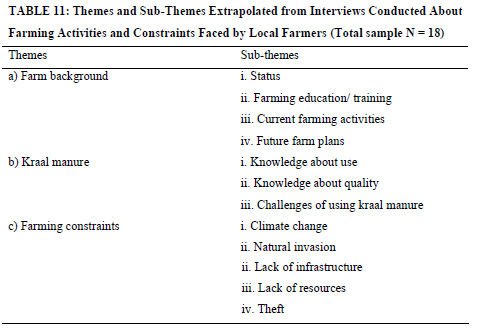
The themes and sub-themes derived from the farmers' interviews are presented below in Table 11. Information was obtained regarding the farms' backgrounds, current production practices, kraal manure use, agricultural constraints, and future farming plans.
3.7.1. Farm Background
The participants reported that they are full-time farmers and rely on hired labour. They are also involved in other off-farm occupations (e.g., professional teachers, lawyers and transportation business) to generate supplementary income. Participants have extensive training in disciplines other than agriculture, and they rely on basic indigenous knowledge acquired from their ancestors/forebears to guide their production. The farms are divided into grazing land and land allocated for cultivation. Common crops cultivated continuously included maize, potatoes, soybeans and dry beans. The livestock kept was mainly cattle and sheep. Other researchers have reported a similar description of the emerging smallholder farmer characteristics in South Africa (Essa & Nieuwdt, 2003; Ndlovu, 2013). Respondents mentioned they intended to secure other farming space through a lease or purchase to increase operational space. The comprehensive rural development project identifies this group of developing smallholder farmers as individuals who will benefit from land redistribution activities. The focus is on "Commercial ready subsistence farmers, expanding commercial smallholders, well-established black commercial farmers and financially capable aspirant black commercial farmers" (DRDLR, 2009). Fencing for improved security and increasing stock numbers were mentioned, as was upgrading the breed from indigenous to increase the value of livestock kept. Demarcation and fencing of grazing camps were mentioned for improving livestock, and this will also assist in protecting the environment by controlling overstocking. Respondents also mentioned they planned to increase equipment (i.e., the number of tractors) or upgrade to bigger to cover more land sufficiently.
3.7.2. Knowledge About Kraal Manure
Respondents were aware that kraal manure was beneficial for crop productivity when used alone or in combination with synthetic chemical fertilisers, and they used it in small gardens for vegetable production. Participant 5 was recorded saying, "Kraal manure does not come in a 50 kg bag; I am all for kraal manure use, but because of the extra steps involved, I still use chemical fertiliser". According to Zingore et al. (2007), the main sources of nutrients on smallholder farms are organic manures, such as compost and cattle manure, mainly because farmers cannot afford to apply enough chemical or mineral fertilisers. Due to the labour involved in carrying and distributing the bulky material in the fields, none of the respondents applied kraal manure at the field scale. Likewise, Manqana (2022) reported that numerous fields with varying management practices are frequently found on smallholder farms. As such, the soil nutrient balances are impacted in fields nearer to the homesteads because they get higher inputs of nutrients in manure or inorganic fertiliser (Manqana, 2022).
Respondents who had access to different types of manure preferred sheep manure over cattle as they found that it gives higher yields. Some respondents reported using all the manure available and did not pick up any differences that suggested high or low quality. None of the participants reported treating kraal manure to improve its quality before application. Even though they know about kraal manure composting, Participant 12 said, "I don't compost; nobody does that anymore, even though we grew up composting manure in piles'". The distance between the crops and a source of kraal manure was mentioned as the primary reason for not incorporating it into the crops they grew. The extent of the cultivated field was said to be too large to accommodate kraal manure. They mentioned that transporting manure to fields, grinding, and spreading required additional labour and fuel, which would escalate the farmer's costs. Likewise, Manqana (2022) mentioned that the management of fields and agricultural yield may be impacted by using one's labour, particularly in outfields where greater effort is needed because of the distance from the homestead. Generally, nutrient additions are primarily applied to specific fields on small-scale farms. Homefields are frequently emphasised since they raise crops that sustain the homestead's livelihood. Homefields often receive the most organic resources and are commonly utilised to grow vegetables (Tittonell et al., 2005b; Zingore et al., 2007).
3.7.3. Farming Constraints
I. Climate Change
Heavy rains were reported to disrupt farming activities in the area, with some farmers being unable to harvest crops such as soybeans as they were too wet to put in harvesting machinery. Heavy rains also disrupted the top dressing of fertilisers and spraying for weed control. Farmers mentioned losing potential yields due to high rainfall, favouring uncontrolled weed growth. Likewise, a feasibility study done by van Tol et al. (2018) indicated the farming activities currently practised in the selected areas of the Tsitsa River catchment, which include the crops cultivated and other farming characteristics. In their study, it was reported that farmers attained lower yields due to unreliable rainfall, a shortage of farming resources, and labour.
On the other hand, others mentioned that low rainfall and drought occurrences limited their production, and this was reported in other studies conducted in different areas of the Eastern Cape Province (Manyevere et al., 2014; Zwelendaba, 2014). One farmer said, "It is hard to get planting time correct because sometimes we go for a long time without rain. But when it comes, it is so heavy and damaging" (Participant 16). Water scarcity has even resulted in the abandonment of crops such as cabbage, which farmers perceive as an important cash crop. Farmers mentioned the occurrence of winter frost and how they would time their harvesting so that no crops are in the field when it occurs. Other farmers reported that wildfires occurred, reducing the grazing area for their livestock. Climate change is a severe and perplexing phenomenon for smallholder farmers, who lack the technology to predict climate in real-time.
Ii. Biological Invasion
The farmers mentioned that the area has been affected by the spread of invasive plant species called Acacia mearnsii de Wild (black wattle). Wattle is a well-known invasive species in South Africa (Gwate et al., 2016), accounting for an estimated 400,000 hectares of land (Stafford et al., 2017). These species have a quick generation time and often reach reproductive maturity within 2-3 years of their growth cycle, drastically increasing invasion success and eventually outcompeting indigenous plants (Lusizi et al., 2024; Vicente et al., 2021). Scientists and government officials depict this Acacia species as the ecological villain because it depletes water supplies in arid landscapes, outcompetes native vegetation, reduces livestock fodder, and interferes with the livelihoods of farmers (see Invasive Species South Africa, 2019; McQueen et al., 2001). Farmers indicated that clearing black wattle was an expense they could not afford, preventing them from accessing arable farming areas that were previously productive.
Iii. Lack of Infrastructure and Resources
The main problem reported by the farmers was the lack of storage facilities for their harvest. Participant 2 said, "At harvesting, everyone has maize, so the demand is low, and the price is down. It is better if you have storage facilities so you can keep it and sell it when demand is high". The lack of boundary fencing on the farms and fencing for demarcating camps results in farmers losing control over which camps livestock graze. The farmers report that in some camps, the livestock is over capacity. The lack of dams inside the farms was one of the farmers' challenges, especially when they went through long dry spells. The farmers did not have their tractors to till the land, and those that did state that their tractors were either old and broken down or too small for the size of land they needed to work on. Farmers relied on hiring tractors from their fellows, which resulted in delays as other people prioritised working their lands before hiring out tractors. Other farmers rely on government tractors, and they report that since these tractors are used to service a lot of other farmers, they often do not come on time. Likewise, Khapayi and Cellliers (2016) and Mthi et al. (2021) listed the lack of infrastructure, high transactional costs, and lack of agricultural implements among the main issues that delay the operations of emerging farmers as they progress out of subsistence scale to commercialise in the province.
iv. Theft
The farmers mentioned that the stock theft in their areas was very high (especially of sheep). Due to this, it was noted that some farmers sold all their sheep and concentrated on cattle as they could not control this. The theft in the area was exacerbated by the lack of or poor fencing of farm boundaries, which enabled criminals to enter farms and steal livestock at night easily. Some farmers who do not have enough space for their cattle are renting space on neighbouring farms. They were more likely to lose livestock due to theft because they relied heavily on hired workers, which they reported to be unreliable. Mthi and Nyangiwe (2018) identified similar theft challenges, and they linked high rates of sheep stock theft to high unemployment and as a means of obtaining quick money for the offenders.
4. CONCLUSION
Our study showed that most smallholder farmers in the Tsitsa River catchment of Eastern Cape Province practised mixed crops and livestock farming. We indicated that the likelihood of carrying out various agricultural activities and management practices was not associated with the age or gender of the participants. The PCs that accounted for the main variability in the area include the type of land under cultivation, size of the cultivated land, livestock numbers, crop fertilisation, irrigation and source of manure. This study identified three farm topologies: resource-endowed (Type I), which owns more land and earns a higher proportion of its income from farming; moderately resourced (Type II), which is neither rich nor poor, with a balance of resources to sustain their livelihoods; and poorly resourced (Type III), which has severely limited resources. This analysis allowed a comprehensive understanding of farm diversity in the study area. Culturing different crops (e.g., cereals, vegetables and pasture) was carried out mainly in gardens, with the fields vastly abundant due to a lack of farming resources. Most farmers applied kraal manure to the variety of crops grown in the garden, and livestock ownership was mentioned as an easy way to access manure. Sheep were the most kept livestock, with many farmers keeping a herd of between 61 and 100 animals. Farmers knew that kraal manure was beneficial for crop productivity when used alone or combined with synthetic chemical fertilisers. However, increased reliance on manure had challenges, such as a lack of transportation for field application, giving fields nearer the farmhouse more nutrients than outfields. Moreover, farmers encountered several constraints, such as lack of infrastructure and limited resources, theft, invasive species, and climate change, affecting their farm productivity. The findings of this study provide insights into the current agricultural activities and manure utilisation occurring in the Tsitsa River catchment. In the future, policymakers and governments should use a comprehensive approach that recognises Indigenous knowledge and attitudes when supporting their decisions in intervention initiatives involving smallholder farmers in rural communities.
5. ACKNOWLEDGEMENTS
This research work was supported by the Govan Mbeki Research and Development Centre of the University of Fort Hare (South Africa) under the Sustainability Agriculture and Food Security research niche area (Project P744). Zizo Blessing Mzayiya received a scholarship from the South African Department of Rural Development and Agrarian Reform (Ref No: S5/2/3).
6. AUTHORS' CONTRIBUTIONS
ZBM and AM conceived and designed the experiment. AM acquired funding for the study. AM and CVM are co-supervisors of ZBM. With the assistance of AM and CVM, ZBM designed the methodology and conducted the study. ZBM collected and analysed the data and interpreted the results. ZBM drafted the manuscript first draft of the manuscript. AM and CVM critically reviewed and edited the manuscript. All authors discussed the results and read and approved the final manuscript.
7. DATA AVAILABILITY STATEMENT
The original contributions presented in the study are included in the article. The raw data supporting the conclusions of this article will be made available by the authors without undue reservation.
8. COMPETING INTERESTS
The authors declare that they have no known competing financial interests or personal relationships that could have appeared to influence the work reported in this paper.
9. ETHICS APPROVAL AND CONSENT TO PARTICIPATE
This study complied with the University of Fort Hare policy on research ethics, and permission was received from the University's Research Ethics Committee (REC-270710-028-RA Level 01) before surveys.
REFERENCES
ABUHAMDA, E.A.A., ISMAIL I.A. & BSHARAT, T.R.K., 2021. Understanding quantitative and qualitative research methods: A theoretical perspective for young researchers. Int. J. Res, 8: 71-87. [ Links ]
ALIBER, M. & HART, T.G., 2009. Should subsistence agriculture be supported as a strategy to address rural food insecurity? Agrekon., 48: 434-458. [ Links ]
ALVAREZ, S., TIMLER, C.J., MICHALSCHECK, M., PAAS, W., DESCHEEMAEKER, K., TITTONELL, P., ANDERSSON, J.A. & GROOT, J.C.J., 2018. Capturing farm diversity with hypothesis-based typologies: An innovative methodological framework for farming system typology development. PLoS One., 13(5): e0194757. https://doi.org/10.1371/journal.pone.0194757. [ Links ]
BANNATYNE, L.J., ROWNTREE, K.M., VAN DER WAAL, B.W. & NYAMELA N., 2017. Design and implementation of a citizen technician-based suspended sediment monitoring network: Lessons from the Tsitsa River catchment, South Africa. Water S. Afr., 43: 365-377. http://dx.doi.org/10.4314/wsa.v43i3.01. [ Links ]
BESTER, R., BLIGNAUT, J.N. & BROOKES, D.J., 2019. The impact of human behaviour and restoration on the economic lifespan of the proposed Ntabelanga and Laleni dams, South Africa: A systems dynamics approach. Water Res. Econ, 26: 1-15. [ Links ]
BRAUN, V. & CLARKE, V., 2006. Using thematic analysis in psychology. Qual. Res. Psychol., 3: 77-101. [ Links ]
BUCAGU, C., VANLAUWE, B., VAN WIJK, M.T. & GILLER, K.E., 2014. Resource use and food self-sufficiency at farm scale within two agroecological zones of Rwanda. Food Secur., 6(5): 609-628. [ Links ]
CHIMONYO, V.G.P., MUTENGWA, C.S., CHIDUZA, C. &TANDZI, L.N., 2020. Characteristics of maize growing farmers, varietal use and constraints to increase productivity in selected villages in the Eastern Cape Province of South Africa. S Afr. J. Agric. Ext., 48: 64-82. [ Links ]
CONNOR, T. & MTWANA, N., 2018. Vestige garden production and deagrarianisation in three villages in the Eastern Cape, South Africa. S. Afr. Geogr. J., 100: 82-103. [ Links ]
COUSINS, B., 2013. What is a 'smallholder'? Class-analytic perspectives on small-scale farming and agrarian reform in South Africa. Work. Pap., 16. http://hdl.handle.net/10566/4468 [ Links ]
DEPARTMENT OF RURAL DEVELOPMENT AND LAND REFORM (DRDLR)., 2009. The comprehensive rural development programme. Pretoria, South Africa. [ Links ]
DU PLESSIS, C., VAN ZIJL, G., VAN TOL, J. & MANYEVERE, A., 2020. Machine learning digital soil mapping to inform gully erosion mitigation measures in the Eastern Cape, South Africa. Geoderma., 368: 114287. [ Links ]
DUNJANE, N., ZENGENI, R., MUCHAONYERWA, P. & WUTA, M., 2018. Typological characterisation of farms in a smallholder food-cash crop production system in Zimbabwe-opportunities for livelihood sustainability. J. Agric. Rural Dev. Trop. Subtrop., 119: 11 -22. [ Links ]
DEPARTMENT OF WATER AND SANITATION (DWS)., 2017. Determination of Water Resource Classes and Resource Quality Objectives for Water Resources in the Mzimvubu Catchment. River Desktop EWR and Modelling Report: Volume 2 - Desktop EWR Assessment. Authored by Birkhead, A (Streamflow Solutions) and Louw, D (Rivers for Africa eFlows Consulting) for Scherman Colloty and Associates cc. Report no. WE/WMA7/00/CON/CLA/0217, Volume 2. Pretoria, South Africa. Available from https://www.dws.gov.za/RDM/WRCS/doc/Mzimvubu%20Desktop%20EWR%20Report_Final.pdf [ Links ]
DEPARTMENT OF WATER AND SANITATION (DWS)., 2014. Feasibility study for the Mzimvubu Water Project: water requirements. Directorate, Options Analysis. Pretoria, South Africa. Available from https://www.dws.gov.za/iwrp/mzimvubu/documents/Detailed%20Feasibility%20Phase/6.%20Mzimvubu%20Water%20Requirements%20-%20Report%20-%20Final.pdf [ Links ]
ELUNDINI LOCAL MUNICIPALITY., 2022. Elundini Integrated Development Plan (IDP) and budget (2022-2023). Nqanqarhu, South Africa. Available from https://www.elundini.gov.za/category/documents/idp/ [ Links ]
ELUNDINI LOCAL MUNICIPALITY., 2017. Elundini local municipality socioeconomic review and outlook, 2017. Eastern Cape Socio Economic Consultative Council. Available from https://ecsecc.org.za/documentrepository/informationcentre/elundini-local-municipality_74571.pdf [ Links ]
ESHETAE, M.A., ABERA, W., TAMENE, L., MULATU, K. & TESFAYE, A., 2024. Understanding farm typology for targeting agricultural development in mixed crop-livestock farming systems of Ethiopia. Farming System., 2: 100088. [ Links ]
ESSA, J.A. & NIEUWOUDT, W.L., 2003. Socioeconomic dimensions of small-scale agriculture: A principal component analysis. Dev. South. Afr., 20: 67-73. [ Links ]
FABRICIUS, C., BIGGS, H. & POWELL, M., 2016. Research investment Strategy for Ntabelanga Laleni ecological infrastructure project. Pretoria, South Africa: Department of Environmental Affairs. [ Links ]
GEBREKIDAN, B.H., HECKELEI, T. & RASCH, S., 2020. Characterizing farmers and farming system in kilombero valley floodplain, Tanzania. Sustainability., 12(17): 7114. [ Links ]
GILLER, K.E., CORBEELS, M., NYAMANGARA, J., TRIOMPHE, B., AFFHOLDER, F., SCOPEL, E. & TITTONELL, P., 2011b. A research agenda to explore the role of conservation agriculture in African smallholder farming systems. Field Crops Res., 124: 468-472. [ Links ]
GILLER, K.E., TITTONELL, P., RUFINO, M.C., VAN WIJK, M.T., ZINGORE, S., MAPFUMO, P., ADJEI-NSIAH, S., HERRERO, M., CHIKOWO, R. & CORBEELS, M.J.A., 2011a. Communicating complexity: Integrated assessment of trade-offs concerning soil fertility management within African farming systems to support innovation and development. Agric. Syst., 104(2): 191-203. [ Links ]
GILLER, K.E., WITTER, E., CORBEELS, M. & TITTONELL, P., 2009. Conservation agriculture and smallholder farming in Africa: The heretics' view. Field Crops Res., 114: 23-34. [ Links ]
GIRMA, Y., 2022. Credit access and agricultural technology adoption nexus in Ethiopia: A systematic review and meta-analysis. J. Agric. Food Res., 10: 100362. [ Links ]
GQIBITYALA, A., 2017. Farmers' perception of factors influencing small-scale vegetable production at Tsengiwe village, South Africa. Masters thesis, Nelson Mandela Metropolitan University, South Africa. [ Links ]
GUSHA B., PALMER A.R. & VILLANO R.A., 2018. Performance of livestock production in north Eastern Cape communal areas: A stochastic frontier analysis. Proceedings of the 30th International Conference of Agricultural Economists, 28 July - 2 August, Vancouver. [ Links ]
GWATE, O., MANTEL, S.K., FINCA, A., GIBSON, L.A., MUNCH, Z. & PALMER, A.R., 2016. Exploring the invasion of rangelands by Acacia mearnsii (black wattle): Biophysical characteristics and management implications. Afr. J. Range Forage Sci., 33: 265-273. [ Links ]
HUBER, R., BARTKOWSKI, B., BROWN, C., EL BENNI, N., FEIL, J.H., GROHMANN, P., JOORMANN, I., LEONHARDT, H., MITTER, H. & MÜLLER, B., 2024. Farm typologies for understanding farm systems and improving agricultural policy. Agric. Syst., 213: 103800. [ Links ]
INVASIVE SPECIES SOUTH AFRICA., 2019. Black Wattle. Available from https://www.invasives.org.za/legislation/item/205-black-wattle-acacia-mearnsii [ Links ]
JAGADAMMA, S., LAL, R., HOEFT, R.G., NAFZIGER, E.D. & ADEE, E.A., 2008. Nitrogen fertilisation and cropping system impact on soil properties and their relationship to crop yield in the central Corn Belt, USA. Soil Tillage Res., 98(2): 120-129. [ Links ]
KABINI, D.M., 2022. The impact of the agricultural sector on economic growth and development in South Africa. Doctoral thesis, North-West University, South Africa. [ Links ]
KHAPAYI, M., 2013. Commercialisation of emerging farmers in the Eastern Cape Province: Identification of limiting factors that inhibit the progression from subsistence to commercial farming. Masters thesis, Nelson Mandela Metropolitan University, South Africa. [ Links ]
KHAPAYI, M. & CELLIERS, P.R., 2016. Factors limiting and preventing emerging farmers from progressing to commercial agricultural farming in the King William's Town area of the Eastern Cape Province, South Africa. S Afr. J. Agric. Ext., 44: 25-41. [ Links ]
KIBIRIGE, D., 2013, The impact of human dimensions on smallholder farming in the Eastern Cape Province of South Africa. Doctoral thesis, University of Fort Hare, South Africa. [ Links ]
KUMAR, S., CRAUFURD, P., HAILESLASSIE, A., RAMILAN, T., RATHORE, A. & WHITBREAD, A., 2019. Farm typology analysis and technology assessment: An application in an arid region of South Asia. Land Use Policy., 88: 104149. [ Links ]
LE ROUX, J.J., BARKER, C.H., WEEPENER, H.L., VAN DEN BERG, EC. & PRETORIUS, S.N., 2015. Sediment yield modelling in the Mzimvubu catchment. WRC Report No. 2243/1/15. Pretoria: Water Research Commission. [ Links ]
LE ROUX, J. & VAN DER WAAL, B., 2020. Gully erosion susceptibility modelling to support avoided degradation planning. S. Afr. Geogr. J., 102: 406-420. [ Links ]
LOWDER, S.K., SÁNCHEZ, M.V. & BERTINI, R., 2021. Which farms feed the world and has farmland become more concentrated? World Dev., 142: 105455. [ Links ]
LUSIZI, Z., MOTSI, H., NYAMBO, P. & ELEPHANT, D.E., 2024. Black (Acacia mearnsii) and silver wattle (Acacia dealbata) invasive tree species impact on soil physicochemical properties in South Africa: A systematic literature review. Heliyon., 10: e24102. [ Links ]
MAIRURA, F.S., MUSAFIRI, C.M., KIBOI, M.N., MACHARÍA, J.M., NG'ETICH, O.K., SHISANYA, C.A. ET AL., 2022. Farm factors influencing soil fertility management patterns in Upper Eastern Kenya. Environ. Chall., 6: 100409. [ Links ]
MANDIRINGANA, O.T., MNKENI, P.N.S., MKILE, Z., VAN AVERBEKE, W., VAN RANST, E. & VERPLANCKE H., 2005. Mineralogy and fertility status of selected soils of the Eastern Cape Province, South Africa. Commun. Soil Sci. Plant Anal., 36: 2431-2446. [ Links ]
MANQANA, L., 2022. Farm typology and spatial variability of selected soil fertility parameters on selected smallholder farms in KwaZulu-Natal Province, South Africa. Masters thesis, University of KwaZulu-Natal, Pietermaritzburg, South Africa. [ Links ]
MANYEVERE, A., 2014. An integrated approach for the delineation of arable land and its cropping suitability under variable soil and climatic conditions in the Nkonkobe municipality, Eastern Cape, South Africa. Doctoral thesis, University of Fort Hare, Alice, South Africa. [ Links ]
MANYEVERE, A., MNKENI, P.N.S., LAKER, A. & MUCHAONYERWA., P., 2020. The use of indigenous knowledge systems in soil classification, appraisal and soil productivity rating for maize cropping: A case of the Xhosa speaking people in Raymond Mhlaba Municipality, South Africa. INDILINGA - Afr. J. Indig. Knowl. Syst., 19(1): 96-109. [ Links ]
MANYEVERE, A., MUCHAONYERWA, P., MICHIEL, C., LAKER, A. & MNKENI, P.N.S., 2014. Farmers' perspectives with regard to crop production: An analysis of Nkonkobe Municipality, South Africa. J. Agric. Rural Dev. Trop. Subtrop., 115: 41-53. [ Links ]
MASHAMAITE, C.V., ALBIEN, A.J., MOTHAPO, P.N., PIETERSE, P.J. & PHIRI E.E., 2023. Local knowledge, perceptions, and uses of the potentially conflict-generating plant species, Moringa oleifera Lam.: A case study in Limpopo Province, South Africa. Hum. Ecol., 51: 979-994. [ Links ]
MCQUEEN, C., NOEMDOE, S. & JEZILE, N., 2001. The Working for Water programme. Land Use. Water Resour. Res., 1(4): 1-4. [ Links ]
MILES, M.B. & HUBERMAN, A.M., 1993. Qualitative data analysis: A sourcebook of new methods. 2nd ed. Newbury Park, CA. [ Links ]
MOOI, E. & SARSTEDT, M., 2011. A concise guide to market research: The process. The Process, Data, and Methods Using IBM SPSS Statistics. Berlin et al: Springer. [ Links ]
MOYO, S. & SWANEPOEL, F.J.C., 2010. Multifunctionality of livestock in developing communities. In F.J.C. Swanepoel, A. Streobel & S. Moyo (eds.), The Role of Livestock in Developing Communities: Enhancing Multifunctionality. South Africa: UFS and CTA, pp 1-11. [ Links ]
MTHI, S. & NYANGIWE, N., 2018. Farmers' perception on sheep production constraints in the communal grazing areas of the Eastern Cape Province, South Africa. Int. J. Livest. Prod., 9: 334-339. [ Links ]
MTHI, S., YAWA, M., TOKOZWAYO, S., IKUSIKA, O.O., NYANGIWE, N., THUBELA, T., TYASI, T.L., WASHAYA, S., GXASHEKA, M., MPISANA, Z. & NKOHLA, M.B., 2021. An assessment of youth involvement in agricultural activities in Eastern Cape Province, South Africa. Agric. Sci., 12: 1034-1047. [ Links ]
MUCHERU-MUNA, M.W., ADA, M.A., MUGWE, J.N., MAIRURA, F.S., MUGI-NGENGA, E., ZIN-GORE, S. & MUTEGI, J.K., 2021. Socioeconomic predictors, soil fertility knowledge domains and strategies for sustainable maize intensification in Embu County, Kenya. Heliyon., 7: e06345. [ Links ]
MUGWE, J., MUGENDI, D., MUCHERU-MUNA, M., MERCKX, R., CHIANU, J. & VANLAUWE, B., 2009. Determinants of the decision to adopt integrated soil fertility management practices by smallholder farmers in the central highlands of Kenya. Exp. Agric., 45(1): 61-75. [ Links ]
NDLOVU, S., 2013. Community development projects and food security: The case of Zanyokwe irrigation project Eastern Cape Province, South Africa. Masters thesis, University of Fort Hare, Alice, South Africa. [ Links ]
NETTING, R.M., 1993. Smallholders, householders: Farm families and the ecology of intensive, sustainable agriculture. Stanford University Press. [ Links ]
PETER, M., 2008. Indigenous knowledge in disaster management in Africa. Nairobi, Kenya: United Nations Environmental Program. [ Links ]
SARKER, M.R., GALDOS, M.V., CHALLINOR, A.J. & HOSSAIN, A., 2021. A farming system typology for the adoption of new technology in Bangladesh. Food Energy Secur, 10: 1-18. [ Links ]
SIXOTHO, W., 2017. Intergenerational dynamics of smallholder farming households: A case study of family farms at Bumbane and Emagaleni villages, Eastern Cape, South Africa. Masters thesis, University of Fort Hare, Alice, South Africa. [ Links ]
SNAPP, S., MAFONGOYA, P. & WADDINGTON, S., 1998. Organic matter technologies for integrated nutrient management in smallholder cropping systems of southern Africa. Agric. Ecosyst. Environ., 71: 185-200. [ Links ]
STAFFORD, W., BIRCH, C., ETTER, H., BLANCHARD, R., MUDAVANHU, S., ANGELSTAM, P., BLIGNAUT, J., FERREIRA, L. & MARAIS, C., 2017. The economics of landscape restoration: benefits of controlling bush encroachment and invasive plant species in South Africa and Namibia. Ecosyst. Serv., 27: 193-202. [ Links ]
STATISTICS SOUTH AFRICA (STATS SA)., 2017. Census of Commercial Agriculture, Report No. 11-02-01 (2017). Pretoria, South Africa: Financial and Production Statistics. Available from https://www.statssa.gov.za/publications/Report-11-02-01/Report-11-02-012017.pdf [ Links ]
STEPHEN, F.T., EKUNDAYO, E.M. & LANRE, A., 2022. Application of principal component analysis as a data-reducing technique. Suan Sunandha Sci. Technol. J., 6(2): 30-33. [ Links ]
SURI, H., 2011. Purposeful sampling in qualitative research synthesis. Qual. Res. J., 11: 63-75. [ Links ]
THOMAS, D.R., 2006. A general inductive approach for analysing qualitative evaluation data. Am. J. Eval, 27: 237-246. [ Links ]
TITTONELL, P., VANLAUWE, B., LEFFELAAR, P., ROWE, EC. & GILLER, K.E., 2005a. Exploring diversity in soil fertility management of smallholder farms in western Kenya: I. Heterogeneity at region and farm scale. Agric. Ecosyst. Environ., 110: 149-165. [ Links ]
TITTONELL, P., VANLAUWE, B., LEFFELAAR, P., SHEPHERD, K.D. & GILLER, K.E., 2005b. Exploring diversity in soil fertility management of smallholder farms in western Kenya: II. Within-farm variability in resource allocation, nutrient flows and soil fertility status. Agric. Ecosyst. Environ., 110: 166-184. [ Links ]
UNITED NATIONS., 2020. The Sustainable Development Goals report. Available from https://unstats.un.org/sdgs/report/2020/The-Sustainable-Development-Goals-Report [ Links ]
VAN AVERBEKE, W., MNKENI, P.N.S., HARRIS, P.J.C. & MKILE, Z., 2008. Fertility status of cropped soils in smallholder farming systems of the Transkei region, Eastern Cape Province, South Africa. In S. Haneklaus, C. Hera, R.M. Rietz & E. Schnug (eds.), Fertilisers and fertilisation for sustainability in agriculture: The First World meets the Third World - challenges for the future. Pretoria: Terra Nostra, pp. 513-526. [ Links ]
VAN TOL, J., AKPAN, W., KANUKA, G., NGESI, S. & LANGE, D., 2014. Soil erosion and dam dividends: Science facts and rural 'fiction' around the Ntabelanga dam, Eastern Cape, South Africa. S. Afr. Geogr. J, 98: 169-181. [ Links ]
VAN TOL, J., AKPAN, W., MAROYI, A., MUTENGWENDE, N., HUCHERMEYER, N., NGESI, S., NQANDEKA, H., MAMERA, M., BRADLEY, G. & ROWNTREE, K., 2018. The Mzimvubu water project: Baseline indicators for long-term impact monitoring. WRC Report No. 2433/1/18. Pretoria, South Africa: Water Research Commission. [ Links ]
VANLAUWE, B., TITTONELL, P. & MUKALAMA, J., 2007. Within-farm soil fertility gradients affect the response of maize to fertiliser application in western Kenya. In A. Bationo, B. Waswa, J. Kihara & J. Kimetu (eds.), Advances in integrated soil fertility management in sub-Saharan Africa: Challenges and opportunities. Springer, pp. 121-132. [ Links ]
VICENTE, S., MAGUAS, C., RICHARD SON, D.M., TRINDADE, H.B., WILSON, J.R.U. & LE ROUX, J.J., 2021. Highly diverse and highly successful: Invasive Australian acacias have not experienced genetic bottlenecks globally. Ann. Bot., 128: 149-157. [ Links ]
WENHOLD, F.A.M., FABER, M., VAN AVERBEKE, W., OELOFSE, A., VAN JAARSVELD, P., VAN RENSBURG, W.S.J., VAN HEERDEN, I. & SLABBERT, R., 2007. Linking smallholder agriculture and water to household food security and nutrition. Water S. Afr., 33: 327-336. [ Links ]
ZANTSI, S., GREYLING, J.C. & VINK, N., 2019. Towards a common understanding of emerging farmers in a South African context using data from a survey of three district municipalities in the Eastern Cape Province. J. Agric. Ext. Rural Dev., 47: 81 -93. [ Links ]
ZINGORE, S., MURWIRA, H.K., DELVE, R.J. & GILLER, K.E., 2007. Influence of nutrient management strategies on variability of soil fertility, crop yields and nutrient balances on smallholder farms in Zimbabwe. Agric. Ecosyst. Environ., 119: 112-126. [ Links ]
ZWELENDABA, V.V., 2014. An evaluation of the effects of land tenure security in on-farm investment and on-farm productivity: A case of the smallholder farmers in the Amathole District of the Eastern Cape Province of South Africa. Masters thesis, University of Fort Hare, Alice, South Africa. [ Links ]
 Correspondence:
Z.B. Mzayiya
Correspondence Email: ivasinga2@gmail.com
