



Services on Demand
Journal

Article
 English (pdf)
 Article in xml format
 Article references
 Automatic translation
 Send this article by e-mail
Indicators
Related links
-
 Cited by Google
 -
 Similars in Google
Share

 Permalink
South African Journal of Animal Science
On-line version ISSN 2221-4062Print version ISSN 0375-1589
S. Afr. j. anim. sci. vol.55 n.10 Pretoria 2025
https://doi.org/10.17159/sajas.v55i10.06
REVIEW ARTICLES
Nutrition of ruminant livestock grazing natural pasture, with special reference to supplementary phosphorus and sodium chloride - a South African perspective
H.O. de Waal
Shangrila 23, 11 General Klopper Street, Dan Pienaar, Bloemfontein 9300, South Africa University of the Free State, 205 Nelson Mandela Drive, Park West, Bloemfontein, South Africa
ABSTRACT
South Africa has a long history of studying specific dietary deficiencies in livestock grazing natural pastures (veld), with these pastures generally regarded as deficient in protein and phosphorus. The pioneering work by Sir Arnold Theiler and co-workers focused on addressing the cause of bovine botulism, but a direct link to an underlying phosphorus deficiency was later established. Other minerals have also received attention in South Africa, but since the early 1900s, the focus has mainly been on the phosphorus nutrition of grazing ruminant livestock. The initial focus on a primary phosphorus deficiency evolved and became the catalyst for renewed and comprehensive studies at Armoedsvlakte and elsewhere in southern Africa. The information obtained from these studies improved the understanding of the important roles and interactions between the selective grazing behaviour of ruminants and the composition of the veld, which serves as their primary source of daily nutrient intake. Supplementing grazing ruminants with various minerals and rumen-stimulating licks became routine practice, but results have varied and expected animal performance has not always been attained. This review provides a perspective of the nutrition of ruminant livestock grazing veld, with reference to the role of supplementary feeding, especially of phosphorus and the ever-present sodium chloride. Reference is also made to arthrosis or osteochondrosis, a phenomenon observed in grazing cattle since 1982.
Keywords: aphosphorosis, body mass, electrolyte balance, licks, reproduction, rib bone, subliminal thirst
Introduction
South Africa has a long history of studying specific dietary deficiencies in ruminant livestock grazing natural pastures or veld (De Waal, 1990; Van Niekerk, 1996). An important constraint on animal production from veld seems to be an insufficient intake of digestible nutrients in relation to animal requirements. This is compounded by deficiencies of specific nutrients, such as phosphorus, protein (Du Toit et al., 1940; Read, 1984), or sodium (De Waal et al., 1989a,b; De Waal, 1990; De Waal, 1994; Van Niekerk, 1996). In a widely cited report, Du Toit et al. (1940) concluded: 'Judged by the estimated requirements of cattle and sheep for growth, all South African pastures, composed mainly or wholly of grasses, are deficient in phosphorus, crude protein and, in certain areas, sodium for a period ranging from five to nine months of the year, depending on the area. There are indications that in certain of these regions, the pasture may be deficient in phosphorus throughout the year. Furthermore, on the basis of the average values for phosphorus, these grass pastures contain at no time of the year sufficient of this nutrient to provide in the requirement for an additional function (e.g. gestation or lactation) of the animal, superimposed on growth.'
While other minerals have also received attention in South Africa (Van der Merwe & Perold, 1967; Van der Merwe, 1985; Van Niekerk, 1996; Underwood & Suttle, 1999), since the early 1900s, the focus has mainly been on the phosphorus nutrition of grazing ruminant livestock (Theiler, 1912; Theiler et al., 1927; Theiler & Green, 1932; Bisschop, 1964; Van der Merwe, 1974; Belonje, 1978; De Waal et al., 1980; De Waal et al., 1981; Engels, 1981; Groenewald, 1986; Read et al., 1986a,b,c,d; De Waal et al., 1996; Van Niekerk, 1996; De Waal & Koekemoer, 1997; Spangenberg, 1997; Wessels, 1999; De Brouwer et al., 2000; De Waal et al., 2000). The pioneering work by Sir Arnold Theiler and co-workers (Theiler, 1912; Theiler et al., 1927; Theiler & Green, 1932) focused on addressing the cause of bovine botulism, but a direct link with an underlying phosphorus deficiency was later established. This was the catalyst for comprehensive studies that improved the understanding of the important roles and interactions between the selective grazing behaviour of ruminants and the composition of the veld, which serves as the primary source of ruminants' daily nutrient intake.
An increase in the incidence of lameness in grazing cattle was first observed in 1982 in the north-western parts of South Africa, and was diagnosed as arthrosis or osteochondrosis (Prozesky et al., 2016; Van der Veen et al., 2017). Arthrosis was initially ascribed to a phosphorus deficiency, but the increased focus on this phenomenon (osteochondrosis) temporarily distracted attention from ongoing efforts to improve the understanding of the causes and remedies of a real phosphorus deficiency in grazing cattle. Although a wealth of published information is available, a perspective is needed on the nutrition of ruminant livestock grazing veld and the roles and interactions of supplementary feeding, especially of protein, phosphorus, and the ever-present sodium chloride.
Early history of pica and bovine botulism, and the link to phosphorus deficiency
The history of researching the phosphorus nutrition of grazing cattle in southern Africa dates back to the late 1800s (Read, 1984; De Waal et al., 1996). In the early 1900s, Theiler and co-workers identified phosphorus as a major limiting factor for cattle grazing veld at Armoedsvlakte (Theiler, 1912; Theiler et al., 1927; Theiler & Green, 1932), a world-renowned experimental farm located near Vryburg in the North West Province of South Africa. The Afrikaans name Armoedsvlakte means 'poverty plain', and this provides an indication of the abject desolation and poor conditions prevailing in that area at the time.
Later, Theiler & Green (1932) reflected on the reason for studying the phosphorus nutrition of grazing cattle at Armoedsvlakte, and cited old records referred to by Le Vaillant (1785), who observed cattle eagerly seeking and chewing the bones of dead animals in Namaqualand (a dry north-western area of South Africa), thus displaying a typical depraved appetite or pica. It was initially assumed that these cattle had developed a craving for calcium, and thus needed to chew bones because of their calcareous nature. However, Theiler and co-workers later recognised the specific role of a phosphorus deficiency of the veld, and suggested a rephrasing of the original statement by changing it from 'calcareous nature' to 'phosphatic nature' (Theiler & Green, 1932).
According to Underwood & Suttle (1999), pica - a condition in which animals develop a depraved appetite for abnormal materials such as soil, wood, flesh, and bones, and consequently ingest these materials - is often associated with a phosphorus deficiency (aphosphorosis). Aphosphorosis was identified by Theiler and co-workers (Theiler, 1912; Theiler et al., 1927; Theiler & Green, 1932) as the primary reason for cattle showing pica and gnawing the putrefied bones of animal skeletons infected with Clostridium botulinum, with the toxin ultimately causing botulism and death. In the early stages of development, botulism manifested typical symptoms, which were described as 'styfziekte' and 'lamziekte' in grazing cattle. Although Theiler and co-workers (Theiler, 1912; Theiler et al., 1927; Theiler & Green, 1932) initially focused on this phenomenon and tried to solve the endemic fatal impact of botulism on grazing cattle, it transpired that a phosphorus deficiency was the underlying cause for cattle on veld developing pica. This need for seeking and gnawing animal bones exposed these cattle to C. botulinum, with fatal consequences.
The spectacular response of grazing cattle to phosphorus supplementation at Armoedsvlakte (Theiler & Green, 1932) was extrapolated, and supplementary phosphorus was provided elsewhere to grazing or browsing ruminant livestock, including sheep (Belonje, 1978; De Waal et al., 1980; Read, 1984). Since then, effective marketing has made it standard animal husbandry practice to supplement grazing ruminants with phosphorus, often all year round. However, with reference to findings in Zimbabwe, Van der Merwe (1974) stated that cattle did not always respond favourably to phosphorus licks in winter. Similarly, Bisschop (1964) concluded from studies at Armoedsvlakte that phosphorus supplementation was not necessary for growing, non-producing cattle at Armoedsvlakte and in other areas with similar or lower deficiencies during periods of neutral or negative body mass changes. However, Bisschop (1964) recommended the adequate phosphorus supplementation of breeding and producing beef cattle, specifically pregnant and lactating females, throughout the year.
Van Niekerk (1996) conducted studies using mostly non-reproducing animals such as oxen, and concluded that when phosphorus was provided as the only supplement in the dry season (i.e. during winter), it failed to improve animal performance while the animals were losing body mass. According to Van Niekerk (1996), evidence of a dry-season response in lactating cows had not yet been produced at that time, and although Ward (1968) and Groenewald (1986) are often quoted in support of dry-season phosphorus supplementation for lactating cows, 'these experiments were, however, designed in such a manner as to make it impossible to draw such a conclusion' (van Niekerk, 1996).
The role of natural pasture as a source of nutrition for grazing livestock
Based on the results of Theiler and co-workers (Theiler, 1912; Theiler et al., 1927; Theiler & Green, 1932) in addressing the negative effects of a primary phosphorus deficiency in cattle at Armoedsvlakte, the important role of veld as a source of phosphorus and other minerals was recognised. Although botulism was only endemic to specific areas, these early studies raised awareness of the phosphorus status of veld in southern Africa (Van der Merwe, 1974).
Early studies relied on the analysis of plant material collected from different veld types during different seasons of the year. Samples varied considerably in their nutrient contents, especially for mainly or wholly grass veld, with protein and phosphorus being low in winter (Du Toit et al., 1940; Bisschop, 1964; Lombard, 1966). Methods of sampling material included hand-cutting (clipping with hand-held wool shears), hand-plucking, cutting quadrats, or closely following animals and plucking simulated grazing samples (Du Toit et al., 1940; Van Schalkwyk et al., 1968). With the exception of the last method, these techniques did not appreciate the inherent selective grazing behaviour of ruminants, namely their ability to select plant material of a higher quality (Engels et al., 1969; 1971; 1974a,b; Engels & Malan, 1978; 1979; De Waal, 1979; Engels et al., 1981; Faure et al., 1983; De Waal et al., 1989a,b). The latter studies provided important perspectives on the behaviour of ruminant livestock grazing veld, specifically in terms of the seasonal variation in the diet selection of cattle and sheep, and the effects on herbage intake and animal performance (De Waal, 1979; 1990). The quality and quantity of veld are influenced by rainfall, with consistency and distribution being more important than annual rainfall volumes; therefore, insufficient intake of digestible nutrients in relation to requirements is an important constraint on animal production from veld and may be aggravated by deficiencies of specific nutrients (De Waal, 1979; 1990).
According to Louw (1969; 1979), the quality of herbage ingested by grazing animals is low and deficient in nutrients; therefore, it needs supplementation to support reasonable levels of animal production. To test this hypothesis, sheep were fed low-quality roughage in pens, and when supplemented with nitrogen, both natural protein and non-protein nitrogen sources such as urea markedly increased voluntary feed intake and improved digestibility. These studies introduced the concept of rumen-stimulating supplements (De Waal, 1979). Thus, voluntary intake of grazing animals may be increased and deficiencies in pastures corrected by supplementary feeding (Van Niekerk, 1996). However, this comes at a considerable cost, and animal responses can be unpredictable and less than might be expected (De Waal, 1990; 1994). Van Niekerk (1996) also stressed the futility of supplementing non-limiting nutrients to animals.
In the early 1970s, a research programme involving grazing sheep and cattle was initiated to gain knowledge of important nutritional and environmental factors (Engels, 1972; De Waal, 1979; 1986; Read, 1984; Spangenberg, 1997; Wessels, 1999). Oesophageally fistulated cattle and sheep were used to collect herbage samples, and this highlighted the selective grazing behaviour and capabilities of ruminants, with sheep being notably superior to cattle. This important perspective prompted Engels & Malan (1978) to state that hand-cut samples of veld were not representative or suitable for analysis when studying the nutrition of grazing livestock. Samples collected by oesophageally fistulated animals contained more protein, and the organic matter was more digestible (De Waal et al., 1980), thus refuting previous conclusions regarding the poor quality of grass veld (Du Toit et al., 1940).
According to De Waal (1990), good levels of animal production can be achieved in the central grass veld of South Africa by applying sound veld and animal management practices. Such practices incorporate adhering to the long-term grazing capacities of the veld (Meissner et al., 1983), opting for appropriate lambing and calving seasons in relation to the production of the veld, and implementing strategic supplementary feeding practices (De Waal, 1990; De Waal & Combrinck, 2000).
A perspective on phosphorus nutrition and the need to supplement grazing livestock
Previously, reference was made to a misconception that the quality of herbage ingested by ruminants is generally low and deficient in nutrients and requires supplementation to support reasonable levels of animal production. Based on this belief and the results of feed intake and digestibility trials, the principles and strategies for supplementary feeding (Coetzee, 1969; Louw, 1969; 1978; 1979; Van Niekerk & Jacobs, 1985; Van Niekerk, 1996) were developed for ruminant livestock grazing different veld types.
In addition to other nutrients, such as minerals (e.g. phosphorus), protein, and energy, supplementary feeds (licks) for grazing ruminants invariably include sodium chloride to control voluntary intake and, as a secondary aim, to satisfy the specific sodium requirements of livestock (De Waal, 1979; De Waal et al., 1989b; De Waal, 1994). When developing supplementary feeding strategies, emphasis was placed on the other lick constituents, with little, if any, regard to the ever-present sodium chloride. This was surprising, particularly given the ample evidence of the adverse effects of high sodium chloride intake on ruminants (De Waal, 1994). Nevertheless, it became routine animal husbandry practice to supplement grazing livestock with various licks containing sodium chloride to control voluntary intake.
The initiative launched at Glen, near Bloemfontein, to investigate the effects of providing supplementary phosphorus and protein to grazing animals, incorporated sophisticated techniques, such as fistulating animals at the oesophagus and rumen. Fitting grazing animals with rumen fistulae (De Waal et al., 1980; 1981; 1983; Read et al., 1986a,b,c,d; De Waal et al., 1996; De Waal & Koekemoer, 1997) improved understanding of the animal response to supplementary feeding. Collecting blood and rib bone samples to determine the phosphorus status of grazing sheep and cattle also capitalised on the advantages of these sophisticated techniques (Little, 1972; De Waal, 1979; Read, 1984; Faure et al., 1985; De Waal & Koekemoer, 1997; Spangenberg, 1997; Wessels, 1999).
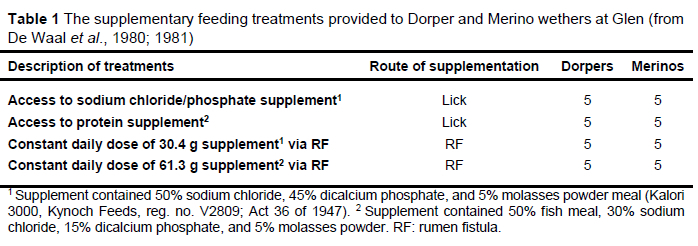
In the first trial of this renewed initiative at Glen, De Waal et al. (1980; 1981) provided two types of supplements to young Dorper and Merino sheep from June 1977 to May 1978; the composition of the two supplements simulated typical phosphorus and protein licks used by farmers (Table 1). The poor response of sheep to supplementary feeding was often ascribed to the sporadic and inconsistent consumption of licks by sheep; therefore, these supplements were provided as both a conventional lick and at a constant daily intake via rumen fistulae (Table 1).
Grazing behaviour was apparently not affected by the differential supplementation of protein or phosphorus, as the diet selected by the oesophageally fistulated wethers did not differ (P >0.05) (De Waal et al., 1980). Some differences (P <0.05) in voluntary herbage intake and body mass changes between treatments and breeds were observed, but with no definite trends (De Waal et al., 1981).
According to De Waal et al. (1981), the poor growth rates of both breeds in the two rumen-fistulated treatments may have been caused by an adverse effect of the supplemented sodium chloride, which was provided daily per fistulam at constant levels of 15.2 and 18.4 g, respectively. At the time, De Waal et al. (1981) speculatively ascribed this response to the possibility that the detrimental effect of sodium chloride may have been alleviated to some extent by the daily supplementation of 17.4 g crude protein per fistulam. Supplementation did not affect (P >0.05) wool production, but wool yield was 60% higher during the summer period of the trial than during winter. This definite effect of season on wool production was ascribed to increases of 82.3% and 18.8% in fibre length and fibre diameter, respectively (De Waal et al., 1981).
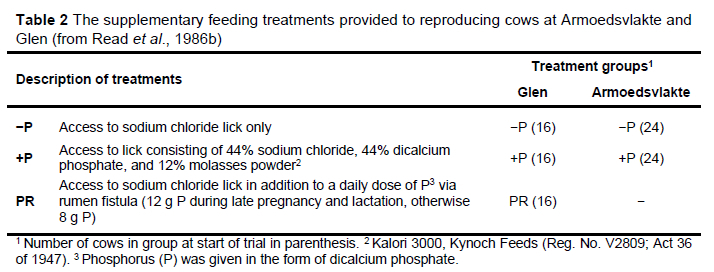
The renewed research on phosphorus supplementation was also continued with beef cattle and sheep at Armoedsvlakte, and initiated with beef cattle at Glen (Table 2). Unlike the earlier studies at Armoedsvlakte by Theiler and co-workers (Theiler, 1912; Theiler et al., 1927; Theiler & Green, 1932), commercially available dicalcium phosphate, instead of bone meal, was used as a phosphorus source (Read et al., 1986a,b,c,d).
Fifty Dorper ewes were also assigned to the +P and -P treatments at Armoedsvlakte (Read et al., 1986a). The -P group had access to a sodium chloride lick and the +P group was given the same lick as the cattle (Table 2).
In the trials at Armoedsvlakte, Read et al. (1986b) assumed that phosphorus was the first identified limiting nutrient (Theiler, 1912; Theiler et al., 1927; Theiler & Green, 1932), and the same assumption was made for the trials at Glen. The critical test of a limiting nutrient is improved animal performance when that nutrient is supplemented. According to Hemingway (1967), depression in reproductive ability is a striking effect of a phosphorus deficiency; thus, the focus at Glen and Armoedsvlakte was on the response of reproducing cattle and sheep to phosphorus supplementation (Read, 1984).
The severity of the phosphorus deficiency differed markedly between Glen and Armoedsvlakte over the trial period of 5.5 years (November 1977 to June 1983) (Read et al., 1986b). At Glen, the body mass and reproductive performance of the beef cows were not affected by phosphorus supplementation. However, at Armoedsvlakte, the cumulative mortality rates of the -P cows was twice that of the +P cows (58.3% versus 27.3%, respectively), the -P cows weighed, on average, 121 kg less, and their reproductive performance was severely impaired. The mortality rate also increased annually, at an increasing rate, in the -P group at Armoedsvlakte, indicating a more rapid deterioration in the condition of the cows with increasing age and prolonged phosphorus deprivation. Deaths occurred more sporadically in the +P group (Read et al., 1986b).
The calves of the +P cows were 9.8% heavier at birth (37.7 versus 34.0 kg) and 21.6% heavier at weaning (231.8 versus 181.8 kg) than those of the -P group. According to Read et al. (1986b), a serious effect of the phosphorus deficiency was the depression of feed or digestible organic matter intake, especially during late lactation and early pregnancy (e.g. in 1979 the daily digestible organic matter intake was 2.752 and 4.925 kg for the -P and +P cows, respectively). This depressed feed intake resulted in stunted growth, increased mortality, and markedly poor reproductive performance. At Glen, no advantage of phosphorus supplementation was observed for any aspect of animal performance. In contrast, a distinct financial advantage was gained in animal performance by providing supplementary phosphorus to reproducing beef cattle at Armoedsvlakte (Read et al., 1986b). Read et al. (1986b) concluded that the phosphorus-supplemented cattle appeared to satisfy their requirements for both crude protein and metabolisable energy at Glen and Armoedsvlakte. This implied a straightforward phosphorus deficiency at Armoedsvlakte (i.e. a response to phosphorus supplementation may occur, potentially mediated by its stimulatory effect on feed intake), provided that the diet contained adequate protein.
The phosphorus content of rib bone samples (mg P/cm3 fresh bone) proved a reliable and sensitive indicator of the phosphorus status of grazing cattle (Read et al., 1986c), with 140-150 mg P/cm3 suggesting adequacy. Concentrations below 100 mg P/cm3 were observed during lactation in the severely phosphorus-deficient cows at Armoedsvlakte. At Glen, there was no suggestion of even a subclinical deficiency; the only advantage of phosphorus supplementation was higher rib bone mineral reserves during late lactation, especially in young heifers.
Blood plasma inorganic phosphorus (Pi) levels indicated that the -P cows at Armoedsvlakte were phosphorus deficient, whereas at Glen, the -P cows tended to have lower levels than the +P cattle, although these differences were rarely significant (Read et al., 1986d). Blood plasma Pi levels below the critical range of 2 mg/100 ml plasma were considered useful for identifying a phosphorus deficiency, but higher levels appeared insensitive for distinguishing between groups, as observed during the Glen trial. Read et al. (1986d) concluded that low blood plasma Pi levels reflected low phosphorus intake, but plasma levels were unsatisfactory for distinguishing between higher levels of phosphorus intake.
Read et al. (1986a) also studied the effects of providing phosphorus supplementation to Dorper ewes, using the same two licks as for cattle in the +P and -P treatments (Table 2) at Armoedsvlakte over a period of 4.5 years (January 1979 to June 1983). The critical issue investigated in this study was whether sheep were as susceptible to a phosphorus deficiency as cattle were. Dorper sheep were bred specifically for the harsh conditions found in the drier regions of South Africa (De Waal & Combrinck, 2000), and were ideal test animals for this trial. The average body mass of the -P ewes was 9.6% less than that of the +P ewes, and, in terms of reproductive performance, the +P group tended to wean heavier lambs. Rib bone phosphorus levels successfully identified the -P Dorper ewes as being phosphorus deficient, and the levels of phosphorus in the rib bone samples also indicated cyclic changes in the ewes' phosphorus reserves, associated with changes in the physiological status of the reproducing ewes.
The confounding effects of sodium chloride in supplements for grazing sheep and cattle
In the previously described trials, sodium chloride was a common ingredient in the supplements. Why, then, the focus on and concern about sodium chloride in the nutrition of grazing livestock? According to De Waal (1994), sodium chloride has played an important role in human societies since ancient times, being used to enhance food flavour, influence settlement sites, serve as a trading commodity, preserve food (notably meat for long sea voyages and the South African dried meat favourite, biltong), and cure or dry animal skins and hides. The latter two applications attest to the well-known and pronounced dehydrating effect of sodium chloride. Furthermore, wild African herbivores have a strong affinity for natural occurring sites of salt (i.e. salt pans), and this phenomenon has given rise to the common name for supplementary feeding, namely licks (De Waal, 1994).
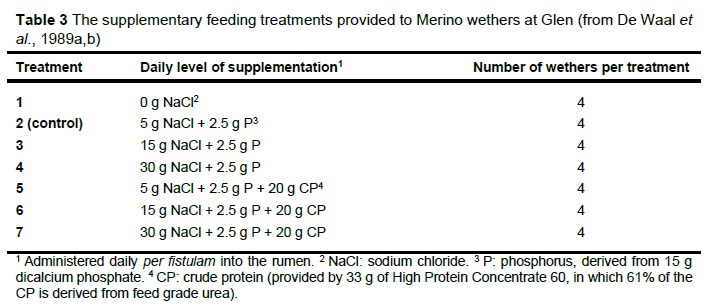
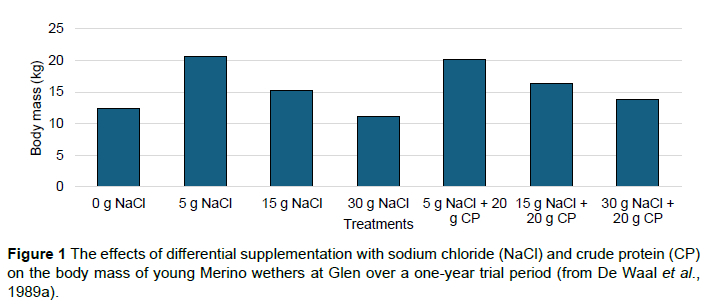
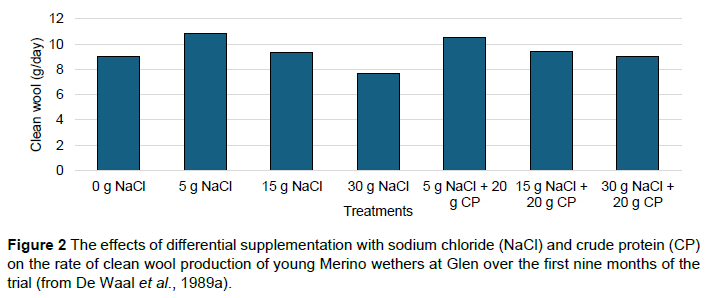
Suspecting that sodium chloride might not be inert in ruminant feeding, De Waal et al. (1989a,b) hypothesised that high levels are detrimental, and provided young Merino wethers at Glen with different supplements daily per fistulam from January 1981 to January 1982 (Table 3). The body mass of the wethers was affected by the supplementation (Figure 1), and within four weeks, the adverse effects of sodium chloride intake on growth rate became evident (Table 3). The daily rate of clean wool production (Figure 2) was also influenced by the differential supplementation during the first nine months of the trial (De Waal et al., 1989a).
These results (Figures 1 and 2) confirmed the hypothesis that a high intake of sodium chloride was detrimental to young sheep grazing veld at Glen (De Waal et al., 1981). Furthermore, compared to wethers receiving 5 g NaCl/day, marked reductions in body mass and wool production were evident when no supplementary sodium chloride was provided (0 g NaCl/day). This demonstrated that young sheep grazing veld at Glen had a nutritional requirement for a small amount of sodium (De Waal et al., 1989a,b).
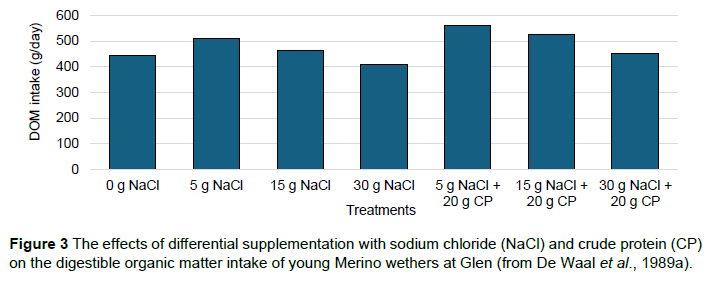
The voluntary digestible organic matter intake of the grazing wethers was measured in May 1981 (Figure 3). The digestible organic matter intake did not differ between the treatments (P >0.05), but appeared to be reduced by incremental levels of sodium chloride and increased by crude protein supplementation (De Waal et al., 1989b).
When the feed intake was determined, the body mass of some wethers had already been markedly affected by the different levels of sodium chloride and crude protein supplementation (De Waal et al., 1989a), and wethers with lower body masses typically ate less than larger sheep. Consequently, by expressing the daily digestible organic matter intake per unit of metabolic size (Wkg0.75), De Waal et al. (1989b) showed that some differences between treatments were eliminated. Hence, the differences in digestible organic matter intake (Figure 3) may have been only partly responsible for the differences in body mass (Figure 1) and wool production (Figure 2) observed.
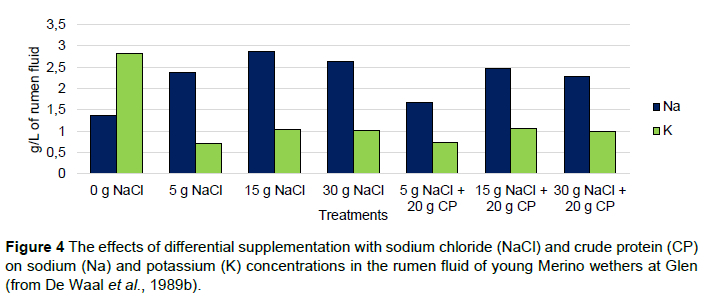
A question remained: what other physiological mechanisms may have mediated the effects of sodium chloride on growth and wool production? In this context, De Waal et al. (1989b) observed indirect responses to the differential supplementation of sodium chloride and crude protein in the rumen fluid of the wethers sampled in May 1981. Wethers receiving 0 g sodium chloride had lower ruminal sodium levels (P <0.05), but markedly elevated ruminal potassium levels (P <0.05) (Figure 4).
The sodium and potassium concentrations in the rumen fluid (Figure 4) suggested that the electrolyte balance of the wethers may have been affected. Sodium is the principal cation of the circulating extracellular fluid and is essential for key physiological processes, including the maintenance of osmotic pressure, body fluid balance, and tissue hydration. Similarly, potassium (K+) is an important cation in the intracellular fluid of the body (De Waal, 1994). To equalise the large concentration gradient of the two cations outside (extracellular) and inside (intracellular) cells, Na+ and K+ diffuse in opposite directions across cell membranes. Water accompanies the hygroscopic Na+ across the cell membranes of the cells, and because of the major physiological implications of this (i.e. swelling of the cells and physiological death), this process of equalisation cannot be tolerated. Sodium and K+ ions are returned against their concentration gradients by active transport across cell membranes; this process is achieved by the sodium pump and, unlike diffusion, requires energy to operate (Baldwin et al., 1980; De Waal, 1994). Baldwin et al. (1980) indicated that 20% to 30% of the basal energy expenditure in animals is accounted for by the transport of Na+/K+ across membranes; therefore, supplementary sodium chloride may disrupt the normal functioning of this transport mechanism. In this context, Na+ and K+ imbalances in the extra- and intracellular fluid compartments may have increased the maintenance energy expenditure of the wethers, leaving less energy available for production and resulting in reductions in both body mass gain and wool production (De Waal et al., 1989a,b; De Waal, 1994).
Stepping up efforts to determine the phosphorus requirements of grazing cattle
Despite the results of numerous trials, speculation regarding the phosphorus requirements of grazing cattle persisted. This uncertainty arose because determining the phosphorus intake of grazing ruminants is difficult and because phosphorus requirements depend on the levels of protein and digestible energy in the pasture (De Waal et al., 1996). Using oesophageally fistulated animals provides reliable information on the protein and digestible organic matter content of the diet ingested (De Waal, 1979); however, pasture samples are contaminated with saliva, and this method is consequently unsuitable for studying a mineral such as phosphorus unless the circulating salivary phosphorus is labelled with 32P (Little et al., 1977). Furthermore, the actual amount of phosphorus ingested is confounded by the amount of protein and digestible energy consumed if an animal grazes until satiety or until the pasture is exhausted. Therefore, it is not practical to relate phosphorus consumption directly to animal production (De Waal et al., 1996).
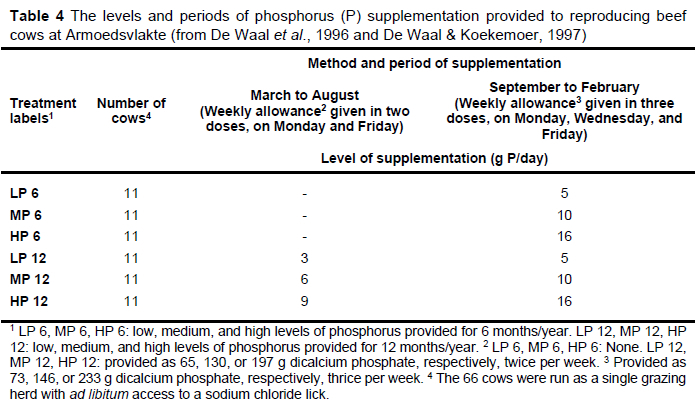
Given the uncertainty regarding phosphorus intake, recommendations for phosphorus supplementation are largely speculative, and grazing cattle may therefore be oversupplied or undersupplied with phosphorus (Read et al., 1986b,c,d). Both scenarios will affect animal production and financial returns. According to Read (1984), the digestible organic matter and crude protein intakes of grazing cattle at Armoedsvlakte were adequate when supplemented with phosphorus; therefore, De Waal et al. (1996) and De Waal & Koekemoer (1997) considered this site ideally suited for trials to quantify the supplementary phosphorus requirements of cattle (Table 4).
The average body mass of the cows over the 59-month trial period (September 1984 to May 1990) showed no period x level interaction, and of the two main effects, only period was significant (P = 0.0162). The cows receiving phosphorus year-round were, on average, 33 ± 13.0 kg heavier than those receiving phosphorus for only six months of the year. Birth mass varied with the level of phosphorus supplementation (P = 0.0463). Weaning percentage varied according to the period of phosphorus supplementation (P = 0.0563) and showed a linear response to the level of phosphorus supplementation (P = 0.0560). The effect of phosphorus level on calf birth mass, but not on calf weaning mass, suggests that when a phosphorus deficiency exists, cows draw on body reserves to shield their calves from the deficiency.
According to De Waal & Koekemoer (1997), the cows not supplemented with phosphorus per fistulam from March to August (Table 4; LP 6, MP 6, and HP 6) had lower blood plasma Pi levels than the 12-month cows (LP 12, MP 12, and HP 12) by late gestation (August). Furthermore, after six months of phosphorus supplementation per fistulam, no differences between the treatments were observed by late lactation (March). This pattern of blood plasma Pi levels was repeated across successive calving seasons, indicating that this parameter reflected short-term phosphorus intake but not necessarily longer-term phosphorus status.
In August 1985, at the end of the first trial year, differences in rib bone phosphorus concentrations were apparent, with those of the HP 6, MP 12, and HP 12 cows being the highest (De Waal & Koekemoer, 1997). By March 1986, during late lactation of the first calving season, only the MP 12 and HP 12 cows maintained their bone phosphorus reserves. The rib bone phosphorus levels in the other treatments were considerably lower and fell well short of the widely accepted normal concentration (140 mg P/cm3 fresh rib bone), and below the level classified as deficient (120 mg P/cm3 fresh bone). The rib bone phosphorus levels in the six-month groups did not recover after six months of phosphorus supplementation. Trends in the rib bone density, measured as specific gravity, were similar to those observed for the individual bone minerals (phosphorus, calcium, and magnesium), indicating that specific gravity may be used as an indicator of bone mineralisation. However, bone specific gravity is less sensitive than a single mineral (e.g. phosphorus), and does not provide information on the reserves of a specific mineral.
At Armoedsvlakte, both the level and period of phosphorus supplementation had a marked effect on calving and weaning performance, as well as on the body mass of the cows. Calving percentage (the ability to produce calves, dead or alive) and weaning percentage (the ability to rear these calves to weaning) are important measures of responses to the different treatments. Although an over-simplification, the LP 6 cows generally exhibited a calving pattern of 'calf-skip-calf-skip', whereas the LP 12 cows typically calved for two successive years before skipping a season. Over the five years of the trial, the calving percentages of these two groups were similar, although slightly favouring the LP 12 cows (De Waal et al., 1996).
Phosphorus supplementation generally did not affect calf weaning masses because the cows mobilised their bone mineral reserves to sustain lactation. However, at the lower levels of phosphorus supplementation, these reserves were eventually depleted, resulting in reduced weaning masses. The greatest financial advantage was achieved by supplementing 16 g P/day from late gestation to late lactation (September to February) and 9 g P/day during the remainder of the year (De Waal et al., 1996).
During this time (1985 to 1990), De Brouwer et al. (2000) studied the effects of phosphorus supplementation on Simmental cows grazing veld at the Highveld Agricultural Experimental Station near Potchefstroom, in the North West Province. Three levels of phosphorus supplementation using dicalcium phosphate were provided, namely 8 (CS), 4 (HS), or 0 (ZS) g P/cow/day. All the cows received 10 g P/cow/day in winter during the 1986-1989 period, but in 1990, supplementation was changed to 10 (CW), 5 (HW), or 0 (ZW) g P/cow/day as part of a winter maintenance supplement (containing protein, energy, and minerals).
The reproduction of the cows and the growth of their calves were not affected (P >0.05) by phosphorus supplementation (De Brouwer et al., 2000). The mean body mass of the CS cows (8 g P/day) was highest (P <0.01), and that of the HS cows (4 g P/day) was higher (P <0.01) than that of the ZS cows (0 g P/day) cows by the end of summer. The condition scores of the CS (8 g P/day) and HS (4 g P/day) cows were better (P <0.01) than those of the ZS cows (0 g P/day). The rib bone phosphorus content (112.6 mg P/cm3 rib bone) was lowest in the ZS (0 g P/day) cows, indicative of deficiency (P <0.01), compared to 141.9 and 130.8 mg P/cm3 for the CS (8 g P/day) and HS (4 g P/day) cows, respectively. The body mass of the cows was affected by phosphorus supplementation (P <0.05) in winter, and both the CW (10 g P/day) and HW (5 g P/day) cows had improved (P <0.01) condition scores and higher (P <0.01) rib bone phosphorus concentrations than the ZW (0 g P/day) cows. Four ZW (0 g P/day) cows died and De Brouwer et al. (2000) ascribed these fatalities to a phosphorus deficiency, as reflected by the very low rib bone phosphorus content (74.5 mg P/cm3 rib bone). Symptoms of phosphorus deficiency were manifested in this entire group. De Brouwer et al. (2000) concluded that reproducing cows should be supplemented with 8.3-9.1 g P/day, and that protein supplementation should also be provided during winter, in addition to phosphorus supplementation.
It is possible that the high sodium chloride intake of the cows in the trial by De Brouwer et al. (2000) may have confounded the results. The summer supplements were offered ad libitum during the 1985/86 and 1986/87 seasons, and the ZS cows (0 g P/day) consumed large quantities of sodium chloride, particularly during the second season, when the average intake was approximately 250 g NaCl/cow/day. According to De Brouwer et al. (2000), this could indicate pica, but despite the high sodium chloride intake, no toxicity symptoms, such as those described by Spangenberg (1997), were observed. Nevertheless, De Brouwer et al. (2000) considered it prudent to adjust the supplement composition to equalise sodium chloride intake between treatments, reducing the average intake to 92 g/cow/day for the remaining summer seasons (1987/88 to 1989/90). As discussed previously, depression in reproductive ability is a striking effect of phosphorus deficiency (Hemingway, 1967); therefore, the conclusion by De Brouwer et al. (2000) regarding a possible phosphorus deficiency in the breeding cows seems questionable.
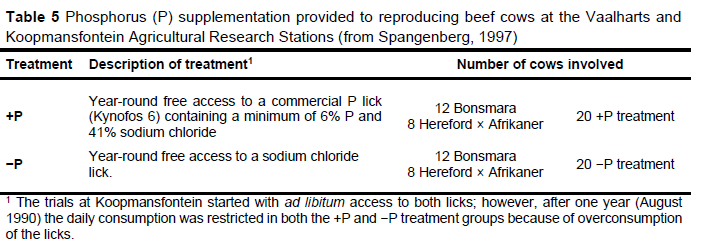
The focus on phosphorus nutrition at Glen and Armoedsvlakte was extended to the Vaalharts (near Jan Kempdorp) and Koopmansfontein (near Barkly West) Agricultural Research Stations in the Northern Cape Province. Forty-eight Bonsmara and 32 Hereford x Afrikaner cows, aged four to six years, were identified as pregnant in August 1989 (i.e. carrying their 2nd, 3rd, or 4th calves). The cows were allotted randomly, within breeds and age groups, to the sites and treatments (+P and -P), using the same design at both sites (Table 5), and the trials were conducted from August 1989 to June 1994 (Spangenberg, 1997).
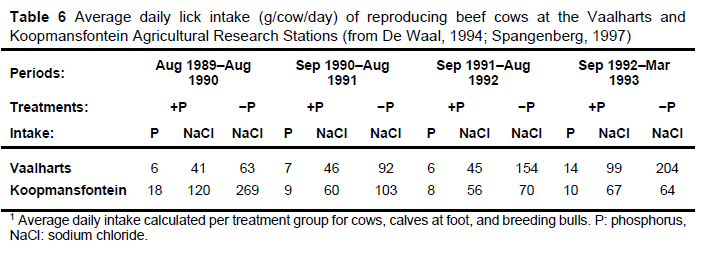
Average to poor rainfall was received at both Vaalharts and Koopmansfontein during the study period, affecting the quantity and quality of the veld (Spangenberg, 1997) and, consequently, the voluntary lick consumption of the cattle (Table 6). At Vaalharts, lick consumption (i.e. the average lick intake of cows, bulls during mating, and calves at foot until weaning) increased with progressive drought conditions in consecutive years. Over the trial period, the average lick consumption of the +P cows at Vaalharts was 7.4 g P/day and 51.8 g NaCl/day, whereas the -P cows consumed 131.5 g NaCl/day. The sodium chloride consumption of the -P cows was thus 155% higher than that of the +P cows.
A different situation occurred at Koopmansfontein, where the average lick consumption (Table 6) of both groups was high from the start, resulting in consumptions of 18.0 g P/day and 127.7 g NaCl/day for the +P cows and a staggering 269.2 g NaCl/day for the -P cows during the first year. The average consumption of the -P cows peaked at 413 g NaCl in February 1990 (Spangenberg, 1997). This overindulgence in lick was allowed to continue for a year without intervention; however, from 21 August 1990, lick consumption was restricted for both groups to set levels of 80 g NaCl/day and 12 g P/day for the +P cows, and 80 g NaCl/day for the -P cows (Spangenberg, 1997). If this intervention at Koopmansfontein is disregarded, entirely misleading average consumption rates of 10.3 g P/day and 73.3 g NaCl/day for the +P cows, and 113.4 g NaCl/day for the -P cows were recorded. Ultimately, seven cows in the -P group died.
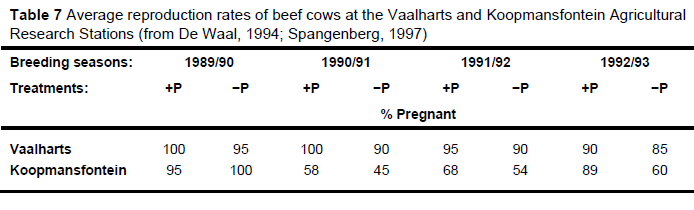
The sudden overindulgence in licks, and thus the high sodium chloride intake by cows in both the +P and -P treatment groups at Koopmansfontein, had a major impact on reproduction (Table 7). After the sharp decline in conception rates for both the +P and -P groups in 1990/91 (58% and 45%, respectively), the intervention to reduce the high sodium chloride intake resulted in the reproductive performance of the cows in both treatments recovering steadily in subsequent years, although this recovery was slower for the -P cows (Spangenberg, 1997).
At Vaalharts, the performance of the cows and calves was reflected (P >0.05) in the financial outcomes of the treatments, whereas at Koopmansfontein, the performance favoured the +P cows (P >0.05), and this was reflected in the financial outcome (Spangenberg, 1997).
At Vaalharts, the rib bone phosphorus did not differ (P >0.05) between treatments. As discussed previously, the body mass losses of both the +P and -P cows occurred very rapidly after the trial commenced at Koopmansfontein (Spangenberg, 1997). Furthermore, clinical symptoms - particularly stiffness, anorexia, and discoordination - developed rapidly in the -P cows, followed by deaths one year after the trial started. Therefore, the lower (P >0.05) rib bone phosphorus content of the -P cows (119.3 mg P/cm3 fresh rib bone), compared to the 148.3 mg P/cm3 in the +P cows over the trial period, suggested a borderline phosphorus deficiency (Spangenberg, 1997).
Reflecting on the variables measured at Vaalharts, Spangenberg (1997) concluded that there was no evidence of a phosphorus deficiency, although some phosphorus supplementation would be prudent under extreme drought conditions. At Koopmansfontein, it was hypothesised that the very high sodium chloride intake may have aggravated a borderline phosphorus deficiency, as observed in the -P cows. It was accepted that, when not supplemented, the cows at Koopmansfontein experienced a phosphorus deficiency, albeit a borderline one.
The varied responses to phosphorus supplementation at Armoedsvlakte and Glen were well known, but uncertainty regarding the benefits of phosphorus supplementation in regions such as the Molopo area of the North West Province, remained (Wessels, 1999). A survey conducted in the early 1990s (Jannie van den Heever, 1994; personal communication) showed that only 17% of the farmers in this region were supplementing according to the norms of <10 g P/cow/day and <80 g NaCl/cow/day, as recommended by the department. Most farmers were supplementing at much higher levels, and it was estimated that ZAR 3.5 million could be saved by simply following departmental guidelines.
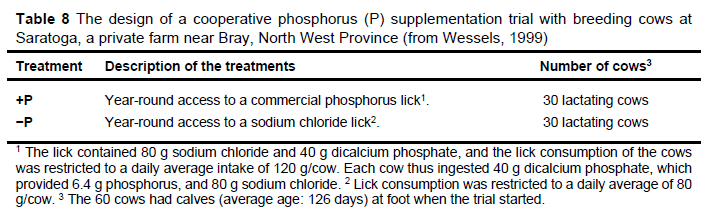
After successfully negotiating with a beef cattle farmer, a cooperative phosphorus supplementation trial was conducted at Saratoga, a private farm near Bray in the Molopo region of the North West Province. Sixty lactating beef cows of mixed genotype, with calves at foot (average age: 126 days) and aged four to eight years (i.e. capable of producing their 2nd, 3rd, 4th, 5th, or 6th calves), were randomly allotted within age groups to two treatments (Table 8). The trial was conducted from 21 April 1992 to 5 January 1993 (Wessels, 1999).
As in the trials at Vaalharts and Koopmansfontein (Spangenberg, 1997), poor rainfall at Saratoga during the very dry year of 1992 resulted in average to poor quantity and quality veld (Wessels, 1999). When the trial commenced, licks were added to troughs weekly at an anticipated intake of 80 g NaCl/cow/day. However, the lick was consumed in just over a day (Wessels, 1999), with some dominant -P cows consuming approximately 500 g sodium chloride each within 10 minutes (De Waal, 1994). Very soon, two +P cows and 15 -P cows exhibited stiffness, anorexia, and incoordination, symptoms also reported by Spangenberg (1997). Additional lick troughs were provided for both treatments to decrease voluntary intake (Wessels, 1999).
After weaning the first batch of calves on 30 June 1992, the lick intake of the +P cows decreased, whereas that of the -P cows remained high. The symptoms described previously disappeared in the +P cows. Based on the experience gained at Koopmansfontein (Spangenberg, 1997), the weekly allowances for both the +P and -P cows were provided in two smaller portions, on Mondays and Thursdays (Wessels, 1999). In response, the lick intake of the +P cows dropped to the acceptable levels of 80 g sodium chloride and 6 g phosphorus per cow per day. Although the sodium chloride intake of the -P cows also decreased over time, they maintained a high intake, and two eventually died (Wessels, 1999).
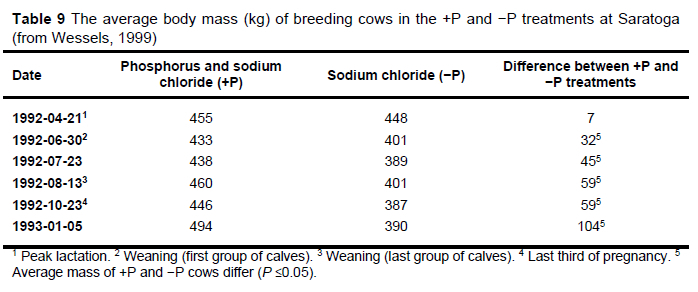
The sharp loss of body mass and concomitant anorexia (severe emaciation) of the -P cows at Saratoga (Table 9), as also reported at Koopmansfontein, was attributed to the very high initial sodium chloride intake and its detrimental effects (De Waal, 1994; Spangenberg, 1997; Wessels, 1999). Some context on the high sodium chloride intake and its potential detrimental effects is thus warranted. At Armoedsvlakte, the +P cows consumed, on average, 71.5 g NaCl/day during the trial (53, 66, 54, 88.5, and 96 g NaCl/day for successive years, or parts of years) (Read, 1984). This was lower than the 110 g NaCl/day (93, 104, 162, 151, 53, 87, and 102 g NaCl/day for successive years, or parts of years) reported by De Waal et al. (1996) when phosphorus was supplemented per fistulam at different levels and over different periods (see Table 4). Compared to the consumption at Armoedsvlakte, the voluntary sodium chloride intake at Saratoga was much higher, particularly for the -P cows (Wessels, 1999).
Previously, De Waal et al. (1989a,b) reported the detrimental effects of sustained high sodium chloride intake on the growth and wool production of Merino wethers at Glen. In such cases, animals may become trapped in a cycle of high sodium chloride intake, leading to high water intake and, consequently, lower herbage consumption. According to Drori (1976), high levels of sodium chloride intake cause disturbances in the water-electrolyte balance induced by hypodipsia (subliminal thirst).
Although sodium chloride intake induces thirst (Drori, 1976), recent trials provided no evidence that animals consumed sufficient water to maintain normal water and electrolyte balance or unimpaired energy utilisation. Therefore, the hypothesis proposed by De Waal et al. (1989a,b) was supported by observations at both Koopmansfontein (Spangenberg, 1997) and Saratoga (Wessels, 1999). Cows were progressively affected, deteriorated in condition, and collapsed in order of their dominance at the lick troughs; cows dominated the troughs only until the sustained high sodium chloride intake resulted in serious emaciation.
Unforeseen logistical challenges delayed the start of the trial at Saratoga until April 1992 (Wessels, 1999). The difference in body mass between the +P and -P cows at this time was only 7 kg, but this difference increased (P <0.05) rapidly as the trial progressed (Table 9). The drop in the body mass of the mature cows during the last third of lactation can be partly attributed to the effects of the severe drought (Wessels, 1999). Had grazing conditions not been affected by the drought, cows would have been expected to gain body mass during the final phase of lactation, approaching the weaning of their calves (De Waal, 1990). The widening gap in body mass between the +P and -P cows persisted until the trial was suspended on 5 January 1993 (Wessels, 1999). The greater body mass losses of the -P cows, compared to the +P cows (Table 9), were most likely caused by the detrimental effects of their high sodium chloride intake, rather than by a phosphorus deficiency.
Despite the marked effects on the body mass of the -P cows, the 205-day corrected body mass values for the +P heifer and bull calves were 208 and 214 kg, respectively, compared to 203 and 213 kg, respectively, for the -P calves. Thus, the 205-day corrected body mass of the calves did not differ (P >0.05) between the +P and -P treatments (Wessels, 1999).
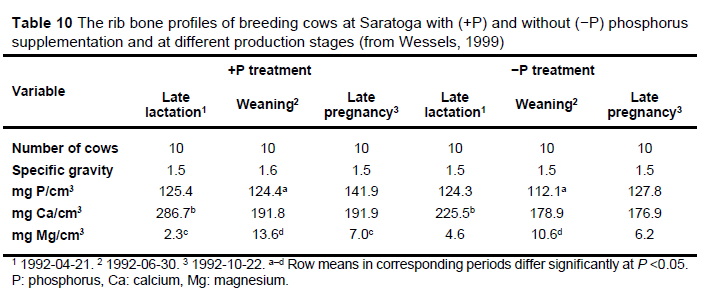
The trial at Saratoga was suspended on 5 January 1993 because 17 of the -P cows showed severe symptoms of stiffness, anorexia, and incoordination, with two cows eventually dying (Wessels, 1999). However, the rib bone phosphorus profiles (Table 10) of the +P and -P cows, which were sampled on 22 October 1992, during late pregnancy (141.9 and 127.8 mg P/cm3 fresh rib bone, respectively), indicated sufficient phosphorus in both treatment groups (Wessels, 1999). In terms of rib bone phosphorus (Table 10), the -P cows were able to recover from a marginally phosphorus-deficient status at weaning without phosphorus supplementation.
Pronouncing a verdict of sufficient or adequate phosphorus levels in rib bone samples requires some clarification. Little & Shaw (1979) stated: 'Levels over 150 mg P/cm3 in samples from the 12th rib would indicate adequacy, and levels 'around' 120 mg P/cm3, deficiency, although the nutritional history of the animals must also be considered before pronouncing them as being phosphorus deficient because it is possible for concentration higher than 150 mg P/cm3 to be observed in bone samples from phosphorus-deficient animals.' Furthermore, Read (1984) and Groenewald (1986) both used the modified technique of rib bone sampling that was developed at Glen (Read, 1984), and reported levels of 144 and 162 mg P/cm3, respectively, as being normal, while levels of 124 and 132 mg P/cm3, respectively, were reported as possibly being indicative of a phosphorus deficiency.
The performance of the -P cows at Koopmansfontein (Spangenberg, 1997) and Saratoga (Wessels, 1999) could not, with certainty, be attributed to a lack of phosphorus in their diet, as it was more likely caused by the confounding effects of a sudden and sustained overindulgence in sodium chloride and its negative effects, inter alia possibly an induced phosphorus deficiency.
According to De Waal et al. (1996), the procedure of monitoring lick intake monthly on a group basis (across all treatments, inclusive of breeding bulls and calves at foot) is ineffective. This is because consumption must be monitored over shorter intervals (7 to 14 days), and the average daily lick intake of a group of animals, especially where sodium chloride is involved as the sole component of a lick, tends to mask the large variation between animals. Animal behaviour should also be observed frequently, particularly at the troughs, as lick consumption by calves increases gradually until weaning, and this can affect the calculated daily intake of the cows. However, additional facilities, such as creep feeding enclosures for calves and elevated troughs for cows, will enable the separate determination of the lick intake of cows and calves. Furthermore, phosphorus supplementation alters the number of calves born annually, and this has a variable effect on the calculation of the average lick consumption.
Meissner et al. (1995) held the view that mineral supplementation and mineral nutrition were generally neglected in South Africa from 1985 to 1990. Progress in this field is difficult, and experiments are laborious, but the need remains to demarcate the locations of deficiency and toxicity. Furthermore, efforts in the past have not adequately considered the selective and seasonal feeding patterns of animals. In conclusion, Van Niekerk (1996) reviewed literature spanning a period of 70 years and suggested that a possible cause of salt-related poor animal performance could be attributed to a depression in voluntary feed intake. The sensing site for hypertonicity was apparently not located in the rumen, because salt injected into the abomasum did not affect feed intake; therefore, the ability of sodium chloride to limit feed intake is likely caused by post-ingestive effects rather than palatability. Van Niekerk (1996) concluded that the results of many supplementary feeding trials should be reviewed in light of more recent findings. In this regard, De Waal (1994) also cautioned that sodium chloride should no longer be regarded as an inert substance in ruminant feeding.
Osteochondrosis
Prozesky (2012) and Prozesky & Shepstone (2012) reported on a phenomenon of arthrosis, later termed osteochondrosis, in beef cattle, describing inflammation of a joint that was not contagious. Cases of this condition have been reported in the North West, Northern Cape, Free State, and KwaZulu-Natal Provinces of South Africa, and the south-western parts of Namibia and Botswana, since 1982. Although cases have been observed in bulls and older cows, the condition occurs in cattle of all ages; calves may even be born with lesions (Prozesky, 2012). The incidence of affected animals on farms varies, but 20%-30%, and in some instances up to 80%, of weaners have been found to be affected (Prozesky & Shepstone, 2012).
Prozesky et al. (2016) noted that aphosphorosis (stiff sickness) had been observed in cattle since the 1800s. Aphosphorosis is caused by a phosphorus deficiency that leads to osteomalacia, and affected animals develop botulism and die because of their consumption of bones contaminated with C. botulinum (Theiler et al., 1927). The introduction of bone meal and sodium chloride licks for grazing ruminants to prevent osteomalacia and botulism appeared to have resolved the osteomalacia (De Waal & Koekemoer, 1997; De Waal et al., 1996). However, since 1982, farmers and veterinarians have reported lameness in cattle accompanied by swelling of the stifle (femorotibial) joint because of effusions into the joint (Prozesky & Shepstone, 2012; Prozesky et al., 2016). Post-mortems showed ulceration of the joint cartilage and collapse of the underlying bone (Prozesky & Shepstone, 2012), and macro- and microscopical lesions of the joints resembled osteochondrosis (Van der Veen et al., 2017). It was hypothesised that a low (i.e. negative) dietary cation-anion difference (McDonald et al., 2011) in the diet predisposes growing cattle to the development of osteochondrosis or exacerbates subclinical or clinical osteochondrosis in cattle (Van der Veen et al., 2017). The importance of the dietary cation-anion difference in the context of animal nutrition was detailed by McDonald et al. (2011).
According to Botha (2018), a discussion panel convened, leading to the development of the Arthrosis project and considerations of numerous trials for cattle. It was concluded that no specific data were available on the composition and quantities of supplements consumed, which could explain why as many as 40% of the animals on some farms were culled because of osteochondrosis. An Arthrosis Research Team was created to 'investigate the problem and provide guidance for research projects to resolve the problem and to better understand the aetiology of this health issue in cattle within the affected area'. A diagnostic tool was needed for on-farm evaluations, to assist in establishing the prevalence of osteochondrosis, and Botha (2018) described the development of such a diagnostic tool, namely the Onderstepoort Osteochondrosis Lesion Scoring (OPOLS) system. In an encompassing study, Botha (2018) used a large volume of OPOLS data, biological samples collected from cattle in the North West Province, and data from a controlled phosphorus trial with cattle (i.e. using different phosphorus sources in supplements), and concluded that 'the bone mineral comparisons between healthy and osteochondrosis-affected cattle, and the commercial trial when cattle were supplemented with specialised minerals, supported the hypothesis that osteochondrosis is related to the diet of the animals'. Using the OPOLS on-farm methodology, research on osteochondrosis must be expanded to test the hypotheses regarding the effects of mineral imbalances, nutritional supplements, phosphorus sources, gender, and age, on the prevalence of osteochondrosis. The OPOLS data from such trials will help to improve the understanding of the high prevalence of osteochondrosis on some farms and to reduce the associated losses (Botha, 2018).
Conclusions
Earlier studies created the misconception that the quality of herbage ingested by ruminant livestock is generally low and deficient in several nutrients (e.g. phosphorus and protein), and requires supplementation to support reasonable levels of animal production. Later studies refuted this view and showed that the selective grazing behaviour of sheep and cattle allows them to ingest good-quality diets. By applying sound veld and animal management practices, good levels of animal production can be achieved on veld in South Africa. Such practices incorporate adhering to the long-term grazing capacities of veld, opting for appropriate lambing and calving seasons in relation to the production of the veld, and using strategic supplementary feeding practices. Cattle may benefit from strategic and judicious phosphorus supplementation on veld, as was demonstrated at Armoedsvlakte, the most well-defined site in South Africa with an acute phosphorus deficiency for cattle. The best financial advantage was gained by supplementing cows with 16 g P/day during late gestation to late lactation (September to February) and 9 g P/day during the rest of the year. However, it is important to manage the lick intake at troughs and restrict the daily intake on a herd basis to less than 80 g NaCl/head. Animal response to phosphorus supplementation varies and the results have been confounded by the adverse effects of sustained high levels of sodium chloride consumption. Phosphorus availability may also have played a role. The results of many supplementary feeding trials on veld should be reviewed, considering the effects highlighted by recent findings. Moreover, the cattle affected, and the symptoms ascribed to arthrosis or osteochondrosis from 1982 are in stark contrast to those reported since the early 1900s for classical aphosphorosis, namely a phosphorus deficiency.
Acknowledgements
I am indebted to those who have walked the path in studying the nutrition of grazing ruminant livestock with me.
Conflict of interest declaration
The author has no conflict of interest.
References
Baldwin, R.L., Smith, N.E., Taylor, J., & Sharp, M., 1980. Manipulating metabolic parameters to improve growth rate and milk secretion. Journal of Animal Science, 51:1416. DOI: https://doi.org/10.2527/jas1981.5161416x [ Links ]
Belonje, P.C., 1978. An investigation into possible methods of assessing the intake of calcium and phosphorus by grazing sheep. Onderstepoort Journal of Veterinary Research, 45:7-22. [ Links ]
Bisschop, J.H.R., 1964. Feeding phosphates to cattle. Department of Agricultural Technical Services Science Bulletin, 365:267. [ Links ]
Botha, F.K., 2018. The importance of minerals on the prevalence of osteochondrosis in cattle in southern Africa. MSc (Veterinary Science) thesis, Department of Paraclinical Sciences, Faculty of Veterinary Science, University of Pretoria, Pretoria. [ Links ]
Coetzee, C.G., 1969. Proteïenaanvulling op hoë en lae voedingspeile. Handelinge van die Suid-Afrikaanse Vereniging vir Diereproduksie, 8:43-48. [ Links ]
De Brouwer, C.H.M., Cilliers, J.W., Vermaak, L.M., Van der Merwe, H.J., & Groenewald, P.C.N., 2000. Phosphorus supplementation to natural grazing for beef cows in the Western Highveld region of South Africa. South African Journal of Animal Science, 30:43-52. DOI: https://doi.org/10.4314/sajas.v30i1.3875 [ Links ]
De Waal, H.O., 1979. Die voedingswaarde van veldweiding van die sentrale Oranje-Vrystaat vir skape met spesiale verwysing na die rol van proteïen- en fosforaanvullings. MSc (Agric) thesis, University of Stellenbosch, South Africa. [ Links ]
De Waal, H.O., 1986. Die voedingswaarde van veldweiding van die sentrale Oranje-Vrystaat vir lakterende skape met spesiale verwysing na die rol van aanvullende energie en ruproteïen. PhD (Agric) thesis, University of Stellenbosch, South Africa. [ Links ]
De Waal, H.O., 1990. Animal production from native pasture (veld) in the Free State Region - A perspective of the grazing ruminant. South African Journal of Animal Science, 20:1-9. [ Links ]
De Waal, H.O., 1994. Effects of sodium chloride (salt) on grazing ruminants - A perspective. AFMA Matrix, 3(1):15-22. [ Links ]
De Waal, H.O., Baard, M.A., & Engels, E.A.N., 1989a. Effects of sodium chloride on sheep. 1. Diet composition, body mass changes and wool production of young Merino wethers grazing native pasture. South African Journal of Animal Science, 19:27-33. [ Links ]
De Waal, H.O., Baard, M.A., & Engels, E.A.N., 1989b. Effects of sodium chloride on sheep. 2. Voluntary feed intake and changes in certain rumen parameters of young Merino wethers grazing native pasture. South African Journal of Animal Science, 19:34-42. [ Links ]
De Waal, H.O. & Combrinck, W.J., 2000. The Dorper - its nutrition and a perspective of the grazing ruminant on veld. Small Ruminant Research, 36:103-117. DOI: https://doi.org/10.1016/S0921-4488(99)00155-8 [ Links ]
De Waal, H.O., Combrinck, W.J., Howard, M.D., & Fouché, H.J., 2000. The impact of climate on veld (natural pasture or rangeland) and animal production. In: Proceedings of the Joint Zimbabwe Society for Animal Production (ZSAP)/Food and Agricultural Organization (FAO) Workshop on Strategies for Dry Season Feeding of Animals, 25-27 October 1999, Harare Club, Harare, Zimbabwe. [ Links ]
De Waal, H.O., Engels, E.A.N., & Biel, L.C., 1983. A note on the insertion of rumen cannulae in pregnant ewes. South African Journal of Animal Science, 13:264-265. [ Links ]
De Waal, H.O., Engels, E.A.N., & Van der Merwe, F.J., 1980. Supplementing sheep with protein and phosphorus on native pasture of the central Orange Free State. 1. Diet composition, digestibility and rumen ammonia concentration. South African Journal of Animal Science, 10:203-208. [ Links ]
De Waal, H.O., Engels, E.A.N., Van der Merwe, F.J., & Biel, L.C., 1981. Supplementing sheep with protein and phosphorus on native pasture of the central Orange Free State. 2. Feed intake, mass changes and wool production. South African Journal of Animal Science, 11:217-227. [ Links ]
De Waal, H.O. & Koekemoer, G.J., 1997. Blood, rib bone and rumen fluid as indicators of phosphorus status of grazing beef cows supplemented with different levels of phosphorus at Armoedsvlakte. South African Journal of Animal Science, 27:76-85. [ Links ]
De Waal, H.O., Randall, J.H., & Koekemoer, G.J., 1996. The effects of phosphorus supplementation on body mass and reproduction of grazing beef cows supplemented with different levels of phosphorus at Armoedsvlakte. South African Journal of Animal Science, 26:29-36. [ Links ]
Du Toit, P.J., Louw, J.G., & Malan, A.I., 1940. A study of the mineral content and feeding value of natural pastures in the Union of South Africa (final report). Onderstepoort Journal of Veterinary Science and Animal Industry, 14(1 & 2):123-327. [ Links ]
Drori, D., 1976. The effect of sodium chloride ingestion on food and fat deposition in male rats. British Journal of Nutrition, 35(2):195-200. DOI: https://doi.org/10.1079/BJN19760023 [ Links ]
Engels, E.A.N., 1972. A study of the nutritive value of natural- and sown pasture in the central Orange Free State with special reference to the energy requirements of sheep. PhD(Agric) thesis, University of Stellenbosch, South Africa. [ Links ]
Engels, E.A.N., 1981. Mineral status and profiles (blood, bone and milk) of the grazing ruminant with special reference to calcium, phosphorus and magnesium. South African Journal of Animal Science, 11:171-182. [ Links ]
Engels, E.A.N., Baard, M.A., & Malan, A., 1974a. Estimation of forage intake on pasture using faecal nitrogen concentration and in vivo digestibility results. Agroanimalia, 6:81-86. [ Links ]
Engels, E.A.N., De Waal, H.O., Biel, L.C., & Malan, A., 1981. Practical implications of the effect of drying and treatment on nitrogen content and in vitro digestibility of samples collected by oesophageally fistulated animals. South African Journal of Animal Science, 11:247-254. [ Links ]
Engels, E.A.N. & Malan, A., 1978. Die invloed van twee veebeladings op die samestelling van die dieet en inname van skape in 'n driekampstelsel in die sentrale Oranje-Vrystaat. Suid Afrikaanse Tydskrif vir Veekunde, 8:1925. [ Links ]
Engels, E.A.N. & Malan, A., 1979. Feed intake of non-pregnant, pregnant and lactating ewes on native pasture and lucerne hay. South African Journal of Animal Science, 9:27-32. [ Links ]
Engels, E.A.N., Malan, A., & Baard, M.A., 1974b. The voluntary feed intake of three breeds of sheep on natural pasture. South African Journal of Animal Science, 4:27-29. [ Links ]
Engels, E.A.N., Van Schalkwyk, A., & Hugo, J.M., 1969. The determination of the nutritive value potential of natural pastures by means of an oesophageal fistula and faecal indicator technique. Agroanimalia, 1:119-122. [ Links ]
Engels, E.A.N., Van Schalkwyk, A., Malan, A., & Baard, M.A., 1971. The chemical composition and in vitro digestibility of forage samples selected by oesophageal fistulated sheep on natural pasture of the central Orange Free State. South African Journal of Animal Science, 1:43-44. [ Links ]
Faure, A.S., Minnaar, G.J., & Burger, F.J.L., 1983. The nutritive value of natural pasture in the Gordonia district. South African Journal of Animal Science, 13:116-119. [ Links ]
Faure, A.S., Minnaar, G.J., & Burger, F.J.L., 1985. Phosphorus supplementation of Karakul sheep grazing natural pasture. South African Journal of Animal Science, 15:33-37. [ Links ]
Groenewald, I.B., 1986. Die invloed van stikstof-, energie- en fosforbevattende lekaanvullings op die produksie- en reproduksievermoë van koeie op natuurlike weiding. PhD thesis, University of the Orange Free State, Bloemfontein, South Africa. [ Links ]
Hemingway, R.G., 1967. Phosphorus and the ruminant. Outlook on Agriculture, 5:172-180. [ Links ]
Little, D.A., 1972. Bone biopsy in cattle and sheep for studies of phosphorus status. Australian Veterinary Journal, 48:668-670. DOI: https://doi.org/10.1111/j.1751-0813.1972.tb09244.x [ Links ]
Little, D.A., McLean, R.W., & Winter, W.H., 1977. Prediction of the phosphorus content of herbage consumed by grazing cattle. The Journal of Agricultural Science, 88:533-538. DOI: https://doi.org/10.1017/S0021859600037217 [ Links ]
Little, D.A. & Shaw, N.H., 1979. Superphosphate and stocking rate effect on a native pasture oversown with Stylosanthes humilis in central coastal Queensland. 5. Bone phosphorus levels in grazing cattle. Australian Journal of Experimental Agriculture and Animal Husbandry, 19:645-651. DOI: https://doi.org/10.1071/EA9790645 [ Links ]
Lombard, P.E., 1966. Nutritional value of the pastures of the O.F.S. region for beef cattle production. DSc thesis, University of the Orange Free State, Bloemfontein, South Africa. [ Links ]
Louw, G.N., 1969. The nutritive value of natural grazing in South Africa. Proceedings of the South African Society of Animal Production, 8:57-62. [ Links ]
Louw, G.N., 1978. Die aanwending van voedselbronne vir diereproduksie. Suid Afrikaanse Tydskrif vir Veekunde, 8:79-84. [ Links ]
Louw, G.N., 1979. An evaluation of the application of stock licks in South Africa. South African Journal of Animal Science, 9:133-144. [ Links ]
McDonald, P., Edwards, R.A., Greenhalgh, J.F.D., Morgan, C.A., Sinclair, L.A., & Wilkinson, R.G., 2011. Animal Nutrition, 7th edition. Pearson Education Limited, Edinburgh Gate, Harlow, Essex CM20 2JE, England. [ Links ]
Meissner, H.H., Hofmeyr, H.S., Van Rensburg, W.J.J., & Pienaar, J.P., 1983. Classification of livestock for realistic prediction of substitution values in terms of a biologically defined Large Stock Unit. Department of Agriculture Technical Communication, No. 175:39, Pretoria, South Africa. [ Links ]
Meissner, H.H., Van Niekerk, W.A., Paulsmeier, D.V., & Henning, P.H., 1995. Ruminant nutrition research in South Africa during the decade 1985/1995. South African Journal of Animal Science, 25:118-131. DOI: https://hdl.handle.net/10520/EJC-1f03b9e81a [ Links ]
Prozesky, L., 2012. Wat is artrose? Vrae oor artrose. Boere Handleiding/Farmers' Guide. Simbra Joernaal/Journal, 2012:99-100. [ Links ]
Prozesky, L., Neser, J., Meissner, H., Botha, K., Jacobs, L., Shepstone, C., Viljoen, H., Köster, H., De Brouwer, C., Van Zyl, J., & Van der Veen, G., 2016. Preliminary report on osteochondrosis in cattle in the north-western parts of South Africa. Onderstepoort Journal of Veterinary Research, 83(1):a1083. DOI: http://dx.doi.org/10.4102/ojvr.v83i1.1083 [ Links ]
Prozesky, L. & Shepstone, C., 2012. Arthrosis with lameness in cattle. Boere Handleiding/Farmers' Guide. Simbra Joernaal/Journal, 2012:101-104. [ Links ]
Read, M.V.P., 1984. Animal performance from natural pastures and the effects of phosphorus supplementation. MSc (Agric) thesis, University of Stellenbosch, South Africa. [ Links ]
Read, M.V.P., Engels, E.A.N., & Smith, W.A., 1986a. Phosphorus and the grazing ruminant. 1. The effects of supplementary P on sheep at Armoedsvlakte. South African Journal of Animal Science, 16:1-6. [ Links ]
Read, M.V.P., Engels, E.A.N., & Smith, W.A., 1986b. Phosphorus and the grazing ruminant. 2. The effects of supplementary P on cattle at Glen and Armoedsvlakte. South African Journal of Animal Science, 16:7-12. [ Links ]
Read, M.V.P., Engels, E.A.N., & Smith, W.A., 1986c. Phosphorus and the grazing ruminant. 3. The rib bone sample as an indicator of the P status of cattle. South African Journal of Animal Science, 16:13-17. [ Links ]
Read, M.V.P., Engels, E.A.N., & Smith, W.A., 1986d. Phosphorus and the grazing ruminant. 4. Blood and faecal grab samples as indicators of the P status of cattle. South African Journal of Animal Science, 16:18-22. [ Links ]
Spangenberg, H.P., 1997. Phosphorus supplementation to grazing beef cows at two sites in the Northern Cape. PhD thesis, University of the Orange Free State, Bloemfontein, South Africa. [ Links ]
Theiler, A., 1912. Facts and theories about styfziekte and lamziekte. Second Report of the Director of Veterinary Research, 7-78. URI: http://hdl.handle.net/2263/13245 [ Links ]
Theiler, A., Viljoen, P.R., Green, H.H., Du Toit, P.J., Meier, H., & Robinson, E.M., 1927. Lamsiekte (Parabotulism) in cattle in South Africa. 11th and 12th Reports of the Director of Veterinary Education and Research, 821. [ Links ]
Theiler, A. & Green, H.H., 1932. Aphosphorosis in ruminants. Nutritional Abstracts and Reviews, 1:359-385. [ Links ]
Underwood, E.J. & Suttle, N.F., 1999. The Mineral Nutrition of Livestock, 3rd edition. CAB International Publishing, UK. [ Links ]
Van der Merwe, F.J., 1974. Nuutste ontwikkelinge in kennis oor die mineraalmetabolisme en mineraalversorging van herkouers. South African Journal of Animal Science, 4:271-274. [ Links ]
Van der Merwe, F.J., 1985. Dierevoeding. Kosmo-Uitgewery, Stellenbosch. [ Links ]
Van der Merwe, F.J. & Perold, I.S., 1967. Trace elements in natural pastures. Journal of the South African Veterinary Association, 38:355-363. [ Links ]
Van der Veen, G., Fosgate, G.T., Botha, F.K., Meissner, H.H., Jacobs, L., & Prozesky, L., 2017. Response of cattle with clinical osteochondrosis to mineral supplementation. Onderstepoort Journal of Veterinary Research, 84(1):a1365. DOI: https://doi.org/10.4102/ojvr.v84i1.1365 [ Links ]
Van Niekerk, B.D.H., 1996. Limiting nutrients in supplementary feeding. Bulletin of the Grassland Society of Southern Africa, 7(1):51-62. [ Links ]
Van Niekerk, B.D.H. & Jacobs, G.A., 1985. Protein, energy and phosphorus supplementation of cattle fed low-quality forage. South African Journal of Animal Science, 15(4):133-136. [ Links ]
Van Schalkwyk, A., Lombard, P.E., & Vorster, L.F., 1968. Evaluation of the nutritive value of a Themeda triandra pasture in the central O.F.S. II. Comparison between quadrat and simulated grazing samples. South African Journal of Agricultural Science, 11:249-258. [ Links ]
Ward, H.K., 1968. Supplementation of beef cows grazing on veld. Rhodesian Journal of Agricultural Research, 6:93. [ Links ]
Wessels, T.C., 1999. Phosphorus supplementation to grazing beef cows in the Molopo region (Saratoga) of the North-West Province. MSc (Agric) dissertation, University of the Free State, Bloemfontein, South Africa. [ Links ]
Submitted 09 July 2025
Accepted 16 September 2025
Published 04 November 2025
# Corresponding author: dewaalho0@gmail.com