



Services on Demand
Journal

Article
 English (pdf)
 Article in xml format
 Article references
 Automatic translation
 Send this article by e-mail
Indicators
Related links
-
 Cited by Google
 -
 Similars in Google
Share

 Permalink
Journal of Contemporary Management
On-line version ISSN 1815-7440
JCMAN vol.13 n.1 Meyerton 2016
RESEARCH ARTICLES
s
An empirical investigation into the effectiveness of consumer generated content on the purchase intention of sports apparel brands
M VenterI, *; T ChuchuII; K PattisonIII
IMarketing Division, University of the Witwatersrand Marike.venter@wits.ac.za
IIMarketing Division, University of the Witwatersrand Tinashe.chuchu@wits.ac.za
IIIMarketing Division, University of the Witwatersrand Kelly.pattison@gmail.com
ABSTRACT
Social media represents a revolutionary new trend that has introduced a substantial change in the way communication takes place. Marketers are therefore converting to consumer-generated content (CGC) to act as an advertising tool in creating awareness and promoting their brands. Although a number of studies have explored this subject, few studies have looked at this topic among the youth in Johannesburg with a focus on sports apparel brands. By means of a conceptual model, brand exposure (to CGC) is the predictor variable, while consumer purchase intention is the outcome variable, and the mediating variables are brand familiarity, brand preference, brand attitude and brand knowledge.
The article undertook a quantitative approach in which 150 self-administered surveys were distributed among students from the University of the Witwatersrand. The findings indicated that eight of the nine hypotheses are supported.
The findings from the article contribute to both academic literature by adding to theory in the field of e-marketing which is a rapidly growing field of interest. From a practical perspective, it will provide marketers with insight into the effectiveness of CGC as an advertising platform.
Key phrases: consumer-generated-content; generation Y consumers; social media; social networking sites; sports apparel
1. INTRODUCTION
"A brand is no longer what we tell the customer it is - it is what the customers tell each other it is" - Scott Cock
The growth of social networking sites (SNS) has been undeniably overwhelming, especially among teens and young adults, with more than 55% using social networking sites, and 48% visit the sites daily or more {Gangadharbatla 2013:lnternet). Social networking sites are of such high popularity, that the term "facebook addict" has been included in the urban dictionary (Hennig-Thurau, Malthouse, Friege, Gensler, Lobschat & Rangaswamy 2010: 311-330).
Examples of commonly used social networking sites are Facebook, Twitter, and Instagram. Due to the rising attention that these sites are getting from consumers, companies are moving to social networking sites as a means of easy, low-cost advertising, as well as a new means to get in contact with their consumers (Winer 2009:108-117). It offers companies' multifarious ways to reach and communicate with consumers (Hennig-Thurau et al. 2010:311-330). It is therefore important for marketers to note that the brand as well as consumers are using social networking sites as a platform for communicating with each other without any restriction in time, place, and medium (Kim & Ko 2012:1480-1486).
A body of research is responding to this subject. In particular, there has been pronounced interest in the role that social networking sites play as an advertising platform. A number of research studies have shown that social networking sites have conveyed the power to the consumers and companies are therefore encouraged to deliver on their promises (Pookulangara & Koesler 2011:348-354). It was found in an article conducted by Kelly, Kerr and Drennan (2010:16-27) that college students are unlikely to respond to advertising on SNS as they do not find it to be trustworthy. Consequently, marketers are relying on consumer-generated content (CGC) to act as an advertising tool in creating awareness and promoting their brands (Shao 2009:7-25). Consumers tend to place more trust in their fellow consumers' feedback on products and services.
However, little research has explored the effectiveness of CGC on consumer purchase intention among the Generation Y cohort in a South African context. Researchers tend to be in favour of research in developed economies and as a result, South Africa, as an emerging economy, is often neglected.
The purpose of this article is therefore to determine the impact of exposure to CGC on consumer's purchase intention. Contextually, the article plays off among Generation Y consumers in Johannesburg and their buying behaviour of sports apparel brands. The proposed conceptual model therefore proposed that brand exposure (to CGC) is the predictor variable, which influences purchase intention (outcome variable). Furthermore, this article aims to determine the mediating role of brand familiarity, brand preference, brand attitude and brand knowledge on purchase intention. The data was collected by distributing 150 self-administered questionnaires among students in the Johannesburg area. Descriptive Data Analysis was done in SPSS 22 while Structural Equation Modelling and Path Modelling in AMOS 22.
This article makes significant contribution to literature in Africa. More specifically, it adds to theory in the following fields: digital marketing, youth culture and fashion marketing. Moreover, it provides marketing practitioners with a better understanding of the importance and relevance of CGC as a means for using social media as a communication channel to reach the youth market.
The remainder of this article discusses the problem being investigated, objectives of the article, a theoretical overview; the conceptual model and hypotheses development, the research methodology, and data analysis with the discussion of the findings. Lastly, the contributions, limitations and future research avenues are highlighted.
2. PROBLEM STATEMENT
Although a number of studies have explored this topic, they differ vastly from the present article. In a recent study by Kim and Johnson (2016:87-108), they found that positive brand-related CGC shared on Facebook significantly influence consumer's buying behaviour in terms of brand engagement, word-of-mouth and potential brand sales.
However, the latter study was conducted in the United States and focussed on one social networking site only, namely Facebook. A few studies on CGC were conducted within the tourism and hospitality industry (Del Chiappa, Alarcon-Del-Amo & Lorenzo-Romero 2015:197-217; Filieri 2016:174-185). For example, Del Chiappa et al. 's (2015:197-217) study focussed on profilling consumers based on the influence of CGC on their choice of a travel agency.
From the results it was evident that although different clusters were identified, CGC does have a significant impact on their choice of travel agency. Filieri (2016:174-185) investigated the antecedents and consequences of trust in CGC on consumer behaviour. The findings revealed that trust towards CGC has a significant influence on consumers' intention to follow other users' recommendations. Filieri's (2016:174-185) study only focused on Tripadvisor as a social media platform. In contrast to the aforementioned studies, this article focusses on CGC within the sports apparel industry. From a different perspective, Ozkan & Tolon (2015:27-51) found that CGC often leads to confusion among consumers as it causes information overload. This tends to have a negative effect on consumers' buying decisions, and results in a decrease in purchasing. In research done on CGC among the youth, findings revealed that due to the youth's mistrust in Internet advertising by corporations, they tend to rely on CGC to a larger degree (Kelly, Kerr & Drennan 2010:16-27). Derived from the conceptions considered above, a gap in literature exists on the influence of CGC on consumer's buying behavior of sports apparel brands.
3. RESEARCH OBJECTIVES
The article aims to achieve the following objectives:
■ to determine the impact of exposure to CGC on consumer purchase intention on social networking sites;
■ to investigate the mediating effect of brand familiarity, brand preference, brand attitude, and brand knowledge on the relationship between CGC and consumer purchase intention;
■ to provide marketers with a better understanding of the effectiveness of CGC as an advertising platform on social networking sites.
4. LITERATURE REVIEW
4.1 Social media
Social media is typically defined as mobile and web-based technologies employed to create highly interactive platforms in which individuals and communities share, co-create, discuss and modify user-generated content (Kietzmann, Hermkens, McCarthy & Silvestre 2011:241-251). An increasingly amount of retailers are using social media to target teenagers and young adults, and social networking sites are central venues in that trend (Cha 2009:77-93).
Previous research shows that social media represents a revolutionary new trend that should be of interest to companies operating anywhere (Kaplan & Haenlein 2010:59-68). Social media introduces a substantial change to the way communication takes place between organizations, communities, and individuals (Kietzmann et al. 2011:241-251). These tools have induced marketers to find optimal ways to use cyberspace when promoting their products (Cheong & Morrison 2008:1-29).
4.2 Types of social media
There currently exists a diverse ecology of social media sites, which vary in terms of their functionality and scope that these companies can utilise. Some sites are for the general masses (e.g. Facebook), some are for professional networks (e.g. Linkedln), there are media sharing sites concentrating on shared videos and photos (e.g. MySpace, YouTube), and lastly blogs, which have become very popular as they are easy to create and maintain. Popular examples of social media are social networking sites, content sharing sites, user-sponsored or company-sponsored blogs/websites, company-sponsored help sites, business networking sites, collaborative websites, virtual worlds, commerce communities, podcasts, news delivery sites, educational material sharing sites, virtual game worlds and open source software communities (Faulds & Mangold 2009:357-365; Kaplan & Haenlein 2010:59-68).
4.3 Social networking sites
Social networking sites are defined as web-based services that allow individuals to construct a public or semi-public profile within a bounded system, articulate a list of other users with whom they share a connection, and view and traverse their list of connections and those made by others within the system (Boyd & Ellison 2008:210-230). Social networking sites (SNS) are an important aspect of social media. The impact of social networks is increasingly persuasive, with activities ranging from economic and marketing to social and educational (Pookulangara & Koesler 2011:348-354).
Social networking sites are changing advertising profoundly, not just by cutting into traditional media budgets but also be revolutionising the way advertisers reach consumers (Gangadharbatla 2013:5-15). These sites are creating opportunities for new business models. They offer companies multifarious ways to reach and communicate with consumers (Hennig-Thurau et al. 2010:311-330). It is important for marketers to note that because of social networking sites, brands and consumers are communicating with each other without any restriction in time, place, and medium. (Kim & Ko 2012:1480-1486). Examples of social networking sites commonly used are Facebook, Myspace, Twitter, and Instagram. Facebook and Twitter are the sites that are most often used by luxury fashion brands as a means of social media marketing (Kim & Ko 2012:1480-1486).
4.4 Consumer generated content
Consumer generated content (CGC) is also referred to as user-generated media, and refers to new media whose content is made publicly available over the internet, reflects a certain amount of creative effort, and is created outside of professional routines and practices. Consumer generated content has a self-sustaining nature and has an ever-growing audience size (Shao 2009:7-25). CGC is an important means through which consumers express themselves and communicate with others online, it is what is products in the moment of being social, as well as the object with which sociality occurs (Smith, Fischer & Yongjian 2012:102-113). When the content written is negative, it can have harmful implications for the building and sustaining of a brand's equity this is because consumers place far more trust in fellow consumers (Shao 2009:7-25).
4.4.1Benefits of consumer generated content to customers
Generally, user-generated content helps consumers to solve product-related problems for free, which reduces service costs for consumers and increases quality (which benefits the company) (Hennig-Thurau et al. 2010:311-330). Social networking sites represent an ideal tool for consumers to freely create and disseminate brand-related information in their established social networks (Chu & Kim 2011:47-75). Companies have started to use social networking sites as a means to invite customers to create their own advertisements for the company. This form of consumer generated media is becoming a popular way for a company to not only engage with its consumers but to also obtain some creative advertising at a low cost (Winer 2009:108-117).
4.4.2Consumer generated content as a communication pfatform
In previous research it has been suggested that individuals deal with user-generated media in three ways (consuming, participating, and producing) (Shao 2009:7-25). Social networking sites that have blogging capabilities, such as MySpace and Facebook, are growing rapidly and frequently feature comments about brands and products. These comments (whether negative or positive) represent a form of user-generated content (Cheong & Morrison 2008:1-29).
CGC is found to be very strong in instances where consumers are considering the purchase of new types of products and services with which they have no prior personal experience {Cheong & Morrison 2008:1-29). Most consumers are likely to look for product information or recommendations before purchasing the product or service, among the information that is considered is that generated by other consumers {Cheong & Morrison 2008:1-29).
4.5 Brand exposure
Brand exposure is about the number of people the brands or consumer's message about the brand has potential to reach {Kelly 2010:lnternet). Brand exposure found on social networking sites is found to either be brand-based exposure or consumer generated content. Consumers may be more likely to approach and select a brand that has an exposure advantage {Baker 1999:31-46). Previous research suggested that as a person experiences more exposure to a particular stimulus, he or she establishes a more positive attitude toward the stimulus (Cha 2009:77-93). When consumers are searching a product name, they may be as likely to find a user-generated site about the product, as they are to find a corporate site, however, far more trust is placed in fellow consumers than in marketers and advertisers {Shao 2009:7-25).
4.6 Brand familiarity
Brand familiarity reflects the extent of a consumer's direct and indirect experience with the brand. It captures the brand associations that exist within a consumer's memory {Campbell & Keller 2003:292-304.). The level of brand familiarity can affect and influence a consumer's purchase intention either positively or negatively (Campbell & Keller 2003:292-304). Previous research has shown that an individual's overall confidence in the chosen brand is a function of the person's familiarity with the brand {Laroche, Kim & Zhou 1996:115-120).
A higher level of confidence a consumer expresses in a brand can also lead to higher purchase intentions. Therefore marketers should provide consumers with more product-related information, or direct experience in order to increase their familiarity with the brand {leading to a potential increase in confidence and consumer purchase intentions) {Laroche, Kim & Zhou 1996:292-304). Therefore it is important for marketers to get an understanding of the level of familiarity the consumer has with the brand. If consumers are already highly familiar with the brand they may be less interested in those adverts than in adverts for novel brands that the consumer does not know about (Campbell & Keller 2003:292-304).
4.7 Brand preference
Brand preference is the measure of brand loyalty in which a consumer will choose a particular brand in the presence of competing brands, but will accept substitutes if the brand is not available (BusinessDictionary.com 2014:lnternet). It can be thought of as a consumer's predisposition toward the product that may vary (D'Souza & Rao 1995:32-42; Kim & Ko 2012:1480-1486). Understanding consumer preferences is an important tool for marketers as with this understanding they can create appropriate marketing strategies for the different brand categories that can target their consumers effectively (Ghose & Lowengart 2013:3-17). Knowing the pattern of consumer preferences across the population is critical input for designing and developing innovative marketing strategies (Ebrahim 2011:1-11).
Previous research assumed that the fit between consumers' regulatory focus and the focus that is addressed in advertising claims has an impact on product preferences and on the strength of the memory connection between the product category and the advertised brand (Florack & Scarabis 2006:741-755).
4.8 Brand attitude
Attitude is the learned predisposition to behave in a consistently favourable or unfavourable way with respect to a given object (Schiffman, Kanuk & Wisenblit 2010:244-277). Brand attitude is the opinion that consumers have towards a product or service (allBusiness 2000:lnternet). Brand attitude is important because it shows marketers both the positive and negative feedback that consumers have towards a brand (Rice, Kelting & Lutz 2012:249-259). Thus, through measuring brand attitude, marketers are able to determine which particular objectives of the branding were met, and which ones were not (Rice et al. 2012:249-259).
Attitudes are learned, therefore those relative to purchase behaviour are formed as a result of direct experience with the product, word-of-mouth information acquired from others, or exposure to mass-media advertising (Schiffman et al. 2010:244-277). Although attitudes may result from behaviour, they are not synonymous with behaviour. They reflect either a favourable or unfavourable evaluation of the attitude object (Schiffman et al. 2010:244-277). The level of exposure of the brand therefore has the ability to change an attitude a consumer may have towards the brand, either positively or negatively (allBusiness 2000: Internet). Brand attitude has the ability to influence the consumers purchase intentions (Kim & Ko 2012: 1480-1486; Laroche etal. 1996:115-120).
4.9 Brand knowledge
Knowledge can be defined as "a strategic resource that consists of the skills and capabilities which individuals, teams, and organization use for problem solving" (Eppler & Will 2015:445-456). Consumer research insights have always played an important role in managerial decision making in many areas of marketing (Keller 2003:595-600). It is important as knowledge remains with consumers even after the relationship expires (Eppler & Will 2015:445-456).
Past research relates consumer brand knowledge to the cognitive representation of the brand. Consumer brand knowledge can be defined in terms of the personal meaning about the brand stored in consumer memory (all descriptive and evaluative brand-related information) (Keller 2003:595-600). Brand associations held in the consumer's memory reflect the brand image (the reasoned or emotional perceptions about the brand) (Low & Lamb Jr 2000:350-368).
According to cognitive psychology, incoming stimulus information interacts with the individual's prior knowledge in the process of impression formation. In the retail context, consumers' prior knowledge about a retailer can influence how they process new pieces of information about the retailer (Kwon & Lennon 2009:557-564).
Therefore the level of brand knowledge a consumer has about the brand can affect the purchase behaviour of the consumer (Esch, Langner, Schmitt & Geus 2006:98-105). Past research states that there are several levels of brand awareness, ranging from mere recognition of the brand to dominance (which is the condition where the brand involved is the only brand recalled by the consumer) (Pappu, Quester & Cooksey 2005:143-154).
Brand knowledge stresses a different type of offer with an integrated marketing and communication concept. Brand knowledge must take the specificities of knowledge and the holistics of branding into consideration (Eppler & Will 2015:445-456).
4.10 Consumer purchase intention
Purchase intention represents "what we think we will buy" (Park & Stoel 2005:148-160). Purchase intention is a combination of consumers' interest in a product and the possibility of buying a product. It is seen as an attitudinal variable for measuring customers' future contributions to a brand (Kim & Ko 2012:1480-1486).
It is important for marketers to understand consumers needs and wants, as well as what influences their purchase and consumption. In order to meet consumers needs effectively, stay ahead of the competition and increase purchase intentions marketers need to consider the marketing mix, and modify each element to establish an overall image and a unique selling point that makes their products stand out (Karbala & Wandebori 2012:80-83). It has been seen in past research that the purchase intention of a consumer is strongly related to the attitude and preference that the consumer has towards the brand (Kim & Ko 2012:1480-1486).
Previous research found that familiar brand names and strong and positive brand knowledge of a brand are expected to decrease the consumer's perceived risk with regard to purchasing from that brand. Therefore this tells us that the greater the level of brand familiarity and knowledge, the greater the consumers purchase intentions (Kwon & Lennon 2009:557-564). Within this article, consumer purchase intention of consumers with regard to sports apparel brands will be studied.
4.11 The sports apparel industry
The apparel industry is defined as the marketing and selling of fashionable brands and consist of two main categories, namely sport and fashion (Apparel Industry 2006:lnternet). In recent years the line between fashion and sports apparel have blurred, and an increase in collaborations between these two industries are evident (Report linker 2011 internet). This has resulted in continious fabric innovations across the sports and apparel industries (Report linker 2011 :lnternet).
The sports apparel industry remains of significant importance both economically and socially, as it provides income, jobs, foreign currency receipts, and opportunities for sustained economic development (Keane & Te Velde 2008:1 -72).
4.11.1Sports apparel in South Africa
In South Africa the apparel industry is a small one, however, due to technological developments, local textile production has evolved into a capital-intensive industry (South Africa.lnfo 2014:lnternet). The global retail sports apparel industry has grown rapidly in the last few years and is expected to continue this trend.
The sports apparel industry comprises of various enterprises that are primarily engaged in the manufacturing and retailing of new sports apparel and accessories such as training apparel, and clothing worn for participation in many sports (Global Retail Sports Apparel Market 2012:lnternet).
4.11.2Challenges in the sports apparel industry
Some of the challenges being faced by this industry is the seasonal conditions and frequent changes in consumer's tastes and preferences. Consumer's preferences for apparel items may depend on the joint influence of price and product attributes such as quality, style, and brand. In the apparel industry marketing is used bridge the gap between what the company has to offer and what the market or consumers want (North, De Vos & Kotze 2003:41-51). Within this article, the apparel industry will be looked at with regard to consumer purchase intentions, based on user-generated exposure.
To conclude, the above section discussed the main theoretical constructs underlying the present article, as well as the context of the research. Theoretically, brand exposure, brand familiary, brand preference, brand attitude, brand knowledge and consumer purchase intention were explained. Contectually, an overview was provided of social networking sites, consumer generated content and the sports apparel industry.
5. CONCEPTUAL MODEL AND HYPOTHESES DEVELOPMENT
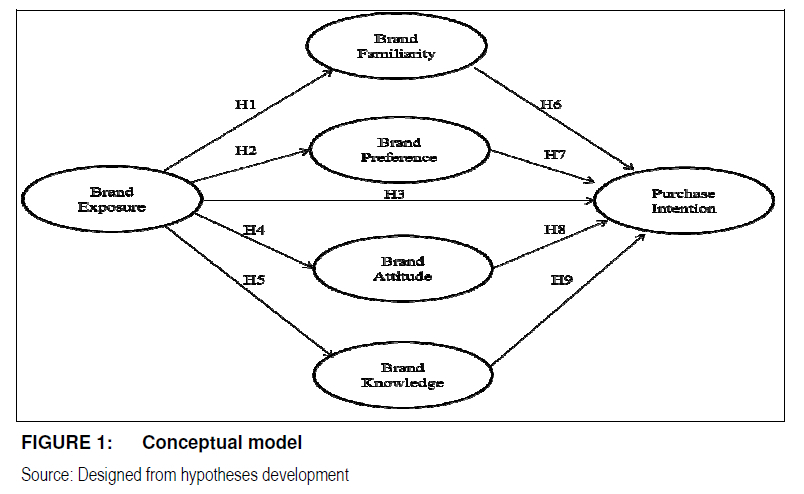
By means of a comprehensive conceptual model, the present article aims to fill the gap in literature on the impact of CGC on sports apparel brands among the South African youth. The predictor variable is brand exposure to CGC, while brand familiarity, brand preference, brand attitude and brand knowledge are mediators. Figure 1 presents the proposed conceptual model.
5.1 Brand exposure and brand familiarity
Brand exposure found on social networking sites are found to either be brand-based exposure or consumer generated content. In past research it has been found that consumers are likely to find a user-generated site, as they are to find a corporate site (Shao 2009:7-25).
Consumers may be more likely to approach and select a brand that has an exposure advantage {Baker 1999:31-46). Furthermore, brand familiarity plays a significant role in consumer decision-making and it has been found to affect the information search process, product evaluation, and ultimately consumer's brand choice (Sundaram & Webster 1999:664-670).
Furthermore, the level of brand familiarity can affect and influence a consumer's purchase intention either positively or negatively {Campbell & Keller 2003:292-304). Consequently, exposure to various touch-points of a brand increases brand familiarity (Park & Stoel 2005:148-160). Therefore, the present article proposes the following:
H1: There is a positive relationship between brand exposure and brand familiarity
5.2 Brand exposure and brand preference
Understanding consumer preferences is an important tool for marketers as it assists in the creation of appropriate marketing strategies to effectively reach their target market (Ghose & Lowengart 2013:3-17). Therefore, understanding the pattern of consumer preferences is critical for designing and developing innovative marketing strategies (Ebrahim 2011:1-11). Brand preference is closely related to brand choice that can facilitate consumer decisionmaking and activate brand purchase. (Ebrahim 2011:1-11). Derived from the literature, this article proposes the following:
H2: There is a positive relationship between brand exposure and brand preference
5.3 Brand exposure and consumer purchase intention
Research suggests that a consumer, who is more exposed to a brand, tends to establish a more positive attitude toward the brand (Cha 2009:77-93). When consumers search for information on a specific brand, they are likely to be exposed to CGC in which they place more trust than corporate brand advertising (Shao 2009:7-25). And ultimately, consumers who trust a brand are more likely to make a purchase. As a result, the following hypothesis is proposed:
H3: There is a positive relationship between brand exposure and consumer purchase intention
5.4 Brand exposure and brand attitude
Brand attitude is one of the most important factors that influence consumer behaviour. It is shown in past research that it is important for marketers to be attentive to brand attitude as it can moderate the relative importance of purchasing intention determinants (Dan & Kei 2011:1-4). Previous research suggested that as a person experiences more exposure to a particular stimulus, he or she establishes a more positive attitude toward the stimulus (Cha 2009:77-93). Considering this literature, the following hypothesis is proposed:
H4: There is a positive relationship between brand exposure and brand attitude.
5.5 Brand exposure and brand knowledge
According to Kwon and Lennon (2009:557-564), consumers' prior knowledge about a brand is likely to influence the way they process new information about the brand (Kwon & Lennon 2009:557-564). As a result, the level of brand knowledge a consumer has about the brand can affect the purchase behaviour of the consumer (Esch et al. 2006). Consumer's knowledge of a brand often remains with the consumer after the relationship expires (Eppler & Will 2015:445-564), therefore emphasising the power of brand knowledge. It can therefore be concluded that exposure leads to an increase in brand knowledge, which ultimately influences consumer's buying behaviour. The following hypothesis is proposed:
H5: There is a positive relationship between brand exposure and brand knowledge
5.6 Brand familiarity and consumer purchase intention
Brand familiarity affects various facets of consumer decision-making. It has been found to affect information search process, product evaluation, and choice heuristics, advertising message processing, and ultimate brand choice (Sundaram & Webster 1999:664-670). These dimensions include advertising exposures, information search, interactions with salespeople, purchase decision-making and product usage (Korchia 2001:1 -9).
Previous research has shown that an individual's overall confidence in the chosen brand is a function of the person's familiarity with the brand (Laroche, Kim, & Zhou 1996:115-120). A higher level of confidence a consumer expresses in a brand can also lead to higher purchase intentions. Therefore marketers should provide consumers with more product-related information, or direct experience in order to increase their familiarity with the brand (leading to a potential increase in confidence and consumer purchase intentions) (Laroche et al. 1996:115-120). Following the literature on brand familiarity and purchase intentions, the following hypothesis is proposed:
H6: There is a positive relationship between brand familiarity and consumer purchase intention
5.7 Brand preference and consumer purchase intention
Understanding consumer preferences is an important tool for marketers. With a better understanding of consumer preference, marketers can create more appropriate marketing strategies to effectively target the desired consumer (Ghose & Lowengart 2013:3-17). Brand preference is closely related to brand choice that can facilitate consumer decision-making and activate brand purchase (Ebrahim 2011:1-11). Previous research suggests that the fit between consumers' regulatory focus and the focus that is addressed in advertising claims has an impact on product preferences in the specific product category and the advertised brand (Florack & Scarabis 2006:741-755). Derived from the conceptions considered above, the following hypothesis is proposed:
H7: There is a positive relationship between brand preference and consumer purchase intention
5.8 Brand attitude and consumer purchase intention
Prior research has shown that brand attitude strength predicts behaviours of interest to firms, including brand consideration, intention to purchase, purchase behaviour, and brand choice (Park, Maclnnis, Priester, Eisingerich & Lacobucci 2010:1-17). This shows that when marketers understand the strength of brand attitude of their target market, they have an ability to predict certain aspects that may be important to them.
Although attitudes may result from behaviour, they are not synonymous with behaviour. They reflect either a favourable or unfavourable evaluation of the attitude object (Schiffman et al. 2010). According to the Theory-of-reasoned action, creating favourable attitudes towards a brand will lead to better predictions of consumer's predictions of their buying behaviour (Schiffman et al. 2010). Therefore, this article proposes the following hypothesis:
H8: There is a positive relationship between brand attitudes and consumer purchase intentions
5.9 Brand knowledge and consumer purchase intention
As previously stated, consumers' prior knowledge about a brand may influence how they process new pieces of information about the brand, which ultimately influences their buying behaviour (Kwon & Lennon 2009:557-564). Therefore the level of brand knowledge a consumer has about the brand can affect the purchase behaviour of the consumer (Esch et al. 2006:98-105). The two main components of brand knowledge are brand awareness and brand image. Considering this statement, marketers should focus on increasing brand awareness and building a positive brand image in the minds of the consumer. This will ultimately encourage purchase intention. The following hypothesis is proposed:
H9: There is a positive relationship between brand knowledge and consumer purchase intentions
6. RESEARCH METHODOLOGY
6.1 Sample and data collection
The data used for this article were collected from young adults between the ages of 18 and 35. The sample comprised of 150 students from the University of the Witwatersrand, both males and females, and respondents were selected by means of stratified sampling.
The researcher ensured that a fair number of students from a number of schools on campus were selected for participating in the completion of the self-administered questionnaires. The respondents were ensured that the data was purely for academic purposes and that responses are completely anonymous. Furthermore, confidentially were guaranteed and respondents had the choice of withdrawing at any stage during the questionnaire completion.
6.2 Measurement instrument development
The research scales were operationalised mainly on the basis of existing scales. Adequate modifications were made in order to fit the research context for the purpose of the present article. Seven-point Likert scales were employed to analyse items of the research instrument.
Each measurement instrument was assessed for reliability (Cronbach's coefficient > 0.7) and validity (Factor analysis > 0.71), thereby meeting the recommended thresholds (Atashzadeh-Shoorideh & Yaghmaei 2016:174-205). More specifically, brand exposure was measured using a scale developed by Chu and Kim (2011:47-75) (a = 0.94), while Villarejo-Ramos, Rondan-Cataluna and Sanchez-Franco's (2000:223) brand knowledge scale was used (α = 0.95), and brand preference was measured by an adaptation of Balbaaki's scale (2012:1-101) (a = 0.85).
Furthermore, both brand attitude (α = 0.93) and brand familiarity (a = 0.87) were measured by adapting scales from Cho (2011:1 -198). Lastly, to measure purchase intention (a = 0.93), a scale adapted from Bian and Forsythe (2012:1443-1451) was used.
7. RESULTS
The data analysis was done using SPSS 22 for the descriptive statistics, while the model fit and path modelling was conducted using AMOS 22.
7.1 Descriptive statistics
The respondent profile consisted of 67% females and 33% males, while 97% was between the ages of 18 and 25 and 3% were between 26 and 35 years of age. The 150 respondents were relatively equally distributed among the different schools at Wits, such as the School of Economic and Business Sciences, School of Humanities and School of Sciences. With regard to their use of social networking sites, the following was found:
7.2 Structural equation modeling
For the purpose of this article, Structural Equation Modeling (SEM) is used for the data analysis. SEM is an established statistical technique that tests theory by means of hypothesised relationships from a proposed conceptual model (Liao & Hsieh 2013:409-424; Nusair & Hua 2010:314-324). An advantage of using SEM is that it tests relationships between latent variables and observed variables that constitute a research model (Qureshi and Kang 2014:165-176). By means of a conceptual model, the present article proposes nine hypotheses that will be tested using SEM. More specifically, model fit will be tested, a correlation matrix will be conducted, scale accuracy analysis and hypotheses testing by means of path modeling.
7.3 Model fit
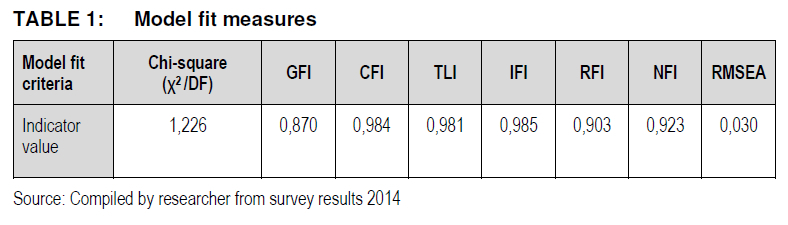
The assessment of the proposed conceptual model proceeded utilising the unchanged data set. The ratio of chi-square over degree-of-freedom was 1,226. This value is less than the recommended thresshold of less than 3.0 and therefore, confirms the model fit (Chinomona 2011:1-175).
Table 1 represents the model fit measures for the data.
The model fits measures surpassed the recommended acceptable threshold of 0.8 for Goodness of Fit Index (GFI) (0.870), Comparative Fit Index (CFI) (0.984), Tucker Lewis Index (TLI) (0.981). Upon examining the Root Mean Square Error of Approximation (RMSEA) indice, the model indicated an acceptable fit with a value of 0.03. It is ideal for the RMSEA to be below 0.08 (Hooper, Coughlan & Mullen 2008:53-60; Hu & Bentler 1999:1-55; McDonald & Ho 2002:64-82).
These results infer that the proposed research conceptual model converged satisfactorily well and could be a representation of the underlying empirical data structure collected at the Universtiy of the Witwaterwatersrand. Recommended statistics for the overall-model assessment revealed acceptable fit of the measurement model to the data. All correlation values were less than 0.8. The measurement model produced a ratio of chi-square value over degree-of-freedom of 1,226. Since an acceptable Confirmatory Factor Analysis (CFA) value was obtained, the article proceeded to the hypothesis testing stage using structural equation modeling with AMOS 22 software program.
7.4 Inter-construct correlation matrix
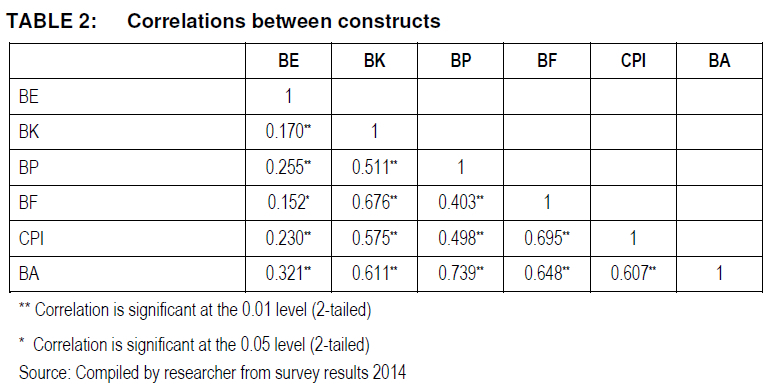
The inter-construct correlation matrix was utilised to check discriminant validity of the research constructs. Correlations among latent constructs were evaluated in order to observe if they were lower than 1.0 (see Table 2).
As indicated in table 2, the inter-correlation values for all paired latent variables are less than 1.0, therefore, indicating the existence of discriminant validity (Chinomona, Lin, Wang & Cheng 2010:182-200). It is further recommended for the correlation values between to be less than 0.7 in confirming the existence of discriminant validity.
7.5 Scale accuracy analysis
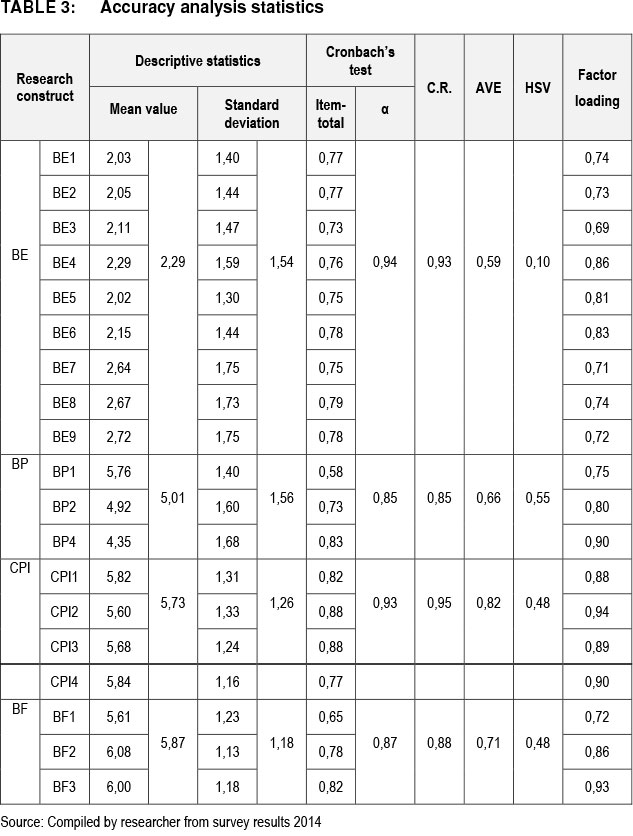
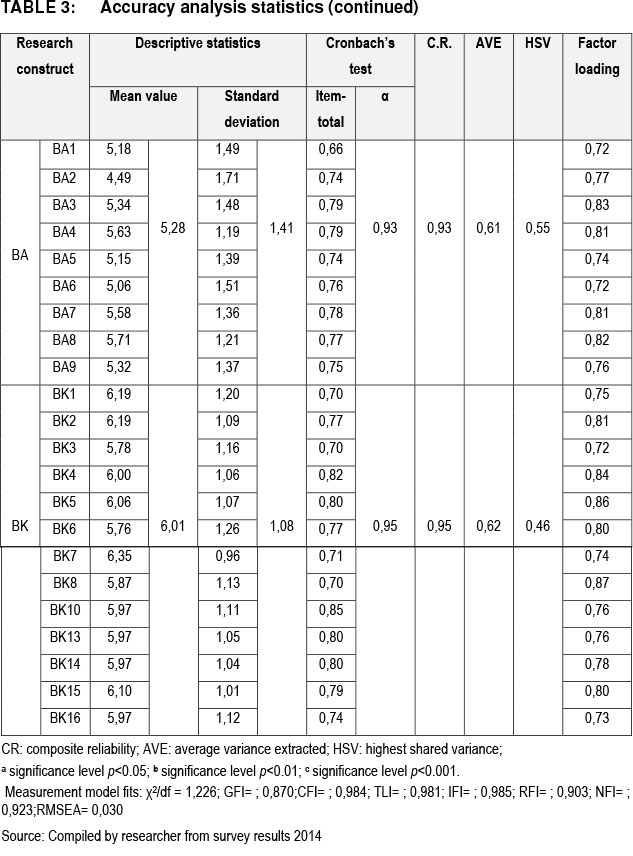
The results of scale reliability tests are shown in Table 3.
As can be seen in table 3, the majority of the item-to-total values are above 0.7, while Cronbach's alpha coefficients (a), and composite reliability (C.R.) indexes ranged from 0.851 to 0.949 and 0.853 to 0.956 respectively. These values exceeded the estimate criteria suggested in prior literature.
All average variance extracted (AVE) values were above 0.4 and most approached 0.5, thus being acceptable according to the literature (Fraering & Minor 2006:284-306). These results reveal evidence of marginal to acceptable levels of research scale reliability.
7.6 Path modeling and hypotheses testing
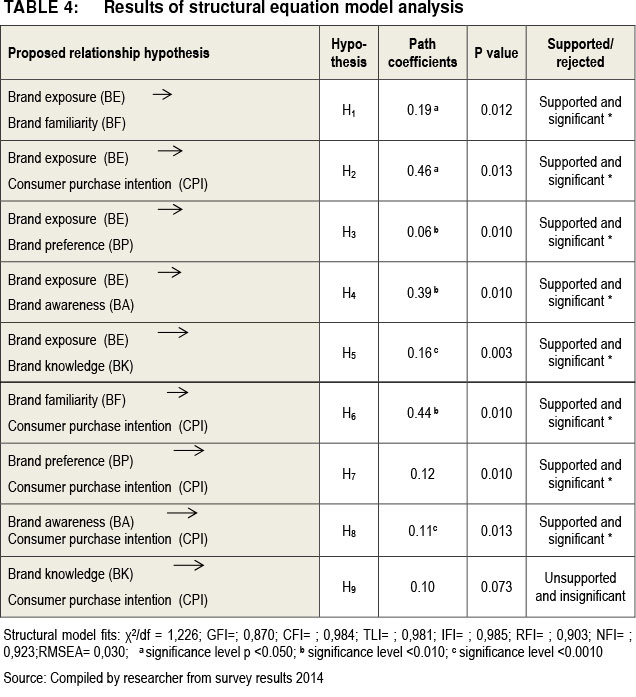
Table 4 presents the results of the structural equation modeling followed by a discussion.
8. DISCUSSION OF RESULTS
From Table 4, the findings reveal that eight of the nine hypotheses are supported. The only hypothesis that is not supported is H9 (BK influences CPI). In other words, this means that brand knowledge (BK) does not directly influence consumer purchase intention (CPI). Upon further examination the following was found: The strongest relationships were between brand exposure (BE) and consumer purchase intention (CPI) with a path coefficient of 0.46, followed by brand familiarity (BF) and consumer purchase intention (CPI) (0.44). Thus, indicating that if consumers are exposed to CGC of a specific brand, they are likely to consider purchasing the brand.
Similarly, brand familiarity increased the likelihood that consumers will purchase that brand. The weakest relationships were between brand awareness (BA) and consumer purchase intention (CPI), and brand exposure (BE) on brand preference (BP) with coefficients of 0.11 and 0.06 respectively. In other words, consumer's degree of brand awareness (BA) is not very likely to influence purchase intention (PI). Likewise, brand exposure (BE) is not very likely to influence brand preference (BF).
Although the remainder of the hypotheses indicated significant results, the strength of the relationships was moderate. For example, brand exposure positively influences brand familiarity (BF), brand awareness (BA) and brand knowledge (BK). This means that the degree of brand exposure to CGC positively influences brand familiarity, brand awareness and brand knowledge.
Furthermore, brand preference (BP) and brand knowledge (BK) positively influences consumer purchase intention (CPI). In other words, consumers with a preference for a certain brand and knowledge of that brand are likely to consider purchasing the brand. Upon testing the effect of the mediating variables (H6→H9) on consumer purchase intention (CPI), these four mediators (BF, BP, BA and BK) have a significant positive influence on consumer purchase intention (CPI).
9. IMPLICATIONS OF THE ARTICLE
Because of the rapidly growing importance of social media, particularly among the youth culture in emerging markets, these findings provide fruitful implications for both academics and practitioners. On the academic side, this article makes a significant contribution to the field of digital marketing and brand management literature by examining the influence of CGC on consumers' purchase intention of sports apparel.
Overall, the findings from the present article provide tentative support to the proposition that exposure to CGC should be considered an antecedent of purchase intention, while brand familiarity, brand preference, brand attitude and brand knowledge are mediating variables between brand exposure and purchase intention. This article further contributes to academic literature in the field of digital marketing, integrated marketing communications, consumer behaviour and the apparel industry.
On the practitioners' side, it is important for marketing practitioners to understand the importance of CGC on purchasing behaviour. By gaining insight into the role of social media on buying behaviour among the youth, marketers can utilize social media as a platform for effective communication with customers. The article therefore submits that CGC has a significant influence on purchase intention of sports apparel among generation Y consumers. In other words, sports apparel brands should increase consumer's exposure to CGC relating to their brand. If the CGC is of a positive nature, it will increase consumer's familiarity with the brand, consumers will be more likely to prefer that specific brand to others, consumers will be more likely to form positive attitudes towards the brand, and lastly, having been exposure to a certain brand will increase their knowledge of the brand.
Concerning the roles of the mediating variables, the following can be deduced: In order for brands to influence consumer's purchase intention, they need to establish a strong sense of brand familiarity, encourage brand preference, focus on creating positive brand attitudes and increase brand knowledge among consumers.
Derived from the factors considered in this article, it is evident that the present article contributes to academic literature and practice in several ways. It is of imperative importance to utilise brand exposure through CGC on social networking sites. By exploiting strategies to achieve positive CGC, brands are guaranteed to gain in profit and market share over their competitors in the marketplace. Apparel brands should therefore not underestimate the power of CGC on social networking sites such as Facebook.
10. LIMITATIONS AND FUTURE RESEARCH
Although the present article provides several contributions, it is not without its' limitations. Firstly, this article is context specific. It was conducted among the students from the University of the Witwatersrand, and only focused on sports apparel. Considering a different respondent profile, or applying the subject on a different product, might yield different results. Future studies can therefore focus on CGC and its' impact on consumer buying behaviour in a different context.
A second limitation is that the present article investigated exposure to CGC on one social media platform only, namely Facebook. With the growing use of Twitter and Instagram, the results may be different if the article is conducted on a different social media platform. Future research can therefore consider a shift of the social media site. Lastly, there is the possibility of inaccurate completion of the surveys, due to students being a rush to get to a class.
11. CONCLUSION
The purpose of the current research was to examine the effectiveness of CGC on consumer's purchase intention of sports apparel brands among the youth in Johannesburg. By means of a conceptual model, nine hypotheses were tested and 150 surveys were distributed among university students. The results support eight of the nine hypotheses, therefore indicating that CGC positively influences brand familiarity, brand preference, brand attitude and brand knowledge.
Furthermore, brand familiarity, brand preference, brand attitude and brand knowledge act as mediators between brand exposure and consumer purchase intention. The only insignificant relationship was found to be between social networking sites and consumer purchase intention.
REFERENCE LIST
APPAREL INDUSTRY. 2006. Apparel definition. [Internet: http://dictionary.reference.com/browse/apparel+industry; downloaded on 2014-03-15. [ Links ]]
ALLBUSINESS. 2000. Business glossary. [Internet: http://www.allbusiness.com/glossaries/brand-attitude/4965990-1.html, downloaded on 2014-07-05. [ Links ]]
ATASHZADEH-SHOORIDEH F & YAGHMAEI F. 2016 Development and Psychometric Evaluation of Scales: A Survey of Published Articles. Journal of Medical Education 14(4) 174-205 [ Links ]
BAALBAKI SS. 2012. Consumer perception of brand equity measurement: a new scale. Denton, TX: University of Borth Texas. (PhD thesis), [ Links ]
BAKER WE. 1999. When can affective conditioning ad mere exposure directly influence brand choice? Journal of Advertising 8(4):31-46. [ Links ]
BIAN Q & FORSYTHE S. 2012, Purchase intention for luxury brands: a cross-cultural comparison, Journal of Business Research 65(10): 1443-1451. [ Links ]
BOYD DM & ELLISON NB. 2008. Social network sites: definition, history and scholarship. Journal of Computer-Mediated Communication 13(1):210-230. [ Links ]
BUSINESSDICTIONARY.COM. 2014, Brand preference [Internet: http://www,businessdictionary.com/definition/brand-preference.html; downloaded on 2015-06-18] [ Links ]
CAMPBELL MC & KELLER KL. 2003. Brand familiarity and advertising repetition effects. Journal of Consumer Research 3:292-304. [ Links ]
CHA J. 2009. Shopping on social networking web sites: attitudes toward real versus virtual items. Journal of interactive Advertising 10(1):77-93. [ Links ]
CHINOMONA E. 2011, Non-mediated channel powers and relationship quality: a case of SME's in Zimbabwe channels of distribution. Cape Town: SAIMS. (27th conference of the Southern Institute for Management Scientists: 30-1 Sep. [ Links ])
CHINOMONA R, UN JYC, WANG MCH & CHENG JMS. 2010, Soft power and desirable relationship outcomes: the case of Zimbabwean distribution channels. Journal of African Business 11 (2): 182-200. [ Links ]
CHO E. 2011. Development of a brand image scale and the impact of lovemarks on brand equity. Ames, IA: Iowa State University, (PhD thesis, [ Links ])
CHU SC & KIM Y. 2011. Determinants of consumer engagement in electronic word-of-mouth (eWOM) in social networking sites. International Journal of Advertising 30(1):47-75. [ Links ]
DEL CHIAPPA G, ALARCOM-DEL-AMO MDC & LORENZO-ROMERO C. 2015. Internet and user-generated content versus high street travel agencies: A latent gold segmentation in the context of Italy. Journal of Hospitality Marketing and Management 25(2):197-217. [ Links ]
DE VRIES LS & LEEFLANG PHS. 2012. Popularity of brand posts on brand fan pages: An investigation of the effects of social media marketing. Journal of interactive Marketing 26(2):83-91. [ Links ]
D'SOUZA G & RAO RC. 1995. Can repeating an advertisement more frequently than the competition affect brand preference in a mature market? Journal of Marketing 59(2):32-42, [ Links ]
EBRAHIM R. 2011. A article of brand preference. West London, UK: Brunei University (Doctoral symposium; 28 & 29 March 2011). [ Links ]
EPPLER MJ & WILL M. 2015. Branding knowledge- brand building beyond broduct and service brands. Journal of Brand Management 8:445-456. [ Links ]
ESCH FR, LANGNER T, SCHMITT BH & GEUS P. 2006. Are brands forever? How brand knowledge and relationships affect current and future purchases. Journal of Product and Brand Management 15(2):98-105. [ Links ]
FAULDS DJ & MANGOLD GW. 2009. Social media: the new hybrid element of the promotion mix. Business Horizons 52:357-365. [ Links ]
FILIERI R. 2015. Why do travelers trust TripAdvisor? Antecedents of trust towards consumer-generated media and its influence on recommendation adoption and word of mouth. Tourism Management 51 (1 ):174-185. [ Links ]
FLORACK A & SCARABIS M. 2006. How advertising claims affect brand preferences and category brand associations: the role of regulatory fit. Psychology and Marketing 23(9)741-755. [ Links ]
FRAERING M & MINOR MS. 2006. Sense of community: an exploratory article of US consumers of financial services. International Journal of Bank Marketing 24(5): 284-306. [ Links ]
GANGADHARBATLA H. 2013. Facebook me. Journal of Interactive Advertising 8(2):5-15. [ Links ]
GLOBAL RETAIL SPORTS APPAREL MARKET. 2012. Market trends, profit and forecast analysis: 2012-2017 [Internet: http://www.researchandmarkets.com/reports/2078441/global_retail_sports_apparel_market_2012-2017, downloaded on 2014-03-27. [ Links ]]
GHOSE S & LOWENGART O. 2013. Consumer choice and preference for brand categories. Journal of Marketing Analytics 1:3-17. [ Links ]
HENNIG-THURAU T, MALTHOUSE EC, FRIEGE C, GENSLER S, LOBSCHAT L & RANGASWAMY A. 2010. The impact of new media on customer relationships. Journal of Service Research 13(3):311-330. [ Links ]
HOOPER D, COUGHLAN J & MULLEN M. 2008. Structural equation modelling: guidelines for determining model fit. Electronic Journal of Business Research Methods 6(1):53-60. [ Links ]
HY LT & BENTLER PM. 1999. Cutoff criteria for fit indexes in covariance structure analysis: conventional criteria versus new alternatives. Structural Equation Modeling: A Multidisciplinary Journal 6(1): 1 -55. [ Links ]
CHEONG H & MORRISON MA. 2008. Consumers' reliance on product information and recommendations found in UGC. Journal of Interactive Advertising 8(2):1-29. [ Links ]
KAPLAN AM & HAENLEIN M. 2010. Users of the world, unite! The challenges and opportunities of social media. Business Horizons 53:59-68. [ Links ]
KARBALA A & WANDEBORI H. 2012. Analyzing the factors that affecting consumer's purchase intention in Toimoi store, Indonesia. 2nd International Conference on Business, Economics, Management and Behavioural Sciences;80-83. (Conference proceedings. [ Links ])
KEANE J & TE VELDE DW. 2008. The role of textile and clothing industries in growth and development strategies: investment and growth program. Overseas Development Institute (ODI) 1-72. [ Links ]
KELLER KL. 2003. Brand synthesis: the multidimensionality of brand knowledge. Journal of Consumer Research 29(4):595-600. [ Links ]
KELLY L, KERR G & DRENNAN J. 2010. Avoidance of advertising in social networking sites. Journal of Interactive Advertising 10(2):16-27. [ Links ]
KELLY N. 2010. Four ways to measures social media and its impact on your brand. [Internet http://www.socialmediaexaminer.com/4-ways-measure-social-media-and-its-impact-on-your-brand, downloaded on 2014-06-03. [ Links ]]
KIETZMAN JH, HERMKENS K, MCCARTHY IP & SILVERSTRE BS. 2011. Social media? Get serious! Understanding the functional building blocks of social media. Business Horizons 241-251 [ Links ]
KIM AJ & JOHNSON KK. 2016. Power of consumers using social media: Examining the influences of brand-related user-generated content on Facebook. Computers in Human Behavior 58(1):98-108. [ Links ]
KIM AJ & KO E. 2012. Do social media marketing activities enhance customer equity? An empirical article of luxury fashion brands. Journal of Business Research 65:1480-1486. [ Links ]
KJELDGAARD D. 2009. The meaning of style? Style reflexivity among Danish high school youths. Journal of Consumer Behaviour 8:71-83. [ Links ]
KJELDGAAR D & ASKEGAARD S. 2006. The globalisation of youth culture: the global youth segment as structures of common difference. Journal of Consumer Research 33 (September): 231 -247. [ Links ]
KORCHIA M. 2001. The effect of brand associations on three constructs. Spain: EMAC (33rd EMAC conference; May 2004) (Conference proceedings). [ Links ]
KWON WS & LENNON SJ. 2009. What induces online loyalty? Online versus offline brand images. Journal of Business Research 65:557-564. [ Links ]
LAROCHE M, KIM C & ZHOU L. 1996. Brand familiarity and confidence as determinants of purchase intention: an empirical test in a multiple brand context. Journal of Business Research:115-120. [ Links ]
LIAO CH & HSIEH IY. 2013. Determinants of consumer's willingness to purchase gray-market smartphones. Journal of Business Ethics 114(3):409-424. [ Links ]
LOW GS & LAMB CW Jr. 2000. The measurement and dimensionality of brand associations. Journal of Product and Brand Management 9(6):350-368. [ Links ]
SOUTH AFRICA.INFO.2014. Manufacturing in South Africa. [Internet: http://www.southafrica.info/business/economy/sectors/manufacturing.htm#.UzF6Y8laLIU, downloaded on 2014-04-24. [ Links ]]
MCDONALD RP & HO MHR. 2002. Principles and practice in reporting statistical equation analyses. Psychological Methods 7(1):64-82. [ Links ]
NORTH EJ, DE VOS, RB & KOTZE T. 2003. The importance of apparel product attributes for female buyers. Journal of Family Ecology and Consumer Science 31:41 -51. [ Links ]
NUSAIR K & HUA N. 2010. Comparative assessment of structural equation modeling and multiple regression research methodologies: e-commerce context. Tourism Managements] (3): 314-324. [ Links ]
OZKAN E & TOLOM M. 2015. The effects of information overload on consumer confusion: An examination on user generated content. Review of Social, Economic & Administrative Studies 29 (1):27-51. [ Links ]
PAPPU R, QUESTER PG & COOKSEY RW. 2005. Consumer-based brand equity: improving the measurement-empirical evidence. Journal of Product and Brand Management 14(3): 143-154. [ Links ]
PARK J & STOEL L. 2005. Effect of brand familiarity, experience and information on online apparel purchase. International Journal of Retail and Distribution Management 33(2): 148-160. [ Links ]
PARK WC, MACINNIS DJ, PRIESTER J, EISINGERICH AB & LACABUCCI D. 2010. Brand attachment and brand atitude strength: conceptual and empirical differentiation of two critical brand equity drivers. Journal of Marketing 74:1-17. [ Links ]
POOKULANGARA S & KOESLER K. 2011. Cultural influence on consumers' usage of social networks and its' impact on online purchase intentions. Journal of Retailing and Consumer Services 18(4):348-354. [ Links ]
QURESHI SM & KANG C. 2014. Analysing the organisational factors of project complexity using structural equation modelling. International Journal of Project Management 33(1): 165-176. [ Links ]
RICE D, KELTING K & LUTZ R. 2012. Multiple endorsers and multiple endorsements: the influence of message repetition, source congruence and involvement on brand attitudes. Journal of Consumer Psychology 22(2):249-259. [ Links ]
SCHIFFMAN LG, KANUK LL & WISENBLIT J. 2010. Consumer behaviour. Upper Saddle River, NJ: Pearson. [ Links ]
SHAO G. 2009. Understanding the appeal of user-generated media: a user's and gratification perspective. Internet Research 19(1):7-25. [ Links ]
SMITH AN, FISCHER E & YONGJIAN C. 2012. How does brand-related user-generated content differ across YouTube, Facebook and Twitter? Journal of Interactive Marketing 26(4): 102-113. [ Links ]
SUNDARAM DS & WEBSTER C. 1999. The role of brand familiarity on the impact of word-of-mouth communication on brand evaluations. Advances in Consumer Research 26:664-670. [ Links ]
VILLAREJO-RAMOS AF, RONDAN-CATALUNA FJ & SANCHEZ-FRANCO MJ. 2000. Direct and indirect effects of marketing effort on brand awareness and brand image. Marketing Letters 11(3):221-223. [ Links ]
WINER RS. 2009. New communications approaches in marketing: issues and research directions. Journal of Interactive Marketing 108-117. [ Links ]
* corresponding author