



Services on Demand
Journal

Article
 English (pdf)
 Article in xml format
 Article references
 Automatic translation
 Send this article by e-mail
Indicators
Related links
-
 Cited by Google
 -
 Similars in Google
Share

 Permalink
Journal of Contemporary Management
On-line version ISSN 1815-7440
JCMAN vol.16 n.2 Meyerton 2019
https://doi.org/10.35683/jcm19030.0027
RESEARCH ARTICLES
Financial Ratios as Indicators of Financial Sustainability at a South African University
JI MclarenI,*; FW StruwigII
INelson Mandela University, Department of Finance. ignis.mclaren@mandela.ac.za; ORCID NR: https://orcid.org/0000-0003-3347-5902
IINelson Mandela University, Department of Business Management. Miemie.Struwig@mandela.ac.za; ORCID NR: https://orcid.org/0000-0001-9318-183X
ABSTRACT
Managing limited financial resources is an ongoing challenge for financial managers at South African universities, especially with the call to government for free education. This article explores a set of financial ratios as indicators for financial sustainability at South African universities. A comprehensive literature review was undertaken to develop a theoretical framework to evaluate financial sustainability at universities. The proposed theoretical framework included five groups of ratios, namely, financial performance, liquidity, asset management, debt management and reserves ratios. It further included four elements of financial sustainability, namely, strategy, operating sustainability, investment and risk management.
The proposed theoretical framework was empirically-tested, and financial ratios were calculated for one university in South Africa for a period of eight years. The results showed that these ratios could be useful for examining financial sustainability at universities by means of the four identified elements. Financial performance ratios were included in three of the four elements of financial sustainability, namely, strategy, operating sustainability and investments. Reserve ratios, on the other hand, were included in two of the four elements of financial sustainability. Risk management included three groups of ratios, namely, asset management ratios, debt management ratios and liquidity ratios.
Key phrases: Financial ratios; financial sustainability; financial sustainability ratios and South African universities
1. INTRODUCTION
Universities are knowledge organisations and their core objectives are not only to generate, acquire and transfer knowledge, but also to develop and transfer technology innovation, support and challenge current political establishments. In addition, they are required to support the economy by becoming the providers of appropriate knowledge and skills demanded by the workforce in the global market. To fulfil this role, universities often strive to create courses that are relevant and timely in response to the needs of the current socioeconomic environment.
The South African university sector is faced with many challenges such as fees must fall and free education for some. As a result, universities' financial performance has become a critical factor for their success and continued existence. It is, therefore, essential to evaluate the financial performance of this industry to ensure that limited resources are spent for the best advantages. As higher education has grown, and state funding has been constrained, the financial sustainability of Higher Education Institutions has become an issue for those who govern and manage these institutions. South African universities are heavily reliant on tuition revenue and need to cope with the governments' free education call. Universities thus face the underfunding challenge and are trapped between a "fee-freeze" and subsidy lag. This comes at a time of stagnant economic growth during the countries' post-apartheid history when universities are facing significant expansionary growth pressure. Maximising the effective use of available indicators such as financial ratios thus becomes important to achieve financial sustainability NMU: The Legacy (2017:58).
The challenge for governments is to ensure that increasingly autonomous institutions respond to public interest agendas while taking a greater responsibility for their own financial sustainability. The challenge for institutions is to manage an increasingly complex portfolio of aims and funding. The management challenge of universities is thus to manage a more complex portfolio of aims and funding, and to differentiate themselves in an increasingly competitive environment. However, they also need to determine how they can protect their ability to deliver their core academic outcomes over the long-term. To address this question, a set of financial ratios were proposed as indicators of financial sustainability at universities, which were empirically-tested using financial data from one university in South Africa. The intention was to show whether the financial ratios were indicators that could be used to manage financial sustainability of a university or not.
2. THEORETICAL OVERVIEW OF FINANCIAL RATIOS AS INDICATORS FOR FINANCIAL SUSTAINABILITY AT UNIVERSITIES
To understand financial ratios as indicators of financial sustainability at universities, it is important to first outline the role of universities and the new financing environment of universities.
2.1 Role of universities
Higher education in South Africa has been increasingly faced with financial pressures such as tuition fee income, university subsidy and capital funding as well as the more strident demands for free higher education. Universities are not homogeneous social institutions and have to consider competing ideas about their purposes. Academic freedom does, after all, encourage diversity of the organisation. Various areas need to be addressed when considering the diverse role of universities, namely, governance, management and leadership, the student environment (access and success), the staff environment (equity), institutional cultures, the teaching and learning environment, research and intellectual cultures, institutional equity, higher education funding and the role of universities in society Swartz (2017:1-5).
Although universities can make strategic choices to guide their decision-making, there is one aspect where universities in South Africa have little control, namely, the subsidy formula which rests in the hands of the government and influences programme choices and investment decisions of the universities.
2.2 New financing environment of universities
The funding of South African universities consists of three income streams Financing Higher Education in South Africa (2018:4), namely:
• First stream: Subsidies from Department of Higher Education and Training;
• Second stream: Student fees; and
• Third stream: Donor funding, research funding, income from investments, beneficiation of intellectual property (including government departments other than the Department of Higher Education and Training).
The subsidy framework is illustrated in Figure 1.
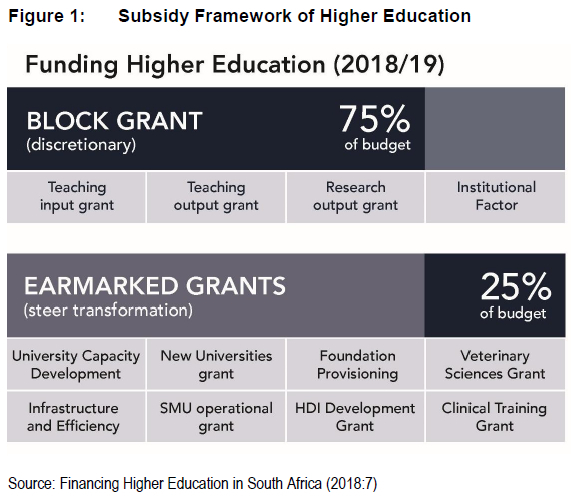
Figure 1 shows that the subsidy framework has two main elements. Firstly, block grants (undesignated amounts to cover the operating costs of the universities) and, secondly, earmarked grants that are allocated for specific purposes, for example, Infrastructure and Efficiency, Clinical Training and the University Capacity Development Grant.
According to L'Ange (2015:27), the allocation of block grant funding to universities is "calculated" in four categories, namely:
• Teaching input grant: calculated according to the number of full-time equivalent students according to weighting factors and the classification of educational subject matter categories per fund group;
• Teaching output grant: determined by the actual total of non-research graduates and diplomats;
• Research output grant: generated by the actual totals of research graduates and research publication units; and
• Institutional factor grant: determined by the enrolment size and the percentage of disadvantaged students.
South African universities are underfunded University Funding in South Africa (2016:1). The primary sources of university funding are the Department of Higher Education and Training block grant based on a system of full-time equivalents and student fees. For most South African Higher Education Institutions, funding from DHET makes up more than two-thirds of the unrestricted revenue. The student fee component in university budgets is typically in the region of 30 to 40%.
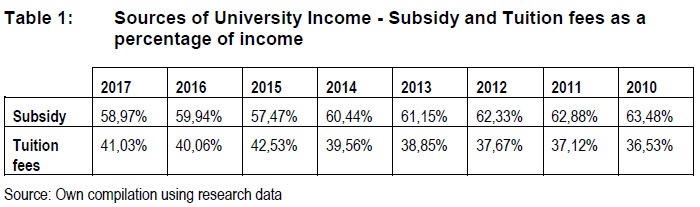
The sources of income (if third stream income is excluded) of the selected university for the period 2010 to 2017 is illustrated in Table 1.
Table 1 shows that subsidy as a percentage of income (which includes subsidy and tuition fees only) decreased gradually over the seven-year period from 63.48% in 2010 to 57.47% in 2015. In 2016, there was an increase from 57.47% to 59.94%. On the other hand, tuition fee income as a percentage of income increased from 36.53% in 2010 to 42.53% in 2015. In 2016, there was a decrease from 42.53% in 2015 to 40.06%. The increase in income in 2016 (subsidy as well as tuition fee income) may be attributed to the intervention by the Department of Education (as result of the #FeesMustFall movement) providing gap funding to make up for the freeze on tuition fee increases from 2015 to 2016.
According to University Funding in South Africa (2016:2), the historic increases in tuition fees beyond consumer price index (CPI) were a direct result of the subsidy allocation to universities per full-time equivalent student. However, the subsidy allocation has been in decline since 2010, and the higher education price index (HEPI) is approximately 2% higher than CPI.
Universities remain dependent on state support, which continues to decline. The rate of state support below CPI places more pressure on student fees and third-stream income. According to University Funding in South Africa (2016:8), the personnel costs at many South African Higher Education Institutions exceed the value of state support, resulting in added pressure on other revenue streams.
The events surrounding the #FeesMustFall student protests that started in 2015 and gained intensity from September 2016 have placed renewed focus on issues of financial sustainability at South African universities. In response to various universities announcing double-digit increases to their 2016 fees in October 2015, student protests erupted under the #FeesMustFall campaign and this resulted in campus activities being suspended at almost all South African universities. After meetings between the President, the Minister of Higher Education and Training, the vice-chancellors and student leaders, former President Zuma announced on 23 October 2015 that there would be a zero percent increase in student fees for 2016 PWC Report (2016:4).
Initiatives undertaken by the Department of Higher Education and Training to address funding shortfalls, especially for students that require financial assistance and the missing middle were commendable, but they are a work-in-progress. South African universities need to be innovative and resourceful in finding ways to ensure their financial sustainability in the medium- and long-term.
2.3 Financial sustainability in perspective
Literature on sustainability was pioneered by Dunphy (2000:57) and has been advanced by Collins and Porras (2000:10), Royal, Daneshgar and O'Donnell (2003:168) as well as Senge, Smith, Kruschwitz, Laur and Schley (2008:21). Dunphy, Griffiths and Benn (2003:11) use qualitative analysis of companies to argue for indices of financial, environmental and human sustainability and provide a case for the adoption of organisational sustainability principles in every aspect of organisational life. Dunphy et al. (2003:12) establish that "an organisation is sustainable (when) its stakeholders continue to support it".
Denneen and Dretler (2012:4) argue that financially sustainable institutions are focusing on four aspects, namely:
• Developing a clear strategy, focused on the core business;
• Reducing support and administrative costs;
• Freeing up capital in non-core assets; and
• Strategically investing in innovative models.
Marwa and Aziakpono (2015:876) define sustainability as the ability of an institution to meet its goals and targets over the long-term. In this context, sustainability includes various dimensions such as financial sustainability. In other words, if an institution wants to meet its goals and targets over the long-term, it needs to be financially sustainable. Afriyie (2015:18) refers to sustainability as the ability of an institution to continue functioning into the indefinite future without the threat of depletion in key resources. Financial sustainability is not an end in itself but the aim is that the university's goals are reached, making sure that the institution generates sufficient income to enable it to invest in its future academic and research activities Sazonov, Kharlamova, Chekhovskaya & Polyanskaya (2015:34).
King Commission IV (2016:17) defines sustainability not only as the survival of the institution, but also its capacity to continue delivering on its mandate to the benefit of society. Sustainability thus means conducting operations in a manner that meets existing needs without compromising the ability of future generations to meet their needs. Sustainability also refers to the ability of an institution to consistently, continually and efficiently raise, manage and deploy funds with which to implement programmes and to achieve set goals that ultimately benefit the communities in which they operate. Universities all over the world are more driven to promote sustainability as well as becoming more sustainable by ways of teaching, research, engagement and campus operations Alshuwaikat, Adenle & Saghir (2016:4). According to Berzosa, Bernaldo and Fernandez-Sanchez (2017:812), higher education institutions have an important role to play regarding sustainability and its development, but it remains controversial over what issues these institutions should address in order to be regarded as a sustainable university.
León (2001:15) indicates four fundamental pillars for financial sustainability, namely:
• Strategic and financial planning;
• Income diversification;
• Sound administration and finance; and
• Own income generation.
The definition for financial sustainability provided by The Education Working Paper (2007:27) is the most comprehensive. It indicates that an institution is managed in a financially-sustainable manner when it recovers its full economic costs and invests in infrastructure (physical, human and intellectual) at an adequate rate to ensure future capacity to deliver the strategic plan and to serve its students and stakeholders. This definition implies four key elements, namely:
• Strategy: institution has a method to evaluate its future needs and risks and to measure its performance;
• Operating sustainably: institution is recovering costs and generating income to cover its costs on its normal operations;
• Investment: institution is investing at an appropriate level to maintain productive capacity; and
• Risk management: institution is managing risk appropriately in relation to its strategy and is prepared to deal with potential financial problems.
This definition of financial sustainability was used in this article as it is possible to use key indicators to evaluate how well an institution is managing its own financial sustainability
2.4 Financial ratios as indicators of financial sustainability
Many measurement systems or checklists for evaluating sustainable performance by universities have been developed. The Campus Sustainability Assessment Framework, for example, grew out of an initiative by the Sierra Club to encourage universities to improve on-campus sustainability Cole & Wright (2003:15). This framework has been used by several universities to structure their sustainability programmes and reports. The framework provided 175 indicators of sustainability focusing on people and the ecosystem Beringer (2006:442). This framework, however, has been abandoned by the Sierra Club in favour of the Global Reporting Initiative (GRI) standards for reporting even though the GRI standards may not be completely appropriate for this sector Dumay, Guthrie & Farneti (2010:540).
The Association for the Advancement of Sustainability in Higher Education (AASHE) created the STARS system (Sustainability Tracking, Assessment & Rating System™) to facilitate self-reports of sustainability performance by universities and to identify areas for performance improvement. The STARS system has been adopted by 525 universities mainly in North America. Although no university in South Africa subscribes to the STARS system, some have adopted the framework used in the STARS system Sari (2017:2).
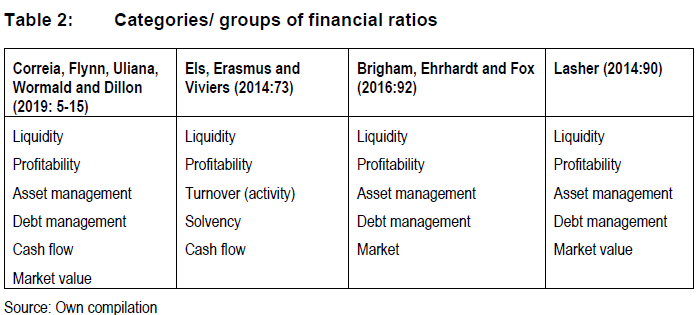
Financial indicators were developed primarily as early-warning devices or triggers to alert institutional leaders of financial distress, and they are largely still used in this way Reissenweber (2012:3). Managing limited financial resources is an ongoing challenge for financial leaders at South African universities. One way to analyse financial performance and identify how it can be improved, is by looking closely at financial ratios. Ratios are used to make comparisons between different aspects of an institutions' performance. They reveal very basic information such as whether an institution has accumulated too much debt, stockpiled too much inventory, or are not collecting receivables fast enough. It is important to analyse trends in ratios over time. According to Brigham, Ehrhardt and Fox (2016:76) trend analysis provides useful information whether an institution's financial condition is likely to improve or deteriorate in the future. Gitman and Zutter (2015:139) establish that financial ratios "enable financial managers to monitor the pulse of the firm and its progress towards strategic goals". While institutional leaders can use tools such as financial ratios as an indicator to evaluate and manage the financial performance of a university, it is still not clear which financial ratios can be used as indicators to best assist the South African university to make informed decisions on a range of areas to ensure financial sustainability. Ratio analysis has limitations, but when used with judgement it may provide useful information about an institution's operations and financial condition Besley, Brigham & Sabindi (2015:42). The literature overview of analysis and interpretation of financial statements provides groups or categories of financial ratios. Table 2 outlines the various groups of financial ratios according to various authors.
Table 2 shows that two groups of ratios are used by all authors, namely, liquidity and profitability. Three other sets of ratios are used by three authors, namely:
• Debt management;
• Asset management; and
• Market value.
As profitability and market value are not part of the financial structure of a university, profitability is replaced by financial performance ratios. Market value ratios are replaced by reserve ratios. In the context of a university, its reserves indicate whether the institution has sufficient funding available to sustain and grow infrastructure, plant and equipment as well as to fund strategic initiatives. Financial performance shows whether the institutions' recurrent income covers the recurrent expenditure while providing for strategy and reserve accumulation to match the strategic priorities of the universities' vision.
Considering the context of the university and what financial sustainability entails, the following groups of ratios were, therefore, proposed for the study:
• Liquidity ratios;
• Debt management ratios;
• Asset management ratios;
• Financial performance ratios; and
• Reserve ratios.
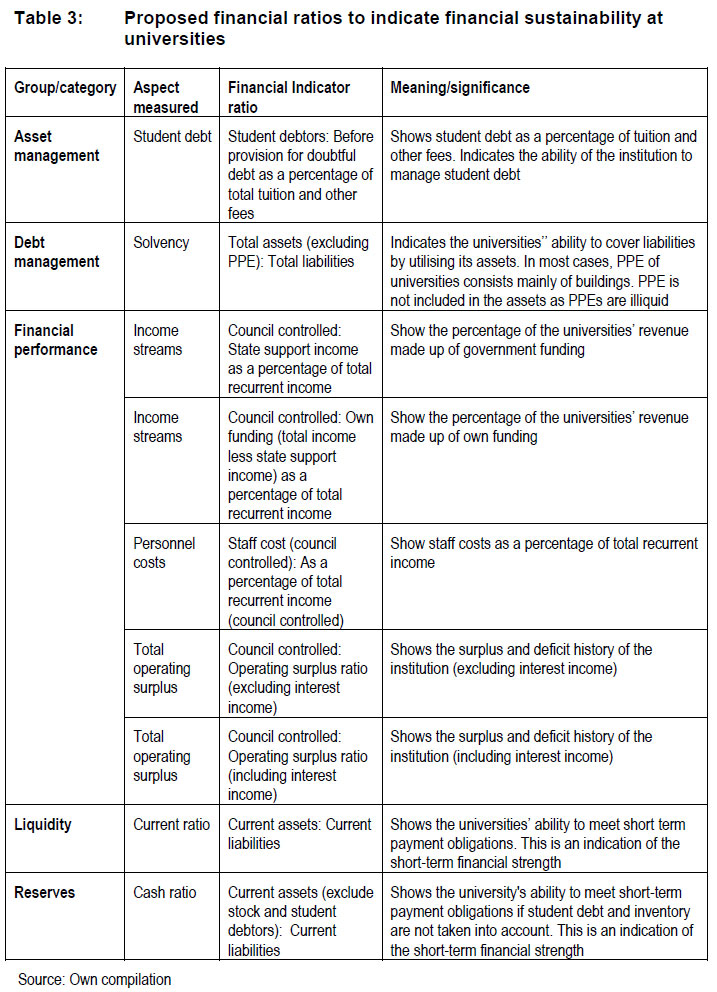
Table 3 describes the ratios for universities that can be used as indicators of financial sustainability, which are categorised according to the five identified groups.
Table 3 shows that there are 11 financial indicator ratios in the five suggested groups.
3. PROPOSED THEORETICAL FRAMEWORK OF FINANCIAL RATIOS AS INDICATORS OF FINANCIAL SUSTAINABILITY AT SOUTH AFRICAN UNIVERSITIES
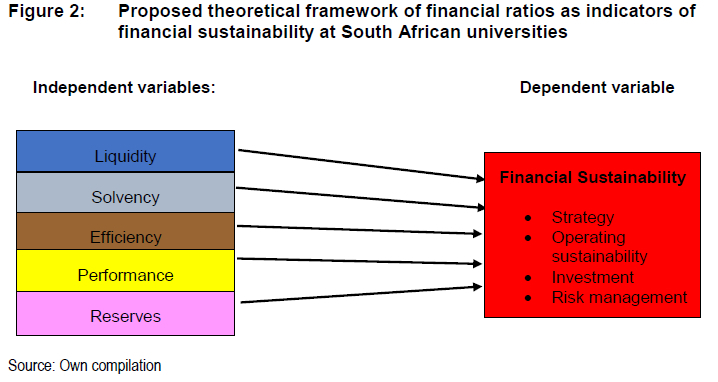
Considering the definition of financial sustainability that includes four elements and financial ratios for universities, which can also be divided into five groups, a possible theoretical framework to use financial ratios as indicators of financial sustainability at a university is given in Figure 2.
Figure 2 shows that five groups of financial ratios are indicators of financial sustainability that consist of four elements. Each group of ratios can indicate financial sustainability to one or more elements of financial sustainability.
To measure financial sustainability elements of a university, the objectives of this study are to address the following research questions:
• Strategy: Does the institution have a method to measure its financial performance?
• Operating sustainability: Is the institution recovering costs and generating income to cover the costs on its normal operations?
• Investment: Does the institution invest at an appropriate level to maintain productive capacity?
• Risk Management: Does the institution manage risk appropriately in relation to its strategy?
4. RESEARCH DESIGN/ METHODOLOGY
The research design used in this study is analytical in nature and the research procedure includes the use of facts or information already available, and to analyse these to make a critical evaluation of the sustainable performance. The theoretical framework in Figure 2 was empirically-tested by means of the following research processes:
• Step 1: Clarify the content of the proposed theoretical framework with experts in university finance.
• Step 2: Calculate the proposed ratios for the period 2010 to 2017 using financial data of the Finance Executive Forum of Universities South Africa and audited financial statements of one university in South Africa.
• Step 3: Analyse the calculated ratios to determine whether the ratios can be useful in examining financial sustainability at universities by means of the four identified elements.
• Step 4: Use the calculated ratios (results) to answer specific questions relating to the elements of financial sustainability of the university to investigate whether the financial ratios are indeed indicators for the elements of financial sustainability of universities.
• Step 5: Propose a set of ratios to use for determining the financial sustainability of universities.
The research design of the study is outlined in the following paragraphs.
4.1 Study sample
In Step 1 of the research process, it was indicated that experts in university finance would clarify the content of the theoretical framework. The financial director who commented on the content of the theoretical framework was selected as he had a thorough understanding of university finance. Academic experts in finance were also consulted.
To calculate the ratios as per Step 2 in the research process, the sample included the financial statements of the selected university for the period 2010 to 2017. In addition to the information in financial statements, the results of a finance benchmarking study done by the Finance Executive Forum of Universities South Africa was also used.
The period 2010 to 2017 was selected for several reasons, namely:
• Final annual financial statements for 2018 were not available yet;
• Followed financial crisis of 2008;
• Income disclosure in Financial Statements prior to 2010 were different; and
• Mergers in Higher Education Institutions in South Africa had been completed.
The selected university is one of six comprehensive universities in South Africa, offering both general and professionally orientated university programmes to 27 000 students across seven campuses. The selected university has a strong track record in both fundamental and applied research, working extensively in partnership with business and industry.
4.2 Measuring instrument
The theoretical framework proposed five groups of ratios that could be used as indicators of financial sustainability at universities. All the information necessary to calculate these ratios were sourced from the financial statements of the sample university. Emphasis was on the five groups of ratios as a guide to obtain the data. The clarification of content of the proposed theoretical framework with an expert only involved two questions, namely, whether the evaluator agreed with the content and could explain their answer.
Once the ratios had been calculated, the results were subjected to a set of questions as indicated in the proposed framework to attend to the elements of sustainability.
4.3 Data collection
The financial statements of the selected university were obtained from the financial director. The data in the financial statements were analysed according to certain ratio formulae. The financial statements are public documents and are available on the internet. Selected ratio calculations from the Finance Executive Forum of Universities South Africa benchmarking exercise were also considered Finance Executive Forum report (2016:1).
4.4 Data analysis and interpretation
Information taken from existing financial statements of the selected university was used to calculate financial ratios. Once the ratios were calculated, the results were interpreted to determine if the ratios were useful in examining financial sustainability at universities by means of the four identified elements (see Figure 2).
4.5 Research rigour and ethics
Research rigour was ensured by looking at credibility, transferability, dependability and conformability.
Creditability was ensured by following an appropriate, well-recognised research method. First the ratios were calculated and then they were subjected to a set of four questions relating to sustainability. To prevent single investigator bias, two people were involved in the process so that information was compared and cross-checked for consistency.
To address transferability, a detailed description of the South African university environment was provided by indicating the role of universities. The detailed descriptions of the South African university context enabled transferability.
Dependability requires an in-depth methodology description to allow the study to be repeated Korstjens and Moser (2018:122). As such, the researcher made and retained extensive notes regarding the research process and data collection. This would enable other researchers to follow and verify what was done to repeat the study by following the five specific steps in the research process identified.
Conformability was achieved by the detailed in-depth methodology description illustrating the research process in a step-by-step basis. The description of the research process enabled the progress of the study to be traced in a systematic way and allowed the integrity of the research findings to be scrutinised. In conclusion, various strategies were incorporated into the research design to establish its trustworthiness. Such strategies included procedures to mitigate researcher bias, construction of the theoretical framework and clear identification of contextual background. These methods demonstrated the quality and rigour of the research design. The research also adhered to the ethics requirements of the university.
5. RESULTS OF FINANCIAL RATIOS AT A UNIVERSITY
The financial director confirmed the proposed theoretical framework as a useful guide. It was thus used as a base to calculate the five groups of ratios. The results of the calculation of the ratios of a selected university are presented and analysed in Tables 4 to 8, according to the groups of ratios identified. Table 4 outlines the results of the ratios to calculate the financial performance of the university.
Table 4 illustrates that state support funding as a percentage of total council controlled recurrent income declined over the seven-year period, from 49.88% in 2010 to 44.68% in 2015 and then increased in 2016 to 47.57%. Own funding as a percentage of council controlled recurrent income, on the other hand, increased from, 50.12% in 2010 to 55.32% in 2015 and then declined in to 52.11% in 2017. The changes in 2016/7 related to the intervention by the Department of Education (as result of the #FeesMustFall movement) providing gap funding to make up for the freeze on tuition fee increases from 2015 to 2016.
The decline in state support funding over the period 2010 to 2017 placed more pressure on tuition fees and third-stream income. Staff costs as a percentage of total council controlled recurrent income fluctuated between 52% and 57% over the eight-year period. This percentage was in line with the Department of Education which states that the total cost of all staff salaries as a percentage of council controlled recurring income should be between 58% and 62% Government Gazette (2009:8). The council controlled operating surplus ratio (interest income included) decreased over the period from 9.80% in 2010 to 2.78% in 2016 and then increased to 11.12% in 2017. The council controlled operating surplus ratio (interest income excluded) dropped from 5.66% in 2010 to -4.64% in 2016, but then increased to 2.84% in 2017. The university strove to achieve a positive operating surplus ratio to ensure long-term sustainability by provisioning reserves to fund the maintenance of its asset base and to provide seed funding for investment opportunities. The operating surplus ratio should be positive before interest income as for recurrent expenditure to be funded from recurrent income. The operating surplus ratio before interest income from 2016 to 2017 reflected a positive trend. Short-term austerity measures, better than projected debt recovery, as well as the reduction in the cost of debt relief concessions for academically-deserving but financially-needy students, which were funded through the NSFAS programme, contributed to better than expected results. Table 5 outlines the results of the liquidity ratios of the university.
Liquidity refers to an organisations' ability to honour its short-term commitments Els et al. (2014:80). This means that liquidity is adequate if the organisation has sufficient current assets to pay for current liabilities. It can be seen from Table 5 that the liquidity ratios were adequate, and that the university was in a position to cover current liabilities using its current assets. Although there was no cash flow problem, it should be noted that both ratios declined from 11:1 in 2010 to 7:1 in 2016 and the reason for the decline in the liquidity ratios needs to be investigated. There was, however, an improvement in both liquidity ratios in 2017. Table 6 outlines the results of the asset management ratio of the university.
Asset management ratios measure how effectively assets are managed and utilised within the organisation. The asset management ratio in Table 6 highlights the trend in the management of student debtors over the period 2010 to 2017. It is evident from Table 6 that student debtors (before provision for doubtful debt) as a percentage of total tuition and other fees had increased considerably over the period 2010 to 2017. Table 7 outlines results of the debt management ratio of the university.
Debt management is important in the financial management of an organisation. Financial leverage (the extent to which an organisation uses debt) determines the level of financial risk. Table 7 illustrates the university's ability to cover its liabilities by utilising its assets (excluding property, plant and equipment, see Table 3). However, it is evident that that this ability of the university decreased over the period, from 2.29 in 2010 to 1.80 in 2017. Table 8 outlines the results of the reserve ratios of the university.
The reserve ratios in Table 8 indicate the ability for an institution to continue with its core business without new funding in the next financial year and may be regarded as an indication of the financial sustainability of the institution. The reserve ratios were calculated by comparing the universities'' cumulative reserves to its annual expenditure level. The first reserve ratio as per table 8, considered council-controlled reserves and council-controlled expenditure where the second reserve ratio considered total reserves and total recurrent expenditure. A ratio of 1.0 indicated that a university would be able to cover one years' expenses without needing additional funding. A ratio below 1.0 means that a university would not be able to cover the following years' expenses without new funding. Both reserve ratios reflected a declining trend over the period 2010 to 2016 but showed an improvement from 2016 to 2017.
6. ELEMENTS OF SUSTAINABILITY RESULTS
The elements of financial sustainability results (see Figure 2) to determine which groups of ratios were indicating each element of sustainability need to be outlined.
6.1 Results of the ratios relating to strategy
Referring to the proposed theoretical framework (see Figure 2), the question was posed:
Does the institution have a clear method to measure its financial performance?
One of the strategic enablers that would guide implementation of the revised strategic plan at the selected university for the period 2018 to 2020 was the enhancement of long-term financial sustainability through responsible resource stewardship. The strategic plan could not be solely academically or financially driven. According to The Education Working Paper (2007:29), financial ratios such as the ones calculated in this article need to be integrated with the strategic planning process to ensure a sustainable future. Financial analysis and strategies need to be integrated with other strategies (for example, human resources, marketing, student services and academic planning) and understood as well as owned by the leaders of the institution.
The total financial needs must be considered in strategic planning as well as the ways they are to be secured. To this end, key questions that might be asked to measure the financial performance included The Education Working Paper (2007:31):
• Is the institution content with its current size and the balance of its activities and funding resources?
• Does the institution have a strong enough financial base to plan and manage the institution strategically?
• Does the institution have enough uncommitted income and enough discretion over how the income is used to permit academic developments?
Financial performance, in relation to the question that was asked, in this context, could be measured by the following ratios identified in Table 4.
• State support income as a percentage of total recurrent income (council controlled). This ratio showed that the state support income as a percentage of total council-controlled income had decreased from 49.88% to 47.57% over the eight-year period;
• Own funding (total income less state support income) as a percentage of total recurrent income. It was evident that own funding as a percentage of total recurrent income had increased from 50.12% to 52.43% meaning that there was more pressure on the institution to generate own funding;
• Operating surplus ratio (council-controlled funds excluding interest income) had decreased from 5.66% in 2010 to -4.64% in 2016 indicating that the uncommitted income as a percentage of total income had dropped considerably over the seven-year period. Both operating surplus ratios showed an improvement from 2016 to 2017; and
• Operating surplus ratio (council-controlled income including interest income) decreased from 9.80% in 2016 to 2.78% in 2016. This showed that the university had to utilise investment income to fund recurrent expenditure, where a more ideal situation would be to utilise interest income to build reserves to fund strategic initiatives.
These financial ratios were thus measures that the institution could use to determine its financial performance. Financial performance ratios would be an indicator for the strategy of a university as these ratios would show whether the organisation was financially-sustainable or not.
6.2 Results of the ratios relating to operating sustainability
Referring to the proposed theoretical framework (see Figure 2), the question was posed:
Is the institution recovering costs and generating income to cover the costs on its normal operations?
Institutions need to ensure that their core operations are funded on a sustainable basis. Universities must ensure that the institution's recurrent income covers the recurrent expenditure while providing for strategy and reserve accumulation to match the strategic priorities of the university's vision. Without this, they will require continued external support and their ability to invest for a longer term may be threatened The Education Working Paper (2007:34).
Understanding and recovering costs is central to financial sustainability. Universities need to have the full costs of teaching and research, costs of different disciplines, costs of different student types (full- or part-time, undergraduate or postgraduate) as well as the costs of the different modes of delivery. Although pricing may appear less relevant at universities, it remains important that the pricing of courses and other services offered by the university are considered carefully. To determine the correct price of tuition, it is important to have information on costs associated with products and services offered by the institution.
According to The Education Working Paper (2007:36), costing information serves several purposes, namely:
• Shows managers which programmes or services are in surplus or deficit and, furthermore, raises awareness of true costs of such programmes or services;
• Enables universities to make a case to government or other funders for additional funding;
• Sets a guide for decisions on pricing and cost recovery; and
• Provides information that can be useful in reviewing the value of programmes or services.
From Table 4, two of the financial performance ratios that might assist in answering the question of whether the institution is generating income to cover the costs of normal operations are the following. The decrease in the operating surplus ratio provided an indication that although the institution generated a surplus; it was in much less fortunate position to use recurrent income to fund recurring expenses. Staff costs as a percentage of total recurrent income, as staff costs made up the highest percentage of total expenses, it was important that this ratio was carefully monitored. Staff costs as a percentage of total recurrent income (council controlled) varied between 52% and 56% over the eight-year period.
Both financial performance ratios indicate whether the institution is recovering its cost and generating an income to cover costs. Financial performance ratios were thus indicating the operating sustainability of the university as these ratios would show whether the organisation could sustain its operations.
6.3 Results of the ratios relating to investment
Referring to the proposed theoretical framework (see Figure 2), the question was posed: Does the institution invest at an appropriate level to maintain productive capacity?
With reference to Figure 2, if the organisation has a strategy and is recovering full economic costs on normal operations, it meets two of the elements for financial sustainability. The third element is investing for sustainability.
Investing strategies should be forward-looking and driven by institutional strategy The Education Working Paper (2007:42). The question that institutions need to be answering is not "How much it will cost to bring our infrastructure up to modern standards?", but rather "What infrastructure is needed in the future and what will it cost?" To achieve the required levels of investment, universities need to be able to recover all their costs and to make surpluses on their normal operations. Alternatively, they need to have access to regular and planned capital funding that is related to their long-term investment needs.
The two operating surplus ratios (see Table 4) reflected a decreasing trend over the 2010 to 2016 period indicating smaller contribution to reserves on an annual basis. This trend was verified by the decline in the two reserve ratios (see Table 8), indicating that the university was not in a position to invest at an appropriate level to fund strategic priorities. These financial ratios were thus measures that the institution could use to determine its investment opportunities. Financial ratios were thus indicators in the investment possibilities of the university as these ratios would show whether the organisation could make investments or not.
6.4 Results of ratios relating to risk management
Referring to the proposed theoretical framework (see Figure 2), the question was posed:
Does the institution manage risk appropriately in relation to its strategy?
According to The Education Working Paper (2007:44), for complex risk management environments:
... institutions need a more strategic and systematic process of risk assessment and risk management and this has to penetrate throughout the whole organisation if it is to protect institutions from serious financial failures. The aim should not necessarily be to eliminate or avoid risk, but rather that the risks that they accept (and manage) are commensurate with the opportunities and benefits they expect to achieve.
The selected university identified various financial risk factors including market risk, credit risk and liquidity risk NMU: University Annual Report (2016:38). The universities' overall risk management processes focused on credit collection as well as the unpredictability of financial markets and sought to minimise potential effects on the university's financial performance. Potential concentrations of credit risk consisted mainly of short-term cash, cash equivalent investments, trade receivables and other receivables. Receivables comprised of outstanding student fees and a number of customers, dispersed across various industries and geographical areas. The university was exposed to credit risk arising from student receivables relating to outstanding fees.
The ability to recover outstanding fees is important to ensuring a university is able to pay its short- and long-term debts. The asset management ratio (see Table 6) measured the risk associated with non-payment of student fees. This ratio showed an increase in gross student debt as a percentage of tuition fees over the seven-year period. The sharp increase in this percentage in 2016 was mainly due to debt concessions made as result of the #FeesMustFall that started in 2015 and gained momentum in September 2016. Correia, Flynn, Uliana, Wormald and Dillon (2015:18) describe liquidity risk as the risk that the organisation will not have sufficient funds to pay its creditors or meet other short-term commitments. Two liquidity ratios that were calculated (see Table 5) might be used to evaluate the liquidity risk of the selected institution. The current ratio as well as the cash ratio might be regarded as healthy (above 2:0), but both ratios showed a decreasing trend over the period from 2010 to 2016. Both liquidity ratios showed an improvement from 2016 to 2017.
The debt management ratio (see Table 7) was another ratio that might be used to monitor the risk of the university. This ratio as calculated in Table 7 illustrated the university's ability to cover its liabilities by utilising its assets. This ratio remained relatively stable over the 2010 to 2015 period but decreased in 2016 and, therefore, must be monitored in future years to identify and eliminate potential risk. These financial ratios (asset management, debt management and liquidity ratios) were measures that the institution could use to investigate its risk management execution. Financial ratios were thus indicators for risk management of a university as these ratios would indicate whether the organisation was managing their risk or not.
7. DISCUSSIONS, RECOMMENDATIONS AND CONCLUSIONS
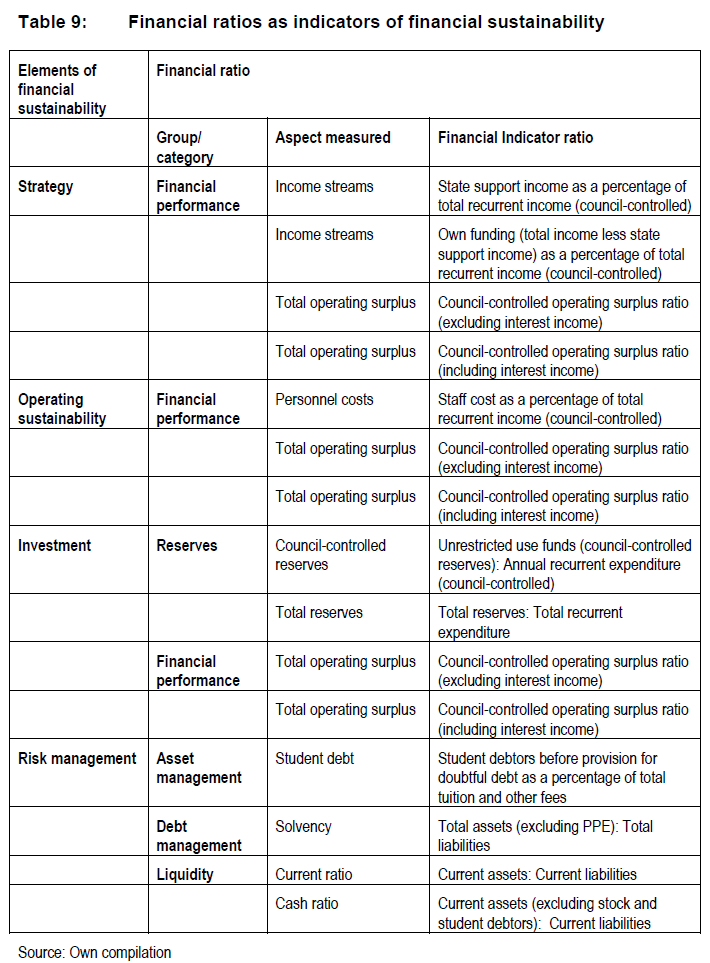
In this study, the proposed theoretical framework (see Figure 2) was empirically-tested, and five groups of ratios were suggested as indicators of financial sustainability, which was measured by four elements. In total, 11 ratios could be proposed to be used by Higher Education Institutions to indicate financial sustainability. Table 9 provides a summary of the financial ratios that could be used as indicators of financial sustainability.
Table 9 shows the financial ratios that were indicators of financial sustainability of universities. It should be noted that financial performance ratios were included in three of the four elements of financial sustainability, namely, strategy, operating sustainability and investments. Risk management included three groups of ratios, namely, asset management ratios, debt management ratios and liquidity ratios.
This study used annual financial statements to perform the financial ratio analysis. Management accounts were not used and might have provided a different view. It is recommended that management accounts also be included in future analyses. Other non-financial factors (such as growth in student and staff numbers and new academic programmes) were not considered in this study and might also have an influence on the financial sustainability of the university. It is important to consider non-quantitative factors not included in the annual financial statements, which might be indicators of financial sustainability. Future studies should develop benchmarks for higher education institutions for each financial ratio as this might be useful to the Department of Education to evaluate the financial health of universities and thereby assist in the decision-making process with regard to the allocation of funding to universities. The limitations of ratio analysis such as the use of historic information and the application of different accounting policies, should, however, always to be kept in mind Skae (2017:320).
South African universities need to be innovative and resourceful in finding ways to ensure their financial sustainability in the medium- and long-term. Some useful strategies include:
• Securing the maximum amount of funding from government to cover institutional operating and capital costs;
• Utilising financial and other resources more efficiently and effectively;
• Improving cost efficiencies and implementing institutional overhead recovery models; and
• Mobilising alternative sources of third-stream income.
South African university financial managers need valid financial measures to evaluate their financial sustainability and to plan accordingly. This article provided proposals in this regard.
REFERENCES
AFRIYIE AOA. 2015. Financial sustainability factors of higher education institutions: a predictive model. International Journal of Education Learning and Development 2(3): 17-38. [ Links ]
ALSHUWAIKAT HM, ADENLE YA & SAGHIR B. 2016. Sustainability assessment of higher education institutions in Saudi Arabia. Sustainability (8): 1-16. [ Links ]
BERINGER A. 2006. Campus sustainability audit research in Atlantic Canada: pioneering the campus sustainability assessment framework. International Journal of Sustainability in Higher Education 7(4):437-455. [ Links ]
BERZOSA A, BERNALDO MO & FERNANDEZ-SANCHEZ G. 2017. Sustainability assessment tools for higher education: an empirical comparative analysis. Journal of cleaner production (161): 812-820. [ Links ]
BESLEY S, BRIGHAM EF & SABINDI AB. 2015. Corporate finance: a South African perspective. Hampshire: Cengage Learning. [ Links ]
BRIGHAM EF, EHRHARDT MC & FOX R. 2016. Financial management: theory and practice. Hampshire: Cengage Learning. [ Links ]
COLE L & WRIGHT T. 2003. Assessing sustainability on Canadian university campuses: development of a campus sustainability assessment framework. Canada: Royal Roads University. [ Links ]
COLLINS JC & PORRAS JI. 2000. Built to last: successful habits of visionary companies. New York: Harper Collins. [ Links ]
CORREIA C, FLYNN D, ULIANA E, WORMALD M & DILLON J. 2019. Financial management. 9th ed. Cape Town: Juta. [ Links ]
DENNEEN J & DRETLER T. 2012. The financially sustainable university. USA: Bain & Company, Inc. [ Links ]
DUMAY J, GUTHRIE J & FARNETI F. 2010. GRI sustainability reporting guidelines for public and third sector organizations: a critical review. Public Management Review 12(4):531-548. [ Links ]
DUNPHY D. 2000. Sustainability: the corporate challenge of the 21st century. Sydney: Allen and Unwin. [ Links ]
DUNPHY D, GRIFFITHS A & BENN S. 2003. Organisational change for corporate sustainability. London: Routledge. [ Links ]
ELS G, ERASMUS P & VIVIERS S. Eds. 2014. Corporate finance - a South African perspective. 2nd ed. Cape Town: Oxford University Press. [ Links ]
FINANCE EXECUTIVE FORUM REPORT. 2016. Report to the Finance Executives Forum of Universities South Africa benchmarking task team. Bloemfontein: University of the Free State [ Links ]
FINANCING HIGHER EDUCATION IN SOUTH AFRICA. 2018. World Bank seminar on Higher Education and Training (Department of Higher education and Training). Johannesburg: University of the Witwatersrand. [ Links ]
GITMAN LJ & ZUTTER CJ. 2015. Principles of managerial finance. 14th ed. Essex: Pearson. [ Links ]
GOVERNMENT GAZETTE. 2009. Policy framework for the remuneration of senior managers in public higher education institutions. Pretoria: Government Printers. [ Links ]
KING COMMISSION IV. 2016. King report on governance for South Arica 2016. Pretoria: Institute of Directors. [ Links ]
KORSTJENS I & MOSER A. 2018. Practical guidance to qualitative research. Part 4: Trustworthiness and publishing. European Journal of General Practice 24:120-124. [ Links ]
LASHER WR. 2014. Practical financial management. 7th ed. Toronto: Nelson Education. [ Links ]
L'ANGE I. 2015. An assessment of the financial sustainability of Rhodes University. Grahamstown: Rhodes University. [ Links ]
LEÓN P. 2001. Four Pillars of financial sustainability 2001. Resources for Success Series 2:1-29. [ Links ]
MARWA N & AZIAKPONO M. 2015. Financial sustainability of Tanzanian saving and credit cooperatives. International Journal of Social Economics 42(10):870-887. [ Links ]
NMU: THE LEGACY. 2017. NMU: the legacy - Nelson Mandela University (2005-2017), Port Elizabeth: Nelson Mandela University. [ Links ]
NMU: UNIVERSITY ANNUAL REPORTS. 2010 - 2017. NMU: University annual reports. Port Elizabeth: Nelson Mandela University. [ Links ]
PWC REPORT. 2016. Does the future add up? Perspectives and points of view from PwC. Johannesburg: Price Waterhouse Cooper. [ Links ]
REISSENWEBER R. 2012. Financial indicators in strategic decision making: recommended practices for financial officers at small private colleges and universities in the Midwestern United States. Nebraska: University of Nebraska. (PhD Dissertation. [ Links ])
ROYAL C, DANESHGAR F & O'DONNELL L. 2003. Facilitating organisational sustainability through expert investment systems. Electronic Journal of Knowledge Management 1(2):167-176. [ Links ]
SARI FR. 2017. Trends in sustainable universities: 2016 UI Greenmetric world university rankings report. Doha Qatar: IREG Forum. [ Links ]
SAZONOV SP, KHARLAMOVA EE, CHEKHOVSKAYA IA & POLYANSKAYA EA. 2015. Evaluating financial sustainability of higher education institutions. Asian Social Science 11(20): 34-40. [ Links ]
SENGE PM, SMITH B, KRUSCHWITZ N, LAUR J & SCHLEY S. 2008. The necessary revolution: how individuals and organizations are working together to create a sustainable world. New York: Doubleday. [ Links ]
SKAE FO. 2017. Managerial Finance. 8th ed. Durban: LexisNexis. [ Links ]
SWARTZ D. 2017. The contribution of universities and business schools to inclusive development in Europe and Africa. University of Stellenbosch. (STIAS Conference - 18 April 2017. [ Links ])
THE EDUCATION WORKING PAPER. 2007. Report of the OECD/IMHE-HEFCE Project on financial management and governance of Higher Education Institutions (Education Working Paper No. 7). Paris: OECD. [ Links ]
UNIVERSITY FUNDING IN SOUTH AFRICA. 2016. Fact sheet for USAF Submission to the presidential commission of enquiry into higher education. Pretoria: USAF. [ Links ]
* corresponding author