



Services on Demand
Journal

Article
 English (pdf)
 Article in xml format
 Article references

 Automatic translation
 Send this article by e-mail
Indicators
Related links
-
 Cited by Google
-
 Similars in Google
Share

 Permalink

Journal of Contemporary Management
On-line version ISSN 1815-7440
JCMAN vol.17 n.2 Meyerton 2020
https://doi.org/10.35683/jcm20028.78
RESEARCH ARTICLES
Contractors' perceptions of factors affecting construction labour productivity in South Africa
OJ AdebowaleI, *; JJ SmallwoodII
INelson Mandela University, Port Elizabeth, South Africa adebowaleoluseyi@gmail.com ORCID NR: https://orcid.org/0000-0003-1381-5658
IINelson Mandela University, Port Elizabeth, South Africa John.smallwood@mandela.ac.za ORCID NR: https://orcid.org/0000-0003-1726-1525
ABSTRACT
Despite significant contributions by the construction industry to economic growth of developed and developing countries, productivity on construction projects is reportedly poor. This necessitates the need for studies that will contribute to improve productivity performance in the construction sector. This article reports on the perceptions of contractors regarding factors that affect productivity growth in the South African construction industry. Site engineers (n=18), site managers (n=27) and site supervisors (n=51) in four South African provinces that have significant construction capital outlay were surveyed using random and convenient sampling techniques (N=96). The data obtained for the study was analysed with descriptive and inferential statistics. The study established a significant mean difference with respect to the perception of respondents regarding factors that affect construction labour productivity. Based on the p-values obtained in the study, the most significant productivity influencing factors were determined to include excessive bureaucracy, late delivery of materials, industrial action resulting from political activities, inadequate project planning, and awarding contracts to the lowest bidders. The study makes recommendations towards improving construction productivity performance. The outcome of this study will contribute to improving the profitability of construction businesses and enhance construction stakeholders' satisfaction.
Key phrases: Construction sector; contractors; labour productivity and South Africa
1. INTRODUCTION
The construction industry is a significant contributor to developed and developing economies. The industry contributes 3 - 8% of the Gross Domestic Product (GDP) in most countries (Arditi, Gluch & Holmdahl 2013:980). The economic importance of construction labour productivity improvement makes the subject more pressing than ever. Its economic significance is further underscored by the fact that construction activities impact on other industries such as manufacturing and banking (Dixit, Pandey, Mandal & Bansal 2017:742). This is because, to some extent, parts of the business investment of these industries are reliant on construction as their service delivery is largely dependent on physical infrastructure (Shah & Ahad 2017:10; Chia, Skitmore, Runeson & Bridge 2014:874). Higher construction labour productivity flows through the economy due to the significance of the construction sector to other economy dependent sectors (Dixit, Mandal, Thanikal & Saurabh 2018:379). It has been widely reported that the global construction industry is confronted with the challenge of poor productivity (Shah & Ahad 2017:10; Akogbe, Feng & Zhou 2015:16), and therefore usually criticised for its underperformance (Kazaz & Ulubeyli 2007:2132). This has negatively impacted on construction project performance, project stakeholders, and construction businesses. Addressing productivity problems in construction will offer strategic advantages to construction organisations, improve overall project performance, and help to identify the potential areas of improvement to achieve organisational goals (Sheikh, Ullah, Ayub & Thaheem 2017:274).
Several studies have been conducted in developing countries such as Chile, India, Jordan, Nigeria, Oman, Palestine, South Africa, Thailand, and Uganda (Hiyassat, Hiyari & Sweis 2016: 138-149; Construction Industry Development Board (CIDB) 2015:1-28; Jarkas, Al Balushi & Raveendranath 2015:332-334; Odesola & Idoro 2014:93-109; Thomas & Sudhakumar 2013:103-125; Rivas, Borcherding, González & Alarcón 2011:312-320; Alinaitwe, Mwakali & Hansson 2007:169-176; Enshassi, Mohamed, Mustafa & Mayer 2007:245-254; Makulsawatudom, Emsley & Sinthawanarong 2004:1-6) respectively. These studies have documented arguments upon which their studies are based. For example, Thomas and Sudhakumar (2013:106) emphasise the need to understand the difference in perceptions of different project participants with regards to factors influencing productivity, while there are arguments that positive and negative productivity influencing factors should be identified and controlled. Similar to developing countries, some studies have also been recorded in developed countries, such as New Zealand, the United Kingdom, and the United States of America (Durdyev & Mbachu 2011:18-33; Dai, Goodrum & Maloney 2009:217-226; Chan & Kaka 2007:564-584) respectively.
Notwithstanding the myriad of recommendations arising from these studies, factors affecting construction labour productivity with their attendant impact on construction project performance are recurring especially in developing countries. This necessitates the evolvement of more innovative and efficient methods that would contribute to addressing the issue of poor productivity in construction (Shinde & Hedaoo 2017:1174). Obtaining the perceptions of contractors on factors affecting construction labour productivity would provide better insight into the subject matter in the South African construction industry, because factors that affect construction labour productivity are rarely constant, but may vary from country to country, from project to project, and even within the same project. The uncertainties inherent in construction projects' environments contribute to the lack of universal consensus on a set of factors and classification of factors that affect construction labour productivity growth (Hughes & Thorpe 2014:211). Given the peculiarity of these factors across countries, identifying factors affecting construction labour productivity in each region / country is pivotal to productivity growth in these areas. The underlying purpose of this study, therefore, is to obtain the perceptions of site engineers, site managers and site supervisors on factors that affect productivity in the South African construction industry, and further determine whether there are statistical significant differences in the perceptions of the three occupation groups. This would further provide insight into formulating plans towards improving productivity in the construction industry.
2. SOUTH AFRICAN CONSTRUCTION PROJECT PERFORMANCE
The challenge of poor project performance is severe in emerging economies, which require considerable infrastructural development projects to stimulate economic growth (Chingara & Moyo 2014:57). Developing countries prioritise poverty alleviation and socio-cultural dimensions that sustain harmony and co-existence, which in turn, contribute to the poor performance of construction projects in developing economies (Ugwu & Haupt 2007:665). In a bid to improve the performance of construction projects in South Africa, a study conducted by the South African Workforce Management Group Adcorp (SAWMGA) reported that labour productivity in the South African construction industry has been poor for decades (Chingara & Moyo 2014:58). As a result, there is a need for the South African construction industry to play a decisive role in the country's bid to achieve rapid socio-economic development while ensuring improved project performance (Ofori, Hindle & Hugo 1996:203).
A study reported that 13% of the surveyed project clients were not satisfied with the performance of contractors (CIDB 2012:3). This level of performance can be deemed to be associated with time and quality of product delivery. To increase clients' satisfaction, Mbachu and Nkado (2007:39) opine that the requirements and expectations of clients must be understood by their service providers and ultimately strive to satisfy their expectations. The challenges related to construction project performance in the South African construction sector have been long-lasting, and there is little evidence to establish the non-existence of these challenges. Some of the challenges confronting the performance in construction are public sector capacity, technology, site conditions, statutes and regulations, increase in the cost of materials, access to available mortgage and credit, interest rates, and poverty.
3. PRODUCTIVITY IN THE CONSTRUCTION SECTOR
There is no single definition that can entirely describe productivity in a complex sector such as the construction industry (Kavithra, Ambika & Shankari 2017:1294). The reason is because there are different inputs and outputs, which are involved in different projects and organisations for performance assessment (Nasir, Ahmed, Haas & Goodrum 2014:596). Performance can be measured at various levels including sector, organisation, project, and activity (Dixit et al. 2018:380). The productivity of construction projects is one of the measures for performance of the construction projects at the industry level based on its relationship with economic development (Dixit 2018:185). For equipment-intensive construction operations, productivity is defined as output / input (i.e. m3 / h for excavation works). Conversely, the subject is defined as input / output (i.e. 0.50h / m2 for wall formwork operations) for labour-intensive construction operations (Panas & Pantouvakis 2010:64). Both output and input usually have cost implications (Rivas et al. 2011:312).
Notwithstanding the definitions of productivity that have been provided by different authors, construction labour productivity influencing factors exist throughout the different productivity definitions (Durdyev & Ismail 2016:25). Generally, construction organisations operate within an environment that consistently changes (Enshassi, Mohamed & Abushaban 2009:267). There is a surfeit of evidence that among the several construction-related challenges confronting developing countries, productivity is a critical issue, and the subject is key to a project's success (Akogbe et al. 2015:17). One of the essential factors that determine the competitiveness of construction organisations regardless of their size is productivity performance (Rivas et al. 2011:318). Poor productivity in construction is commonly attributed to several influences, rather than a single factor. These influencing factors are usually dependent on one another; one factor usually results in the occurrence of others (Dai et al. 2009:397). The construction industry is complex in nature because it comprises large numbers of parties as owners (clients), contractors, consultants, stakeholders, and regulators (Enshassi et al. 2009:269). Management of these diverse construction stakeholders is challenging as they are usually from different disciplines and organisations, which can constitute a major obstacle to timeous project delivery (Shinde & Hedaoo 2017:1169).
The negative impact of poor productivity on construction projects motivates researchers to study factors that are responsible for poor productivity (Baloyi & Bekker 2011:54). Consequently, construction labour productivity has become a frequently researched topic (Rahman, Memon, Memon, Shaikh & Siddiqui 2019:4). The general emphasis with respect to the need for construction labour productivity improvement is widely centred on its contribution to nations' economies and satisfaction of construction projects' stakeholders (Chia et al. 2014:874; Odesola & Idoro 2014:93). Considerable savings through improved construction project productivity will drive long-term economic growth and improve the standard of living (Chingara & Moyo 2014:62). Construction labour, materials, plant, and capital are major resources that can be instrumental in improving projects' performance. The availability of these resources does not transform into optimal productivity on projects, but rather their adequate management and allocation.
For the construction industry to achieve optimum productivity, there must be efficient utilisation of labour, accurate and complete drawings, healthy and safe work, quality workmanship, and no litigation at the end of the project (Hughes & Thorpe 2014:215). Dixit et al. (2017) maintain that effort to improve productivity must ensure optimal use of the resources involved in the organisation, as well as the smooth and uninterrupted flow of the construction process and its activities. Adebowale and Smallwood (2018) identify the need for construction managers to take cognisance of effective management of construction projects through consistent employee training, adequate constructability reviews of construction drawings and specifications, and communication management at business and project levels.
To determine the factors responsible for unproductive time on construction projects, Olomolaiye, Wahab and Price (1987:318) investigated the factors that negatively influence craftsmen's productivity. The authors determined that lack of materials, lack of tools, rework, instruction delays, and delay of inspection are the underlying factors resulting in poor productivity on construction sites. Sheikh et al. (2017:283) express that direct and support work activities should be efficiently managed to maximise labour productivity. Senouci, Al-abbasi and Eldin (2018:48) determined that temperature has the highest impact on construction labour productivity and consequently state the need for construction managers to devise means of mitigating the impact of adverse temperatures on job sites. Dai, Goodrum and Maloney (2007:1145) identify the significant factors affecting construction projects productivity as waiting for materials, errors in drawings, slow response to queries relating to drawings, and unavailability of equipment to perform tasks. Poor site management by contractors could delay material supply and further slow down construction progress. In their study, Dixit et al. (2017:756) report that poor site coordination is one of the main causes of delays on construction projects, which directly impacts on construction labour productivity. Iyer, Chaphalkar and Joshi (2008:182) identify design and drawing errors as one of the factors that contribute to accidents on construction sites. Designers' influence on waste and cost reduction can be maximised when designers understand the challenges and opportunities that are related to waste prevention and how this can be practically achieved (Osmani, Glass & Price 2008:1149). Princy and Shanmugapriya (2017:74) adopted a questionnaire survey to explore the perceptions of contractors, consultants, and clients on factors that beset productivity in residential, commercial, infrastructure, and industrial construction projects.
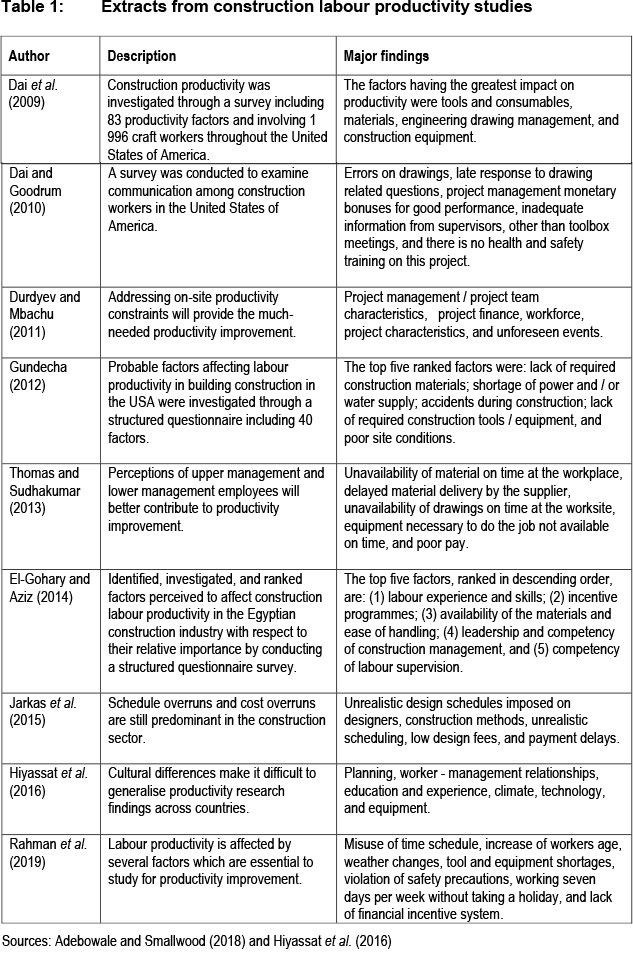
This study reported critical construction labour productivity influencing factors as numerous design alterations and revisions, issues related to drawings and specifications, payment delays, electricity problems, water shortages on projects, and lack of experience of workers. Shinde and Hedaoo (2017:1172) state the need to regularly measure and record the activities on site while comparing the result with a standard acceptable benchmark. Sheikh et al. (2017:283) report planning, coordination, and supervision as essential for increasing the effectiveness of employees and maintaining the required daily output level. Princy and Shanmugapriya (2017:74) suggest that most of the factors that affect productivity on construction sites result from incompetent project managers and poor management systems, and further recommend that construction organisations should ensure qualitative practices in every stage of construction projects delivery. Kavithra et al. (2017:1295) maintain that many external and internal factors, which affect construction labour productivity cannot be anticipated and consequently results in variation in labour productivity. Results of major findings of construction labour productivity-related research in the last decade are presented in Table 1 below.
4. RESEARCH METHOD
The study employed the underlying assumptions of quantitative research. The sample stratum consisted of 523 contractors and 96 questionnaires were retrieved, which equates to a 18.3% response rate. The average length of time participants' organisations had been involved in construction is approximately 22 years, while the average length of time that the respondents have worked in construction is 16 years. Both represent a considerable length of time, which indicates that the respondents are likely to understand the factors that influence construction labour productivity. The Eastern Cape, Gauteng, Kwazulu-Natal, and Western Cape provinces of South Africa predominate in terms of construction capital outlay. Hence, the survey was conducted among contractors in these provinces. Respondents from the Eastern Cape represent 33.3%, followed by Gauteng (28.2%), Western Cape (20.8%), and KwaZulu-Natal (17.7%). Site engineers (n=18), site managers (n=27), and site supervisors (n=51) constituted the occupations of respondents (N=96). Most (83.3%) of the respondents were male, while the minority (16.7%) were female. This gender distribution, which is usually the reflection of the reality in the construction industry, could possibly have influenced respondents' perceptions. More than half (62.4%) of the respondents were within the 26-45 age range, which indicates that younger construction practitioners were more represented than their older counterparts.
Based on previous labour productivity related studies and input of construction experts, 41 construction labour productivity influencing factors were identified. These factors constitute the content of the research instrument that was used to obtain the perceptions of the CIDB registered contractors that are registered within the categories of grade 5-9. Contractors' perceptions are considered essential, because they are the key driver of production on construction sites, and cannot be alien to the subject under investigation.
Contractors that are registered with the CIDB within grades 5-9 are established construction organisations and would have delivered several construction projects. Consequently, site engineers, site managers, and site supervisors of participant construction organisations were surveyed and deemed to be capable of providing useful insights into factors that affect productivity growth on construction projects. The study population, which was obtained from the CIDB's official page, was randomly drawn except for a few conveniently sampled contractors. The sample size was determined using the formula below as proposed by (Hogg & Tannis, 2009). The formula provides a 95% confidence level, and a 0.05 sampling error. The sample was drawn in Microsoft Excel. Microsoft Excel allotted a number to each of the participants' contracting organisations, which enables the organisations to be sorted in terms of a random value. The sample size of each province was therefore obtained as randomly generated in Microsoft Excel.
The research questionnaires were distributed to participant organisations through the internet, while completed questionnaires were retrieved through the same medium. To obtain a statistically representative sample of a study population, the following equations were used:
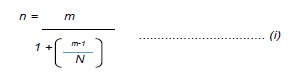
Where n = sample size of the unlimited population; m = required sample size; and N = available population. However, (m) in the equation (i) is determined by equation (ii)
Where:

Z = static value of confidence level adopts (1.96 for 95% confidence level for this study);
P = value of the proportion of population which is being estimated, and
e = sampling error (0.05).
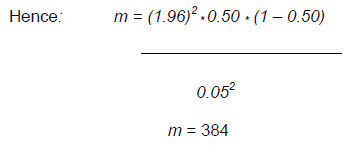
The value of (m) is substituted into equation (i) to determine the adequate sample size of contractors. The estimated sample size was 664, however, 141 of the sample was not contactable at their e-mail addresses. Consequently 523 contractors represent the actual sample size.
The research instrument comprised an ordinal measurement scale to indicate the extent to which the identified factors influence productivity on construction projects. The scale adopted was 1 (minor) to 5 (major), while respondents were also provided with an option of selecting 'unsure' should respondents be uncertain with respect to a factor. Prior to the launch of the primary survey, a pilot survey which spanned over a period of one month was conducted to enhance the validity of the research instrument. Site managers and site engineers who were conveniently selected on construction sites in Port Elizabeth, Eastern Cape province, constituted the participants of the pilot study. The research questionnaire was consequently modified to accommodate the input of pilot study participants towards improving the instrument for the primary survey.
To address ethical concerns, respondents were assured of anonymity through a duly signed consent and an introduction letter that bears the name of the researchers' university. The letter recorded the essence of the study and was distributed to participant organisations alongside the research questionnaires.
The validity of the research instrument was ensured with the pilot survey conducted with completely different elements of the research population i.e. participants who were exempted from participating in the primary survey. After the preliminary investigation, the research questionnaire was found valid to address the subject of productivity factors. Cronbach alpha coefficient reliability tests were further undertaken to address the concern of reliability. According to Dane (2011), a correlation of 0.80 largely represents an acceptable reliability value. A reliability value of 0.70 is considered sufficient by some researchers. This study, therefore, considers a reliability value of 0.80 to be acceptable. The internal consistencies (reliability) of the research questionnaire satisfy this condition after the statistical tests were conducted.
The data collected was analysed using the SPSS statistical package, and a measure of central tendency in the form of a mean score (MS) was used to rank site managers', site engineers' and site supervisors' opinions regarding factors influencing productivity in South African construction. The perceptions of these categories of construction practitioners were presented, and all the respondents demonstrated certainty in the options they selected on the scale adopted as none of the respondents selected unsure.
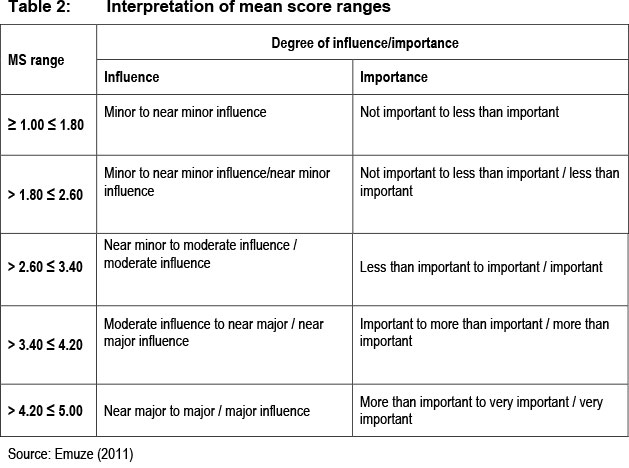
Table 3 presents the interpretation of the MS ranges upon which the discussion of the results is based. Given that the Likert type scale consists of five (5) points and that the difference between one (1) and five (5) is four (4), the ranges are defined and computed by dividing the difference of four (4) by the five (5) points which equates to 0.8. The respective influence and importance of factors ranges in terms of construction labour productivity are presented.
5. DESCRIPTION OF FINDINGS AND INFERENCES
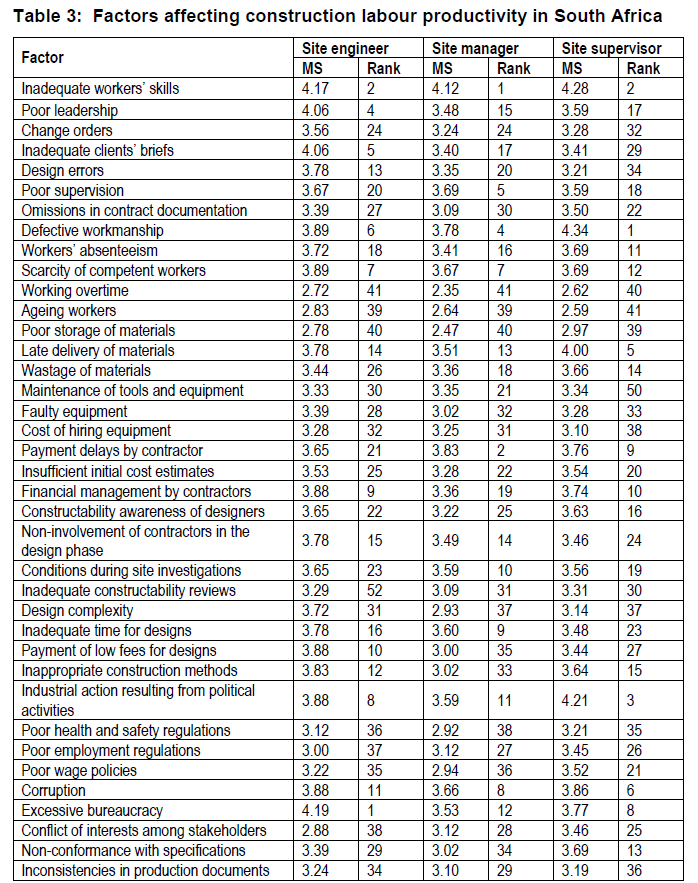
Table 3 presents the perceptions of construction site engineers, site managers, and site supervisors regarding factors affecting construction labour productivity in South Africa. Based on MSs, the compelling factors that undermine construction labour productivity performance are described, while necessary inferences are drawn.
5.1 Inadequate workers' skills as a compelling factor that affects labour productivity
Site managers indicated inadequate workers' skills as the most important factor that affects productivity on South African construction projects. The factor achieved a MS > 3.40 < 4.20 (Table 2 and 3), which suggests that site managers perceived skills shortage as having a moderate influence to near major / near major influence on construction labour productivity. Site supervisors indicated inadequate workers' skills as the second most significant factor, the MS being > 4.20 < 5.00, which suggests that site supervisors perceived the factor as having a near major to major / major influence on construction labour productivity. The perceptions of site engineers concerning inadequate workers' skills were not largely different from that of the site managers. Site engineers perceived inadequate workers' skills as the second most significant factor that lowers productivity in South African construction. The challenge of inadequate skills in construction was also reported in research findings arising from projects conducted in Bahrain, India, Nigeria, North America, Palestine, Qatar, and Uganda (Tam, Huong & Ngoc 2018:135; Karimi, Taylor & Goodrum 2017:377; Jarkas 2015:103; Odesola & Idoro 2014; Mahamid 2013; Jarkas, Kadri & Younes 2012:21; Alinaitwe et al. 2007:174; Enshassi et al. 2007:250). Skills shortage appears to be a major challenge in the construction industry, especially in developing countries. Dixit, Mandal, Sawhney and Singh (2017:661) maintain that skills development is basic for accomplishing quicker, sustainable, and productive activities in construction.
5.2 Defective workmanship as a major factor that affects labour productivity
Site supervisors indicated defective workmanship as being critical to improving labour productivity in construction. Site supervisors consider defective workmanship as the most important labour productivity influencing factor. Based on site supervisors' perceptions, the factor achieved a MS > 4.20 < 5.00 (Table 2 and 3), which implies that site supervisors perceived defective workmanship as having a near major to major / major influence on construction labour productivity. Site managers and site engineers perceived defective workmanship to have a similar impact, as the respective MSs are > 3.40 < 4.20. This suggests that site managers and site engineers perceived defective workmanship to have a moderate influence to near major / near major influence on construction labour productivity. The perceptions of the three occupation groups involved in this study indicate that defective workmanship is a major issue in terms of improving productivity in construction. Defective workmanship is not a problem peculiar to South Africa, as it was also identified as a major threat to construction labour productivity in Saudi Uganda, Arabia, Nigeria, Chile, and India (Sebastian & Raghavan 2015:94; Odesola & Idoro 2014:93; Mahamid 2013:458; Rivas et al. 2011:318; Alinaitwe et al. 2007) respectively.
5.3 Poor leadership as a key factor that affects labour productivity
Poor leadership achieved a MS > 3.40 < 4.20 (Table 2 and 3) courtesy of all three (3) categories of respondents. In other words, the groups of construction practitioners unanimously perceived that poor leadership has a moderate influence to near major / near major influence on construction labour productivity.
5.4 The lowest bidders as a major factor that affects labour productivity
Similarly, site engineers and site managers considered awarding contracts to the lowest bidders as the third most important factor in terms of productivity improvement. The two groups perceive that awarding contracts to lowest bidders has a moderate influence to near major / near major influence on construction labour productivity as the factor achieved a MS > 3.40 < 4.20 (Table 2 and 3). While site supervisors indicated awarding contracts to lowest bidders as the seventh most significant factor that affects labour productivity in construction, the factor, notwithstanding achieved a MS > 3.40 < 4.20. This further implies that awarding contracts to lowest bidders is also considered by site supervisors to have a moderate influence to near major / near major influence on construction labour productivity.
5.5 Payment delays as a compelling factor that affects labour productivity
Payment delays by contractors were indicated as the second most significant productivity influencing factor by site managers. Payment delays by contractors achieved a MS > 3.40 < 4.20, which implies that site managers perceived payment delay by contractors as having a moderate influence to near major / near major influence on construction labour productivity.
5.6 Industrial action resulting from political activities as a key factor that affects labour productivity
Site supervisors perceived industrial action resulting from political activities to have a moderate influence to near major / near major influence on construction labour productivity, as the factor achieved a MS > 3.40 < 4.20. The results show that industrial action resulting from political activities is a major concern for site supervisors. Industrial action resulting from political activities as a challenge to productivity growth is consistent with previous studies conducted in Uganda and South Africa (CIDB 2015:23; Alinaitwe et al. 2007:174).
5.7 Inadequate project planning as a major factor that affects labour productivity
Inadequate project planning was indicated by site supervisors as one of the most significant productivity influencing factors. This factor was indicated by site managers and site engineers as the sixth and seventeenth productivity influencing factor, respectively. During a similar study conducted by Thomas and Sudhakumar (2013:107) in India, planning was identified as a major factor that hampers site productivity.
Adebowale and Fapohunda (2015:1116) report challenges associated with planning in construction as a major impediment to efficiency on construction projects. The result implies that site supervisors consider planning important to construction productivity. Despite inadequate project planning being indicated as the seventeenth factor by site engineers, the factor achieved a MS > 3.40 < 4.20, which implies that respondents considered inadequate project planning to have a moderate influence to near major / near major influence on construction labour productivity. Construction organisations are required to evolve effective planning programmes that are based on the nature, type, and complexity of construction projects. The planning program should consider accessibility of resources required for project implementation, selection of appropriate technology, weather conditions, duration and relationship between activities, and health and safety measures (Adebowale, Kukoyi, Olagoke & Ademola 2020:9).
Lastly, other factors that were considered important to construction labour productivity by the study participant groups based on the MSs achieved include scarcity of competent workers, excessive bureaucracy, corruption in the construction industry, late delivery of materials, payment delays by contractors, poor financial management by contractors, and poor supervision. While training of labourers is essential, Dey, Prabhu and Subramani (2017:130) advocate the need for site supervisors' experience to achieve optimum productivity on construction projects.
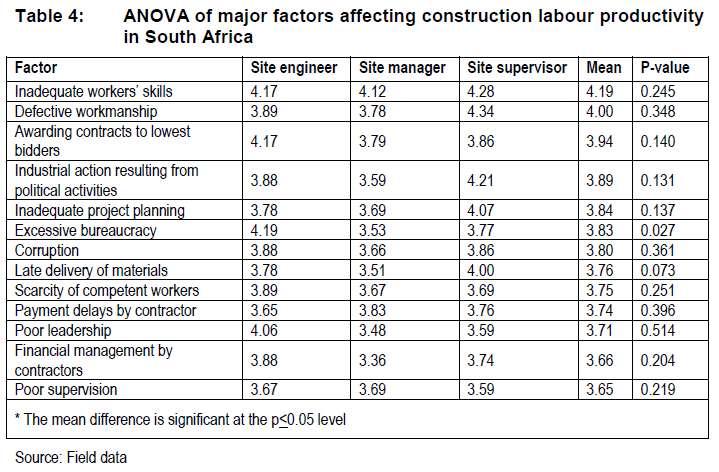
An analysis of variance (ANOVA) test was conducted on the most significant factors affecting construction labour productivity obtained in the study. This study involved three (3) occupation means, therefore, ANOVA is deemed appropriate to reduce the chances of Type 1 error, since ANOVA analyses differences between all conditions means simultaneously. The mean difference for each factor was deemed significant at the 0.05 level. Using their MSs, the highest rated factors were obtained from each occupation group. The mean MS of these factors was computed to obtain their order of ranking. As indicated in Table 4, inadequate workers' skills and defective workmanship achieved the highest MSs of 4.19 and 4.00 respectively based on the perceptions of respondents.
Further analysis revealed that these factors have p-values of 0.245 and 0.348 respectively, which suggests that there is a significant mean difference in the perception of respondents concerning the factors. Awarding contracts to lowest bidders, industrial action resulting from political activities, and inadequate project planning were also among the factors that achieved the highest rating by respondents' groups. These aforementioned factors considered by respondents' groups as being important to construction labour productivity also achieved a significant mean difference with respect to the perception of respondents regarding the factors. On the contrary, excessive bureaucracy achieved a p-value of 0.027, which indicates that the mean difference of the factor is not significant. Given that excessive bureaucracy has a p-value less than 0.05; the influence of excessive bureaucracy on construction productivity is significant notwithstanding the MS achieved by the factor. This could mean that most construction projects experience a stringent bureaucratic process with attendant negative impact of the progress of construction operations. The ranking of factors presented in Table 4 further supports the importance of factors discussed relative to Table 3. Based upon the p-values achieved, factors that have the most significant influence on productivity in South African construction include excessive bureaucracy, late delivery of materials, industrial action resulting from political activities, inadequate project planning, and awarding contracts to the lowest bidders. However, inadequate workers' skills and defective workmanship achieved the highest MSs.
6. IMPLICATIONS OF THE RESEARCH
This study highlighted the economic importance of productivity growth in the construction industry. Construction management is understood in terms of the management of the business of construction and construction projects per se. Adebowale et al. (2020:7) determined that construction cost and time are related to construction productivity to a very large extent. Addressing productivity influences with respect to construction businesses and construction projects necessitates the need for more innovative approaches to address the challenges of poor productivity in construction. The result of this study informs the South African construction stakeholders of areas of concern that require interventions to achieve productivity growth in construction. Recurrence of poor productivity on construction sites would inevitably result in overrunning the estimated construction cost and time. It further contributes to loss in construction business, and ultimately, laying off construction employees. Poor business performance and job losses would negatively impact on construction stakeholders' satisfaction and contribute to the dwindling contribution of the construction industry to national economic development. Consequently, construction stakeholders, especially those that work in managerial positions are saddled with the responsibility of ensuring the implementation of pragmatic productivity improvement plans on their respective projects, while considering the findings and recommendations of this study.
7. CONCLUSIONS
The study gathered the perceptions of site engineers, site managers, and site supervisors regarding factors that affect productivity in the South African construction industry, and further identified the most significant productivity influencing factors. Based on the p-values obtained in the study, the factors that exert the most significant influence on construction productivity were determined. The study determined that excessive bureaucracy, late delivery of materials, industrial action resulting from political activities, inadequate project planning, and awarding contracts to the lowest bidders, were the most significant factors that affect productivity growth in the South African construction industry. The results of the study indicate that the perceptions of site engineers, site managers, and site supervisors with respect to construction labour productivity constraining factors vary significantly. In terms of the MSs of factors, skills deficit appears to be a major problem confronting construction productivity performance.
8. RECOMMENDATIONS
Based on the findings of the study, it is essential that contracts administration is devoid of prejudice and become less bureaucratic, while the process of contracts administration is monitored to ensure quality and efficiency in construction project delivery. It is required that contractors evolve strategies aimed at promoting management of construction materials to prevent a shortage of materials on construction sites. Wider engagement among construction stakeholders is recommended to mitigate the negative impact of industrial action on the progress of construction activities. The skills deficit identified in the study indicates a need for construction project stakeholders' to commit to training to enhance skills for and competence in the industry. This study did not secure enough evidence to generalise its findings, therefore, further studies that secure the perceptions of more construction stakeholders are recommended.
9. IMPLICATIONS FOR MANAGEMENT
The outcome of this study informs the leadership of construction organisations and relevant stakeholders in the South African construction industry of the foremost factors that exert negative influence on construction projects' productivity. Construction productivity influencing factors, which are reported in this study, would assist construction managers, and public and private sector clients to develop and implement a holistic management strategy to address the prevailing factors that marginalise construction labour productivity as inferred in this study.
REFERENCES
ADEBOWALE OJ & FAPOHUNDA JA. 2015. Analysis of construction-related factors affecting the efficiency of construction labour. Journal of Construction Project Management and Innovation 5(1):1115-1130. [Internet:https://journals.co.zacontent/jcpmi/5/1/EJC174575.pdf; downloaded on 14 September 2020. [ Links ]]
ADEBOWALE OJ, KUKOYI, PO, OLAGOKE IM & ADEMOLA B. 2020. Towards Improving Project Performance Indicators in South African Construction Sector. Journal of Economics and Behavioral Studies 12(4:(J). (pp1-12). [Internet:file:///C:/Users/USER'S/Downloads/3079-Article%20Text-5779-1-10-20200822.pdf; downloaded on 16 September 2020. [ Links ]]
ADEBOWALE OJ & SMALLWOOD JJ. 2018. A comparative analysis of factors influencing construction productivity in selected South African provinces. Royal Institution of Chartered Surveyors, COBRA 23 - 24 April 2018, London, United Kingdom. [Internet:file:///C:/Users/USER'S/Desktop/Flash%20dox/Mixed%20Dox/Academic/My%20publications/Published %20conference%20Papers/COBRA%202018.pdf; downloaded on 14 September 2020. [ Links ]]
ARDITI D, GLUCH P & HOLMDAHL M. 2013. Managerial competencies of female and male managers in the Swedish construction industry. Construction Management and Economics 31(9):979-990. (DOI:https://doi.org/10.1080/01446193.2013.828845. [ Links ])
AKOGBE RK, FENG X & ZHOU J. 2015. Construction Projects Productivity in West African country of Benin: Case of Ground Earthworks. Journal of Construction Engineering and Project Management 5(2):16-23. (DOI:http://dx.doi.org/10.6106/JCEPM.2015.5.2.016. [ Links ])
ALINAITWE HM, MWAKALI JA & HANSSON B. 2007. Factors affecting the productivity of building craftsmen- studies of Uganda. Journal of Civil Engineering and Management 13(3):169-176. (DOI:http://dx.doi.org/10.3846/13923730.2007.9636434. [ Links ])
BALOYI L & BEKKER M. 2011. Causes of construction cost and time overruns: The 2010 FIFA World Cup stadia in South Africa. Acta Structilia 18(1):51-67. [Internet:https://www.ajol.info/index.php/actas/article/view/77173.pdf; downloaded on 14 September 2020. [ Links ]]
CHAN PW & KAKA A. 2007. Productivity improvements: understand the workforce perceptions of productivity first. Personnel Review 36(4):564-584. (DOI:http://dx.doi.org/10.1108/00483480710752803. [ Links ])
CHIA FC, SKITMORE M, RUNESON G & BRIDGE A. 2014. Economic development and construction productivity in Malaysia. Construction Management and Economics 32(9):874-887. (DOI:http://dx.doi.org/10.1080/01446193.2014.938086. [ Links ])
CHINGARA B & MOYO T. 2014. Factors affecting labour productivity on building projects in Zimbabwe. International Journal of Architecture, Engineering and Construction 3(1):57-65. [Internet:file:///C:/Users/USER'S/Downloads/Factors_affecting_labor_productivity_on_building_projects_in_Zimbabwe%20(1).pdf; downloaded on 16 September 2020. [ Links ]]
CONSTRUCTION INDUSTRY DEVELOPMENT BOARD (CIDB). 2012. The construction industry indicator summary results. Pretoria, South Africa: CIDB 1-10. [Internet:http://www.cidb.org.za/publications/Documents/Construction%20Industry%20Indicators%20Summary%20Results%20-%202011.pdf; downloaded on 14 September 2020. [ Links ]]
CONSTRUCTION INDUSTRY DEVELOPMENT BOARD (CIDB). 2015. Labour and work conditions in the South African Construction Industry. Pretoria, South Africa: CIDB 1-33. [Internet:http://www.cidb.org.za/publications/Documents/Labour%20and%20Work%20Conditions%20in%20the% 20South%20African%20Construction%20Industry;%20Status%20and%20Recommendations.pdf; downloaded on 14 September 2020. [ Links ]]
DAI J & GOODRUM PM. 2010. Differences in perspectives regarding labor productivity between Spanish-and English-speaking craft workers. Journal of Construction Engineering and Management 137(9):689-697. (DOI:http://dx.doi.org/10.1061/(ASCE)CO.1943-7862.0000329. [ Links ])
DAI J, GOODRUM PM & MALONEY WF. 2007. Analysis of craft workers' and foremen's perceptions of the factors affecting construction labour productivity. Construction Management and Economics 25(11):1139-1152. (DOI:http://dx.doi.org/10.1080/01446190701598681. [ Links ])
DAI J, GOODRUM PM & MALONEY WF. 2009. Construction craft workers' perceptions of the factors affecting their productivity. Journal of Construction Engineering and Management 135(3):217-226. (DOI:http://dx.doi.org/10.1061/(ASCE)0733-9364(2009)135:3(217. [ Links ])
DANE FC. 2011. Evaluating Research - Methodology for People Who Need to Read Research. Boston, United States: Sage publication Ltd. [ Links ]
DEY S, PRABHU S & SUBRAMANI G. 2017. Identification and mitigation of factors affecting human resource productivity in construction. International Journal of Civil Engineering and Technology 8(1):123-131. [Internet:http://www.iaeme.com/MasterAdmin/Journal_uploads/IJCIET/VOLUME_8_ISSUE_1/IJCIET_08_01_013.pdf; downloaded on 15 September 2020. [ Links ]]
DIXIT S, MANDAL SN, SAWHNEY A & SINGH S. 2017. Relationship between skill development and productivity in construction sector: A literature review. International Journal of Civil Engineering and Technology 8(8):649-665. [Internet:https://core.ac.uk/download/pdf/143476427.pdf; downloaded on 15 September 2020. [ Links ]]
DIXIT S, PANDEY AK, MANDAL SN & BANSAL S. 2017. A study of enabling factors affecting construction productivity: Indian scenario. International Journal of Civil Engineering and Technology 8(6):741-758. [Internet:file:///C:/Users/USER'S/Downloads/AStudyofEnablingFactorsAffectingConstructionProductivityinIndianscenario.pdf; downloaded on 15 September 2020. [ Links ]]
DIXIT S. 2018. Analysing enabling factors affecting the on-site productivity in Indian construction industry. Periodica Polytechnica Architecture 49(2):85-193. (DOI:http://dx.doi.org/10.3311/PPar.12710. [ Links ])
DIXIT S, MANDAL SN, THANIKAL JV & SAURABH K. 2018. Construction productivity and construction project performance in Indian Construction Projects. (Creative Construction Conference). (379-386). (DOI:http://dx.doi.org/10.3311/CCC2018-050. [ Links ])
DURDYEV S & ISMAIL S. 2016. On-site construction productivity in Malaysian infrastructure projects. Structural Survey 34(4):446-462. (DOI:http://dx.doi.org/10.1108/SS-12-2015-0058. [ Links ])
DURDYEV S & MBACHU J. 2011. On-site labour productivity of New Zealand construction industry: Key constraints and improvement measures. Construction Economics and Building 11(3):18-33. (DOI:http://dx.doi.org/10.5130/AJCEB.v11i3.2120. [ Links ])
EL-GOHARY KM & AZIZ RF. 2014. Factors influencing construction labour productivity in Egypt. Journal of Management in Engineering, 30-39. [Internet:https://ascelibrary.org/doi/abs/10.1061/(ASCE)ME.1943-5479.0000168; downloaded on 15 September 2020. [ Links ]]
ENSHASSI A, MOHAMED S, MUSTAFA ZA & MAYER PE. 2007. Factors affecting labour productivity in building projects in the Gaza Strip. Journal of Civil Engineering and Management 13(4):245-254. (DOI:http://dx.doi.org/10.3846/13923730.2007.9636444. [ Links ])
ENSHASSI A, MOHAMED S & ABUSHABAN S. 2009. Factors affecting the performance of construction projects in the Gaza Strip. Journal of Civil engineering and Management 15(3):269-280. (DOI:http://dx.doi.org/10.3846/1392-3730.2009.15.269-280. [ Links ])
EMUZE FA. 2011. Performance improvement in South African Construction. [Internet:http://construction.mandela.ac.za/construction/media/Store/documen ts/Research%20Reports/Richard%20Jimoh%20Ajayi's%20PhD%20Theses/Performance-improvements-in-South-African-construction.pdf; downloaded on 25 July 2020]. (Doctoral dissertation, Nelson Mandela Metropolitan University. [ Links ])
HIYASSAT MA, HIYARI MA & SWEIS GJ. 2016. Factors affecting construction labour productivity: a case study of Jordan. International Journal of Construction Management 16(2): 138-149. (DOI:http://dx.doi.org/10.1080/15623599.2016.1142266. [ Links ])
GUNDECHA M. 2012. Study of factors affecting labour productivity at a building construction project in the USA: web survey. Fargo (ND): North Dakota State University, United States. (Dissertation. [ Links ])
HOGG R & TANNIS E. 2009. Probability and statistical inferences. 8th ed. Upper Saddle River (NJ): Prentice Hall. (New York, United States. [ Links ])
HUGHES R & THORPE D. 2014. A review of enabling factors in construction industry productivity in an Australian environment. Construction Innovation 14(2):210-228. (DOI:https://doi.org/10.1108/CI-03-2013-0016. [ Links ])
IYER KC, CHAPHALKAR NB & JOSHI GA. 2008. Understanding time delay disputes in construction contracts. International Journal of Project Management 26(2): 174-184. (DOI:http://dx.doi.org/10.1016/j.ijproman.2007.05.002. [ Links ])
JARKAS AM. 2015. Factors influencing labour productivity in Bahrain's construction industry. International Journal of Construction Management 15(1):94-108. (DOI:http://dx.doi.org/10.1080/15623599.2015.1012143. [ Links ])
JARKAS AM, AL BALUSHI RA & RAVEENDRANATH PK. 2015. Determinants of construction labour productivity in Oman. International Journal of Construction Management 15(4):332-344. (DOI:http://dx.doi.org/10.1080/15623599.2015.1094849. [ Links ])
JARKAS AM, KADRI CY & YOUNES JH. 2012. A survey of factors influencing the productivity of construction operatives in the state of Qatar. International Journal of Construction Management 12(3):1-23. DOI:http://dx.doi.org/10.1080/15623599.2012.10773192. [ Links ])
KAVITHRA SS, AMBIKA D & SHANKARI RS. 2017. A review on quantified impacts of construction labour productivity towards project performance. International Research Journal of Engineering and Technology [Internet:https://www.irjet.net/archives/V4/i1/IRJET-V4I1232.pdf; downloaded on 15 September 2020. [ Links ]]
KARIMI H, TAYLOR TRB & GOODRUM PM. 2017. Analysis of the impact of craft labour availability on North American construction project productivity and schedule performance. Construction Management and Economics 35(6):368-380. (DOI:http://dx.doi.org/10.1080/01446193.2017.1294257. [ Links ])
KAZAZ A & ULUBEYLI S. 2007. Drivers of productivity among construction workers: A study in a developing country. Building and Environment 42(5):2132-2140. (DOI:http://dx.doi.org/10.1016/j.buildenv.2006.04.020. [ Links ])
MAHAMID I. 2013. Contractors' perspective toward factors affecting labour productivity in building construction. Engineering, Construction and Architectural Management 20(5):446-460. (DOI:https://doi.org/10.1108/ECAM-08-2011-0074. [ Links ])
MAKULSAWATUDOM A, EMSLEY M & SINTHAWANARONG K. 2004. Critical factors influencing construction productivity in Thailand. The Journal of KMITNB, 14(3):1-6. [Internet:http://www.thaiscience.info/Journals/Article/TJKM/10470 220.pdf?fbclid=IwAR1_R517ZHDpZy_vXbL0I8wGQJ_vLI8adnmQe2zTWZb1B6Zv8STmXMkSmKo; downloaded on 15 September 2020. [ Links ]]
MBACHU J & NKADO R. 2007. Factors constraining successful building project implementation in South Africa. Construction Management and Economics 25(1):39-54. (DOI:http://dx.doi.org/10.1080/01446190600601297. [ Links ])
NASIR H, AHMED H, HAAS C & GOODRUM PM. 2014. An analysis of construction productivity differences between Canada and the United States. Construction Management and Economics 32(6):595-607. (DOI:http://dx.doi.org/10.1080/01446193.2013.848995. [ Links ])
ODESOLA IA & IDORO GI. 2014. Influence of Labour-Related Factors on Construction Labour Productivity in the South-South Geo-Political Zone of Nigeria. Journal of Construction in Developing Countries 19(1):93-109. [Internet:http://eprints.usm.my/41756/1/JCDC_19(1)_2014-Art._6_(93-109).pdf; downloaded on 15 September 2020. [ Links ]]
OFORI G, HINDLE R & HUGO F. 1996. Improving the construction industry of South Africa: A strategy. Habitat International 20(2):203-220. (DOI:http://dx.doi.org/10.1016/0197-3975(95)00056-9. [ Links ])
OLOMOLAIYE PO, WAHAB KA & PRICE ADF. 1987. Problems influencing craftsmen's productivity in Nigeria. Building and Environment 22(4):317-323. (DOI:http://dx.doi.org/10.1016/0360-1323(87)90024-2. [ Links ])
OSMANI M, GLASS J & PRICE ADF. 2008. Architects' perspectives on construction waste reduction by design. Waste Management 28(7):1147-1158. (DOI:http://dx.doi.org/10.1016/j.wasman.2007.05.011. [ Links ])
PANAS A & PANTOUVAKIS JP. 2010. Evaluating research methodology in construction productivity studies. The Built and Human Environment Review 3(1):63-85. [Internet:file:///C:/Users/USER'S/Downloads/2.17%20(1).pdf; downloaded on 16 September 2020. [ Links ]]
PRINCY JD & SHANMUGAPRIYA S. 2017 Ranking of Relative Importance of Productivity Factors in Indian Construction Projects. Journal of Construction Engineering, Technology and Management, 7(1):67-77. [Internet:file:///C:/Users/USER'S/Downloads/Productivityfactors-Princyandpriya%20(1).pdf; downloaded on 16 September 2020. [ Links ]]
RAHMAN IA, MEMON AH, MEMON AQ, SHAIKH MA & SIDDIQUI F. 2019. Factors affecting the labour productivity in construction projects of Pakistan. In MATEC Web of Conferences 266, 05010. (DOI:http://dx.doi.org/10.1051/matecconf/201926605010). (EDP Sciences, 1-5. [ Links ])
RIVAS RA, BORCHERDING JD, GONZÁLEZ V & ALARCÓN LF. 2011. Analysis of factors influencing productivity using craftsmen questionnaires: Case study in a Chilean construction company. Journal of Construction Engineering and Management 137(4):312-320. (DOI:http://dx.doi.org/10.1061/(ASCE)CO.1943-7862.0000274. [ Links ])
SEBASTIAN L & RAGHAVAN VS. 2015. Constraints on labour productivity- A case study. The International Journal of Engineering and Science 4(4):88-97. [Internet:http://www.theijes.com/papers/v4-i4/Version-1/P0441088097.pdf; downloaded on 16 September 2020. [ Links ]]
SENOUCI A, AL-ABBASI M & ELDIN NN. 2018. Impact of weather conditions on construction labour productivity in Qatar. Middle East Journal of Management, 5(1):34-49. [Internet:https://pdfs.semanticscholar.org/e8da/a325890d516ec2e77cfad1e69e64b8fbfdde.pdf; downloaded on 16 September 2020. [ Links ]]
SHAH SWA & AHAD MZ. 2017. Factors Affecting Construction Labor Productivity In Peshawar Khyber Pakhtunkhwa (KPK) Pakistan. Advances in Social Sciences Research Journal 4(25):10-19. [Internet:file:///C:/Users/USER'S/Downloads/3989-Article%20Text-10434-1-10-20171229.pdf; downloaded on 16 September 2020. [ Links ]]
SHEIKH NA, ULLAH F, AYUB B & THAHEEM MJ. 2017. Labor productivity assessment using activity analysis on semi high-rise building projects in Pakistan. Engineering Journal 21(4):273-286. [Internet:file:///C:/Users/USER'S/Downloads/1376-1-10375-1-10-20170811%20(1).pdf; downloaded on 16 September 2020. [ Links ]]
SHINDE VJ & HEDAOO MN. 2017. Productivity improvement in construction industry. International Journal of Engineering Technology Science and Research, 4(12):321-333. [Internet:http://www.ijetsr.com/images/short_pdf/1514832807_1169-1175-mccia127A_ijetsr.pdf; downloaded on 16 September 2020. [ Links ]]
THOMAS AV & SUDHAKUMAR J. 2013. Critical analysis of the key factors affecting construction labour productivity - An Indian Perspective. International Journal of Construction Management, 13(4):103-125. (DOI:http://dx.doi.org/10.1080/15623599.2013.10878231. [ Links ])
UGWU OO & HAUPT TC. 2007. Key performance indicators and assessment methods for infrastructure sustainability - a South African construction industry perspective. Building and Environment, 42(2):665-680. (DOI:http://dx.doi.org/10.1016/j.buildenv.2005.10.018. [ Links ])
TAM NV, HUONG NL & NGOC NB. 2018. Factors affecting labour productivity of construction worker on construction site: A case of Hanoi. Journal of Science and Technology in Civil Engineering (STCE)-NUCE 12(5):127-138. (DOI:http://dx.doi.org/10.31814/stce.nuce2018-12(5)-13. [ Links ])
* corresponding author