



Services on Demand
Journal

Article
 English (pdf)
 Article in xml format
 Article references

 Automatic translation
 Send this article by e-mail
Indicators
Related links
-
 Cited by Google
-
 Similars in Google
Share

 Permalink

Journal of the Southern African Institute of Mining and Metallurgy
On-line version ISSN 2411-9717Print version ISSN 2225-6253
J. S. Afr. Inst. Min. Metall. vol.125 n.10 Johannesburg Oct. 2025
https://doi.org/10.17159/2411-9717/3629/2025
PROFESSIONAL TECHNICAL AND SCIENTIFIC PAPERS
Development of mining industry in Tanzania: A review
B.F. Giyani; A. Salama
The University of Dar es Salaam, Mining and Mineral Processing Engineering, School of Mines and Geosciences, Tanzania. ORCiD: B.F. Giyani http://orcid.org/0009-0009-3140-2380. A. Salama http://orcid.org/:0000-0001-6210-978X
ABSTRACT
Tanzania is a country with a variety of mineral deposits, including metallic minerals, gemstones, mineral fuels, industrial minerals, and critical minerals. This study provides an overview of mining legal framework, mineral occurrence and production, challenges in the mining sector, and government initiatives. The aim is to demonstrate the development of the mining sector in Tanzania and explore the potential for further mining investment in the country. The mineral production data showed generally increasing trends over the years, for example, gold production increased from 42 tonnes in 2018/2019 to around 50 tonnes in 2023/2024. Despite the growth, the mining sector encounters several challenges, including a lack of detailed geological information on mineral deposits, inadequate infrastructures in some remote mining sites, the existence of informal artisanal miners, and mineral smuggling. The Tanzanian government has introduced several initiatives to address these challenges, including carrying out the highresolution airborne geophysical survey to increase geological information in some areas, the formalisation of artisanal and small-scale mining, establishing mineral markets to combat mineral smuggling, and encouraging mineral value addition within the country.
Keywords: mineral commodities, critical minerals, rare earth elements, mineral occurrence, artisanal and small-scale miners, mining legal framework
Introduction
The global demand for mineral commodities has increased rapidly in recent years due to technological advancement, industrial development, and a growing world population. Currently, mining operations worldwide extract about 70 billion tonnes of ore and waste materials from the ground each year (Vidal et al., 2021). The global decline of ore grades also accelerates the mineral demand as higher-grade deposits are mined and exhausted over time (Calvo et al., 2016). For instance, the global copper head grades dropped from about 4.0% in 1900 to around 0.65% in 2015 (Flores et al., 2020), and recently (2022), it has dropped to less than 0.52% (Holden, 2023). This means larger volumes of low-grade ores must be mined and processed to keep up with the increasing metal demand. In addition, mining companies are increasing their production in the existing deposits and searching for new mineral resources across the world, including Tanzania.
Tanzania is one of the countries with abundant mineral resources compared to Africa and the world (Weldegiorgis et al., 2023). The country has witnessed significant mineral exploration activities in recent years. As a result, new deposits have been discovered, such as those of rare earth and critical elements, the essential components in the development and advancement of modern technologies and future innovations, such as electric car batteries, smartphones, tablets, laptops, lasers, magnetic components (Haxel, 2002; Filho et al., 2023) and clean energy technologies (Agrawal, Sharma, 2021). In addition to the existing mineral deposits, more exploration projects are currently underway in different parts of the country in order to identify new mineral resources. The mineral deposits in Tanzania are associated with various geological systems, including the Nyanzian, Proterozoic, Ubendian, Craton, Usagaran, Bukoban, Karroo, Volcanics, and Cenozoic geological systems (GST, 2015; Kahyarara, 2024). The key mineral commodities found in these deposits can be categorised into five major groups: metallic minerals (e.g., gold, silver, and copper); gemstones (e.g., tanzanite and diamond); mineral fuels (e.g., coal and uranium); industrial minerals (e.g., bauxite, gypsum, limestone, phosphate, and soda ash); and critical minerals (e.g., nickel, graphite, lithium, and rare earth elements, also known as REE).
The contribution of the mining sector to the Tanzanian GDP has increased remarkably over the years, rising from 2.6% in 2008 to 5.1% in 2018, and is expected to reach 10% by 2025 (Ministry of Minerals, 2024). The growth of this sector is attributed to several factors, including improving the mining regulatory framework, bringing together foreign and local mining stakeholders for mutual benefits, enhancing peace and security, and promoting the formalisation of artisanal and small-scale miners (ASMs). Both large-scale mining companies and ASMs play critical roles in developing the mining sector in Tanzania. Large companies often bring major investment, advanced technology, and expertise, contributing to higher and more efficient production. Meanwhile, the artisanal and small-scale mining contributes to massive employment, promotes community involvement, and supports livelihoods. Currently, eight large-scale mines (six for gold and two for gemstones) and many medium and small-scale mines (primarily for gold, diamonds and coloured gemstones) operate in Tanzania. In addition, several mining projects are in the advanced stages, including Kabanga, Dutwa, and Ngwena (nickel projects), Mantra (uranium project), Liganga (iron ore project), Nyanzaga, Magambazi, Resolute-Nyakafuru (gold projects), Panda Hill (niobium project), Ngualla (rare earth elements), Uranex (graphite project), and Mchuchuma and Kiwira (coal projects).
Over the past thirty years, studies have reported several aspects of the Tanzanian mining industry, including ore geology, mineralisation, and occurrence (Van Campenhout, 2002; GST, 2015; Henckel et al., 2016; Dunn, Von der Heyden, 2022), economy (Jourdan, 1990; Mwalyosi, 2004; Kahyarara, 2024), as well as policy and legal (Chachage, 1995; Poncian, George, 2015; Huggins, Kinyondo, 2019). This study expands the knowledge by providing an overview of mining industry development in the country, including more recent information on mining legal framework, mineral occurrence and production, challenges, and government programmes, to demonstrate the development of Tanzania's mining sector and explore the potential for further mining investment in the country.
Tanzanian mining legal framework
Since the 1980s, the government of Tanzania has implemented structural economic reforms in various sectors, including mining. Following these reforms, several policies, laws, and regulations were formulated to make provision for the control of mining operations in Tanzania and establish rules for the exploration and exploitation of mineral resources in the country. They are designed to attract investment, promote sustainable mining, increase government revenue, formalise artisanal miners, protect the environment in mining areas, and improve the well-being of local communities. Some key policies and laws governing the mining sector in Tanzania include the Mineral Policies of 1997 and 2009 (URT, 1997; 2009), and the Mining Acts of 1998 and 2010 (URT, 1998; 2010) , together with the Miscellaneous Amendments of 2017 (URT, 2017) and the Mining Act Revised Edition of 2019 - Chapter 123 (URT, 2019). In addition, several regulations have been formulated, covering various mining aspects such as, licensing, local content, and corporate social responsibility (CSR), environment and explosives, mineral trade, as well as dispute resolution.
The Mineral Policy of 1997 was the first mineral policy in Tanzania. This policy aimed to enhance the sustainable development of the mining sector while promoting private investment in the sector to increase contribution to the GDP. The Mining Act 1998 was enacted following the formulation of the 1997 Mineral Policy. Some of the key aspects addressed in the 1998 Mining Act include attracting foreign investment, smoothening the progression from prospecting to mining rights, streamlining the procedure for obtaining mining rights, stabilising a fiscal package that includes basic rates for such items as royalties, and standardising the environmental protection and conservation guidelines (Butler, 2004; Lugoe, 2012).
By 2007, one of the key achievements witnessed since implementing the Mineral Policy of 1997 was the commissioning of six large-scale gold mines. These mines, and year of commissioning are as follow: Golden Pride Mine (1998), Geita Gold Mine (2000), Bulyanhulu Gold Mine (2001), North Mara Gold Mine (2002), Tulawaka Gold Mine - now Stamigold (2005), and Buzwagi Gold Mine (2007). As a result, the government revenue collected from the mining sector and the number of people employed in large-scale mines during that time increased substantially.
However, the mineral sector continued to face challenges, particularly low integration with other sectors of the economy, comparatively lower contribution to the GDP, low development of small-scale mining, and low technical expertise to administer the sector more effectively at that time. As a result, the Mineral Policy of 1997 was replaced by the Mineral Policy of 2009, following a ten-year evaluation since its implementation. The Mineral Policy of 2009 aimed at strengthening integration of the mineral sector with other sectors, improving the economic environment for investment, maximising benefits from mining, improving the legal environment, strengthening capacity for administration of the mineral sector, promoting and facilitating value addition of minerals, and strengthening environmental management. The formalisation of the ASM subsector was also emphasised in this policy, which facilitates the ASMs to access the market for minerals, geological information, and technical and financial services.
The Mining Act of 2010 (URT, 2010), which replaced the 1998 Mining Act (URT, 1998), is the primary legislation governing the mining activities in Tanzania. It makes provisions that regulate the law relating to prospecting for minerals, mining, processing, and dealing in minerals, as well as the granting, renewal, and termination of mineral rights, payment of royalties, fees, and other charges. Following the amendments to the 2010 Mining Act, some key features were pointed out in the Miscellaneous Amendments Act 2017 (URT, 2017) and the Mining Act Revised Edition of 2019 Chapter 123 (URT, 2019), including the establishment of the Mining Commission, increasing the royalty rate, increasing government shareholding in mineral right holders, and establishing mineral markets. The Mining Commission oversees the mining industry in Tanzania by supervising, monitoring, and regulating several aspects such as, exploration, mining, beneficiation, and mineral trading. The royalty rates on the gross value of minerals produced have been increased from 5% to 6% for diamonds and gemstones and from 4% to 5% for metallic minerals (e.g., gold, silver, copper, platinum, and others). Also, the government has the right to hold at least 16% free carried interest (FCI) in the share capital for medium and large-scale mining companies operating in the country. Additionally, the mineral and gem houses were established in various places across the country, and the aim is to control mineral trading, reduce mineral smuggling from the country, and provide guaranteed mineral markets for ASM to increase government revenues from mineral trading in Tanzania. Furthermore, following the amendment of Section 59 of the Mining Act 2019 Chapter 123, the government has introduced the domestic gold purchase programme for local traders and miners; this programme is further discussed in the government initiatives section of this paper.
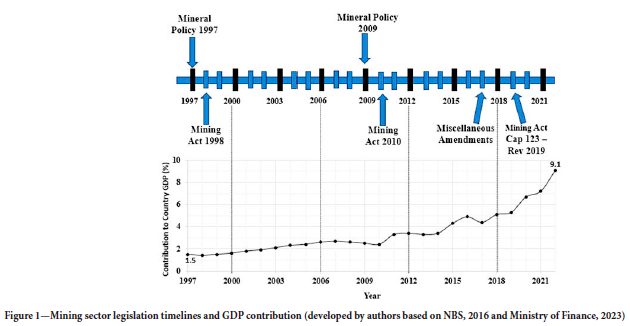
Figure 1 shows the mining sector legislation timelines and the corresponding GDP data. It can be seen that the mining sector's contribution to the country's GDP did not increase much between 1997 and 2009. However, a remarkable increase is observed from 2010 to date. For example, the government revenue from the mining sector increased from USD2 million in 1997 to USD78 million in 2007 (URT, 2009), then increased rapidly to about USD234million (2022), resulting in the GDP increase from 1.5% in 1997 to 9.1% in 2022. Such a remarkable increase can be attributed to several factors, such as increased foreign investment, increased royalty rates, formalisation of ASMs, and the establishment of mineral markets and buying centres. This trend suggests that mining legislation is one of the essential components influencing the growth of the mining sector in a country.
Mineral occurrences
The mineral resources of Tanzania are associated with a number of geological formations, and the ones with economic importance are the Nyanzian, Proterozoic, Ubendian, Craton, Usagaran, Bukoban, Karroo, Volcanics, and Cenozoic formations (GST, 2015; Kahyarara, 2024). The key mineral deposits found in these systems are presented in Figure 2. Based on the current study, this map shows that the country has a variety of mineral deposits, which can be categorised into five groups:
i. Metallic minerals: gold, silver, copper, and iron.
ii. Gemstones: tanzanite and diamond.
iii. Mineral fuels: coal and uranium.
iv. Industrial minerals: bauxite, gypsum, limestone, phosphate, and soda ash.
v. Critical minerals: nickel, graphite, lithium, and REE.
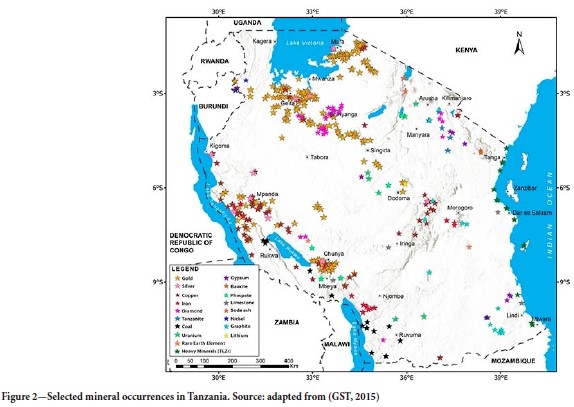
It should be noted that this study did not cover all the mineral commodities found in Tanzania, rather, the minerals listed here were selected to demonstrate the country's mineral wealth in order to explore more possibilities for mining investment in Tanzania. Generally, the map presented in Figure 2 indicates that the mineral deposits in Tanzania are primarily located in five key areas:
i. North and northwest: gold, silver, copper, diamond, and nickel.
ii. Northeast: tanzanite, phosphate, soda ash, and uranium.
iii. Central: gold, copper, graphite, uranium, and lithium.
iv. South and southwest: coal, uranium, graphite, gold, and REE.
v. East and along the coast: Limestone, gypsite, graphite, and heavy mineral sands.
Metallic minerals
Several metallic minerals are found in different parts of Tanzania. As shown in Figure 2, the majority of gold deposits in Tanzania are found in three main goldfields, which are Lake Victoria region (Geita, Nyamongo - Mara, Nzega - Tabora and Shinyanga); Mpanda and Lupa (Mpanda - Katavi, Chunya - Mbeya); and East and Central region (Sekenke - Singida, Sambaru, and Mananila) (Van Straaten, 1984; GST, 2015). In most of these deposits, gold mineralisation is found in quartz veins in shear zones and fractures or hosted by folded banded iron formation, and in other deposits gold is closely associated with porphyritic volcanic and sub-volcanic intrusive rocks (Henckel et al., 2016). Apart from gold, these deposits carry variable but significant amounts of other metals, e.g., copper and silver, which are extracted from metal sulphide and oxide minerals as concentrate, particularly copper. Currently, several large-scale companies are mining gold in Tanzania, including Geita Gold Mine (Geita), Barrick North Mara Mine (Mara), Barrick Bulyanhulu Mine (Shinyanga and Geita), New Luika Mine (Songwe), and Stamigold (Kagera). Other new gold projects are expected to start soon, including Nyanzaga (Mwanza), Shanta (Singida), Magambazi (Handeni Tanga), and Resolute-Nyakafuru. Gold mining and extraction activities are also performed by the medium-scale and small-scale miners in various parts of the country, particularly Geita, Chunya (Mbeya), Kahama (Shinyanga), Nzega (Tabora), Buhemba and Nyamongo (Mara).
In addition to gold, copper deposits are found in various locations in the country, including Lake Victoria region, Mpanda and Lupa goldfields, Malagarasi and near Lake Tanganyika (Kigoma), Pare mountains (Northeast) in Kilimanjaro region, and Uluguru mountains (Morogoro). Also, Tanzania has several iron deposits in various places, including Liganga and Mchuchuma (Njombe), Mvomero and Uluguru mountains (Morogoro), Karema and Hundusi (Katavi), Itewe (Chunya) (Jourdan, 1990; UNIDO, 1982). The Liganga iron ore mine holds the largest iron resources in Tanzania, with proven reserves of 126 million tonnes. In August 2024, the agreement to develop the Maganga Matitu iron project, worth USD77.4 million, was signed. It is jointly owned by Fujian Hexingwang Industrial Company from China (64%) and the Tanzanian government (36%). This project has an estimated iron reserve of 101 million tonnes. The project intends to utilise titaniferous magnetite deposits at Maganga Matitu and coal from Ketewaka to produce steel (Motisun Group, 2022). Currently, arrangements are made to compensate and relocate the residents for the project.
Gemstones
Tanzania has a variety of gemstones, such as diamonds, tanzanite, and others. Diamond and tanzanite account for a significant portion of the country's economy from gemstone, therefore, these two gems are discussed in this study. Tanzanite is a blue vanadium-bearing variety of the sorosilicate zoisite, which is hosted in a complex region consisting of granulite facies metacarbonate and metasilicate rocks overprinted by amphibolite to greenschist facies retrogression (Olivier, 2006). It is commonly used in jewellery due to its rarity and trichroic beauty, displaying blue, red, and yellow-brown-green when viewed down at different crystallographic axes (Cairncross, 2019). Currently, tanzanite is only found in Tanzania at Mererani hills (Manyara), in the northeastern part of the country (see Figure 2). Tanzanite mineralisation at Mererani occurs within a series of graphite-kyanite gneiss units within the garnet sillimanite gneiss (Harris et al., 2014).
Diamonds commonly occur in two principal genetic deposit types: primary deposits (which are found in magmatic deposits of kimberlite and olivine lamproite) and secondary deposits (weathered from primary sources) (Kjarsgaard et al., 2022). The diamond deposits in Tanzania are genetically bound to kimberlitic extrusions, which are located in the north-central part of Archaean Craton near Shinyanga town (Stiefenhofer, Farrow, 2004). Tanzania has been a major diamond producer since 1940, with the bulk of production coming from the open pit Williamson mine in Mwadui Shinyanga. Besides Williamson Diamonds Mine, diamonds are found in Mabuki, Maganzo (Shinyanga), and Nyang'wale (Geita). Currently, these mining sites are only operated by artisanal and small-scale miners. Limited diamondiferous kimberlites occur in the Western Rift valley (Rukwa and Nyasa) and southeast of Arusha in the Eastern Rift.
Coal and uranium
Tanzania has the largest coal resources in East Africa. This coal is mainly found along the Songea Karoo basins in the southern part of the country, particularly to the east and north-west of Lake Nyasa (Ruvuma and Kiwira), as well as in the north-west and south-east of Lake Rukwa. The total coal resource in the country is estimated to be more than 1.5 billion tonnes, but there could be up to five billion tonnes (Muhongo, 2013). Most coal is produced in the Ruvuma, Mbeya, Rukwa, and Songwe regions. Uranium is commercially extracted from uranium-bearing minerals such as uraninite. Uranium mineralisation has been identified in several areas in Tanzania, and the most potential deposits are located in Mkuju and Madaba (Ruvuma), Manyoni and Bahi Mbuga (Singida and Dodoma), as well as Minjingu (Manyara) and Monduli (Arusha). The Mkuju River mining project in the southwest of the Selous game reserve has more potential, with an estimated reserve of 182.1 million tonnes at a grade of 298 ppm U3O8 (O'Connor, Bertoli, 2012). However, the implementation of the project is waiting for the strategic environmental assessment (SEA) to evaluate the environmental impacts on the surrounding wildlife and ecosystems. This is because the deposit is located in the south-west of the Selous Game Reserve, home to a diverse range of wildlife, including elephants, lions, hippos, and numerous bird species.
Industrial minerals
Several industrial minerals are found in various places in Tanzania. The most common ones include limestone, gypsum, bauxite, phosphate, and soda ash. Limestone is widely found in different parts of the country, particularly around the coastal regions or near rift valleys such as Tanga, Kilwa, Lindi, Dar es Salaam, Mbeya, and Iringa. These deposits are estimated to have over 300 million tonnes of limestone (Ministry of Minerals, 2021). It should be noted that some of the limestone deposits and other industrial minerals, particularly those in the coastal regions are not seen properly in Figure 2 because they are overlaid with a heavy minerals symbol, since both limestone and heavy minerals occur in the same locations. Both large-scale companies and small-scale miners perform limestone mining. For large scale, the production is performed to serve as the main raw material for manufacturing Portland cement in several factories such as Twiga cement, Simba cement, and Tembo cement. In the case of small-scale production, limestone is used in construction, lime manufacturing, agriculture (to reduce soil acidity), and small-scale cement production.
Gypsum deposits are found in many parts of Tanzania, such as Pindiro and Mandawa (Lindi), Msagali and Itigi (Singida), Mkomazi (Tanga), as well as Makanya (Kilimanjaro). The Pindiro and Mandawa deposit in Kilwa District is considered the largest deposit in the country. This deposit is dome-shaped, consisting of gypsum mineralisation at the top underlain by a zone of anhydrite sequences (up to 100 m in depth) followed by a sequence of rock salt (over 3000 m). Historical data over a small area of this deposit indicated that the deposit has over 5 million tonnes of 85% gypsum (Jourdan, 1990). Currently, gypsite mining is performed on a large scale at Kiranjeranje (in Kilwa District), and the ore is sent to a large factory at Mkuranga (Pwani) - Knauf Gypsum Tanzania Limited for further processing to make gypsum and other related products.
Bauxite is the most important ore of aluminium, composed primarily of one or more aluminum hydroxide minerals. In Tanzania, bauxite deposits are found in Usambara mountains (Kidundai-Magamba and Mabughai-Mlomboza) located in Lushoto in northern eastern part of the country. The Mabughai-Mlomboza and Kidundai-Magamba plateaus consist of high-grade metamorphic rocks of the Proterozoic Mozambique belt. Based on historical drilling data and surface geological mapping, bauxite mineralisation in this area is between 40%-60% Al2O3, and the total reserve of this deposit is estimated to be about 29 million tonnes (Mutakyahwa et al., 2003). Currently, mining activities in this area is performed by the small-scale mechanised miners, and the product is exported to a cement factory in Zambia. In addition, the Australian company Lindian Resources Ltd, is undertaking exploration works on two bauxite projects at Lushoto and Pare.
Phosphate deposits are found in various areas of Tanzania such as Minjingu (Manyara), Panda Hill, Mbalizi, Songwe, Ngualla Hill Carbonatite in Mbeya and Songwe regions, and Chali Hill in Bahi (Dodoma) (Msolla et al., 2005; Kalvig et al., 2012). Currently, phosphate is mined at the Minjingu deposit. The Minjingu phosphate has a reserve estimation of 10 million tonnes (MMFL, 2022), containing high to medium concentrations of naturally occurring P2O5 (20%-35%) (Haneklaus et al., 2024). Soda ash is mainly found around Lake Natron and the Engaruka basin. The mining proposal of soda ash ore (trona) from Lake Natron developed by the National Development Corporation (NDC) has generally met strong opposition from conservation agencies and local communities, citing the uniqueness of Lake Natron as an tourist attraction, a source of livelihood, and the only regular breeding site for the lesser flamingo (Phoenicopterus minor) in Eastern Africa (Kadigi et al., 2014). As a result, the Lake Natron project has been abandoned. In the case of Engaruka basin, drilling exploration works have established the presence of large deposits of soda ash in terms of brine, which is estimated to be over 4.8 billion m3 (NDC, 2023). The government has already allocated funds to compensate the residents near the site to pave the way for this project.
Critical minerals and REE
Minerals containing critical elements have been found at various places in Tanzania. The most critical elements include graphite, nickel, lithium, titanium, and zirconium. Other important minerals found in the country carry rare earth elements and heavy minerals, e.g., ilmenite and zircon. The graphite deposits are located in the northeast, central, and southeast regions of the country, including Mererani (Manyara), Mpwapwa (Dodoma), Mahenge (Morogoro), and Nachingwea (Lindi). Several graphite projects are now active in the country, at various stages, including Bunyu (Mtwara), Epanko and Mahenge, Lindi Jumbo, and Chilalo (Lindi). The Jumbo project (located 200 km from Mtwara port) is one of the richest graphite reserves in Africa, containing high grade and coarse flake graphite with an estimated total mineral resource of 41.8 million tonnes at an average grade of 10.8% total graphitic carbon (Walkabout Resources, 2023). The first production in this project started in the first quarter of 2024.
Tanzania has several nickel deposits, and the most potential ones are located in the northwest at Kabanga (Kagera) and southeast at Ntaka hill (Nachingwea - Lindi) (Figure 2). At Kabanga, the mineralisation occurs as disseminated and massive sulphides, and the sulphide minerals present are pyrrhotite, pentlandite, chalcopyrite, cobaltite, and pyrite (GST, 2015). Historical data indicated that the Kabanga mineralisation contains a preliminary resource of over 20-23 million metric tonnes at 2.2-2.6% Ni, 0.27% Cu, and 0.16% Co (Evans et al., 2000; Maier et al., 2010). Similarly, in the case of the Ntaka project, mineralisation occurs as massive sulphide or disseminated sulphide grains, and pentlandite is the main nickel bearing mineral. Other sulphide minerals contained in this ore are chalcopyrite, pyrrhotite, and cobaltite. A preliminary resource of 12.8 million tonnes was reported for the Ntaka ore, at a grade of 1.21% Ni, 0.25% Cu, and 0.03% Co (Moore et al., 2012). It can be noted that in both deposits nickel occur together with cobalt and copper, which make these deposits more attractive.
Lithium occurrence has been reported in central Tanzania at Hombolo, approximately 40 km north-east of the Tanzanian capital Dodoma. The primary sources of lithium in this area, based on the preliminary analysis, are two minerals found within the pegmatites: lepidolite (a lithium-bearing mica), and spodumene (a lithium-bearing pyroxene). Hombolo has a history of hosting lithium-bearing pegmatites, which makes its vicinity one of the main attractions in the search for new lithium deposits in Tanzania (Metminec, 2023). Previous mapping efforts in the area have identified several occurrences of lithium, indicating the presence of valuable mineral resources with a maximum grade of up to 5.2% Li2O in pegmatites that intrude the regional metamorphic basement rocks of the exploration site (Cgrowth Capital, 2023). However, lower grades of 0.12%-1.34% Li2O have been reported by the Geological Survey of Tanzania (GST, 2015) using loose blocks of lepidolite collected the from pegmatite outcrop at Hombolo. More exploration works are being conducted at Hombolo and nearby areas, e.g., Kongwa, Chamwino, and Mohanga, to delineate potential lithium deposits in these areas.
Tanzania is reported to have considerable resources of REE, which are mostly hosted in carbonatite and phosphate minerals. The most potential deposits are found in the southwest at Ngualla Hill (Mbeya), as well as in the eastern part of the country at Wigu Hill (Morogoro). The REE mineralisation at Ngualla is pipe-like in shape with a diameter of around 4 km and is hosted by an in situ iron oxide and baryte-rich weathering shell overlying fresh dolomite carbonatite (Harmer, Nex, 2016). Weathering depths are highly variable, but grades more than 3% total rare earth oxide (TREO) are common within the iron oxide-baryte-rich material over thicknesses of up to 140 metres and based on the high-grade core (central Bastnaesite zone). The Wigu Hill carbonatite complex is known to be an extensive occurrence of rare earth mineralisation, with bastnaesite-rich carbonatite dikes hosting high-grade TREO, dominated by the light REE including cerium, lanthanum, neodymium, praseodymium and samarium. The exploration work at Wigu identified at least five potential resources, and a total inferred resource of 3.3 million tonnes at 2.6% TREO has been defined in two resources, being Twiga and Tembo (Montero, 2015). Apart from REE, niobium is also found in Mbeya at Panda Hill, and an inferred mineral resource of 178 million tonnes at a grade of 0.5% Nb2O5 has been reported by Cradle Resources Limited (2015).
The occurrence of heavy mineral sands in Tanzania containing titanium and zirconium minerals has been reported since the 1990's (Jourdan, 1990). These deposits are found in various locations along the coast, such as Tanga North, Tanga South (Tajiri Pangani), Bagamoyo, Fungoni (Kigamboni Dar es Salaam), Mafia Island West, Mteja (Lindi), Kiswere (Kilwa), and Madimba (Mtwara south) (Mangora et al., 2024). Currently, the most potential heavy mineral deposits are Tajiri and Fungoni. A scoping study reported by Strandline Resources Limited (2020) indicated that the Tajiri deposit has an estimated mineral resource of 268 million tonnes at an average grade of 3.3% total heavy mineral (THM), with about a 23-year mine life. The Fungoni deposit is relatively small, with a reserve of about 12.3 million tonnes and 6.2 years of mine life (Strandline Resources, 2022). In March 2024, the government issued a special mining licence (SML) for the Tajiri mineral sands project, and mining activities should commence within 18 months from the grant date.
Overall, this section demonstrates that Tanzania is rich in mineral resources. The availability of these minerals, an improved mining legal framework, and rising global mineral demand make the country attractive for mining investment and development.
Mineral production and trends
The mineral production and trends were analysed for the period between 2018 to 2024. This period was preferred due to data availability. Also, as mentioned before, significant changes in mining legislation occurred in Tanzania during this time. These changes have generally improved the mining sector in Tanzania, and they are likely to impact mineral production, so this study aims to capture that information.
Metallic minerals
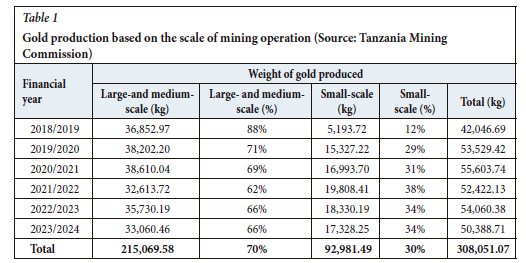
The production trends for metallic minerals such as gold, silver, and copper are presented in Figure 3. As seen in this Figure, the gold production trend increased sharply from 42 tonnes in 2018/2019 to around 55 tonnes in 2021/2022 and then remained relatively constant to about 50-54 tonnes thereafter. The increase in gold production observed in 2019/2020 is attributed to the development of the small-scale mining sector in the country (e.g., formalising more ASMs), together with the establishment of mineral markets and buying centres across the country (between 2019 and 2021) to prevent mineral smuggling so that actual production data are recorded. The proportion of gold produced by small-scale miners is seen in Table 1, rising from 12% (5,193.7 tonnes) in 2019/2020 to 29% (15,327.2 tonnes) in 2019/2020. Despite the low-technology employed by the ASMs, these results indicate that they can make a significant contribution to the mining sector, thus emphasising the importance of formalising and supporting the ASMs subsector.
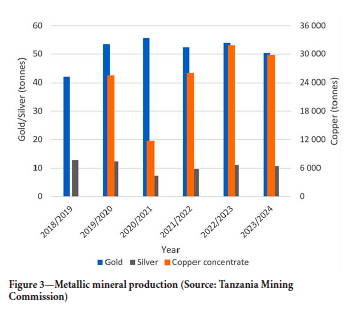
Although the copper concentrate production data for 2018/2019 was unavailable when this study was conducted, the general trend showed a sharp decline in copper production in 2020/2021. This is attributed to the closure of the Buzwagi mine (2021) and the reduced production of copper concentrate from the Bulyanhulu mine (the largest copper producer in Tanzania) following the government's ban on exporting mineral concentrates and raw ores. The copper production increased sharply thereafter, rising from 11,636 tonnes (2020/2021) to around 31,800 tonnes (2022/2023). This is when the Bulyanhulu mine resumed operation at its full capacity, following the government approval to export copper concentrate after resolving disputes between Barrick Gold and the Tanzanian government. Silver production exhibited a similar trend to copper, which could be because silver is commonly associated with copper or other metallic sulphides.
Gemstones
Even though Tanzania is has varieties of gemstones, it has been noted that the gemstone industry is dominated by diamond and tanzanite, and the production data is presented in Figure 4. As seen in this Figure, the diamond production was high in 2018/2019 and then gradually decreased in the following year, and a sharp decline is observed in 2020/2021. This decline is attributed to the COVID-19 pandemic, whereby the Williamson diamond mine (the large diamond producer in Tanzania) suspended operations due to the world market diamond price drop during the pandemic. In 2021/2022, the production started to increase, but in the following year, the production dropped slightly. This is because, in November 2022, the Williamson mine suspended operations for several months due to a failure of the tailings storage facility (TSF), which halted production in 2022/2023. Thereafter, the operations were resumed in July 2023, which lead to the production increase to about 302 thousand carats in 2024.
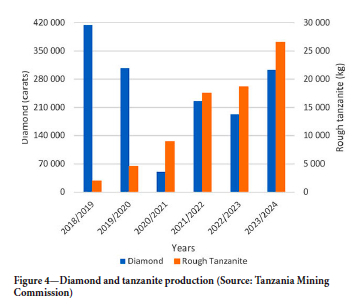
The rough tanzanite production showed an increased trend over the years, from about 1965 kg in 2018/2019 to 26,490 kilogrammes in 2023/2024, equivalent to an increased production of around 1250% in six years. This massive increase in tanzanite production is attributed to several initiatives introduced by the government during this period, such as the construction of a concrete wall surrounding the Mererani gemstone mines in 2018 to combat illegal tanzanite mining and the establishment of gem houses (e.g., Mererani mineral market - 2021).
Coal
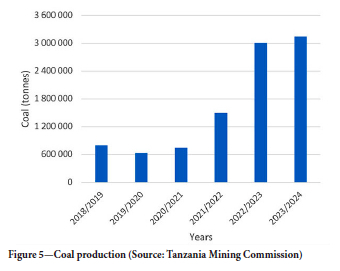
Figure 5 shows the trend of coal production in the past six years. It can be seen that initially (2018-2020), the production was low, ranging between about 600,000 and 800,000 tonnes, which was mainly produced at Ngaka Coal Mine and some small-scale mines. In the last financial year (2023/2024), coal production approached 3.1 million tonnes (with a value of around TZS 917 billion), equivalent to an increase in coal production of over 290% in only six years. The higher increase in coal production seen from 2021/2022 was mainly attributed to establishing new large-scale mines, such as Ruvuma Coal Mine and Jitegemee Coal Mine, with a small proportion produced by several small-scale mines. To date, no uranium production has been reported in Tanzania.
Industrial minerals
A summary of selected production data for industrial minerals is presented in Table 2. The general trend indicates that the production of most minerals increased over the years, with high production dominated by limestone compared to gypsum, bauxite, and phosphate. The increasing trend of limestone production is mainly due to an increased demand for construction, lime manufacturing, agriculture, and cement Companies. Recent increases in the demand for cement for medium and large construction projects have further enhanced the economic merit of limestone production. As for gypsum, the increase in its production over the years has been attributed to the development of the Tanzania construction industry, which includes both commercial and residential buildings.
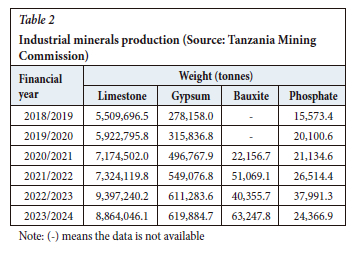
Despite existing bauxite deposits in the country, bauxite production is relatively low. As mentioned before, bauxite production is only performed by small-scale mechanised miners in Lushoto. Future potential projects like those of Lindian Resources Ltd (located at Lushoto and Pare) are expected to significantly increase bauxite production.
Further, phosphate production is lower than that of other industrial minerals, though it has, in general, gradually increased over the years. Most of it is mined at Minjingu and then processed to make fertilisers, while a small portion is mined by the small-scale miners in other deposits. The Minjingu mine is in the final stages of expanding its factory to increase fertiliser production.
The production data have generally indicated increased trends in most minerals for the selected period, except in a few cases, as pointed out in this section. The growth in mineral production is attributed to several factors, including improved mining legislation and the availability of rich mineral deposits, which encouraged more mining investment in the country. It is worth mentioning that Tanzania was one of the few countries that didn't impose lockdowns in the fight against the COVID-19 pandemic. So, large mining companies (except Williamson diamond mine) and ASMs continued with operations, though extra health precautions were taken to prevent transmission. This explains why most of the trends in this study did not exhibit a significant reduction in mineral production between 2019/2020 and 2020/2021.
Challenges in the mining sector and government initiatives
Despite the country being a better place for mining investment, the mining sector in Tanzania encounters several challenges, including a lack of detailed geological information on mineral deposits, inadequate infrastructures in some remote mining sites (e.g., reliable electrical power supply, good roads, clean water access), environmental and land degradation concerns, the presence of informal artisanal miners, and mineral smuggling. Also, while Tanzania has a variety of minerals, it has been observed that the mining sector contribution is heavily dominated by fewer mineral types such as gold, diamond, gemstones, and coal, so utilising other minerals in addition to the dominant ones will boost the country's economy even further. Another challenge that is being faced by the whole world is the decline of high-grade deposits in some places. Mining activities e.g., gold, have been conducted in Tanzania for over a hundred years. This leads to the depletion of high-grade and easily accessible deposits in some areas. Thus, requiring advanced technologies to extract the minerals profitably can be exceedingly costly and challenging. In addition, some of the key challenges facing the ASM subsector in Tanzania include limited use of mechanisation, low level of occupational safety and health care associated with rudimentary mining and mercury amalgamation, lack of a skilled workforce, a high level of environmental risks and poor waste management, poor links between ASM and financial institutions, lack of personal protective equipment, and tax avoidance.
The Tanzanian government intends to conduct geological surveys of rocks using modern technologies, which will aid in identifying new mineral deposits (Minister of Minerals of Tanzania, 2024a). To date, just 16% of the country's land has been thoroughly geologically surveyed, but the plan is to cover at least 50% by 2030. This initiative will provide a better understanding of mineral resources in the country and their location, thereby attracting more mining investors. In this financial year (2024/2025), the parliament has approved a project to conduct an in-depth geological survey in two blocks (covering a total of 165,574 km2) in the regions of Rukwa, Katavi, Mbeya, Songwe, and Kigoma. The government's long-term plan is to purchase a helicopter for rapid measurements of high-resolution airborne geological surveys nationwide.
As mentioned before, the Tanzanian government constructed a concrete wall around the entire tanzanite mining area in Mererani. The construction of this wall was completed by February 2018, costing about USD 2.9-3.1 million (Huggins, Kinyondo, 2019). This decision was made to combat tanzanite smuggling because about 40% of all production was illegally traded and exported, resulting in a significant loss of government revenue collections from this precious gem. The wall is 24 km long and over 3 metres high, with a single exit and entry gate that is tightly controlled to prevent unauthorised access to mining areas. This government intervention resulted in a significant increase of reported rough tanzanite production of about 1160%, from 156 kg (2016/2017) to approximately 1,965 kg (2018/2019). As a result, the revenue collection from tanzanite increased by 1,520% from TZS 119 million (2016/2017) to TZS 1,928 million (2018/2019) (Mining Commision, 2022).
The Tanzanian government has increased infrastructure development, including electrification in rural areas (e.g., active mining sites) through the Rural Energy Agency (REA). For example, in April 2023, the Stamigold Biharamuro Mine project was connected to the national electricity grid. Also, TZS 7 billion has been allocated to provide electricity to 52 areas in Geita to support ASM operations (Minister of Minerals of Tanzania, 2024b). This follows the completion of the Julius Nyerere Hydropower Project (JNHPP), which can create up to 2,115 MW of electricity when fully operational, allowing more power distribution to remote areas, including mining sites. Furthermore, by December 2022, the government had constructed 36,760.29 km of roads connecting regions and districts across the country (Ministry of Works, 2022). These roads are crucial in the development of the industrial sector, including mining, because they are used to transport equipment and consumables to the mining sites and the extracted materials from the mining sites. However, more roads need to be constructed in remote areas to further facilitate the transportation process throughout the year, even during rainy seasons.
The value addition process of some minerals (e.g., copper concentrate) is performed abroad due to limited refinery technologies and capacities in Tanzania. Following the recent reforms of mining laws and regulations, particularly the Mining Value Addition Regulations and Amendments of 2020, mining companies are encouraged to establish smelting and refinery facilities within the country for mineral value addition rather than exporting raw minerals abroad. Adding mineral value within the country will stimulate local industrial development and provide employment opportunities to many Tanzanians. The government has offered tax exemptions on imported machinery and equipment to companies doing mineral refinery work in the country to achieve this goal. Hence, supporting the National Five-Year Development Plan, emphasises building human capacity, strengthening industrial productivity, and stimulating an inclusive and competitive economy (URT, 2021). For the first time in March 2024, the government has offered a Multi-Metal Processing Facility licence to Lifezone Metals Limited to refine nickel, copper, and cobalt in-country. The facility will be located in the Buzwagi Special Economic Zone in the Kahama district.
In June 2024, the Mining Act, Chapter 123 (Section 59) was amended, requiring the mineral right holders and the mineral dealers to set aside at least 20% of gold produced/purchased within the country by selling their gold directly to the Bank of Tanzania (BOT) at competitive world market prices. This programme was officially initiated on 1st October 2024, aiming to enhance currency stability and foster economic confidence. It offers reduced fees such as a royalty of 4% instead of 6%, inspection fees of 0% instead of 1%, and 0% value-added tax. In this programme, the miners and traders are required to submit the reserved gold to any of the three mineral refineries: Geita Gold Refinery Ltd (Geita), Eye of Africa Ltd (Dodoma), and Metals Refinery Ltd (Mwanza). BOT has set aside TZS 1 trillion to purchase gold through this programme (President of the United Republic of Tanzania, 2024).
In recent years, the government has greatly facilitated the formalisation of ASM to reduce the number of informal miners by offering more primary mining licences (PML) to qualified applicants. For instance, between July 2023 and March 2024, the number of PML granted was 6,934. Regarding its formalisation efforts, the government, through the State Mining Corporation (STAMICO), has conducted training for over 10,000 ASMs (by 2023) on health and safety, environmental management, business management, and planning. Also, the government has purchased 15 drilling rigs to support ASM operations through STAMICO. Five drilling rigs are already being used to support ASM activities in various parts of the country. Once the rest of the rigs arrive, two will be dedicated to serve youth miners and one for women miners, to facilitate their operations (President of the United Republic of Tanzania, 2024).
In addition, the government has linked the ASM with financial institutions to acquire loans to purchase mining equipment and machinery. Several banks have offered loans to ASMs that amounts to TZS187 billion from July 2023 to March 2024 (Minister of Minerals of Tanzania, 2024a). These banks include: Cooperative Rural Development Bank (CRDB), National Microfinance Bank (NMB), AZANIA, and Kenya Commercial Bank (KCB). Also, the government has established mineral processing training facilities to serve ASMs. These facilities are located at Lwamgasa and Katente (Geita), and Itumbi (Mbeya). Furthermore, the government plans to construct a modern geoscience laboratory in Dodoma and establish small laboratory facilities at Chunya and Geita to serve ASMs.
To prevent mineral smuggling, the government has established mineral markets and mineral buying centres across the country, which were introduced to control mineral trading and ensure tax revenue collection, including in the ASM subsector. Mineral trading outside of the established markets is prohibited in Tanzania, so minerals must be traded at the market within the region where they are mined and extracted, and only licenced dealers are permitted to export minerals. A total of 42 mineral markets and 78 mineral buying centres were established across the country by June 2022 (Mining Commission, 2023). As a result, the government revenue collection from mineral markets and buying centres, in terms of royalty, clearance, and inspection fees, has increased from TZS8.37 billion (2018/19) to TZS157.44 billion (2022/23), equivalent to a 95% increase in five years. This amount was collected from purchasing gold, tanzanite, diamond, and other gemstones.
Conclusions
Tanzania has a wide range of mineral resources, including metallic minerals, gemstones, industrial minerals, coal, critical minerals, and rare earth elements. The availability of these minerals in the country, improved investment policies, and rising global mineral demand, make the country attractive for mining investment. Therefore, this study provides an overview of the country's mining industry, including more recent information on mining legislation, mineral occurrence and production, and government programmes, to demonstrate Tanzaniaww's mining sector growth and potential for further investment.
One of the key challenges facing the mining sector in Tanzania is the lack of detailed geological information on some potential mining areas, which limits the discovery and development of new mineral resources. Only 16% of the country's land is surveyed using high-resolution airborne geophysical measurements. Other challenges encountered by the mining sector in Tanzania include a lack of adequate infrastructure in some remote mining sites, informal artisanal miners in some areas, environmental and land degradation, particularly in some ASM sites, lack of mineral refinery facilities in the country, and mineral smuggling.
The Tanzanian government has implemented several initiatives to address these challenges, including approving a budget to conduct an in-depth geological survey to improve geological information, constructing the great Mererani wall to prevent tanzanite smuggling, and continued to development of infrastructure including mining areas. Another key initiative implemented recently was the reform of mineral legislation, which helped to promote the development of the mining sector in the country, including the formalisation of ASMs by issuing more primary mining licences to qualified applicants, encouraging value addition of minerals within the country, such as offering an area for constructing refinery facilities, which is located in Kahama district; conducting training sessions for over 10,000 ASMs (by 2023) on various aspects, including health and safety, providing drilling services to ASMs, establishing 42 mineral markets and 100 mineral buying centres to combat mineral smuggling, and linking ASMs with financial institutions to improve mining and processing technologies.
Acknowledgements
The authors acknowledge the Department of Mining and Mineral Processing Engineering of the University of Dar Es Salaam for the financial support of this research.
Credit author statement
BG: conceptualisation, validation, writing, visualisation, investigation, original draft preparation. AS: validation, supervision, review.
References
Agrawal, V., Sharma, S. 2021. Critical Minerals: Current Challenges and Future Strategies Critical Minerals: Current Challenges and Future Strategies. International Journal of Environmental Sciences & Natural Resources This, vol. 27, no. 3. https://doi.org/10.19080/IJESNR.2021.27.556215 [ Links ]
Butler, P. 2004. Tanzania : Liberalisation of Investment and the Mining Sector Analysis of the Content and Certain Implications of the Tanzania 1998 Mining Act. Regulating Mining in Africa For Whose Benefit, pp. 67-80. [ Links ]
Cairncross, B. 2019. Connoisseur's Choice: Tanzanite, Gem Variety of Zoisite, Merelani Hills, Simanjiro District, Manyara Region, Tanzania. Rocks and Minerals, vol. 94, no. 6, pp. 530-539. https://doi.org/10.1080/00357529.2019.1641023 [ Links ]
Calvo, G., Mudd, G., Valero, A., Valero, A. 2016. Decreasing ore grades in global metallic mining: a theoretical issue or a global reality? Resources, vol. 5, no. 4, p. 36. https://doi.org/https://doi:10.3390/resources5040036 [ Links ]
Cgrowth Capital. 2023. Nkole-Hombolo Lithium Project. Preliminary Report. Tanzania mining Project (Issue July). [ Links ]
Chachage, C. S. 1995. The meek shall Inherit the earth but not the mining Rights. Studies on Accumulation Processes and Local Institutions, pp. 37-108. [ Links ]
Cradle Resources Limited. 2015. Panda Hill Niobium - A Step Closer to Construction. [ Links ]
Dunn, S. C., Von der Heyden, B.P. 2022. Proterozoic - Paleozoic orogenic gold mineralization along the southwestern margin of the Tanzania Craton: A review. Journal of African Earth Sciences, vol. 185 (November 2020), 104400. https://doi.org/10.1016/j.jafrearsci.2021.104400 [ Links ]
Evans, D.M., Boadi, I., Byemelwa, L., Gilligan, J., Kabete, J., Marcet, P., Sy, A. 2000. Kabanga magmatic nickel sulphide deposits, Tanzania: morphology and geochemistry of associated intrusions. Journal of African Earth Sciences, vol. 30, no. 3, pp. 651-674. [ Links ]
Filho, W.L., Kotter, R., Özuyar, P.G., Abubakar, I.R., Eustachio, J.H.P.P., Matandirotya, N.R. 2023. Understanding Rare Earth Elements as Critical Raw Materials. Sustainability (Switzerland), vol. 15, no. 3. https://doi.org/10.3390/su15031919 [ Links ]
Flores, G.A., Risopatron, C., Pease, J. 2020. Processing of Complex Materials in the Copper Industry: Challenges and Opportunities Ahead. Jom, vol. 72, no. 10, pp. 3447-3461. https://doi.org/10.1007/s11837-020-04255-9 [ Links ]
GST. 2015. Explanatory notes for the minerogenic map of Tanzania. Geological Survey of Tanzania (GST). [ Links ]
Haneklaus, N.H., Mwalongo, D.A., Lisuma, J.B., Amasi, A.I., Mwimanzi, J., Bituh, T., Ciric, J., Nowak, J., Ryszko, U., Rusek, P., Maged, A., Bilal, E., Bellefqih, H., Qamouche, K., Brahim, J.A., Beniazza, R., Mazouz, H., Van der Merwe, E.M., Truter, W., Waclawek, S. 2024. Rare earth elements and uranium in Minjingu phosphate fertilizer products: Plant food for thought. Resources, Conservation and Recycling, vol. 207 (April). https://doi.org/10.1016/j.resconrec.2024.107694 [ Links ]
Harmer, R.E., Nex, P.A.M. 2016. Rare earth deposits of Africa. Episodes, vol. 39, no. 2, pp. 381-406. https://doi.org/10.18814/epiiugs/2016/v39i2/95784 [ Links ]
Harris, C., Hlongwane, W., Gule, N., Scheepers, R. 2014. Origin of tanzanite and associated gemstone mineralization at Merelani, Tanzania. South African Journal of Geology, vol. 117, no. 1, pp. 15-30. https://doi.org/10.2113/gssajg.117.1.15 [ Links ]
Haxel, G. 2002. Rare Earth Elements - Critical Resources for High Technology. U.S. Department of the Interior, U.S. Geological Survey, vol. 82, no. 2. [ Links ]
Henckel, J., Poulsen, K.H., Sharp, T., Spora, P. 2016. Lake Victoria goldfields. Episodes, vol. 39, no. 2, pp. 135-154. https://doi.org/10.18814/epiiugs/2016/v39i2/95772 [ Links ]
Holden, J. 2023. Gold mine stripping ratios rise on high prices, grades continue declining | S & P Global Market Intelligence. S & P Global Market Intelligence. https://www.spglobal.com/marketintelligence/en/news-insights/research/gold-mine-stripping-ratios-rise-on-high-prices-grades-continue-declining [ Links ]
Huggins, C., Kinyondo, A. 2019. Resource nationalism and formalization of artisanal and small-scale mining in Tanzania: Evidence from the tanzanite sector. Resources Policy, vol. 63. https://doi.org/10.1016/j.resourpol.2019.101436 [ Links ]
Jourdan, P. 1990. The Minerals Industry of Tanzania (Issue February). Institute of Mining Reasearch, University of Zimbabwe. [ Links ]
Kadigi, R.M.J., Mwathe, K., Dutton, A., Kashaigili, J., Kilima, F. 2014. Soda Ash Mining in Lake Natron: A Reap or Ruin for Tanzania? Journal of Environmental Conservation Research, vol. 2, no. 2, p. 37. https://doi.org/10.12966/jecr.05.01.2014 [ Links ]
Kahyarara, G. 2024. Dynamics and Trends of Mining in Tanzania : A Cointegration. African Journal of Economic Review, vol. 12 (June), pp. 137-160. [ Links ]
Kalvig, P., Fold, N., Jonsson, J.B., Mshiu, E.E. 2012. Rock phosphate and lime for small-scale farming in Tanzania, East Africa. Geological Survey of Denmark and Greenland Bulletin, vol. 26, pp. 85-88. https://doi.org/10.34194/geusb.v26.4772 [ Links ]
Kjarsgaard, B.A., Wit, M. De, Heaman, L.M., Pearson, D.G., Stiefenhofer, J., Janusczcak, N., Shirey, S.B., Dc, W. 2022. Global Diamond Mines and Deposits. vol. 88 (July). [ Links ]
Lugoe, F. 2012. Governance in Mining Areas in Tanzania with Special Reference to Land Use. The Economic and Social Research Foundation (ESRF), vol. 41, pp. 1-17. [ Links ]
Maier, W.D., Barnes, S.J., Sarkar, A., Ripley, E., Li, C., Livesey, T. 2010. The Kabanga Ni sulfide deposit, Tanzania: I. Geology, petrography, silicate rock geochemistry, and sulfur and oxygen isotopes. Mineralium Deposita, vol. 45, no. 5, pp. 419-441. https://doi.org/10.1007/s00126-010-0280-0 [ Links ]
Mangora, M.M., Msangameno, D.J., Woiso, J.F., Shaghude, Y.W 2024. State of the Coast for Mainland Tanzania. Chapter 15: Coastal Mining. [ Links ]
Metminec. 2023. Desktop Research & Reconnaissance Survey Report Lithium Exploration Project in the Hombolo Area in Tanzania (Issue September). [ Links ]
Mining Commision. 2022. Annual Report 2020-2021. www.tumemadini.go.tz [ Links ]
Mining Commision. 2023. Annual Report 2021-2022. www.tumemadini.go.tz [ Links ]
Minister of Minerals of Tanzania. 2024a. Budget Speech presented by the Minister of Minerals in the Tanzania National Assembly on 30th April 2024. [ Links ]
Minister of Minerals of Tanzania. 2024b. Speech by Honorable Antony Mavunde at the closure of the 7th Mining Technology Exhibition held in Geita on 13th October 2024. [ Links ]
Ministry of Finance. 2023. The Economic Survey 2022. Ministry of Finance, United Republic of Tanzania. [ Links ]
Ministry of Minerals. 2024. Investor's Guide Tanzania Mining Sector. Ministry of Minerals, United Republic of Tanzania. [ Links ]
Ministry of Minerals. 2021. Tanzania Mining Industry on the Verge of a New Era. Years of Tremendous Growth. International Mineral and Mining Investment, pp. 1-72. [ Links ]
Ministry of Works. 2022. Basic Statistics and Information in Construction Industry (2021). Ministry of works and Transport, United Republic of Tanzania. [ Links ]
MMFL. 2022. About Minjingu mines - Minjingu Phosphate Deposits. Minjingu Mines and Fertilizer Limited. https://minjingumines.com/about.html [ Links ]
Montero. 2015. Montero Mining and Exploration Ltd. Management's Discussion and Analysis. Wigu hill REE Project in Tanzania. [ Links ]
Moore, C., Eng, P., Munro, P., Mcara, J., Eng, P., Schunke, N., Mining, B.E., Min, M.C.P. 2012. Technical Report on the Ntaka hill nickel sulphide project Lindi and Mtwara regions, Tanzania, Africa. [ Links ]
Motisun Group. 2022. Mining - Maganga Matitu Resources Development Ltd (MMRDL). https://doi.org/motisungroup.com/services/mining/, accessed on 23rd October 2024. [ Links ]
Msolla, M.M., Semoka, J.M.R., Borggaard, O.K. 2005. Hard Minjingu phosphate rock: An alternative P source for maize production on acid soils in Tanzania. Nutrient Cycling in Agroecosystems, vol. 72, no. 3, pp. 299-308. https://doi.org/10.1007/s10705-005-6081-7 [ Links ]
Muhongo, S. 2013. Tanzania as an Emerging Energy Producer. Chatham House. Africa Meeting Summary, pp. 1-10. www.chathamhouse.org [ Links ]
Mutakyahwa, M.K.D., Ikingura, J.R., Mruma, A.H. 2003. Geology and geochemistry of bauxite deposits in Lushoto District, Usambara Mountains, Tanzania. Journal of African Earth Sciences, vol. 36, no. (4), pp. 357-369. https://doi.org/10.1016/S0899-5362(03)00042-3 [ Links ]
Mwalyosi, R.B. 2004. Impact Assessment and the Mining Industry: Pespectives from Tanzania. International Association for Impact Assessment (IAIA), p. 14. [ Links ]
NBS. 2016. National Accounts of Tanzania Mainland 2007-2015. National Bureau of Statistics. Ministry of Finance and Planning, United Republic of Tanzania. [ Links ]
NDC. 2023. Projects for Public Private Partnership, United Republic of Tanzania. Engaruka Basin Soda Ash Project. The National Development Corporation (NDC), United Republic of Tanzania. [ Links ]
O'Connor, M., Bertoli, O. 2012. Estimating Recoverable Resources using Uniform Conditioning - A Case Study at the Mkuju River Uranium Project, Tanzania. AusIMM Uranium, Adelaide, June. CSA Global Resource Industry Consultants. [ Links ]
Olivier, B. 2006. The Geology and Petrology of the Merelani Tanzanite Deposit NE Tanzania (Issue December). PhD Thesis, University of Stellenbosch. [ Links ]
Poncian, J., George, C. 2015. Mineral Extraction for Socio-Economic Transformation of Tanzania: The Need to Move from Papers to Implementation of Mining Policy and Law. Journal of Social Science Studies, vol. 2, no. 2, p. 160. https://doi.org/10.5296/jsss.v2i2.7450 [ Links ]
President of the United Republic of Tanzania. 2024. Speech by Honorable Samia Suluhu Hassan at the closure of the 7th Mining Technology Exhibition held in Geita on 13th October 2024. [ Links ]
Stiefenhofer, J., Farrow, D.J. 2004. Geology of the Mwadui kimberlite, Shinyanga district, Tanzania. Lithos, vol. 76, (1-4 SPEC. ISS.), pp. 139-160. https://doi.org/10.1016/j.lithos.2004.04.017 [ Links ]
Strandline Resources. 2022. Tajiri receives Environmental Certificate. STA - Equity Report current as at 22/03/2022. [ Links ]
Strandline Resources limited. 2020. Scoping Study shows Tajiri mineral sands project will deliver strong financial returns over 23-year life (Issue October). [ Links ]
UNIDO. 1982. Pilot Study on Natural Resources in Tanzania. Final Project Report RP/URT/81/003. This publication has been made available to the public on the occasion of the 50th anniversary of the United Nations Industrial Development Organisation. [ Links ]
URT. 1997. The Mineral Policy of Tanzania. Ministry of Energy and Minerals, United Republic of Tanzania. [ Links ]
URT. 1998. The Mining Act of 1998 (No.5). United Republic of Tanzania. [ Links ]
URT. 2009. The Mineral Policy of Tanzania. Ministry of Energy and Minerals, United Republic of Tanzania. [ Links ]
URT. 2010. The Mining Act of 2010 (No.14). United Republic of Tanzania. [ Links ]
URT. 2017. The Written Laws (Miscellaneous Amendments) (No.4) Act, 2017. United Republic of Tanzania. [ Links ]
URT. 2019. The Tanzania Mining Act Revised Edition 2019 (Chapter 123). The United Republic of Tanzania. [ Links ]
URT. 2021. National Five Year Development Plan 2021/22-2025/26: Realising Competitiveness and Industrialisation for Human Development. In United Republic of Tanzania, Ministry of Finance and Planning (Issue June). [ Links ]
Van Campenhout, B. 2002. The Mining Industry and the Future Development of Tanzania. Workshop on Globalization and East Africa, April, 15. [ Links ]
Van Straaten, H. P. 1984. Gold mineralization in Tanzania-a review. Gold '82. Proceedings of a Symposium, University of Harare, 1982, January 1984, 673-685. [ Links ]
Vidal, O., Le Boulzec, H., Andrieu, B., Verzier, F. 2021. Modelling the demand and access of mineral resources in a changing world. Sustainability, vol. 14, no. 1, p. 11. https://doi.org/https://doi.org/10.3390/su14010011 [ Links ]
Walkabout Resources. 2023. Lindi Jumbo Graphite Project. https://doi.org/wkt.com.au/projects/lindi-jumbo-graphite-project/, accessed on 23rd October 2024. [ Links ]
Weldegiorgis, F.S., Dietsche, E., Ahmad, S. 2023. Inter-Sectoral Economic Linkages in the Mining Industries of Botswana and Tanzania: Analysis Using Partial Hypothetical Extraction Method. Resources, vol. 12, no. 7. https://doi.org/10.3390/resources12070078 [ Links ]
 Correspondence:
B.F. Giyani
Email: giyani.baker@udsm.ac.tz
Received: 24 Dec. 2024
Revised: 14 Aug. 2025
Accepted: 27 Aug. 2025
Published: October 2025