




Services on Demand
Journal

Article
 English (pdf)
 Article in xml format
 Article references
 Automatic translation
 Send this article by e-mail
Indicators
Related links
-
 Cited by Google
 -
 Similars in Google
Share

 Permalink
Journal of Vocational, Adult and Continuing Education and Training
On-line version ISSN 2663-3647Print version ISSN 2663-3639
JOVACET vol.7 n.2 Cape Town 2024
https://doi.org/10.14426/jovacet.v7i2.419
ARTICLES
What does 'quality teaching and learning' mean in TVET contexts?
Joy PapierI; Monica MawoyoII
IInstitute for Post-School Studies, Faculty of Education, University of the Western Cape, Bellville, South Africa ORCID link https://orcid.org/0000-0003-2079-9430 (jpapier@uwc.ac.za)
IIInstitute for Post-School Studies, Faculty of Education, University of the Western Cape, Bellville, South Africa ORCID LINK https://orcid.org/0009-0001-7598-1638 (monicam1@mweb.co.za)
ABSTRACT
Over the years, technical and vocational education and training (TVET) colleges in South Africa have been subject to criticism for their low pass rates, raising concerns about the quality of vocational education. In contrast to this, successes at certain colleges, as documented in official reports, are less frequently acknowledged. Our research shifted the focus to these successes in order to identify the factors that are driving positive student outcomes and how they align with the understanding of quality TVET teaching and learning. A meta-review of the scholarly literature identified six thematic areas critical to quality enhancement in vocational education as being: curriculum and course content, teaching and assessment strategies, learning environment, student support systems, lecturer attributes, and leadership. Guided by these themes, we conducted research across five South African provinces using questionnaires, interviews and focus groups to gather data from TVET college students and lecturers. Key findings on successful outcomes of colleges in the study highlighted the importance of student-centred pedagogies, the integration of technology in curricula, the development of practical skills, and collaboration with industry in order to locate students' learning in practical vocational contexts. The research lays a foundation for reflecting on continuous quality improvement using empirically derived indicators that can be further developed in the South African college sector.
Keywords: Technical and vocational education and training (TVET) college; student performance; quality teaching and learning; vocational education and training (VET)
Understanding quality in the provision of technical and vocational education and training (TVET)
Internationally, there has been an ongoing research focus on the quality of TVET and what can be done to improve such quality (Wheelahan & Moodie, 2011; Wolf, 2011; CAVTL, 2013; UNESCO, 2015; Misko, Guthrie & Waters, 2021). While the need to improve the quality of the TVET system has been raised extensively in various countries, Wheelahan (2010) points out, inter alia, that evaluating quality is a complex process due to the variety of factors that contribute to successful teaching outcomes.
It is evident from the literature that quality in TVET encompasses a range of understandings and conceptualisations that the following observation of Mitchell et al. (2006) illustrates pertinently:
For some stakeholders, quality is concerned with meeting high standards, for others it means achieving excellence, for some it means the same as gaining benefits, and for others it means doing the best one can, under given circumstances. Some [vocational education and training (VET)] stakeholders talk about quality inputs and processes and outputs, while others focus on quality outcomes. Some stakeholders focus on managing quality systems and measuring quality indicators, while others focus on creating cultures to stimulate continuous improvement. However, VET stakeholders generally accept that to achieve high-quality outcomes requires adequate inputs and multiple strategies: there is no single solution and there is no quick fix (2006:34).
More generally, quality in education can be defined as 'the degree to which successful outcomes are achieved against a set of desired benchmarks' (Misko et al., 2021:14). In line with this understanding, in South Africa one of the main policy objectives of the White Paper on Post-School Education and Training (WPPSET) is an improved quality of TVET and performance results (DHET, 2013). TVET college students, in particular, have to 'be prepared, to cope with change; to grow their knowledge, skill, and creativity; and to contribute to developing new products and processes' (McGrath et al., 2019:vii).
DHET, which exercises oversight in respect of the public TVET colleges, releases college performance statistics for public scrutiny annually. Whereas, overall, poor performance is usually the impetus for negative criticism of colleges, there are also institutions that consistently achieve high pass and throughput rates, but these do not garner an equivalent amount of positive attention. The throughput rate is defined as the rate at which a student cohort successfully completes a qualification within the stipulated time frame for that qualification. The public TVET colleges offer two state-funded qualification types: the full-time, three-year National Certificate (Vocational) (NC(V)) comprising three levels of one year each - NCV Level 2, Level 3 and Level 4 - and then trimester and semester part-qualifications of the National Accredited Technical Education Diploma (NATED). Each of these qualification streams or fields consists of a wide range of programmes in various vocational and occupational areas; for instance, in the fields of Business Studies, Engineering, Services, and so on. A 'pass' as determined by DHET at the time of the research was 40% for all subjects of the Report 191/NATED programmes, and a student had to obtain at least 30% to qualify for a supplementary examination. In the NC(V) programmes, students have to pass all seven subjects at a level to complete the level, but can progress to the next level while 'carrying' two failed subjects that would have to be passed before the full qualification at the exit level (Level 4) can be attained. The pass requirements for the NC(V) subjects are these: 50% in each of four vocational subjects; 40% in Life Orientation and English First Additional Language, and 30% in Mathematics or Mathematical Literacy.
In the light of sustained public and media focus on poor performance in TVET colleges, our research was deliberately focused on successful achievements in which high pass rates were seen as a proxy for quality provision leading to success. We applied both inductive and deductive approaches in an attempt to sift out the institutional practices that lead to successful student outcomes, as suggested by scholarship; and to ascertain what college students and lecturers in our study believe contributed to their success.
Meta-review of scholarship on quality in VET
In order to assist our study and guide our data-gathering, we conducted a meta-review of the scholarly literature on quality teaching and learning in vocational education and training (VET). The meta-review of the extant literature produced six thematic areas that were shown to have promoted TVET success:
• Curriculum and course content (see Barnett, 2006; Hénard & Roseveare, 2012; DiBenedetto, 2019; Douse & Uys, 2019; Evans, 2019);
• Teaching and assessment strategies (see Deutscher & Winther, 2019; Dhillon, 2019; Orr, 2019; Panadero, Garcia & Fraile, 2019; Sarikaya Erdem & Yildirim, 2019; Sokwane & Adekanmbi, 2019);
• Learners and the learning environment (see Bill, Ellen & Guy, 2012; CAVTL, 2013; Said, 2018);
• Student support systems (Field, Musset & Álvarez-Galván, 2014; Fryer, 2014; Maimane, 2016; Papier & McBride, 2019; Zepke, 2019);
• Lecturer professionalisation and attributes (see Gamble, 2013; Wedekind, 2016; Papier, 2017; Smith & Yasukawa, 2017; Guthrie & Harris, 2019); and
• Leadership (see Crossman & Cameron, 2014; Hoekstra & Newton, 2017; Greatbatch & Tate, 2018).
Owing to constraints regarding the length of this article, the full literature review cannot be reproduced here.1 Instead, the six areas of quality and the constituent elements associated with quality and successful VET are summarised in the table below.
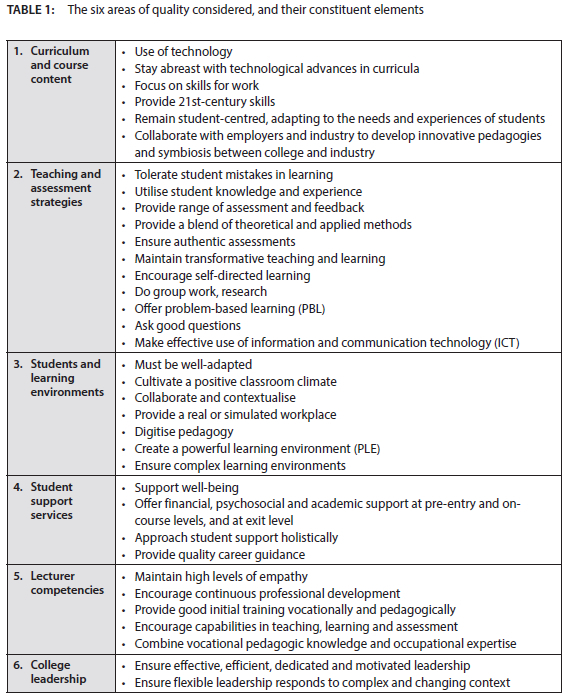
These six areas of quality delivery served as a guide to the design of our data-gathering instruments, according to which the quality of teaching and learning in TVET colleges could be described and evaluated. Taken together, these tentative indicators covered aspects of the vocational educational experience which ought to receive attention in order to deliver high-quality education that is relevant, effective and supportive of students' needs. The range of these elements also suggested that quality TVET teaching and learning does not neatly fit a single definition but is a complex combination of elements and inputs.
Methodology
The research employed both inductive and deductive methods in an attempt to respond to the research questions posed. An iterative process between the literature review and qualitative fieldwork was necessary because the evaluative framework derived from the literature informed the fieldwork but was not considered to be a blueprint, since the qualitative data could also possibly expand or extend the range of elements that had been distilled from the literature. Notwithstanding this, the six thematic areas guided our data-collection survey that included both open- and close-ended questions. Additional qualitative fieldwork through focus-group discussions and interviews offered deeper insights into the contextual realities of colleges regarding the elements of the framework that we had constructed from the literature review.
Sampling strategy
We used as a measure of quality the performance success rates published in the official annual statistics of DHET over four consecutive years (2016-2019) in respect of the prescribed national TVET qualifications. These enabled us to identify those colleges with both high enrolments and high performance for this study.
Using the officially published data, the completion rates of colleges in the fields of Engineering (N1-N6), Business Studies N6 and the NC(V) Level 4 programmes in each of the nine provinces were compared with the national completion rates for these qualifications over the four-year period. In addition, based on the performance of individual provincial colleges, an average performance rate was assigned in order to obtain an overall ranking of provincial performance regarding the specified qualifications. Using the top five (out of nine) provinces, 14 (of the 50) public TVET colleges were identified for participation in the research, which also attempted to achieve a spread of urban and peri-urban and/or rural colleges as far as possible. Ethical clearance was obtained from the university under whose auspices the study was being conducted and permission for the participation of TVET colleges was granted by the DHET; in addition, college heads were contacted to request their agreement to participate. Since colleges across provinces would have different high-enrolment programmes depending on their specialisations within qualification streams, high-achieving colleges were asked to self-select the specific offerings that met our specified criteria of being both high enrolment and high performing at their colleges. Once the specific 'successful' programmes had been identified (i.e. those whose completion rates were close to or above the national mean annually), a random 20% sample of the students in those high-achieving programmes and their lecturers were sent information and request letters, which the colleges were asked to distribute. The support of DHET was also solicited to encourage the colleges to participate. It was hoped that, since the research was an opportunity for colleges to showcase positive achievement, this would be a motivating factor for college principals to participate.
Data-collection instruments and process
We applied the six areas of quality teaching and learning as indicators iteratively with a view to developing an appropriate set of indicators for the local context. The tentative indicators drove the development of a survey questionnaire comprising mostly close-ended questions to elicit from college students and lecturers their teaching and learning experiences and also their perspectives on what enabled their success. In addition, focus-group discussions with college lecturers gathered information on pedagogies and strategies that the lecturers believed enhanced teaching and learning for their students and improved student outcomes. Focus-group discussions with groups of students gathered in-depth information on the teaching and learning practices at their colleges and what they perceived to have contributed most to their success.
Two survey instruments were developed, one each for lecturers and students. Paper-based surveys were distributed to the 14 colleges, of which eight ultimately returned completed data. Altogether, 2 427 responses were collected from students, constituting a 38% response rate based on the 6 458 student questionnaires despatched; and 272 questionnaires were collected from lecturers, representing a 53% response rate from the 509 lecturer questionnaires distributed to colleges.2 A total of 34 campuses across the eight colleges participated in the research.
The eight colleges participated in the survey and an additional two participated in the qualitative research. The additional two colleges had not been able to distribute the survey questionnaires due to internal difficulties at the time of that exercise, but requested to be included in the qualitative interviews and focus-group discussions subsequently. All of the interviews and focus groups were conducted in person by trained researchers, who audio-recorded and transcribed the discussions for analysis.
Data analysis
The survey data were reviewed for inconsistent, invalid, missing or outlier data using statistical methods. Data standardisation was used to identify and convert the data from diverse formats into one uniform format. For the open-ended questions, thematic codes were developed to convert the data into consistent and valid formats.
Descriptive statistical data analysis was applied to the close-ended questions, while thematic analysis was employed for the open-ended questions. Notwithstanding some limitations, the survey elicited significant data on the research questions asked in the study. In addition, focus-group discussion data were analysed thematically and coded feedback areas are reported in the findings below, in response to the following overarching research questions:
• What makes for quality teaching and learning at successful TVET colleges?
• What pedagogies, methodologies and technologies promote learning in successful TVET colleges?
• What teaching and learning approaches and practices assist in preparing learners for the workplace?
• How can TVET colleges address the range of diverse learning needs of TVET college learners to enhance success rates?
Findings
RQ1: What makes for quality teaching and learning at successful TVET colleges?
Key themes that emerged from the qualitative data, as expanded on below, were related to engagement and participation, assessment and outcomes, teacher expertise and professional development, leadership and management, and student support.
Engagement and participation
According to the data, quality teaching and learning can best be described and measured by the extent to which students are engaged and participating in the educational process - metrics which serve as vital indicators of the effectiveness of teaching and the depth of learning. For example, lecturers stressed the importance of professionalism, humanised pedagogies and student empowerment, suggesting that a quality educational experience is one where students are actively involved in a safe and supportive environment. The lecturers at these colleges collectively supported the assertion that quality teaching is manifested in classrooms where students are actively participating, feel psychologically safe to engage and where learning is fun. As one lecturer pointed out: 'I try to make lessons fun and enjoyable by getting them [students] to engage.'
Some lecturers noted that, while they believed in the necessity for student participation, time constraints and resources often had an impact on the quality of teaching and learning.
From the students' perspective, the balance required between theory and practice and the importance of supportive student-lecturer relationships were highlighted. Students were in agreement with lecturers that instructor knowledge was critical, and they cited interactive teaching methods as key to fostering an engaging learning environment through group work, online materials and gaming, as highlighted in Figure 1.
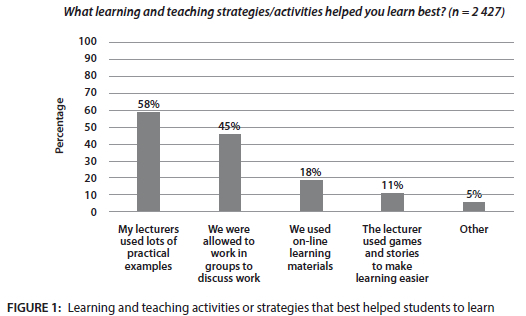
The quotations below from students and lecturers elaborate the strategies that helped students to learn best:
We do practicals and theory, but practicals make it easier to understand the course that I'm doing and what people do in that industry. (Student)
Theory and practical parts are the best learning methods for [me]. (Student)
I use a lot of demonstrations and play videos so that they can see what they learn in theory versus [the] practical. (Lecturer)
Videos, online/cellphones are used for students to immediately see the connections to real-life situations. (Lecturer)
Some students expressed their preferences for one-on-one teaching methods for the purposes of asking questions and achieving a better understanding. The students also appreciated sufficient college preparation before examinations and access to lecturers for help in this regard, as illustrated by the following extracts from the students' data:
Lecturers gave [us] old exam papers and some gave [out] notes, which helped a lot.
They give us past exam questions and [make] some notes for us to study.
In Industrial Electronics, my lecturer made it fun and enjoyable. The examples were very practical and once taught you will never forget [them]; ... it made my final exams . easier.
Assessment and outcomes
Lecturers underscored the importance of a robust evaluation system that includes student assessments and outcomes as key to measuring the quality of teaching and learning. They advocated an approach that not only reflects academic achievement, but also prepares students professionally and personally as the ultimate testament to quality education. They highlighted the importance of diverse competency-based assessments, including practical assessments such as sales pitches and marketing proposals in Business Studies, emphasising the application of real-world skills as a measure of quality. These lecturers cited regular assessment and student feedback as tools for gauging effective teaching and also as fundamental to monitoring academic progress, workplace preparedness and student perceptions.
However, despite assessment being valued for a quality learning process, some criticism was levelled at onerous paper-based assessments and limited practical testing at TVET colleges. A lecturer stated:
The assessment methods do not deal with real-work, realistic problems. They only deal with tests.
This was supported by a student, who observed:
The assessment methods do not reflect real-world challenges. We need more practical assessments that prepare us for the industry.
Notwithstanding the strongly centralised assessment regimes that public TVET colleges are subject to, lecturers across the campuses participating in the study attempted, in their classrooms, a range of competency-based assessments, including practical assessments related to those industries that the students would be entering. Students confirmed that their lecturers provided valuable practical experiences aimed at preparing them for future jobs in their industry.
Teacher expertise and professional development
Lecturers across the board firmly believe that their own continuous improvement and their understanding of workplaces are crucial to quality teaching. The lecturers believe that it is important for them to be involved in curriculum development, which was not the case at the time of the research, as this would improve the quality of the curriculum and the content. One lecturer expressed her disappointment thus:
At the moment, I, as the lecturer, am not participating in curriculum development, since a lot of things here are centralised in DHET.
Although there were some negative perceptions about lecturers, students generally expressed positive sentiments about their lecturers, with some indicating that the lecturers are knowledgeable and make the effort to help students understand the course material. The following extracts highlight the students' positive perceptions of their lecturers:
The lecturers are very satisfactory and have a broad knowledge of the course. They put in so much effort, encouraging and motivating us to do our best, and they always go the extra mile for us as students.
They put in extra work and you leave every lecture having understood everything and [been] given room to ask questions.
Leadership and management
Students credited colleges' management with creating conducive learning environments, for example by providing security on campus and supporting lecturers to do their work well. When asked how they would describe the kind of leadership at their college that could contribute to student success, most of the lecturers mentioned three types, with supportive leadership mentioned by most of them - as indicated in Table 2.
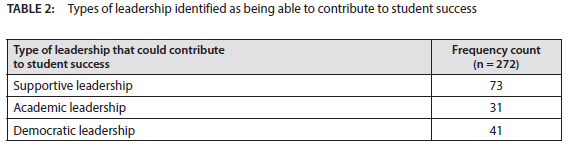
Supportive and academic leadership were described as support being given to both lecturers and students in order to improve learning outcomes. Democratic leadership was perceived as being consultative and tenets of democratic leadership that were mentioned by lecturers included: leaders adopting ideas from staff members; engaging with foresight; being forward-thinking, open to discussing challenges faced by learners, open and friendly but firm and fair, and accessible to students in resolving issues; and also a leadership style that emphasises responsibility, time management, dedication and hard work.
Whereas most students indicated that they could not comment on management as they had not interacted at this level, positive leadership styles and effective management at their colleges are regarded as contributing to a conducive learning environment. Despite their positive sentiments, some lecturers voiced concerns about questionable management practices, outdated policies and the need for a paradigm shift in the approach of management to teaching and learning. They also highlighted the impact of politics and bureaucracy on the decision-making processes in the institution.
RQ2: What pedagogies, methodologies and technologies promote learning in successful TVET colleges?
Key themes arising from the respondents' feedback were these: hands-on, active learning; multimedia and technology; collaborative learning and peer support; learner-centred pedagogies; inclusive and supportive classroom environments; and industry and real-world engagement. These are explained below.
Hands-on, active learning
Many of the lecturers and students identified hands-on, active learning as a critical factor in promoting learning success for college students. For example, the use of diverse teaching methods, including demonstrations and multimedia technology, was said to accommodate different learning styles. Lecturers supported the integration of multimedia in workshops, advocating real-world experience with the latest tools and technology. This approach assisted the students in making theoretical knowledge more concrete and relevant, a sentiment also echoed by many lecturers. They noted the use of visual aids such as overhead projectors and Internet resources to support various learning styles, underscoring the need for technologies that provide a rich learning experience and prepare students for professional contexts.
Hybrid learning, described as combining technology with face-to-face teaching, not only diversifies pedagogy, but also aligns with industry needs, enhances employability skills and respects the diversity of student backgrounds and learning styles. It is evident that such an integrated approach is seen as being vital to the modernisation and effectiveness of TVET education and for preparing students for the dynamic demands of the workforce.
Multimedia and technology
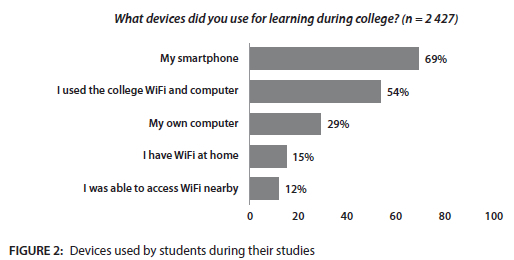
Students across various fields mentioned that they appreciated the use of visual learning methods and practical work activities, but many expressed concerns about the shortage of tools and equipment for practical work, about outdated textbooks and about a lack of focus on new technologies. There were disparities between lecturer and student reports regarding the quality and quantity of these resources. Lecturers noted the role of Moodle and e-learning platforms as facilitating successful revision. Online learning was seen as being key to fostering peer learning and providing flexible learning options; and the lecturers similarly advocated the use of more visual aids and projectors to support different learning styles and supplement classroom instruction. The students provided first-hand insights into the effectiveness of practical, multimedia instruction and a multimodal approach that engages them across different sensory-learning channels. Most of the students make use of their own devices for learning with technology, particularly smart phones, as reflected in the figure below:
Collaborative learning and peer support
Collaborative learning and peer support are considered to be central to promoting learning success across TVET colleges, as highlighted by the lecturers who stressed the significance of varied learner-centred pedagogies and group work in catering to diverse learning styles. Group work is seen as a method with which to accommodate visual, auditory, reading or writing and kinaesthetic learners. Many lecturers reported on the value of group study and peer learning for teamwork, skill development and knowledge sharing. One lecturer pointed out the role of case studies and role plays in applying course material to the real world, with peer support being integral to this process.
Learner-centred pedagogies
Many of the lecturers reported learner-centred pedagogies (LCPs) to be effective methods of teaching; they also spoke of the effectiveness of LCPs in tailoring education to various learning styles. Lecturers noted their use of demonstrations and videos to enhance practical understanding, in these ways cementing theoretical concepts with tangible experiences. A blend of technology and traditional learning, they held, facilitated the immediate application of learned skills through video and peer learning. The lecturers stressed the importance to academic success of respectful, inclusive environments and also of engaging classroom discussions. Overall, there was consensus among both the lecturers and the students that learner-centred pedagogies are instrumental in promoting learning success by engaging diverse learners through a synergy of methodologies and technologies tailored to individual learning styles and needs.
Inclusive and supportive classroom environments
According to the lecturers, fostering an inclusive classroom climate and implementing student-driven research projects boost engagement and students' critical competencies. Differentiated instruction, respectful learning spaces and supportive study materials are strategies that affirm the value of diverse student needs, promoting success. Similarly, lecturers emphasised the need for using real-life examples to make learning relatable and in so doing enhancing comprehension and accessibility for students from varied backgrounds. Students said they appreciated individualised assistance, including counselling and remedial instruction.
RQ3: Which teaching and learning approaches and practices assist in preparing learners for the workplace?
Themes from the data regarding this matter are highlighted below. These are industry and real-world engagement; soft skills development; up-to-date curricula and technology; career-readiness; and professional attitudes.
Industry and real-world engagement
It appears from the data that preparing work-ready graduates is a multifaceted process involving the incorporation of practical skill-building, real-world scenario exposure and industry interaction into the curriculum. The lecturers voiced the importance of practical skills, case studies and current technologies in education, emphasising the need for practical technology skills as a preparatory tool for the workplace. They spoke about the importance of experiential learning in workshops as being pivotal to building practical competencies, while industry engagements are perceived as having the ability to keep course content in line with workplace advancements. Whereas the importance of WIL is recognised, there are variances in the extent to which students have access to WIL, although this does not seem to be consistent across programmes. For example, some students in Engineering indicated that there is no engagement with industry, whereas others studying Plumbing indicated that there is access to WIL. Similarly, at one campus, students pursuing Business Management qualifications indicated that there is some industry experience, whereas others studying Financial Management indicated that they did not get much exposure to the industry. Whereas lecturers' and students' views on teaching and learning converged in the study, the greatest divergence surfaced in relation to workplace experience, where most lecturers cited internships as a method used to prepare students for the world of work, a method that was cited by the lowest proportion of students, as highlighted in the following figures (Figures 3 and 4).
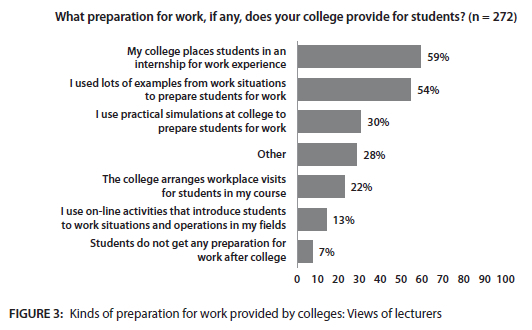
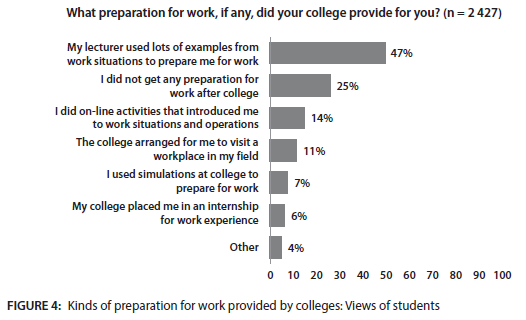
However, there was congruence between the two groups in citing examples from work situations that prepare students for the world of work.
Soft-skills development
Developing soft skills and combining practical technical training with the cultivation of professional soft skills were regarded as necessary to prepare students to meet the cultural and interpersonal demands of today's workplace. For example, lecturers explicitly targeted soft skills in their recommendations, emphasising the crucial role of these skills in career success. They suggested that these skills should be integrated formally into the curriculum to prepare students more adequately for professional environments. The lecturers indicated that practical skills, coupled with direct industry engagement and work visits, make education more relevant to the workplace. They agreed among themselves about the importance of aligning course content with industry needs, a measure facilitated by ongoing communication with industry partners. Students, too, attached credence to the value of industry-aligned course content and work placements for fostering professional attitudes and behaviours.
The lecturers emphasised the importance of discipline and professional behaviours and also the value of industry-aligned course content and work placements for fostering professional attitudes and behaviours. Career-readiness and professional attitudes, it was held, are crucial to instilling professional etiquette, effective workplace communication and a strong sense of ethics. The following extracts from lecturers' data are illustrative:
Key approaches that assist in preparing TVET learners for the workplace include experiential methods like site visits, as well as cultivation of professional soft skills and discipline. Workplace exposure and career-readiness skills are critical. ... . The discipline instilled in our students will take them far in the future.
Quality teaching and learning [are] grounded in real-world relevance and evolved through continual assessment and improvement processes in collaboration with stakeholders. Measurable outcomes include skill competency, workplace readiness, and student feedback.
Having workshops that simulate real-work environments with industry-standard tools and equipment is invaluable for TVET students. Experiential hands-on learning allows students to develop practical skills and gain confidence. Exposure to realistic scenarios and workplace conditions also helps with the transition from college to employment.
Up-to-date curricula and technology
The importance of up-to-date curricula and technology was strongly supported by lecturers across various TVET colleges. For instance, lecturers highlighted practical training as essential, with an emphasis on current technologies and equipment to mirror workplace settings. Practical skills, case studies and relevant textbooks which they incorporated to some extent, were repeatedly mentioned as critical for preparing students for employment.
Career-readiness and professional attitudes
Preparing students for the transition to the workplace transcends the acquisition of technical knowledge and skills, as was gleaned from various interviews with both lecturers and students across the colleges. The consensus was that instilling professional etiquette, effective workplace communication and a strong sense of ethics is imperative. For instance, lecturers underlined the significance of practical training and the integration of current technologies, and also the value of direct industry engagement through work visits and industry-linked projects. Similarly, the importance of including experiential learning and industry alignment in course content was emphasised.
RQ4: How can TVET colleges best respond to the range of diverse learning needs of TVET college learners to enhance success rates?
The findings reveal that, to accommodate the diverse needs of TVET students and prepare them for success, a multifaceted approach is required. Differentiated and individualised instruction, inclusive classroom environments, industry engagement and soft-skills development, as commented on below, are all considered to be critical components. By implementing these strategies, it was held, TVET colleges supported their diverse student populations more adequately and ensured that their graduates are well prepared for successful careers.
Differentiated and individualised instruction (DII)
Differentiated and individualised instruction emerged as a crucial approach to meeting the varied needs of students. By tailoring teaching methods and materials so as to accommodate different learning styles and experiences, educators said that engagement and learning outcomes were improved.
Student-driven projects
Student-driven research projects promote self-directed learning and cater to a diverse range of interests and backgrounds.
Inclusive environments
Creating inclusive classroom environments where diverse learning needs are acknowledged and accommodated, and the use of daily life examples to make content more relatable and accessible, were emphasised. The lecturers focus strongly on culturally responsive teaching to help overcome individual barriers and create an adaptive learning environment that involves integrating students' cultural backgrounds into the curriculum and classroom management.
Peer tutoring and mentoring
Peer tutoring and mentoring were said to be valuable strategies for supporting diverse learners, as is indicated in these extracts from students' and lecturers' data:
Allowing students to express themselves through group discussions. (Student)
Class discussion, debates, group discussions. (Student)
My classroom environment is one full of positive energy where students learn in a very respectful manner. Peer learning [is] being practised most times. (Lecturer)
Students can help each other when we do classwork. (Lecturer)
By fostering language support and open communication, these approaches help to respond appropriately to specific learner challenges and serve to enhance the overall learning experience.
Conclusions from the data
It is evident from the data that there is a heightened awareness among both the lecturers and the students who participated in this study of what constitutes quality teaching and learning in TVET and of what has enhanced student success in the colleges that participated. It is noteworthy, though, that the lines between 'what is' and 'what ought to be' at times become blurred for lecturers and students; but it is clear that colleges with successful student outcomes aspire to what they consider to be best practices in teaching and learning, practices which find purchase in the elements of quality that were derived from the research literature. Notwithstanding the students' and lecturers' input about what could be improved upon, there is significant evidence of the college lecturers striving to uphold these good practices.
This study focused on the pedagogies, methodologies and technologies that appear to be promoting learning success in TVET colleges and which are strategies that align with the curriculum-related success indicators found in the relevant scholarship. Hands-on active learning was emphasised as a critical factor, with diverse teaching methods such as demonstrations and multimedia technology being key in this approach. Collaborative approaches and industry site visits were emphasised, as were the importance of applied learning together with visual aids and Internet resources to support various learning styles. Practical exercises and case studies were recommended as key methodologies for furthering applied learning. Teaching and learning approaches and practices that help to prepare learners for the workplace, such as formative assessment and technology integration, also assisted in preparing students for the dynamic demands of the workforce and ensured that almost all students' needs were met. Overall, it was held that the preparation of work-ready graduates involves incorporating practical skill-building, real-world scenario exposure and industry interaction into the curriculum.
A robust evaluation system that includes varied student assessments was viewed as essential to measuring the quality of teaching and learning, an approach that is not only reflected in the academic achievement, but is also geared towards preparing students professionally and personally for their working lives beyond college.
The lecturer participants strive to create inclusive and supportive classroom environments that they believe enhance the success rates among a diverse student body, while the cultivation of professional behaviours and soft skills is seen as necessary for meeting the cultural and interpersonal demands of today's workplaces.
Finally, supportive leadership was mentioned most often as being the type of leadership that contributes to student success.
Synergies between the research literature and the findings of the research
The data converged on four common threads that resulted from a juxtaposition of the literature meta-review and the qualitative research data. These threads are a student-centred focus, the integration of technology, the development of skills and competencies, collaboration and contextualisation, as set out in the sections below. We use extracts from the comprehensive literature review referred to earlier simply to illustrate the synergies with the empirical data.
Student-centred focus
There was a strong emphasis in the research literature on focusing on the needs of students through curriculum design, teaching strategies and support services in order to create environments in which students can thrive academically, socially and personally. In the qualitative data, there was an emphasis on curricula that adapt to students' needs and experiences, teaching strategies that engage with students' cultural backgrounds, and support services that accommodate their emotional and academic needs.
The areas of focus raised in this thread accord with the definition of 'quality teaching' espoused by Hénard and Roseveare (2012):
Quality teaching is the use of pedagogical techniques to produce learning outcomes for students. It involves several dimensions, including the effective design of curriculum and course content, a variety of learning contexts (including guided independent study, project-based learning, collaborative learning, experimentation, etc.), soliciting and using feedback, and effective assessment of learning outcomes. It also involves well-adapted learning environments and student support services (2012:7).
Integration of technology
The utilisation of technology in modern VET classrooms has been highlighted in multiple indicators in the literature. Curricula are expected to be technologically current, teaching strategies ought to incorporate digital tools and learning environments should be enhanced through digitisation. The emphasis on ICT, in both curriculum development and classroom practice, illustrates a broader trend towards digital literacy and the use of technology to enhance learning. Qualitative data obtained from students and lecturers similarly underscored the importance of technology-infused teaching and learning and a concern about providing future-focused training for workplaces. Evans (2019:952) points to the 'forces' that are shaping new perspectives on vocational learning:
...the emergence of new technologies permits new ways of learning and contributes to the reshaping of work as digitization and automation gather pace. New learning technologies are influencing the ways in which people participate in existing formal learning programs and through individual accessing of online resources. Second, new workplace occupations and technologies have emerged with new knowledge and skill requirements. These undermine old boundaries between vocational and academic learning ... .
Development of skills and competencies
A shared emphasis is apparent in the literature on VET institutions being responsible for the development of practical skills and competencies across various indicators. This was particularly evident in curricula dealing with work-related skills, authentic assessments in teaching, and learning environments that simulate real-world conditions. The alignment with industry needs and vocational training reflects a broader educational objective to ensure that students are job-ready upon graduation, goals that were echoed by both the students and the lecturers in this study, and also in the South African TVET policy documents. This sentiment is echoed in the literature on relevant 21st-century skills and 4IR (4 th Industrial Revolution): for instance, the OECD recommends that
VET students develop wider competencies alongside immediate job skills so they can more easily move from one job to another over their working life or shift to another career path' (OECD Directorate for Education: Education and Training Policy Division, 2011:10).
Research also points to the need for employability skills that equip workers for the changing workplace and to be productive citizens (DiBenedetto, 2019; Douse & Uys, 2019).
Collaboration and contextualisation
Collaboration with industry and contextualisation in real-world environments were recurrent themes in both the meta-review and the qualitative research data. This emphasis was expressed in suggestions for working with employers to shape curricula, using real or simulated work environments for learning, and for teaching strategies that are rooted in practical vocational contexts to ensure that education remains relevant and applicable to students' future careers.
Vocational learning in the authentic environment of work requires the collaboration of learning institutions and industry in partnerships that aim expressly to benefit both students and lecturers. Gustavsson and Persson Thunqvist (2019:984) hold that 'both school- and workplace-related conditions must support putting knowledge to work in the workplace context'; this should be achieved through a process of recontextualising knowledge and skills. A UNEVOC Network report cited by Bahl and Dietzen (2019:3) underscores the perspective in the literature that work-based learning is being 'increasingly recognised as an effective strategy to promote [the] quality and relevance of education and training'.
Significance of this research
The findings of both the desktop literature review and the empirical fieldwork shone a light on what contributes to successful student outcomes in VET, and also on some of the necessary preconditions for quality teaching and learning. These findings may be informative for lecturers, policymakers, college management and funders when they consider the necessary support systems and structures that ought to be put in place in order to build an enabling framework for quality teaching and learning at TVET colleges in South Africa. Through a comprehensive meta-review of the literature on quality in VET systems that was supplemented by investigative and qualitative fieldwork, this project has contributed towards the development of robust, valid and contextualised indicators according to which TVET college quality could be described. It might also serve as a basis from which to reflect on continuous quality improvement. The next steps would be to interrogate these findings critically and to use them to inform the design of an instrument that could be piloted among TVET colleges as a possible self-evaluation tool, which could then enhance the utility value of this national research project.
Acknowledgement
The writing of this article was partly supported by the National Research Foundation's SARCHI Research Chair in Post-School Education and Training: TVET.
REFERENCES
Bahl, A & Dietzen, A (eds). 2019. Work-based learning as a pathway to competence-based education. A UNEVOC network contribution. Bonn: Federal Institute for Vocational Education and Training. Available at: <https://www.academia.edu/38826232/Work-based_Learning_as_a_Pathway_to_Competencebased_Education._A_UNEVOC_Network_Contribution?auto=download&campaign=weekly_digest> [ Links ].
Barnett, M. 2006. Vocational knowledge and vocational pedagogy. In M Young & J Gamble (eds), Knowledge, curriculum and qualifications for South African further education. Cape Town: Human Sciences Research Council, 143-157. [ Links ]
Bill, L, Ellen, S & Guy, C. 2012. How to teach vocational education: A theory of vocational pedagogy: London: City & Guilds Centre for Skills Development. [ Links ]
CAVTL (Commission on Adult Vocational Teaching and Learning). 2013. It's about work: Excellent adult vocational teaching and learning. Learning and Skills Improvement Service (LSIS). Available at: <www.excellencegateway.org.uk/cavtl>.
Crossman, B & Cameron, R. 2014. A comparative thematic review of vocational leadership literature from the USA, Great Britain and Australia. Research in Post-Compulsory Education, 19(4):393-416. Available at: <https://doi.org/10.1080/13596748.2014.955374> [ Links ].
Deutscher, V & Winther, E. 2019. A conceptual framework for authentic competence assessment in VET: A logic design model. In S McGrath et al. (eds), Handbook of vocational education and training. Cham: Springer International Publishing, 1299-1312. [ Links ]
DHET (Department of Higher Education and Training). 2013. White Paper on Post-School Education and Training: Building an expanded, effective and integrated post-school system. Available at: <http://www.dhet.gov.za/SiteAssets/Latest_News/White_paper_for_post-school_education_and_training.pdf.
Dhillon, JK. 2019. Supporting vocational and technical learning in post-6 education in England. In S McGrath et al. (eds), Handbook of vocational education and training. Cham: Springer International Publishing, 1493-1506. Available at: <https://www.springer.com/gp/book/9783319945316> [ Links ]
DiBenedetto, CA. 2019. Twenty-first century skills. In S McGrath et al. (eds), Handbook of vocational education and training. Cham: Springer International Publishing, 1268-1281. [ Links ]
Douse, M & Uys, P. 2019. TVET teaching in the time of digitization. In S McGrath et al. (eds), Handbook of vocational education and training. Cham: Springer International Publishing, 23-38. [ Links ]
Evans, K. 2019. Vocational learning: Fresh perspectives. In S McGrath et al. (eds), Handbook of vocational education and training. Cham: Springer International Publishing, 951-962. [ Links ]
Field, S, Musset, P & Álvarez-Galván, JL. 2014. A skills beyond school review of South Africa, OECD. Reviews of Vocational Education and Training. OECD. doi: https://doi.org/10.1787/20777736.
Fryer, L. 2014. Student support officers' perceptions of student support provision in technical and vocational education and training (TVET) colleges. Master's dissertation, Stellenbosch University, Stellenbosch. [ Links ]
Gamble, J. 2013. Why improved formal teaching and learning are important in technical and vocational education and training (TVET). In: Revisiting global trends in TVET. UNESCO-UNEVOC, 204-238.
Greatbatch, D & Tate, S. 2018. Teaching, leadership and governance in further education. Available at: <https://www.gov.uk/government/publications>.
Gustavsson, M & Persson Thunqvist, D. 2019. Student's vocational learning: Enabling conditions for putting knowledge to work. In S McGrath et al. (eds), Handbook of vocational education and training. Cham: Springer International Publishing, 983-1000. [ Links ]
Guthrie, H & Harris, R. 2019. VET practitioner education in Australia: Issues and approaches. In S McGrath et al. (eds), Handbook of vocational education and training. Cham: Springer International Publishing, 1787-1805. [ Links ]
Hénard, F & Roseveare, D. 2012. Fostering quality teaching in higher education: Policies and practices. An IMHE Guide for Higher Education Institutions, 1(1):7-11. [ Links ]
Hoekstra, A & Newton, P. 2017. Departmental leadership for learning in vocational and professional education. Empirical Research in Vocational Education and Training, 9(1). doi: 10.1186/s40461-017-0057-0. [ Links ]
Lucas, B & Claxton, G. 2013. Pedagogic leadership: Creating cultures and practices for outstanding vocational learning. Available at: <https://www.researchgate.net/publication/296282792_Pedagogic_Leadership_creating_cultures_and_practices_for_outstanding_vocational_learning>.
Maimane, JR. 2016. The impact of student support services on students enrolled for National Certificate (Vocational) in Motheo District, Free State, South Africa. Universal Journal of Educational Research, 4(7):1680-1686. doi: 10.13189/ujer.2016.040721. [ Links ]
McGrath, S, Mulder, M, Papier, J & Suart, K (eds). 2019. Handbook of vocational education and training: Developments in the changing world of work. Springer. Available at: <https://doi.org/10.1007/978-3-319-94532-3>.
Misko, J, Guthrie, H & Waters, M. 2021. Building capability and quality in VET teaching: Opportunities and challenges. Adelaide. Available at: <http://hdl.voced.edu.au/10707/551186>.
Mitchell, J, Chappell, C, Bateman, A & Roy, S. 2006. Quality: A critical issue in teaching, learning and assessment in vocational and further education - a three country comparison. Adelaide. Available at: <https://ncver.edu.au/research-and-statistics/publications/all-publications/quality-is-the-key-critical-issues-in-teaching,-learning-and-assessment-in-vocational-education-and-training>.
OECD Directorate for Education: Education and Training Policy Division. 2011. OECD Reviews of Vocational Education and Training: Learning for jobs pointers for policy development. OECD. Available at: <http://www.oecd.org/education/skills-beyond-school/LearningForJobsPointersfor_PolicyDevelopment.pdf>.
Orr, K. 2019. VET teachers and trainers. In D Guile & L Unwin (eds), The Wiley handbook of vocational education and training. Hoboken, NJ: John Wiley & Sons, Inc, 329-348. doi: 10.1002/9781119098713. [ Links ]
Panadero, E, Garcia, D & Fraile, J. 2019. Self-assessment for learning in vocational education and training. In S McGrath et al. (eds), Handbook of vocational education and training. Cham: Springer International Publishing, 1360-1370. [ Links ]
Papier, J. 2017. A comparative study of TVET in five African countries with a specific focus on TVET teacher education. In F Eicker, G Haseloff & B Lennartz (eds), Vocational education and training in sub-Saharan Africa - current situation and developments. W Bertelsmann Verlag. Bieleveld (Conference proceedings). Available at: <https://www/wbv-open-access.de>.
Papier, J, Mawoyo, M & Tennison, C. 2024. Quality of teaching and learning at TVET colleges. Report produced under the Five-Year Research Programme on TVET Colleges, commissioned by the Department of Higher Education and Training (DHET) and funded by the National Skills Fund (NSF). Pretoria.
Papier, J & McBride, T. 2019. Systematizing student support services in TVET colleges: Progressing from policy. In S McGrath et al. (eds), Handbook of vocational education and training. Cham: Springer International Publishing, 1593-1607. Available at: <https://www.springer.com/gp/book/9783319945316> [ Links ].
Said, A. 2018. Vocational teaching>-learning through the eyes of undergraduate vocational students in Malta: A qualitative exploratory study. International Journal for Research in Vocational Education and Training, 5(1):42-63. doi: 10.13152/IJRVET.5.1.3. [ Links ]
Sarikaya Erdem, Y & Yildirim, A. 2019. Effective teaching and learning at vocational education at tertiary level: A qualitative study of teachers', students' and administrators' perceptions. In BE Stalder & C Nagele (eds), Trends in vocational education and training research, Vol. II. Proceedings of the European Conference on Educational Research (ECER), Vocational Education and Training Network (VETNET), 366-375. doi: https://doi.org/10.5281/zenodo.3371573.
Smith, E & Yasukawa, K. 2017. What makes a good VET teacher? Views of Australian VET teachers and students. International Journal of Training Research, 15(1):23-40. doi: 10.1080/14480220.2017.1355301. [ Links ]
Sokwane, L & Adekanmbi, G. 2019. Exploring the teaching and learning quality question in technical education in Botswana. International Journal of Adult Vocational Education and Technology, 10(2):25-39. doi: 10.4018/ijavet.2019040103. [ Links ]
UNESCO (United Nations Educational, Scientific and Cultural Organization). 2015. Recommendation concerning technical and vocational education and training (TVET). Paris. Available at: <http://unesdoc.unesco.org/images/0024/002451/245118M.pdi#page=3>.
Wedekind, V. 2016. Technical and vocational education and training (TVET) reform in South Africa: Implications for college lecturers, context, background. SAQA Bulletin, 15(1):1-30. Available at: <http://197.81.195.225/docs/bullet/2016/SAQA_Bulletin_15_(1).pdf> [ Links ].
Wheelahan, LM. 2010. Literature review: The quality of teaching in VET. Australia Department of Education, Employment and Workplace Relations, (December):1-46. doi: 10.1007/s13398-014-0173-7.2.
Wheelahan, L & Moodie, G. 2011. The quality of teaching in VET: Final report and recommendations. Mawson. Available at: <http://hdl.voced.edu.au/10707/93>.
Wolf, A. 2011. Review of vocational education - The Wolf Report. Bis, (March):196. doi: 10.1037/h0066788
Zepke, N. 2019. Supporting TVET learners' success with peer-facilitated learning and active citizenship. In S McGrath et al. (eds), Handbook of vocational education and training. Cham: Springer International Publishing, 1535-1547. Available at: <https://www.springer.com/gp/book/9783319945316> [ Links ].
1 For the full literature review, see Papier, J, Mawoyo, M & Tennison, C. 2024. Quality of teaching and learning at TVET Colleges. Report produced under the Five-Year Research Programme on TVET Colleges, commissioned by DHET and funded by the National Skills Fund (NSF).
2 It is important to note that, since these were paper-based questionnaires couriered to the colleges for distribution, it is not clear whether all of the questionnaires delivered to the colleges were distributed to all the lecturers and students.
