




Services on Demand
Journal

Article
 English (pdf)
 Article in xml format
 Article references
 Automatic translation
 Send this article by e-mail
Indicators
Related links
-
 Cited by Google
 -
 Similars in Google
Share

 Permalink
Communicare: Journal for Communication Studies in Africa
On-line version ISSN 2957-7950Print version ISSN 0259-0069
JCSA vol.43 n.2 Johannesburg Dec. 2024
https://doi.org/10.36615/gz3ezj29
ARTICLES
Tanzanian journalists in countering fake news: disinformation and misinformation
Dianus Josephat IshengomaI; Given MutintaII
INelson Mandela University, South Africa & University of Dar es Salaam, Tanzania. https://orcid.org/0000-0002-5593-0374
IINelson Mandela University, South Africa. https://orcid.org/0000-0001-8299-7622
ABSTRACT
The widespread dissemination of fake news, "disinformation and misinformation" is an ongoing issue that has garnered significant attention from scholars and media professionals due to its contribution to public distrust of the credibility of news provided by media outlets. This article explores Tanzanian journalists' efforts to combat fake news by assessing their awareness, challenges and strategies. A quantitative approach was employed to gather data from a sample of 306 journalists from radio, television, newspapers and online/ digital media across various parts of Tanzania's mainland. Data collection was facilitated through a questionnaire that incorporated closed-ended and open-ended questions, distributed via Google Forms to various online journalists' platforms, including WhatsApp and email groups. The findings indicate that an impressive 77.8% of these journalists possess a strong understanding of "fake news" and related concepts such as disinformation and misinformation. Over 70% of respondents encountered fake story sources in their daily journalistic pursuits, with the majority acknowledging its detrimental impact on media organisation credibility. The research also revealed a reliance on traditional methods by Tanzanian journalists to counter fake story sources used. Challenges were identified, including delayed responses from experts or government officials to validate the authenticity of a given story, pressure to report breaking news, a lack of fact-checking software, unreliable Internet connectivity for verifying facts online, and a shortage of trained journalists and news gatekeepers capable of identifying fake news sources.
Keywords: Fake news, journalism, media, disinformation, misinformation, Tanzania
INTRODUCTION
In our rapidly evolving world of mass media and the global information landscape, the proliferation of fake news has emerged as a critical issue that demands attention from both scholars and media practitioners. This phenomenon has taken centre stage in contemporary discussions, and has been intensified by the unprecedented growth of information dissemination through both traditional and emerging communication channels (Wahutu, 2019; Wasserman & Madrid-Morales, 2019). Within contemporary newsrooms, the pervasive influence of fake news, predominantly propagated through social media, has sparked ongoing debates regarding how media organisations can effectively combat the spread of misinformation and disinformation (Chien et al., 2022; Tran et al., 2021). These debates have assumed paramount importance for journalists and other media professionals, as the rapid dissemination of false or misleading information jeopardises the integrity of journalism and the credibility of news sources (Ireton & Posetti, 2018). In this context, newsrooms confront the dual challenge of navigating the rapid pace of social media and upholding their commitment to delivering accurate and reliable information to the public (Allcott & Gentzknow, 2017). In this dynamic environment, journalists bear an increasingly substantial responsibility for engaging in rigorous fact-checking and information verification, even when faced with the urgency of reporting breaking news (Stroud, 2019). In this regard, various initiatives have been undertaken by media organisations and governments worldwide to address this challenge. For instance, global news organisations have actively invested in digital tools and cutting-edge technologies designed to detect and counteract falsehoods. Notable initiatives include that of Agence France-Press (AFP), which has established a dedicated global fact-checking unit committed to scrutinising misinformation shared on social media (Ghani & Khan, 2020). Similarly, Reuters has partnered with Facebook to launch an e-learning course tailored for journalists that is aimed at enhancing their ability to identify manipulated media and "deep fakes" (Ghani & Khan, 2020). Globally, 78 countries have enacted laws since 2011 to curb the dissemination of false or misleading information (Lim & Bradshaw, 2023). In the Middle East, the Egyptian parliament passed a media law in 2018 that granted the government the power to pull down and block any social media account that was deemed to publish fake news, and penalised the journalists who operated them (Stroud, 2019). Similarly, in Africa, several measures are being taken to prohibit the publication of false and misleading information in the media and any other platforms. For instance in East Africa, Kenya, Uganda and Tanzania introduced anti-fake news legislations and measures. In Tanzania, the Cyber Crime Act in 2015 aimed to prohibit the publication of false and misleading information in the media and any other platforms. To compound the issue, bloggers, whom the Tanzanian government accuses of spreading "lies" on the Internet, need to pay US$920 to post content online. In Kenya, in 2018, the Computer Misuse and Cybercrimes Act was established to specifically target cyberbullying and social media abuse, while a daily "social media tax" of US$0.05 is being charged to Twitter, Facebook and WhatsApp users in Uganda (Mutsvairo & Bebawi, 2019). Likewise, in Ghana, several journalists and other citizens have been arrested for publicising and disseminating fake news. These arrests were due to the country's Electronic Communications Act (Act 775, Section 76, of 2008) and the Criminal Offences Act of 1960, which criminalise the production of fake news (Kwode & Selekane, 2023). In South Africa, the South African National Editors' Forum (SANEF) has actively warned about the sources of fake news, including websites, and has urged the public not to spread false information (Lunga & Mthembu, 2019). In addition to the battle between the government and the media over countering fake news, promoting media literacy and critical thinking among audiences has emerged as a crucial element in this ongoing struggle (Tran et al., 2021). However, a pressing concern persists, especially in African countries, regarding how prepared journalists are to counter fake news in their newsrooms in the African context. This article explores Tanzanian journalists' efforts to combat fake news by assessing their awareness, challenges and strategies.
Fake news in Tanzania newsrooms
In Tanzania, as in other African nations, the pervasive issue of fake news has firmly taken hold, resulting in numerous incidents of misleading news coverage across both mainstream and social media platforms. On 10 July 2020, the Tanzanian government suspended Kwanza Online TV's license for 11 days, citing the publication of an unbalanced, biased and misleading story regarding the state of COVID-19 in the country. This report, which referenced an alert from the United States (US) government about the spread of COVID-19 in Dar es Salaam, was deemed false and intended to incite panic, potentially harming the country's economic activities such as tourism (MISA Zimbabwe report, July 2020). Similarly, in 2017, TBC television and radio aired a news segment suggesting that US President Donald Trump had praised President John Magufuli (a former Tanzanian president) as a model of African leadership - a claim later revealed to be based on fabricated information from a non-existent website (The Citizen newspaper, 12 March 2017). Likewise, in August 2021, the Tanzanian government suspended the local newspaper "Uhuru" for 30 days for publishing a story claiming that President Samia Suluhu Hassan had no intention of running for the presidency in 2025, marking the first instance of a newspaper suspension due to fake news during President Hassan's tenure (The East African newspaper, 12 August 2021). In addition, Prime Minister Kassim Majaliwa directed the Tanzania Communication and Regulatory Authority (TCRA) on 21 March 2020 to monitor and apprehend individuals spreading fake news about COVID-19 (Media Council of Tanzania, MCT report, 2022). Tanzania's Cyber Crime Act of 2015 seeks to prohibit the dissemination of false and misleading information through media and other platforms. In addition, bloggers are required to pay a fee of US$920 to post content online - a measure the government asserts is aimed at curbing the spread of falsehoods on the Internet (Mutsvairo & Bebawi, 2019:144). Conversely, a report by the Media Council of Tanzania (MCT, 2022) underscores the transformation of fake news and disinformation from sporadic incidents to troubling norms, often perpetuated with malicious intent by certain media outlets. The report emphasises the critical need for credible and meticulously fact-checked reporting to combat the dissemination of false information and to advocate responsible journalism that serves the public interest. Despite various efforts taken by media practitioners and the government to address fake news and related phenomena, there remains a research gap in understanding the ability of Tanzanian journalists to counter fake news in the Tanzanian context. This article examines how journalists perceive their role in countering fake news. It sheds light on their strategies for verifying information and the challenges they encounter. These findings contribute to informed decisions in addressing the ongoing battle against the spread of false information in the Tanzanian media landscape.
LITERATURE REVIEW
Conceptualising fake news
Lunga and Mthembu (2019) provide a comprehensive definition of fake news, characterising it as the deliberate dissemination of false information through various media channels, including print, broadcast and online platforms. They highlight that fake news can arise intentionally (as disinformation) or inadvertently (as misinformation) and it covers a spectrum of deceptive practices. Wardle and Derakhshan (2018) further categorise fake news into three distinct classifications: disinformation, misinformation and malformation. Disinformation involves the deliberate creation of false information with the explicit aim of causing harm, while misinformation refers to inaccurate information spread without malicious intent. Malformation involves the manipulation of factual events to harm individuals, organisations or nations. In addition, Tandoc et al. (2018) argue that fake news has evolved into an umbrella term encompassing various types of false content, including satire, parody, fabrication, manipulation, propaganda and advertising. President Donald Trump notably used the term "fake news" to criticise mainstream traditional media, such as newspapers and television, which he perceived as reporting negatively about those who disagreed with their political ideologies (Farkas & Jannick, 2018). However, in Africa, the production of fake news must be understood within the context of media repression, digital literacy (or lack thereof), resource-constrained newsrooms and the use of popular communication channels (Mare et al., 2019). Media repression in Africa, through the enactment of draconian legislation and the blatant capture of traditional media infrastructures by political and economic elites, has led to the proliferation of fake online news sites (Moyo et al., 2019). Wasserman and Madrid-Morales (2019) contend that misinformation in African countries has also manifested as extreme speech that incites violence or spreads racist, misogynistic and xenophobic messages, often through popular mobile apps such as WhatsApp. Thus, fake news in the African context can be defined as the deliberate production and sharing of misleading and false information, whether through social media or mainstream press, for political, economic and ideological gains. It includes various forms of misinformation and disinformation specific to the region, such as politically motivated propaganda, rumours and misleading narratives (Mare et al., 2019; Wasserman and Madrid-Morales, 2019). Although the dominant literature on fake news typically focuses on distinguishing between "truthful" and "false" information, for this article, fake news is defined following the perspectives of Wardle and Derakhshan (2018) and African scholars, but with a focus on two aspects - misinformation and disinformation - that result in purely fabricated, misleading and inaccurate information that is spread online or via traditional media.
While there are various assumptions about the history of fake news worldwide, in Africa, its history can be traced back to the colonial era, where fake news proliferated through propaganda, with the state as the primary producer of fake news. Mare et al. (2019) note that fake news in Africa predates the era of online news, as African journalists have long understood that journalism is a contested field susceptible to manipulation by governments and powerful social elites. Historically, the state was the primary producer of fake news, a trend that has persisted into the postcolonial era in many sub-Saharan African countries. Consequently, journalists have always needed to approach journalism as a contested area that is prone to influence by those in power (Mare et al., 2019). Conversely, the current growth of the Internet and social media has accelerated the widespread dissemination of fake news more than ever in world history. The proliferation of fake news is facilitated by "social media entrepreneurs" aligned with politicians, who exploit political biases and pre-existing narratives to create or respond to false information (Wang et al., 2021). Chien et al. (2022) and Moravec et al. (2018) contend that fake news spreads rapidly on social media platforms due to factors such as unclear sources, algorithm-generated content and the use of news bots. Jacob et al. (2023) argue that the prevalence of fake news saw a significant increase during the COVID-19 pandemic, characterised by a phenomenon known as "silence resistance" (Abed, 2021). This resistance was marked by widespread scepticism about established assumptions related to various aspects of COVID-19, including vaccination, disease severity, government responses, origins and containment protocols. As a result, speculation and the propagation of conspiracy theories fuelled confusion, influenced public figures' statements and shaped public opinion as individuals absorbed misleading news tailored to fit their circumstances. In turn, this formed their interpretations of the pandemic, which became a significant platform for fake news.
Fake news and media credibility
Scholars widely acknowledge the detrimental impact of fake news on the credibility and integrity of media institutions that are essential for fostering an informed society. Stroud (2019) underscores the complex challenges posed by fake news, emphasising its adverse effects on the ability to express views persuasively and the demand for truthful information. The ramifications extend beyond individual expression, impacting democracy and societal well-being. Habermas (1998) argues that democracy relies on fair and honest information that is accessible to all and that is essential for informed decision making. However, the proliferation of fake news distorts this flow of information, undermining trust in media and democratic processes (Stroud, 2019). McNair (2018) highlights the fundamental role of unbiased press in a democracy, stressing that fake news disrupts this by misleading citizens, particularly during elections. Consequently, citizens' decision-making processes are compromised, which poses a significant threat to democratic principles. Collins et al. (2021) expands on this, noting that fake news not only influences political discourse but also exacerbates social conflicts and fosters distrust among citizens, potentially inciting protests and violence. Tsarwe (2019) observes a concerning trend in which politics increasingly manipulates media narratives and erodes the traditional standards of truth and objectivity. Arguing that the rise of online content creators and citizen journalists further complicates matters, as the absence of authoritative oversight allows for the dissemination of false information, the credibility of journalism is undermined. Asak and Molale, (2020) assert that the credibility of mainstream media is at risk, with trust in the media diminishing to varying degrees across different countries due to fake news. Wasserman and Madrid-Morales (2019) explain that the short- to long-term consequences of rising levels of disinformation and misinformation include the erosion of trust in journalism and citizens' inability to access reliable political information necessary for making informed decisions, which are fundamental to the democratic system. They argue that disinformation and misinformation have led to a global decline in trust in the news media, and they attribute this decline to factors such as a perceived lack of accuracy and biases in news reporting. Their study found that higher levels of perceived exposure to fake news are associated with lower levels of media trust, particularly in Africa. In the same line, Mare et al. (2019) note that the percentage of people who believe that the media can report news accurately, fairly and truthfully has declined significantly over the past decade, indicating a dramatic drop in public trust in traditional media. They add that fake news has weakened the gatekeeping mechanisms of mainstream media and has led to an overreliance on online sourcing practices and cultures.
Addressing fake news in the newsrooms
To combat fake news, scholars propose various strategies, including manual and automatic fact-checking methods. Collins et al. (2021) categorise approaches for fact checking into manual and automatic. Manual approaches involve expert and crowdsourced verification and automatic approaches use machine learning algorithms. However, they contend that while manual fact checking can be effective, it is labour intensive and time-consuming, especially when dealing with large volumes of information. Automatic fact checking offers scalability but with limitations due to reliance on specific textual cues and styles. According to Wang et al. (2021), audiences can also play a crucial role in debunking fake news by using external sources and internal clue platforms but also through linguistic cue approaches and network analysis methods. However, detecting fake news requires a proper understanding of various forms and techniques used to spread fake news, including knowledge-based, style-based, user-based, propagation-based and credibility-based analyses (Zhou & Zafarani, 2018). Klyuev (2019), Oshikawa et al. (2018) and Kansara and Adhvaryu (2022) explore semantic approaches, such as natural language processing and machine learning for fake news detection, focusing on verifying authenticity through text mining. Saldaña and Vu (2021) suggest the need for media organisations to set up independent professional fact-checking teams affiliated with their organisations as part of their media production processes to debunk fake news. Similarly, Kwode and Selekane (2023) advocate self-regulation of the media as another way to limit fake news. They explain that media organisations can adopt self-regulatory measures to ensure the accuracy and integrity of their reporting by implementing fact-checking processes, adhering to ethical guidelines and holding journalists accountable for the accuracy of their stories. Moreover, Lunga and Mthembu (2019) add that the government should work with the media to strengthen media regulation and uphold ethical standards. They add that this process should include monitoring the dissemination of fake news and taking appropriate action against those who propagate false information. They also suggest that the government and responsible authorities should provide accurate and timely information to reduce speculation and the spread of fake news as part of traditional measures to address the issue. While these studies provide valuable insights into addressing fake news, there remains a gap in Tanzania regarding journalists' preparedness to tackle this issue in newsrooms, especially considering the growing attention to this phenomenon from scholars and media professionals in the country. Therefore, this research is essential for suggesting interventions needed to combat fake news in Tanzania's diverse media landscapes.
THEORETICAL BACKGROUND
The theoretical framework for this study is rooted in the Gatekeeping Theory by Lewin (1947), a concept proposed to explain how news and information in the media can be filtered before reaching the audience. Gatekeeping Theory posits that gatekeepers, whether individuals or entities within a media network, wield substantial influence in determining the passage or blocking of information within a communication network (Lewin, 1947). The term gatekeeper or door holder refers to those individuals who handle the messages distributed to receivers through a mass communication outlet, such as news editors, managers, producers, reporters and other professionals involved in the media content chain (Güçdemir & Özsalih, 2018). In other words, gatekeeping implies controlling the contents and coding of messages by selecting the information to be disseminated and making choices about a message's display and presentation (Farid & Zyad, 2019). The theory argues that, acting as gatekeepers, journalists are responsible for making critical decisions regarding the inclusion or exclusion of information from news sources (Farid & Zyad, 2019). This theory underscores the power of gatekeepers to ensure the quality of news and information before dissemination, thus contributing to the fight against misinformation (DeIuliis, 2015). According to the theory, newsroom gatekeepers are primarily responsible for filtering information and using their expertise to differentiate between fake news and reliable sources (Carter, 1958). Furthermore, Gatekeeping Theory suggests that gatekeepers are crucial in determining the prominence and presentation of news stories by exercising editorial judgement to prioritise substantiated news over sensationalised or fake stories, thereby mitigating the influence of fake news (Tandoc, 2018). The theory calls for media gatekeepers to be informed about ethical guidelines and to have professional experience. In this manner, gatekeepers such as journalists and editors have to ensure that fake news does not penetrate the newsrooms of Tanzania. They must use their experience and knowledge to understand the sources of fake news, and they need to have technological skills to identify fake news from news sources. Likewise, Olsen and Solvoll (2022) highlight that journalists, as gatekeepers, should perform four key functions: quality control of information, selectivity, provision of useful information and provision of knowledge to the public. According to them, quality control of information by trained journalists serves as a counterweight to misinformation and disinformation. Selectivity involves the news media's role in bringing the most significant news to the public. Usefulness means that people value journalism as it helps them to solve problems or understand phenomena through the information provided. Finally, knowledge implies that journalism is a specific form of knowledge production that aims to provide a "truthful account" of the world. Gatekeeping Theory has been used by various scholars (Güçdemir & Özsalih, 2018; Olsen & Solvoll, 2022; Tandoc, 2018) to examine the influence of media gatekeepers (editors and journalists) in monitoring and filtering media content to ensure the public receives accurate information. In the context of this article, the author explores the roles of journalists as gatekeepers in addressing fake news, considering their responsibilities and the challenges they face in this endeavour. Therefore, the key assumptions of Gatekeeping Theory, including gatekeeper's professional experience, awareness, responsibility in controlling the quality of and their roles in filtering information, form the core assumptions of this article.
METHODOLOGY
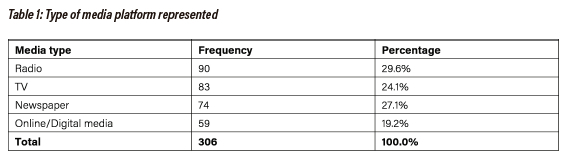
The article employed a quantitative approach to collect data from a sample of 306 journalists who represented various roles such as editors, reporters, programme producers, presenters and online content creators. This sample included 90 journalists from radio, 83 from newspapers, 74 from television and 59 from online digital media. A questionnaire containing both closed-ended and open-ended questions was distributed via Google Forms to gather data. The questionnaires were randomly disseminated to journalists over a month, using WhatsApp groups and email networks associated with different journalist networks in the country. This ensured a convenient and representative sampling of participants. A total of 306 journalists were able to complete the questionnaire online. The online questionnaire primarily consisted of closed-ended questions selected for their simplicity and ease of response. In addition, a selective set of open-ended questions encouraged respondents to provide more detailed insights. Subsequently, the collected data underwent quantitative analysis, in which responses to both closed-ended and open-ended questions were categorised through coding before being analysed using descriptive statistics. IBM Statistical Package and Service Solutions (SPSS) version 20 software was used to generate statistics, including frequencies, percentages and other descriptions relevant to the article's objective.
RESULTS
The findings and discussion have been collated into various sections of this article. These sections include media type and demographics, journalists' awareness of fake news, strategies to combat fake news and the challenges journalists encounter in addressing fake news in Tanzania.
Media types and demographics
Journalists were categorised into four distinct groups based on their affiliated media forms: newspapers, radio, television and online/digital media. Among the 306 participants who participated in this study, 90 journalists were affiliated with radio, representing 29.6% of the total sample. Journalists from newspapers constituted 83 respondents (27.1%), while television was represented by 74 journalists (24.1%) and online media by 59 journalists (19.2%). Radio-affiliated journalists formed the largest group in this study, probably because there are more radio stations available than other types of media in the country (Ssenabuly & Katunzi, 2022).
Designation of journalists
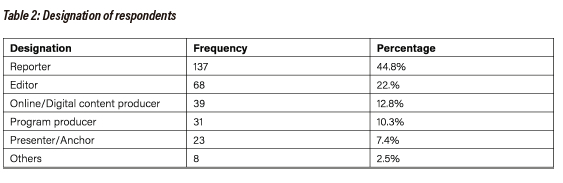
Although the questionnaires were distributed randomly, a clear pattern emerged regarding the job titles among Tanzanian journalists who participated in this study. The predominant job title was that of a reporter (44.8%), signifying a significant portion of the participants. This was followed by editors (22.2%), digital content producers (12.8%) and programme producers (10.3%). The least represented group in this distribution was presenters or news anchors, who accounted for 7.4% of the total sample, as indicated in Table 2. The findings in this aspect reflect the prevailing reality within newsrooms, wherein the majority of media staff occupy the reporter position. This position encompasses both junior and experienced journalists, as also highlighted by Ssenabuly and Katunzi (2022).
Journalists' understanding of fake news concept
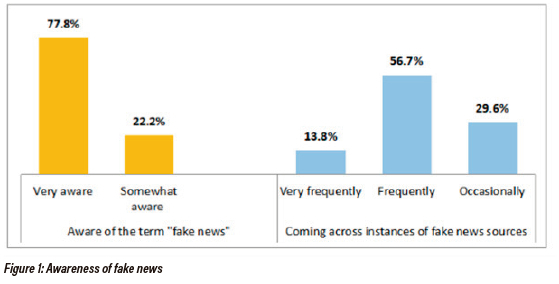
This aspect explored journalists' understanding of the concept of fake news and its related dimensions, including disinformation and misinformation. It also examined how frequently journalists encountered fake news sources in their roles within the Tanzanian media landscape. As depicted in Figure 1, a significant 77.8% of journalists demonstrated a strong understanding of the term "fake news" and its associated concepts. Conversely, only 22.2% of respondents possessed a basic grasp of the term. Concerning the frequency of encountering online fake news sources in their daily journalistic activities, the findings indicate that a substantial portion of participating journalists (more than the average) frequently encountered instances of fake news sources, with an additional 13.8% reporting very frequent encounters. These results highlight a prevalent awareness of fake news issues among the majority of Tanzanian journalists, alongside a notable frequency of encountering sources of fabricated stories in their work.
Ability to identify fake news sources
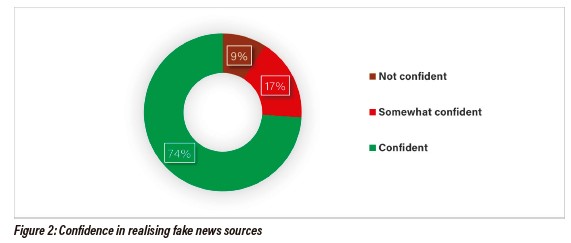
Journalists were asked about their confidence in discerning various forms of fake news sources when presented from different sources while crafting stories. A notable majority of respondents (74%) asserted their confidence in being able to identify whether a news item or story was indeed fake or originated from an unreliable source. Conversely, 9% of all participants acknowledged their lack of confidence in distinguishing the authenticity of the news source, as indicated in Figure 2. To address the 9% with a total deficiency in this area, comprehensive training is needed to equip these individuals with the skills required to discern the authenticity of the news and its sources.
Ability to identify fake news sources by media platforms
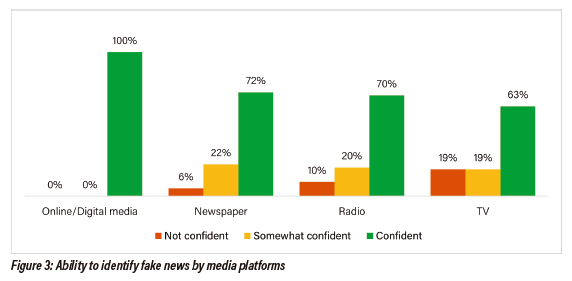
A cross-tabulation was done to assess journalists' ability to identify fake news based on different media platforms. As depicted in Figure 3, journalists affiliated with online and digital media expressed a high confidence level (100%) in discerning fake news sources. Conversely, journalists from the television sector exhibited the lowest ability, with a confidence rate of 63% in identifying fake news sources. Newspaper and radio journalists demonstrated comparable scores, hovering around 72% and 70%, respectively, indicating their confidence in identifying fake news sources. This underscores the need for more training, particularly in areas with lower scores. The digital media scoring 100% in this aspect implies a significant investment in tools and technology to ensure the credibility of online news. This has been cited by Kozuh and Caks (2023) who emphasise the importance of professional digital media houses in providing factual information to the audience.
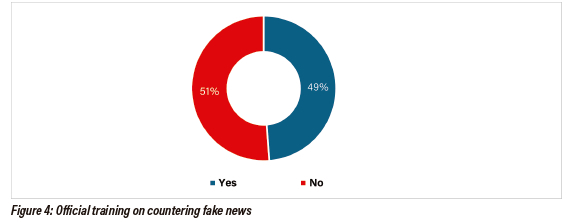
Official training to counter fake news
Respondents were asked whether they had undergone any official training or guidance provided by their employers or other organisations aimed at recognising and addressing fake news and misinformation within the newsroom. Among the journalists surveyed, 51% indicated that they had not received any formal training, while 49% reported having undergone such training. These findings indicate that a notable proportion of journalists have not been exposed to official training in countering fake news, as illustrated in Figure 4. This statistic unveils a potential gap in journalist education and training programmes focused on enhancing media professionals' capacity to scrutinise sources, verify information and distinguish between reliable and unreliable content.
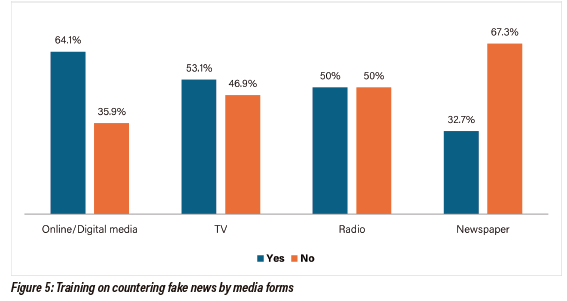
Training of fake news recognition by media platforms
Similarly, a cross-tabulation was conducted to compare the extent to which journalists from different media forms had received training in countering fake news. The results revealed that online/digital media journalists were notably ahead in terms of training, with a substantial 64% affirming that they had received such training. Following closely were television journalists at 53%, radio journalists with an average of 50% and newspaper journalists being the least trained in this category, with only 32.7% of respondents indicating that they had received training.
DISCUSSION ON JOURNALIST AWARENESS OF FAKE NEWS
Generally, the findings on the level of awareness of journalists of fake news were determined across various aspects, including their ability to discern fake news concepts, encounter deceptive sources, detect fake news sites and the availability of training to combat misinformation. The findings shed light on Tanzanian journalists' awareness levels regarding fake news, encompassing misinformation and disinformation. A significant proportion of journalists, including both editors and reporters, demonstrated familiarity with the term "fake news" and its associated dimensions. A considerable number of journalists reported encountering fake news sources in their professional pursuits, with 56.7% encountering them frequently and 13.8% encountering them very frequently. This heightened exposure to deceptive sources underscores the prevalence of misinformation in journalistic work in Tanzania. Impressively, 74% of respondents expressed confidence in their ability to identify fake news sources, with online or digital media journalists exhibiting higher confidence levels. These findings suggest that instances of publishing fake news may not solely stem from a lack of awareness among journalists but rather from negligence in fact checking or external influences such as political agendas, as pointed out by Hassan and Hitchen (2019). In addition, the power of social media to present fake news sources as genuine stories, as articulated by Tran et al. (2021) and Chien et al. (2022), is noteworthy. However, the study revealed a notable gap in formal training to equip journalists to combat fake news. Only 49% of respondents had received official training aimed at countering fake news, indicating a potential deficiency in journalist education and training programmes. UNESCO (2018) advocates frequent training among journalists to enhance their ability to scrutinise sources and verify information, while Kwode and Selekane (2023) emphasise the importance of providing periodic training to less resourced media houses to identify and flag fake news, as many lack the necessary resources for this task.
Strategies used to combat fake news
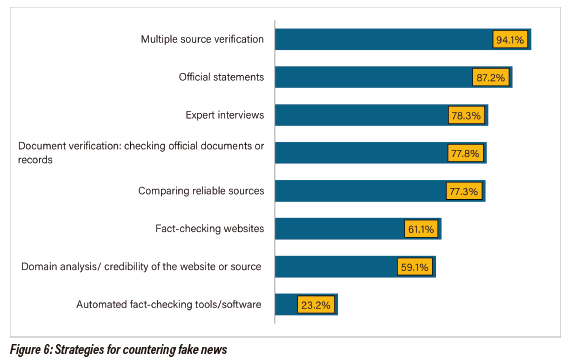
The findings of the study uncovered a noticeable inclination by Tanzanian journalists towards the use of traditional methods to discern and address instances of fake news. While these traditional methods have historical precedence and are rooted in established journalistic practices, the study raises concerns about their effectiveness in fully combating the contemporary complexities of fake news in the digital age. Among the traditional methods examined, the study revealed that multiple-source verification emerged as the prevailing approach, capturing the favour of an overwhelming 94% of respondents. This technique underscores the significance of cross-referencing information from various reliable sources as a means to authenticating the accuracy of news stories. The prominence of this method implies that Tanzanian journalists place a high value on the practice of corroborating information before disseminating it - a principle that remains central to the ethos of credible journalism (Ghan & Khan, 2020). In a similar vein, the study underscores the reliance on official statements as a means to substantiate the authenticity of stories, with 87.2% of respondents endorsing its efficacy. This approach also resonates with the age-old practice of seeking confirmation from authoritative sources, which remains integral to the journalistic process of fact checking and verification. Expert interviews, too, emerged as a significant tool in the realm of Tanzanian journalists, with 78.3% acknowledging their effectiveness in clarifying the accuracy of information. Relying on experts' insights not only lends credibility to news stories but also provides valuable context that aids in dispelling misinformation (Aljaž et al., 2022). Interestingly, the findings expose a discrepancy between the adoption of traditional and modern approaches. While traditional methods garnered high preference, the use of modern tools, such as fact-checking websites, scored 61%. Domain analysis, a technique employed to assess website credibility, received recognition from 59.1% of participants. The least favoured method in this category was the use of automated fact-checking tools/ software, which was endorsed by only 23.2% of all respondents. This divergence between the adoption of traditional and modern strategies points to a potential gap in leveraging advanced technological tools to effectively counter fake news. The relatively low acceptance of automated fact-checking tools/ software indicates a need for further exploration of how technology can enhance the speed and accuracy of information verification in an age characterised by the rapid dissemination of information.
Challenges encountered and journalists' requirements
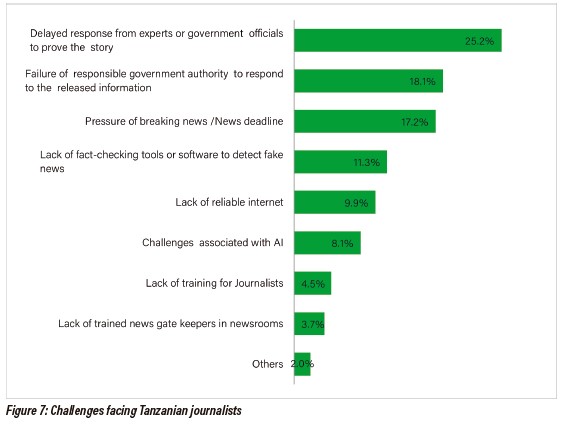
The challenges encountered by journalists in addressing fake news within the Tanzanian media landscape offer valuable insights into the complex dynamics of media integrity and reliability. From the perspective of journalists, these challenges underscore both the evolving nature of misinformation and the critical role that traditional methodologies play in the realm of combating fake news. As it indicated in Figure 7, one of the major challenges highlighted by journalists pertains to the delayed response from experts or government officials required to validate the authenticity of a given story. This challenge, accounting for 25.2% of responses, illuminates the practical hurdles journalists face in seeking timely verification and validation of information. This can be particularly problematic in a rapidly evolving news environment, where accurate and swift reporting is crucial. Following closely, at 18.1%, is the issue of government authorities failing to respond to information suspected to be fake. This reveals a challenging landscape in which journalists may struggle to engage with relevant authorities to clarify or debunk false information, potentially leading to the perpetuation of misinformation. The pressure of breaking news or looming deadlines, identified by 17.2% of respondents, further adds to the intricate matrix of challenges. This finding sheds light on the tension between the demand for timely reporting and the need for thorough fact checking and verification. Additional challenges frequently mentioned underscore the technological and resource limitations journalists face. The absence of fact-checking software and reliable Internet connections for cross-referencing information were cited as hindrances. Moreover, concerns related to the manipulation of stories using Artificial Intelligence (AI) reveal the sophisticated nature of contemporary misinformation tactics. In light of these challenges, journalists emphasised a range of interventions required to fortify their efforts in tackling fake news effectively. This is reflected in Figure 8. Foremost, the importance of training and mentorship to enhance media literacy and fact-checking skills emerged as a key request. The integration of fact-checking software directly within newsrooms was also highlighted, underlining the potential of technology to expedite the verification process. In addition, seeking collaboration with experts or government officials for fact-checking purposes when needed reflects a proactive approach to ensure the accuracy of news content.
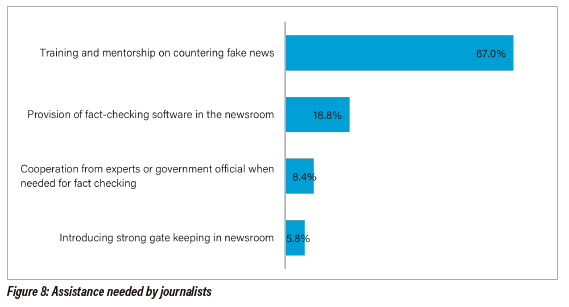
As depicted in Figure 8, the findings highlight the recurring responses given by the respondents. Among these, a significant majority (67%) emphasised the importance of training and mentorship to effectively counter fake news within newsrooms. Additional proposed solutions included the integration of fact-checking software in newsrooms (18.8%), seeking collaboration with experts or government officials for fact-checking purposes (8.4%) and the implementation of robust gatekeeping policies within newsrooms. Notably, these solutions are grounded in the journalists' insights, and their successful implementation is expected to yield positive outcomes. However, responding to challenges that hinder media professionals in addressing fake news is one of the major concerns of various scholars, such as Mare et al (2019), Collins et al. (2021), Lunga and Mthembu (2019) and Wasserman and Madrid-Morales (2019). These scholars explain the consequences of increased levels of disinformation and misinformation, especially in African media with its impact on the erosion of trust between journalism and citizens in various contexts. They suggest that the government and other stakeholders intervene to strengthen media capacity and they emphasise regulation and upholding ethical standards to limit false information in the newsrooms.
CONCLUSION
The findings reveal a multifaceted landscape in which Tanzanian journalists demonstrate a strong understanding of fake news concepts. However, concerns about industry preparedness and formal training highlight the need for greater investment in media literacy initiatives and institutional support to ensure effective gatekeeping of the media in limiting the spread of misinformation. The article's insights into strategies for countering fake news sources emphasise the enduring relevance of traditional practices, such as cross-referencing sources, relying on official statements and conducting expert interviews. Yet, the evolving nature of fake news necessitates integrating modern tools and technologies to address the growing challenges of misinformation and disinformation effectively. Achieving a balance between traditional and modern approaches is pivotal in combating fake news within the Tanzanian media landscape. Amid contemporary challenges, the persistence of traditional methodologies signifies their enduring value. The calls for training, fact-checking tools and collaborative efforts among journalists highlight the need for a collective endeavour from various stakeholders to establish a media environment characterised by accuracy, credibility and responsible reporting. As Tanzania's media navigates this evolving landscape, addressing fake news remains a collaborative mission essential to preserving reliable and truthful journalism.
REFERENCES
Abed, L.G. (2021). COVID-19 Misinformation on Social Media: A study of the understanding, attitudes, and behaviors of social media users. International Journal on Social and Education Sciences, 3(4):768-788. [ Links ]
Aljaž, Z., Marko, P. & Dejan, L. (2022). Users' ability to perceive misinformation: An information quality assessment approach. Journal of Information Processing & Management (IPM), 59(1). Available from: https://arxiv.org/pdf/2110.00230.pdf [ Links ]
Allcott H. & Gentzknow, M. (2018). Social media in the 2016 Election. Journal of Economic Perspective, 32(2): 211-236. [ Links ]
Asak, M. O., & Molale, T. B. (2020). Deconstructing de-legitimisation of mainstream media as sources of authentic news in the post-truth era. Communicatio, 46(4), 50-74. [ Links ]
Carter, R.E. (1958). Newspaper "Gatekeepers" and the sources of news. The Public Opinion Quarterly, Oxford University Press, 22(2):133-144. [ Links ]
Chien, S., Yang, C. & Yu, F. (2022). XFlag: Explainable fake news detection model on social media. International Journal of Human-Computer Interaction, 38(18-20):1808-1827. [ Links ]
Collins, B., Hoang, D.T., Nguyen, T. & Hwang, D. (2021). Trends in combating fake news on social media - a survey. Journal of Information and Telecommunication, 5(2):247-266. [ Links ]
Deluliis, D. (2015). Communication research trends; Gatekeeping Theory from social fields to social network. A Quarterly Review of Communication Research, 34(1):144-146. [ Links ]
Farid R. & Zyad, R (2019). The role of online media gatekeeper in the era of digital media: Advances in social science. Education and Humanities Research, 439:532-544. [ Links ]
Farkas, J. & Jannick, S. (2018). Fake news as a floating signifier: Hegemony, antagonism and the politics of falsehood, Javnost - The Public, 25(3):298-314. [ Links ]
Ghan, A. & Khan, S. (2020). Disorder in the newsroom: The media's perceptions and response to the infodemic. Media Matters for Democracy, Friedrich Neumann Foundation for Freedom (FNF). Available from: https://creativecommons.org/licenses/by/4.0/ [ Links ]
Guçdemir, Y., & Özsalih, A. (2018). The role of gatekeepers in agenda-setting in social media: The Twitter sample in Turkey. Journal of Communication and Media, 4(4):55-63. [ Links ]
Habermas, J. (1998). Between facts and norms: Contributions to a Discourse Theory of Law and Democracy. Cambridge, MA: MIT Press. [ Links ]
Hassan, I. & Hitchen, J. 2019. Nigeria's 'Propaganda Secretaries' Mail & Guardian, April. Accessed 18 April 2023. Available from: https://mg.co.za/article/2019-04-18-00-nigerias-propagandasecretaries/ [ Links ]
Ireton, C. & Posetti, J. (eds). (2018). Journalism fake news and disinformation. In Handbook of Journalism education and training. UNESCO. [ Links ]
Jacob, C., Hausemer, P. & Zagonibogscha, D. (2023). The effect of communication and disinformation during the COVID-19 pandemic. Publication for the Special Committee on the COVID-19 pandemic. Policy Department for Economic, Scientific, and Quality of Life Policies, European Parliament. Available from: https://www.europarl.europa.eu/RegData/etudes/STUD/2023/740063/IPOL_STU(2023)740063_EN.pdf [ Links ]
Kansara, M. & Adhvaryu, K.U. (2022). Identify fake data or misinformation in near real-time using big data and sentiment analytics. International Conference on Automation, Computing and Renewable Systems (ICACRS), pp.489-496. [ Links ]
Klyuev, V. (2018). Fake news filtering: Semantic approaches. 7th International Conference on Reliability, Infocom Technologies and Optimization (Trends and Future Directions) (ICRITO), Noida, India, pp. 9-15. Available from: doi: 10.1109/ICRITO.2018.8748506 [ Links ]
Kozuh, I., & Caks, P. (2023). Social media fact-checking: The effects of news literacy and news trust on the intent to verify health-related information. Journal of PubMedia. Advanced online publication. Available from: https://doi.org/10.3390/healthcare11202796 [ Links ]
Kwode, P.A.K. & Selekane, N.L. (2023). Fake news and the political economy of the media: A perspective of Ghanaian journalists. Journal for Communication Studies in Africa, 42(2):55-63. [ Links ]
Lewin, K. (1947). Frontiers in group dynamics: II. Channels of group life, social planning, and action research. Journal of Human Relations, 1(2):143-153. [ Links ]
Lim, A. & Bradshaw, S. (2023). Chilling legislation: Tracking the impact of "Fake News" Laws on press freedom internationally. Available from: https://www.cima.ned.org/wp-content/uploads/2023/06/CIMA-Chilling-Legislation_web_150ppi.pdf [ Links ]
Lunga, C.M. & Mthembu, M.V. (2019). Investigating the source and strategies adopted by mainstream media in combating fake news in the Kingdom of Eswatini. African Journalism Studies, 40(4):96-111. [ Links ]
Mare, A., Mabweazara, H.M. & Moyo, D. (2019). "Fake news" and cyber-propaganda in Sub-Saharan Africa: Recentering the research agenda. African Journalism Studies, 40(4):1-11. [ Links ]
McNair, B. (2018). Fake news: Falsehood, Fabrication, and Fantasy in Journalism. New York, NY: Routledge. [ Links ]
Media Council of Tanzania (2022). State media in Tanzania-2020-202, ISBN.978-9976-588-02-06. Available from: https://mct.or.tz/wp-content/uploads/2022/07/State-of-the-Media-in-Tanzania [ Links ]
MISA Zimbabwe report (2020). Tazania resorts to fake news laws to shut down TV station. July. Available from: https://zimbabwe.misa.org/2020/07/10/tanzania-resorts-to-fake-news-laws-to-shut-down-tv-station/ [ Links ]
Moravec, R., Minas, A. R., & Dennis, A. (2018). Fake news on social media: People believe what they want to believe when it makes no sense at all. Kelley School of Business Research Paper No. 18-8. Available from: https://www.sciencedirect.com/science/article/pii/S2666307422000092#bib0008 [ Links ]
Moyo, D., Mare, A., & Matsilele, T. (2019). Analytics-driven journalism? Editorial metrics and the reconfiguration of online news production practices in African newsrooms. Digital Journalism, 7(4), 490-506. [ Links ]
Mutsvairo, B. & Bebawi, S. (2019). Journalism educators, regulatory realities, and pedagogical predicaments of the "Fake News" era: A comparative perspective on the Middle East and Africa. Journalism & Mass Communication Educator, 74(2): 143-157. [ Links ]
Olsen, R.K., & Solvoll, M.K. (2022). Gatekeepers as safe-keepers-mapping audiences' attitudes towards news media's editorial oversight functions during the COVID-19 crisis. Journal of Media, 3(1):182-197. [ Links ]
Oshikawa, R., Qian, J., & Wang, WY. (2018). A survey on natural language processing for fake news detection. Available from: http://arxiv.org/abs/1811.00770 [ Links ]
Saldaña, M. & Vu, H.T. (2021). You are fake news! Factors impacting journalists' debunking behaviors on social media. Digital Journalism. Available from: doi:10.1080/21670811.2021.2004 554 [ Links ]
Ssenabuly, B. & Katunzi, A. (2022). A survey report on portrayal of Tanzanian Journalists. African Center for Media Excellency. Available from: https://acme-ug.org/wp-content/uploads [ Links ]
Stroud, S.R. (2019). Pragmatist media ethics and the challenges of fake news. Journal of Media Ethics, 34(4):178-192. [ Links ]
Tandoc, E. C. (2018). Journalism as Gatekeeping. In Vos, T.P. (ed.), Journalism. Berlin, Boston: De Gruyter, 235. [ Links ]
Tandoc, E.C., Lim, Z.W. & Ling, R. (2018). Defining "Fake News": A typology of scholarly definitions. Digital Journalism, 6(2):137-153. [ Links ]
Tran, T., Valecha, R., Rad, P. & Rao, H.R. (2021). An investigation of misinformation harms related to social media during two humanitarian crises. Information Systems Frontiers, 23(4):931-939. [ Links ]
Tsarwe, S. (2019). Searching for elusive journalism values in the era of fake news: A qualitative study on the experiences of a blogging community in Zimbabwe. Communicare, 38(1):18-36. [ Links ]
UNESCO. (2018). Journalism, "fake news" & disinformation. In Handbook for Journalism Education and Training. Paris, France: UNESCO. [ Links ]
Wahutu. S. (2019) Fake news and journalistic "rules of the game". African Journalism Studies, 40(4):13-26. [ Links ]
Wang, S., Pang, M. & Pavlou, P. (2021). Cure or poison? Identity verification and the posting of fake news on social media. Journal of Management Information Systems, 38(4):1011-1038. [ Links ]
Wardle, C. & Derakhshan, H. (2018). Thinking about "information disorder": Formats of misinformation, disinformation, and mal-information. In Journalism, 'Fake News' & Disinformation. UNESCO. 2018, 43-54. [ Links ]
Wasserman, H. & Madrid-Morales, D. (2019). An exploratory study of "fake news" and media trust in Kenya, Nigeria and South Africa. African Journalism Studies, 40(1):107-123. [ Links ]
Zhou, X. & Zafarani, R. (2018). Fake News: A Survey of Research, Detection Methods, and Opportunities. Available from: http://arxiv.org/abs/1812.00315 [ Links ]
Submitted March 2024
Accepted July 2024
